Hibiscus tea is one of the most researched herbal teas in the world. It is not just a pretty pink drink — clinical studies confirm it genuinely helps your heart, blood sugar, skin, and more. Here is what the science says.
📋 Table of Contents
What Is Hibiscus Tea?
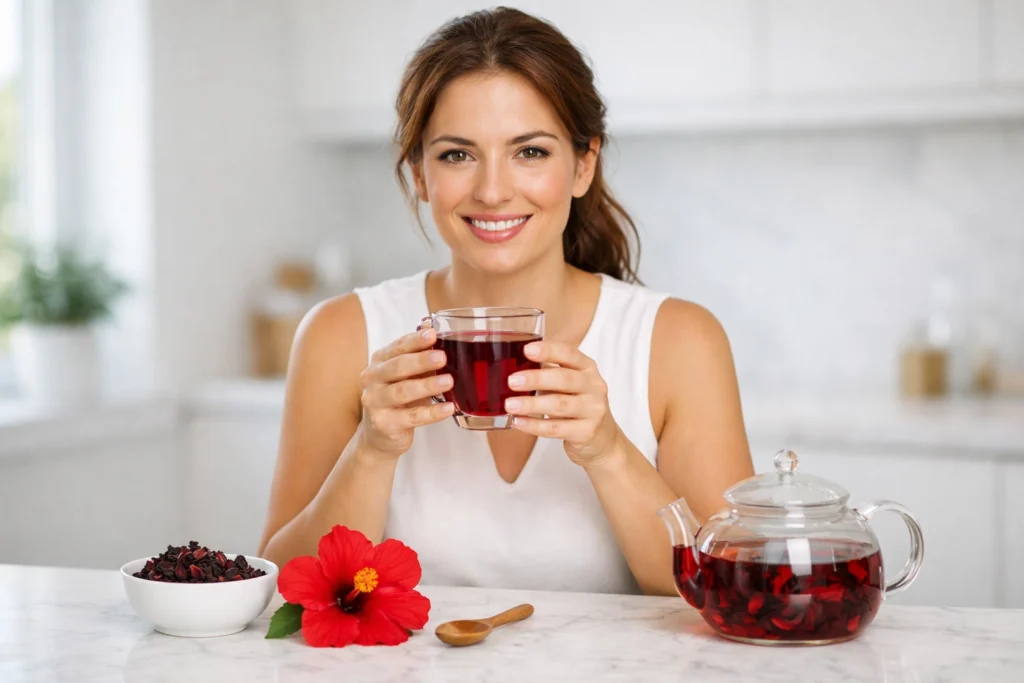
Hibiscus tea is made from the dried red petals of the Hibiscus sabdariffa plant. It brews into a vivid ruby-red drink with a tart, cranberry-like taste. It contains zero caffeine.
People across the world have been drinking it for thousands of years. In Egypt it is called Karkadé. In Nigeria it is Zobo. In Mexico it is Flor de Jamaica. In the Caribbean it is Sorrel. It is one of the most popular drinks on the planet — and modern science is now confirming why so many cultures have treasured it for centuries.
Today hibiscus tea has over 22 clinical publications and 9 human randomised controlled trials behind it. That is a stronger evidence base than most herbal teas you will find on a health food shelf.
🛠️ Free Health Tools — Water Intake Calculator, BMI Calculator, Intermittent Fasting Calculator & more
🔍 Browse All Free Health Tools →| Region | Local Name | How People Drink It |
|---|---|---|
| Egypt & Middle East | Karkadé (كركديه) | Hot or cold; traditional medicine |
| West Africa (Nigeria) | Zobo | Cold sweetened drink; celebrations |
| Senegal | Bissap | National drink; cold and sweet |
| Mexico & Latin America | Flor de Jamaica | Iced water; agua fresca |
| Caribbean | Sorrel | Spiced holiday drink |
| Iran | Sour Tea / Chai Torsh | Hot tea; medicinal use |
| Global English | Hibiscus Tea / Red Zinger | Hot and iced wellness tea |
What’s Inside — Nutrition & Key Compounds
Hibiscus tea is almost zero calories and contains no caffeine, no sugar, and no fat. Its health power comes from its natural plant compounds — especially a group called anthocyanins, which give the tea its deep red colour and are among the most powerful antioxidants found in any food or drink.
| Nutrient / Compound | Per Cup (240ml) | Why It Matters |
|---|---|---|
| Calories | ~3 kcal | Almost zero — suitable for any diet |
| Caffeine | 0mg | Completely caffeine-free |
| Vitamin C | 12–15mg | Immune support and collagen production |
| Potassium | ~50mg | Helps regulate blood pressure |
| Magnesium | ~8mg | Stress regulation and sleep |
| Anthocyanins | 50–200mg | Main antioxidant — reduces inflammation |
| Quercetin | Trace–15mg | Natural antihistamine — helps eczema and allergies |
| Organic acids (AHAs) | Significant | Gentle skin exfoliation when applied topically |
🏆 #1 Antioxidant Drink Out of 280 Tested
A comprehensive scoping review tested 280 common beverages for antioxidant content. Hibiscus tea came first — higher than green tea, black tea, pomegranate juice, and most fruit juices. Within 60 minutes of drinking one cup, measurable antioxidant activity in your bloodstream increases significantly. A 2024 Journal of Food Science analysis found loose-leaf hibiscus calyxes contain dramatically higher anthocyanin levels than tea bags — always buy loose-leaf for maximum benefit.
12 Health Benefits of Hibiscus Tea
Lowers Blood Pressure
This is hibiscus tea’s most well-proven benefit. Multiple clinical trials confirm that drinking 2–3 cups daily meaningfully lowers blood pressure — both the top number (systolic) and the bottom number (diastolic).
One study found hibiscus tea was as effective as captopril — a common blood pressure medication — at its starting dose. But with zero side effects.
If you are already on blood pressure medication, talk to your doctor first — hibiscus plus medication can sometimes lower blood pressure too much.
📊 The Evidence
A randomised controlled trial published in the Journal of Nutrition found 3 cups daily for 6 weeks reduced systolic blood pressure by 7.2 mmHg vs placebo. A 2020 systematic review of 7 clinical trials confirmed the effect. A head-to-head comparison vs captopril (starting dose) found equivalent antihypertensive effectiveness with no side effects. A 5-point systolic reduction at population scale translates to 14% fewer stroke deaths annually.
Protects Your Heart
Hibiscus is the most antioxidant-rich drink tested out of 280 beverages. These antioxidants protect your heart and blood vessels from the damage that leads to heart attack and stroke.
Within 60 minutes of drinking one cup, your blood antioxidant levels rise measurably. This rapid protection makes hibiscus one of the most effective daily heart-protective drinks available.
Reduces Bad Cholesterol
High LDL cholesterol is one of the main risk factors for heart disease. Hibiscus tea has been shown to reduce LDL (“bad”) cholesterol levels.
A review of 17 scientific studies confirmed this benefit. The effect is strongest in people who already have high cholesterol or metabolic syndrome.
Helps Control Blood Sugar
Hibiscus tea reduces the blood sugar spike that happens after you eat. This is important for people with diabetes, pre-diabetes, or anyone trying to keep their blood sugar stable throughout the day.
Drinking hibiscus tea with or after meals appears to slow down how quickly sugar enters the bloodstream.
📊 The Evidence
A 2025 randomised crossover study confirmed hibiscus significantly reduced post-prandial (after-meal) glucose response. Multiple clinical trials in pre-diabetic adults confirmed reductions in fasting blood glucose. A 2019 clinical trial confirmed improvements in fasting blood sugar and HbA1c in type 2 diabetic patients. Always tell your doctor before combining hibiscus with diabetes medication — it can lower blood sugar too much.
Supports Weight Management
Hibiscus tea may support modest weight loss when combined with a healthy diet. Studies show it can help reduce body weight, BMI, and waist circumference over time.
It works by slowing fat absorption and improving how your body processes sugar. It is a support tool — not a miracle weight loss solution.
Protects Your Liver
Your liver processes everything you eat and drink. Hibiscus tea has shown liver-protective properties in clinical studies.
A human clinical trial found that daily hibiscus tea consumption reduced liver steatosis (fatty liver) and improved liver enzyme levels in patients with non-alcoholic fatty liver disease over 12 weeks.
Supports Kidney Health
Hibiscus tea acts as a gentle natural diuretic — it helps your kidneys flush out waste and excess fluids. This can help reduce the risk of kidney stones and urinary tract infections.
Studies confirm hibiscus has nephroprotective (kidney-protecting) properties and may help reduce kidney stone formation.
Boosts Immunity
Hibiscus tea is a natural immune booster. Its high vitamin C content directly supports immune cell production. Its anthocyanins have confirmed antimicrobial activity against many common bacteria and viruses.
Regular daily consumption keeps your immune system supplied with a consistent dose of antioxidants and vitamin C throughout the day.
Reduces Inflammation
Chronic inflammation is behind many health problems — from arthritis to heart disease to skin conditions. Hibiscus is a powerful natural anti-inflammatory.
A 2025 systematic review confirmed hibiscus significantly reduces multiple inflammation markers in the blood. This wide-ranging anti-inflammatory effect helps explain why hibiscus benefits so many different health conditions simultaneously.
Good for Skin — Anti-Aging & Acne
Hibiscus tea is genuinely good for your skin — both when you drink it and when you apply it topically. A 2025 clinical trial in 98 people confirmed it improved skin hydration, reduced wrinkle depth, and improved elasticity after 12 weeks.
It also helps with acne, eczema, and dark spots. For the full skin benefits guide see: hibiscus tea benefits for skin.
Helps with Eczema & Psoriasis
Hibiscus has natural antihistamine properties — meaning it helps calm the immune overreaction that drives eczema and psoriasis flares. It reduces IgE levels (the antibody that triggers allergic skin reactions) and soothes inflamed skin.
For the complete eczema and psoriasis guide see: 7 proven benefits of hibiscus tea for psoriasis and eczema.
Supports Calm & Mental Wellbeing
Because hibiscus is completely caffeine-free, it naturally supports a calm, relaxed state — unlike coffee or regular tea which stimulate the stress hormone cortisol.
Its magnesium content also supports nervous system regulation and better sleep. The 2025 blood sugar study found hibiscus prevents the energy crashes that cause brain fog and mood dips throughout the day.
How Strong Is the Evidence?
Not all health claims have equal evidence behind them. Here is an honest summary of how strong the research actually is for each benefit:
| Health Benefit | Evidence Strength | Best Daily Amount |
|---|---|---|
| Blood pressure | ⭐⭐⭐⭐⭐ Very strong | 2–3 cups daily |
| Antioxidant protection | ⭐⭐⭐⭐⭐ Very strong | 1–2 cups daily |
| LDL cholesterol | ⭐⭐⭐⭐ Good | 2–3 cups daily |
| Blood sugar control | ⭐⭐⭐⭐ Good | 1–2 cups with meals |
| Skin health | ⭐⭐⭐⭐ Good | 1–2 cups daily + topical |
| Inflammation | ⭐⭐⭐⭐ Good | 1–2 cups daily |
| Weight management | ⭐⭐⭐ Moderate | 2–3 cups daily |
| Liver protection | ⭐⭐⭐ Moderate | 1–2 cups daily |
| Kidney health | ⭐⭐⭐ Moderate | 1–2 cups daily |
| Immunity | ⭐⭐⭐ Moderate | 1–2 cups daily |
| Eczema / psoriasis | ⭐⭐⭐ Moderate | 1–2 cups daily + compress |
| Mental wellbeing | ⭐⭐ Emerging | 1–2 cups daily |
How to Make Hibiscus Tea
🌺 Perfect Hibiscus Tea — Step by Step
-
1
Use loose-leaf calyxes — not tea bags
Use 1–2 teaspoons of dried hibiscus calyxes per 240ml cup. Loose-leaf contains far more active compounds than tea bags. A 2024 study found loose-leaf calyxes had dramatically higher anthocyanin levels than bagged versions.
-
2
Use hot — not boiling — water
Heat water to 85–90°C. Boiling water (100°C) destroys vitamin C and anthocyanins. Let boiled water sit for 2–3 minutes before pouring.
-
3
Steep for 7–8 minutes
Hibiscus needs longer than most teas. Cover the cup while steeping. The tea should be a deep vivid red — pale pink means you need more calyxes or longer steeping.
-
4
Strain and add optional extras
Strain through a fine mesh. Add a squeeze of lemon (boosts antioxidant absorption), raw honey (anti-inflammatory), or fresh ginger. Avoid adding milk — it may reduce the benefits.
-
5
Drink through a straw
Hibiscus is naturally acidic. Always drink through a straw and rinse your mouth with water after. Wait 30 minutes before brushing your teeth.
| Method | Strength | Best For |
|---|---|---|
| Standard hot tea | 1–2 tsp per 240ml | Blood pressure, cholesterol, general health |
| Strong therapeutic | 2–3 tsp per 240ml | Maximum antioxidant and anti-inflammatory |
| Iced tea | Double strength, chilled | Daily wellness, rosacea, summer hydration |
| Topical compress | Double strength, cold | Eczema, psoriasis, skin inflammation |
| Facial toner | Standard, diluted 1:1 | Brightening, acne, pore-clearing |
💡 Tip: Steep Below 40°C to Preserve Vitamin C
Hibiscus is one of the richest plant sources of Vitamin C — but Vitamin C is heat-sensitive and begins to degrade above 40°C. For maximum Vitamin C benefit, steep your dried hibiscus calyxes in water that has cooled to below 40°C (warm, not hot) for 10–15 minutes rather than using boiling water. The color and flavor still develop beautifully at this temperature. If you primarily drink hibiscus tea for its antioxidant and immune-supporting properties, this lower-temperature method is recommended.
How Much Should You Drink?
🌺 How should you use hibiscus tea? Type it in our free Herb & Tea Benefit Finder — get preparation method, timing, dosage, and safety notes instantly.
🔍 Try the Herb & Tea Benefit Finder →📅 Best Times to Drink It
Morning (with breakfast): Starts anti-inflammatory protection for the day. Do not drink on a completely empty stomach if you have acid sensitivity.
Afternoon: Hot or iced — no caffeine so no sleep disruption. Keeps antioxidant protection topped up.
Evening (1 hour before bed): Warm cup supports relaxation and sleep. Caffeine-free means it will not keep you awake.
Why not more than 3–4 cups? Hibiscus contains notable amounts of manganese. Drinking more than 1 litre daily long-term may approach the upper safe limit for manganese intake.
Side Effects & Who Should Be Careful
🩸 Blood pressure medications
Hibiscus lowers blood pressure on its own. If you take medication for blood pressure (ACE inhibitors, beta-blockers, diuretics), the combination may lower it too much. Always tell your doctor before drinking hibiscus daily. For the complete drug interaction guide see: hibiscus tea side effects and drug interactions.
💊 Diabetes medications
Hibiscus lowers blood sugar. Combined with insulin or diabetes tablets, it may lower blood sugar dangerously. Monitor your levels closely and discuss with your doctor before adding hibiscus to your routine.
🤰 Pregnancy — avoid completely
Do not drink hibiscus tea during pregnancy. It may stimulate uterine contractions. This applies to hot tea, iced tea, and concentrated topical use.
🦷 Tooth enamel
Hibiscus tea is naturally acidic. Always drink through a straw, rinse with water after, and wait 30 minutes before brushing your teeth.
🫀 High doses and liver
At normal amounts (1–3 cups daily) hibiscus is safe for the liver. At very high doses it may stress it. If you have liver disease, speak to your doctor before drinking daily.
💊 Chloroquine (malaria medicine)
Hibiscus may reduce the effectiveness of chloroquine. Avoid hibiscus entirely if you are taking a chloroquine course.
Try Our Free Herb & Tea Benefit Finder
Type hibiscus or any herb to instantly see its benefits, how to use it, and who should be careful.
🔍 Open the Herb & Tea Benefit Finder →Frequently Asked Questions
Hibiscus tea has 12 well-researched health benefits. The strongest evidence is for lowering blood pressure — multiple clinical trials confirm 2–3 cups daily meaningfully reduces blood pressure, with one study finding it as effective as a common blood pressure drug. It also helps lower bad cholesterol, reduce blood sugar spikes after meals, protect the heart with antioxidants, support weight management, and improve skin health. It is completely caffeine-free and can be drunk any time of day.
For general health, 1–2 cups (240ml each) daily is a good amount. For blood pressure specifically, the clinical trial dose was 3 cups per day. Do not exceed 3–4 cups daily long-term — hibiscus contains notable manganese and drinking more than one litre daily may approach the upper safe limit. Always use loose-leaf calyxes for maximum benefit — tea bags contain far fewer active compounds.
No — hibiscus tea contains zero caffeine. It is a herbal infusion made from dried plant calyxes, not from the tea plant. This makes it one of the very few genuinely caffeine-free hot drinks you can enjoy any time of day — including evening — without affecting your sleep. This is one of hibiscus tea’s most practical advantages for daily health use.
Yes — this is hibiscus tea’s most consistently proven benefit. A randomised controlled trial found 3 cups daily for 6 weeks lowered systolic blood pressure by 7.2 mmHg compared to placebo. A systematic review of 7 clinical trials confirmed the effect. One study found it as effective as captopril at its starting dose. However — if you already take blood pressure medication, the combination may lower your pressure too much. Always speak to your doctor before adding hibiscus to your routine if you are on antihypertensive drugs.
Yes — with important cautions. Clinical trials confirm hibiscus reduces post-meal blood sugar spikes and fasting blood glucose in pre-diabetic and diabetic adults. Drinking it with or after meals appears to slow carbohydrate absorption. However hibiscus lowers blood sugar meaningfully — so if you take insulin or diabetes tablets, the combination can lower blood sugar too much. Always tell your doctor before starting daily hibiscus tea if you have diabetes or take any glucose-lowering medication.
Yes — for most healthy adults, drinking 1–3 cups of hibiscus tea daily is safe. Clinical studies have found no significant side effects at this level in healthy people. The main safety concerns are for people on blood pressure medication, diabetes medication, or blood thinners — for whom the blood-pressure and blood-sugar-lowering effects can be too strong. Pregnant women should avoid it entirely. And everyone should drink it through a straw to protect tooth enamel from the natural acidity.
Hibiscus tea has a tart, tangy flavour — similar to cranberry juice or sour cherries. It is naturally sour without being unpleasant. The flavour varies with brew strength — a light brew is mild and fruity, while a strong brew is deeply tart and intensely flavoured. Many people add a small amount of honey or a squeeze of lemon to balance the sourness. It can be enjoyed hot or cold — the iced version is especially popular in warm climates and is less tart-tasting than the hot version.
Yes — and this is now backed by a 2025 clinical trial in 98 participants confirming significant improvements in skin hydration, wrinkle depth, and elasticity after 12 weeks of daily hibiscus supplementation. Hibiscus helps your skin produce more collagen and hyaluronic acid. When applied topically as a toner it provides gentle exfoliation and helps fade dark spots. It also reduces the inflammation that drives eczema and psoriasis. For the full skin benefits guide see our dedicated article on hibiscus tea benefits for skin.
📚 Complete Hibiscus Tea Guide Series
7 Benefits of Hibiscus Tea for Psoriasis & Eczema
Anti-inflammatory mechanisms, compress method, and clinical evidence for skin conditions.
Hibiscus Tea Benefits for Skin: Anti-Aging, Acne & Hydration
All 10 skin benefits — collagen, AHAs, brightening, and the 2025 RCT results.
Hibiscus Tea Side Effects & Drug Interactions
Complete safety guide — who should avoid hibiscus and medication interactions.
How to Make a Hibiscus Tea Compress for Psoriasis
Step-by-step topical compress guide with brew strength and technique.
Does Hibiscus Tea Stop Eczema Itching?
The research on hibiscus and the itch-scratch cycle.
Hibiscus Tea vs Green Tea for Eczema
Head-to-head evidence comparison — which tea works better for eczema?
7 Best Natural Antihistamines for Eczema
How hibiscus ranks among quercetin, nettle, chamomile, and others.
Hibiscus Tea for Eczema in Children: Is It Safe?
Age-specific safety guide, dilution ratios, and paediatric compress method.