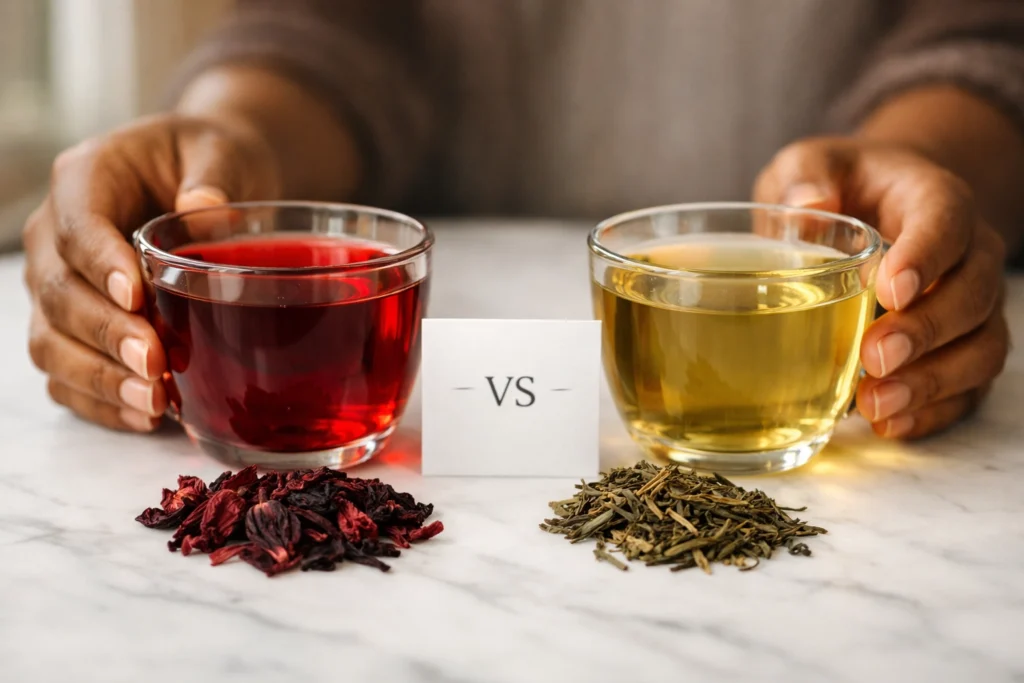
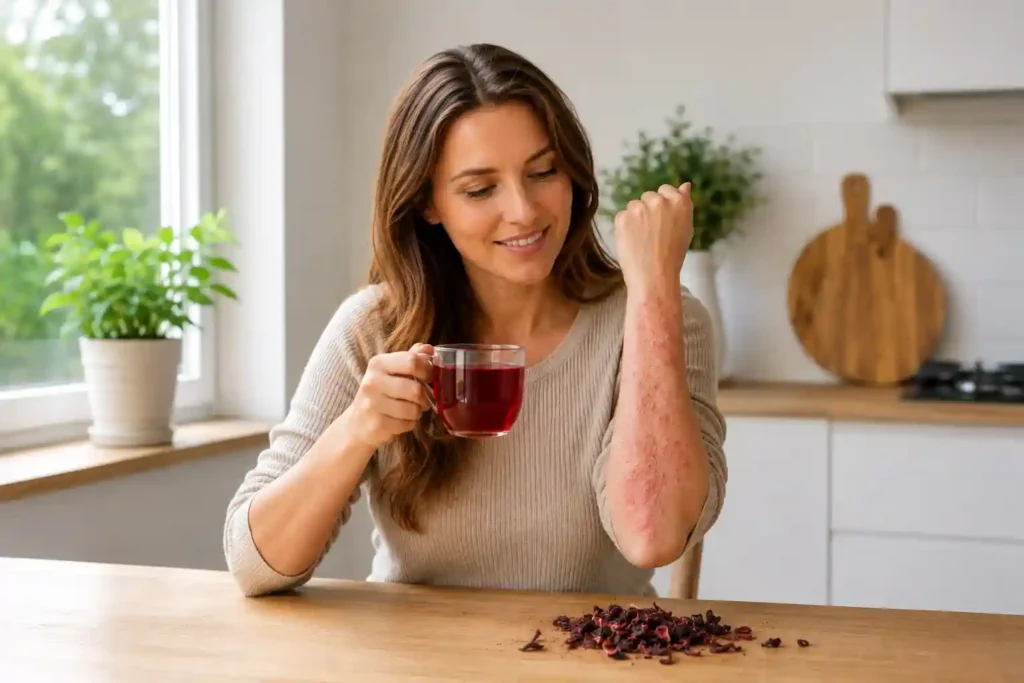
Hibiscus tea can help stop eczema itching. It works as a natural antihistamine and calms the inflammation that causes the itch-scratch cycle.
📋 Table of Contents
Why Hibiscus Tea Works for Eczema Itching?
Eczema itch is relentless. You scratch, your skin gets more inflamed, and then you itch even more. It is one of the hardest parts of living with eczema.
Hibiscus tea may help break that cycle. Research shows it works on the same itch pathways as antihistamine drugs. It also calms the inflammation that keeps the itch alive.
🛠️ Free Health Tools — Water Intake Calculator, BMI Calculator, Intermittent Fasting Calculator & more
🔍 Browse All Free Health Tools →This guide explains exactly why hibiscus works, how to use it, and what results to expect. For the full overview of all 7 benefits for skin conditions, read our complete guide on hibiscus tea for psoriasis and eczema.
Why Eczema Causes Itching
Eczema itch is not just dry skin. It is a full immune system response. Your body releases chemicals called histamines when it detects a trigger. These histamines make nerve endings in your skin fire off itch signals to your brain.
Scratching gives 2 seconds of relief — then makes everything worse. It breaks the skin, lets bacteria in, and triggers even more histamine release. That is the itch-scratch cycle that most eczema sufferers know too well.
🔬 The Itch-Scratch Cycle Explained
Eczema triggers histamine release → histamine activates itch nerve endings → scratching damages skin → more histamine → more itch. Breaking any link in this chain reduces overall itching. Hibiscus works on both the histamine release and the underlying inflammation that feeds the cycle.
How Hibiscus Tea Stops the Itch
It works like a natural antihistamine
Hibiscus contains plant pigments called anthocyanins. These compounds block the release of histamine from your immune cells. An animal study found hibiscus extract reduced scratching almost as well as a standard antihistamine drug. That is a meaningful result for a natural remedy.
It calms the inflammation behind the itch
Eczema is an inflammatory condition. The inflammation is what keeps your skin irritated and reactive. A 2025 review in Food Science & Nutrition confirmed hibiscus has strong anti-inflammatory effects. It works on the same chemical pathways as ibuprofen — but much more gently.
📊 What the Research Shows
Hibiscus anthocyanins block NF-κB, a master switch that controls inflammation in the body. In eczema, this switch is overactive. Turning it down reduces the flood of inflammatory chemicals that keep skin red, swollen, and itchy. This is the same target many eczema medications work on.
It fights the bacteria that makes itching worse
Over 90% of people with eczema have a bacterium called Staphylococcus aureus on their skin. This bacteria makes inflammation worse and triggers more itching. A 2024 research review confirmed hibiscus actively fights staph bacteria. Less bacteria means fewer flare triggers.
It restores your skin’s natural pH
Healthy skin has a slightly acidic pH of around 5.5. Eczema-affected skin is often less acidic than it should be. This disrupts the skin barrier and makes it easier for bacteria and allergens to get in. Hibiscus tea is naturally acidic. Applying it topically helps nudge your skin back toward its healthy pH.
For more on how hibiscus helps the skin barrier, see our full guide on hibiscus tea benefits for skin.
How to Use Hibiscus Tea for Itch Relief
There are two approaches. Drink it daily to reduce inflammation from the inside. Apply it cold to your skin during a flare for fast topical relief. Both together give the best results.
Drink it daily
Use 1–2 teaspoons of loose dried hibiscus or one tea bag per 240ml of water. Let boiled water cool to 85–90°C before steeping. Steep for 7–8 minutes. Drink 1–2 cups per day. Loose-leaf hibiscus contains more active compounds than most tea bags.
Use it as a cold compress
Brew hibiscus tea and let it cool completely. Chill it in the fridge for 15–20 minutes. Soak a clean cotton cloth in the cold tea. Hold the cloth gently on the itchy skin for 10–15 minutes. Pat dry, then apply your regular moisturizer straight away. Do this 3–4 times a week during flares.
🌿 How should you use hibiscus for eczema itch? Type it in our free Herb & Tea Benefit Finder — get preparation method, timing, dosage, and safety notes instantly.
🔍 Try the Herb & Tea Benefit Finder →What Results to Expect
Hibiscus tea is not an overnight fix. But most people notice real changes with consistent use. Here is a realistic timeline.
| Timeframe | What You May Notice |
|---|---|
| Days 1–3 | Cold compress may soothe acute itch during a flare |
| Week 2–4 | Less intense itching episodes with daily tea |
| Week 6–12 | Fewer flares, less redness, improved skin texture |
Stay consistent. Skipping days slows results. And always continue your prescribed eczema treatments. Hibiscus is a support — not a replacement for medical care.
Who Should Be Careful
Hibiscus tea is safe for most healthy adults at 1–2 cups per day. But a few groups need to check with a doctor first.
- Pregnant women — hibiscus may trigger uterine contractions. Avoid completely during pregnancy.
- People on blood pressure medication — hibiscus also lowers blood pressure. Combined, the effect can drop BP too low.
- People on diabetes medication — hibiscus may lower blood sugar. Combined with insulin or diabetes pills, this can cause a blood sugar dip.
- Children under 2 — herbal teas are not safe for babies. Children aged 2–12 should only use diluted compresses unless a doctor advises otherwise.
After drinking, rinse your mouth with water. The natural acidity can soften tooth enamel. Do not brush straight after. For more safety details, read our full guide on hibiscus tea side effects.
Try Our Free Herb & Tea Benefit Finder
Type hibiscus or any herb to instantly see its benefits, how to use it, and who should be careful.
🔍 Open the Herb & Tea Benefit Finder →Frequently Asked Questions
Yes — research supports this. Hibiscus anthocyanins block histamine release from immune cells. An animal study found hibiscus extract reduced scratching behavior almost as effectively as a standard antihistamine drug. Results build over weeks of consistent daily use.
Yes. A cooled hibiscus compress is safe for most people. Soak a clean cloth in chilled hibiscus tea and hold it on the affected area for 10–15 minutes. Always patch test on a small area first. Do not apply to open or infected skin without a doctor’s advice.
Cold compresses can ease acute itch within minutes during a flare. For lasting improvement, most people notice less itching after 2–4 weeks of drinking 1–2 cups daily. Bigger improvements in skin condition take 6–12 weeks. Consistency is key.
No. Hibiscus tea is a natural complement — not a medical replacement. Never stop prescribed treatments like steroid creams or biologics without talking to your dermatologist. Hibiscus works best alongside your existing treatment plan, not instead of it.
For children, topical compresses are safest. Dilute the tea with equal parts water before applying to children’s skin. Drinking hibiscus tea is not recommended for children under 2. For ages 2–12, always ask your child’s doctor first. See our full guide on hibiscus tea for eczema in children.
Related Guides
Hibiscus Tea for Psoriasis & Eczema
The complete pillar guide — all 7 proven benefits for inflamed skin conditions.
Hibiscus Tea Benefits for Skin
Collagen, brightening, hydration, and anti-aging — all 10 skin benefits explained.
Hibiscus Tea Side Effects
Who should avoid it, drug interactions, and safety notes for daily use.
Hibiscus Tea for Eczema in Children
Age-specific safety, dilution ratios, and child-safe compress methods.