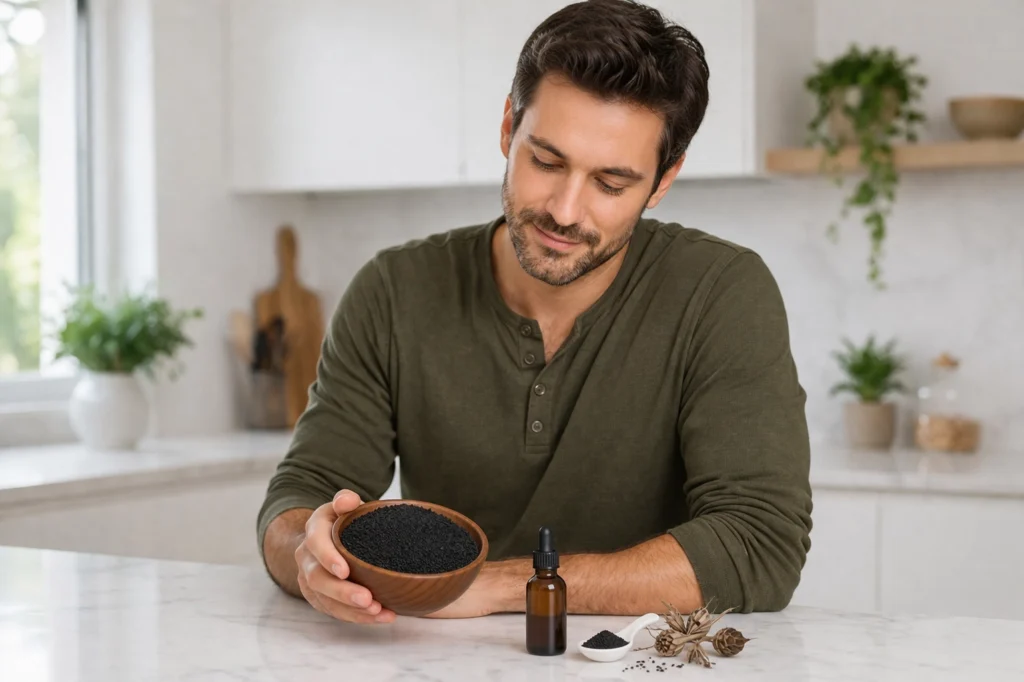
Black seed — also called Kalonji or Nigella sativa — is a tiny black spice with big health benefits. People have used it as medicine for thousands of years. Today, over 1,000 scientific studies back up many of those ancient claims.
📋 Table of Contents
What Is Black Seed (Kalonji)?
Black seed comes from a small flowering plant called Nigella sativa. The plant grows in parts of Asia, the Middle East, and Africa. It produces tiny black seeds that people use in cooking and as medicine.
You may have heard it called by different names. In South Asia it is called Kalonji. In Arabic it is Habbatus Sauda (meaning “black seed”). In English it is sometimes called black cumin or black caraway. Whatever name you use, it is the same small black seed with the same powerful properties. A common question is whether kalonji and black pepper are the same thing — they are not. For a full explanation see our comparison guide: black seed vs black pepper — are they the same thing?
The seeds taste earthy and slightly bitter — a bit like a mix of pepper and oregano. They are popular in Indian, Middle Eastern, and North African cooking. You will often find them sprinkled on naan bread, added to curries, or mixed into rice dishes.
| Country / Region | What People Call It |
|---|---|
| English | Black Seed, Black Cumin, Black Onion Seed |
| Sanskrit / Ayurvedic | Krishna Jiraka |
| Chinese | 黑种草籽 (Hei Zhong Cao Zi) |
| Arabic | Habbatus Sauda (حبة السوداء) |
| Middle Eastern | Habbet Barakah — “Seed of Blessing” |
| Persian | Siahdaneh |
| Turkish | Çörek otu |
| French | Cumin noir |
| Spanish | Comino negro |
| Greek | Mavros Kyminos (Μαύρος Κύμινος) |
| Hindi | Kalonji |
| Botanical / Latin | Nigella sativa |
⚠️ Is Kalonji the Same as Cumin?
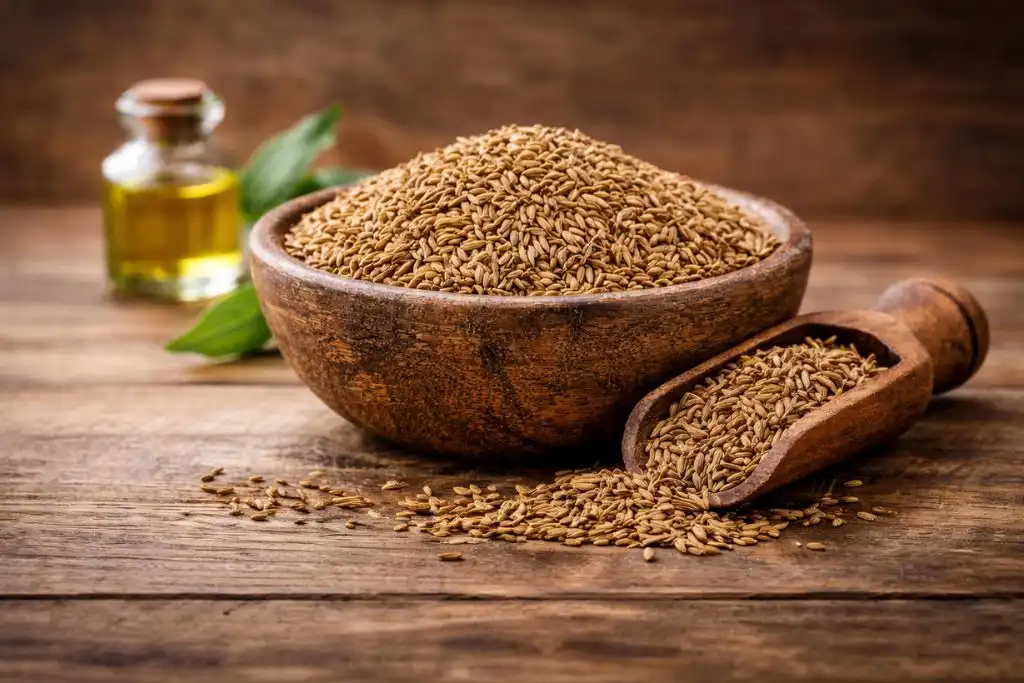
No — and this is a very common mix-up. Black seed (Kalonji / Nigella sativa) is a completely different plant from regular cumin (Cuminum cyminum). They look similar but they are not related. The health benefits are also different. When buying black seed for health reasons, always check the label says Nigella sativa.
What’s Inside Black Seed — Nutrition Facts
Black seed is low in calories but packed with nutrients. One teaspoon of seeds (about 3 grams) gives you a small but useful amount of iron, calcium, and healthy fats.
But the real power of black seed is not in its vitamins and minerals. It comes from special plant compounds — most importantly one called thymoquinone. Scientists believe thymoquinone is responsible for most of black seed’s health benefits.
| Nutrient | Per 1 tsp Seeds (3g) | Why It Matters |
|---|---|---|
| Calories | ~15 kcal | Very low — suitable for any diet |
| Healthy fats | ~1.2g | Good fats including omega-6 and omega-9 |
| Protein | ~0.7g | Small amount of amino acids |
| Fibre | ~0.5g | Supports digestion |
| Iron | ~0.9mg (5% daily need) | Helps carry oxygen in the blood |
| Calcium | ~55mg (6% daily need) | Good for bones and muscles |
| Zinc | ~0.2mg | Supports the immune system |
🔬 The Science Behind the Benefits — Thymoquinone
The most important compound in black seed is thymoquinone (TQ). Scientists have studied it extensively. It has been shown to reduce inflammation, fight bacteria and fungi, support the immune system, and help protect cells from damage. This is why black seed can help with so many different health conditions — from blood sugar to skin problems. Black seed also contains nigellone (good for breathing), thymol and carvacrol (antimicrobial), and essential fatty acids like linoleic acid (omega-6) and oleic acid (omega-9).
10 Health Benefits of Black Seed (Kalonji)
May Help Lower Blood Sugar
If you have type 2 diabetes or high blood sugar, black seed may help. Studies show it can lower fasting blood sugar levels and improve how your body handles sugar over time.
In one review of studies, people with type 2 diabetes who took black seed had noticeably lower blood sugar levels compared to those who did not take it.
However — if you already take diabetes medication, be careful. Black seed can lower blood sugar further, which could be dangerous. Always talk to your doctor first. For the complete diabetes guide including drug interactions and safe dosing see: black seed for diabetes and blood sugar control.
📊 What the Research Shows
A 2025 meta-analysis of 16 randomised controlled trials found black seed reduced fasting blood glucose by 21.43 mg/dL and HbA1c by 0.44% in type 2 diabetic patients — both clinically meaningful reductions. The active compound thymoquinone works by stimulating insulin production, improving insulin sensitivity, and slowing carbohydrate absorption — similar to how some diabetes medications work.
May Lower Cholesterol
High cholesterol is a major risk factor for heart disease. Black seed may help bring cholesterol levels down — particularly the “bad” LDL cholesterol that clogs arteries.
Several studies have found that people who take black seed regularly have lower LDL cholesterol. Some studies also show it can reduce total cholesterol and triglycerides.
This makes black seed one of the few natural remedies with evidence for improving your full cholesterol profile.
📊 What the Research Shows
A 2022 meta-analysis of 17 studies confirmed black seed significantly reduces LDL cholesterol. The same 2025 clinical study found total cholesterol dropped by 18.80 mg/dL and LDL by 19.53 mg/dL. The mechanism involves phytosterols in the seed blocking cholesterol absorption in the gut, and thymoquinone increasing the liver’s ability to clear LDL from the blood.
May Help Lower Blood Pressure
Black seed has been studied for its ability to reduce blood pressure. Research shows it may lower both the top number (systolic) and the bottom number (diastolic) in people with high blood pressure.
The effect is modest — not as strong as blood pressure medication — but meaningful as a daily natural supplement.
Again, if you already take blood pressure medicine, check with your doctor before adding black seed as the two can work together too strongly.
Reduces Inflammation in the Body
Inflammation is behind many health problems — arthritis, asthma, skin conditions, and even heart disease. Black seed is a natural anti-inflammatory.
Studies show that taking black seed can lower inflammation markers in the blood. This means less swelling, less pain, and better protection against chronic diseases.
Think of it like a gentler, natural version of ibuprofen — it targets many of the same pathways in the body.
🔬 How It Works
Thymoquinone blocks a protein called NF-κB — the main switch that turns on inflammation in the body. It also inhibits COX-1 and COX-2 enzymes — the same targets as ibuprofen and aspirin. A 2025 umbrella meta-analysis confirmed significant reductions in CRP, IL-6, TNF-α, and oxidative stress markers across multiple clinical trials. This multi-pathway approach explains why black seed helps with so many different inflammatory conditions simultaneously.
Supports the Immune System
Black seed does something unusual — it can both strengthen a weak immune system AND calm down an overactive one. This makes it helpful for people who get sick often, as well as people with allergies or autoimmune conditions.
Research shows black seed helps the body produce more immune cells and fight off viruses and bacteria more effectively.
A 2024 meta-analysis of COVID-19 patients found that those who took black seed oil had significantly better outcomes than those who did not.
Good for Breathing — Helps Asthma & Allergies
Black seed has been used for breathing problems for centuries. Today, studies confirm it really does help.
People with asthma who took black seed alongside their regular medication reported less coughing, less wheezing, and easier breathing. Black seed also helps with hay fever — reducing a runny nose, sneezing, and itchy eyes.
It works by opening up the airways and reducing the allergic response that causes asthma symptoms.
🔬 How It Works
Black seed contains a compound called nigellone — a natural bronchodilator that relaxes the muscles around the airways, making it easier to breathe. Thymoquinone also reduces the Th2 immune overactivation that drives allergic asthma. A 2019 clinical study confirmed 500mg of black seed oil twice daily for 4 weeks significantly improved Asthma Control Test (ACT) scores — the standard clinical tool used to measure asthma severity.
May Help with Weight Management
Struggling with your weight? Black seed may help — though it is not a quick fix or miracle solution.
Studies show that people who take black seed regularly tend to lose a small but meaningful amount of weight. They also tend to have lower body fat and a smaller waist measurement.
Black seed works by making you feel fuller for longer, slowing down fat absorption, and slightly boosting your metabolism. It works best alongside a healthy diet and regular exercise. For the full evidence guide see: black seed for weight loss — can kalonji really help?
Great for Skin — Acne, Eczema & Wound Healing
Black seed oil is one of the most popular natural skin treatments — and for good reason. Research shows it helps with acne, eczema, psoriasis, and wound healing.
For acne: a gel containing black seed extract has been shown in studies to reduce pimples and skin inflammation by 78% in a clinical trial.
For eczema: black seed oil reduces the itching, redness, and dryness that comes with eczema flares.
For wounds: black seed oil speeds up healing by boosting collagen production and fighting bacteria that can infect broken skin. For the full skin guide with dilution ratios see: black seed oil for skin — 6 proven benefits and how to use it.
Supports Brain Health & Memory
Black seed may help keep your brain sharp as you get older. A study in elderly adults found that taking black seed for 9 weeks improved memory, attention, and thinking ability compared to those who took a placebo.
Researchers believe black seed protects brain cells from the damage that builds up over time. This may help lower the risk of memory problems and cognitive decline.
🔬 The Research
A randomised single-blind study in 40 healthy elderly adults found that 500mg of Nigella sativa capsules twice daily for 9 weeks significantly improved learning, memory recall, and reasoning compared to placebo. The neuroprotective effect is attributed to thymoquinone’s ability to reduce oxidative stress in brain tissue, lower neuroinflammation, and protect cholinergic neurons — the nerve cells most affected in Alzheimer’s disease.
Promotes Healthy Hair & Scalp
Black seed oil is one of the most popular natural remedies for hair loss and scalp problems — and there is real science behind this use.
Studies show black seed oil can reduce hair fall, increase hair thickness, and soothe an itchy or inflamed scalp. It also fights dandruff by killing the fungus that causes it.
For best results, massage diluted black seed oil into your scalp 2–3 times per week and leave it on for at least 30 minutes before washing out. For the complete hair evidence guide see: black seed oil for hair growth — does kalonji really work?
Black Seed in Traditional Medicine
Black seed is one of the oldest medicines in the world. Different cultures discovered its benefits independently — hundreds or even thousands of years before modern science confirmed them.
🌙 In Islamic Medicine
The Prophet Muhammad (peace be upon him) is reported to have said in an authenticated Hadith: “Use this black seed — it is a cure for every disease except death.” This statement, recorded in Sahih al-Bukhari, has made black seed (Habbatus Sauda) one of the most important medicinal plants in Islamic tradition for over 1,400 years. Muslims across the world still take it daily with honey as a general health tonic. Modern science has since confirmed many of its benefits — making it one of the rare cases where ancient wisdom and modern research fully agree.
🌿 In Ayurvedic Medicine
In Ayurveda (traditional Indian medicine), black seed is classified as a digestive tonic and anti-inflammatory herb. It is used to treat respiratory conditions, skin diseases, and digestive problems. Ayurvedic practitioners often combine it with honey and warm water as a morning tonic — a practice now supported by modern evidence for its blood sugar and anti-inflammatory benefits.
🏛️ In Unani Medicine
Unani medicine — practiced across India and the Middle East — describes black seed as a “stomach strengthener,” “liver tonic,” and “antiseptic.” Classical Unani texts recommend it for asthma, arthritis, skin diseases, and general immunity. These traditional uses map almost perfectly onto the conditions modern clinical trials have studied and confirmed benefits for.
How to Use Black Seed
You can use black seed in several different ways. Each form works slightly differently. Here is a simple guide to help you choose the right one for your needs. For a detailed step-by-step guide covering all 7 methods see: how to use black seed daily — 7 simple methods.
| Form | How to Use It | Best For |
|---|---|---|
| Whole seeds | Sprinkle on bread, add to curries, rice, or yoghurt. Or chew ½ tsp with honey. | Daily health maintenance. Easy to add to food. |
| Ground powder | Mix ½–1 tsp into warm water, smoothie, or food. | Blood sugar, anti-inflammatory effects. More potent than whole seeds. |
| Cold-pressed oil | Take ½ tsp with honey internally. Apply diluted on skin or scalp. | Skin conditions, hair growth, strongest health benefits. |
| Capsules | 500–1000mg daily as directed on the label. | Easy to take. Good for precise dosing. |
| Tea | Steep 1 tsp crushed seeds in hot water for 10 minutes. Add honey. | Breathing problems, immune support, relaxation. |
🌿 Traditional Morning Tonic — The Classic Method
-
1
Measure ½ teaspoon of cold-pressed black seed oil into a small spoon
-
2
Mix it with 1 teaspoon of raw honey in a small cup
-
3
Take it on an empty stomach — 30 minutes before breakfast
-
4
Drink a glass of warm water afterwards
This is the most traditional and widely used method. The honey makes the strong flavour more pleasant and may help the body absorb black seed better.
🫙 Deep Dive: Black Seed Oil — Choosing Quality & Using It Right
Not all black seed oil products are the same. A 2024 study found a 27-fold difference in active compound levels between commercial products. Learn how to choose quality oil and use it for maximum benefit:
👉 Black Seed Oil Benefits: 8 Proven Uses for Health, Skin & Hair →
Traditional Combinations That Work Well
| Combination | Why People Use It |
|---|---|
| Black seed + raw honey | Classic Islamic remedy. Honey improves taste and boosts antimicrobial benefits |
| Black seed + warm water (morning) | Helps digestion and blood sugar. Best on empty stomach |
| Black seed + ginger | Stronger anti-inflammatory effect. Good for joint pain and breathing |
| Black seed oil + coconut oil (scalp) | Best combination for hair growth and dandruff treatment |
How Much Black Seed Should You Take?
There is no official recommended daily dose for black seed. But based on clinical studies, here are the amounts that have been shown to work:
📋 Doses Used in Clinical Studies
For blood sugar: 2g/day ground powder — split as 1g with breakfast and 1g with dinner
For asthma: 500mg oil twice daily (1g/day total)
For general health: ½–1 tsp seeds or oil daily
For brain health: 500mg capsule twice daily for minimum 8 weeks
Maximum safe amount: Based on a 2021 safety study, up to 900mg oil or 48.6mg thymoquinone daily is safe for most healthy adults
Side Effects & Who Should Be Careful
Black seed is very safe for most people when used in normal food amounts. The US FDA has classified it as safe to eat. But there are some important things to know — especially if you take any medications. For a full guide covering all drug interactions and who should avoid black seed see: black seed side effects and who should be careful.
🩸 Blood pressure and diabetes medications
Black seed lowers both blood sugar and blood pressure. If you already take medication for these conditions, black seed may make them drop too low. This can be dangerous. Always tell your doctor before you start taking black seed regularly.
🩸 Blood thinners (like warfarin or aspirin)
Black seed oil can slow blood clotting. If you take blood-thinning medication, this combination could increase bleeding risk. Do not combine them without talking to your doctor. Stop taking black seed oil at least 2 weeks before any surgery.
🤰 Pregnancy
Do not take large amounts of black seed during pregnancy. At normal food amounts (a little sprinkled on bread), it is generally fine. But as a supplement or oil, it may stimulate the uterus. Avoid therapeutic doses during pregnancy.
🦷 Tooth enamel (if drinking as tea or oil)
Black seed tea and oil are acidic. Drinking them frequently without rinsing your mouth can slowly damage tooth enamel. Always rinse your mouth with plain water after taking black seed oil or tea. Wait 30 minutes before brushing your teeth.
🌿 Skin reactions (topical use)
Some people get a skin rash when they apply black seed oil directly to their skin. Always do a patch test first. Put a small amount on your inner wrist and wait 24 hours. If no reaction — it is safe to use on larger areas.
💊 Chloroquine (malaria medication)
Black seed may make chloroquine less effective. If you are taking chloroquine for malaria, do not use black seed at the same time.
Is Black Seed Worth Trying?
Black seed is one of the most researched natural health remedies in the world. With over 1,000 scientific studies behind it, it earns its ancient reputation as a powerful medicine.
For most healthy adults, adding 1–2 teaspoons of black seed to your daily routine is safe, affordable, and genuinely beneficial. The easiest way is to sprinkle the seeds on food, or take ½ teaspoon of cold-pressed oil with honey each morning.
The strongest evidence is for blood sugar control, cholesterol reduction, and anti-inflammatory effects. There is also solid evidence for breathing problems, skin conditions, and immune support.
Just remember — black seed is a helpful addition to a healthy lifestyle. It is not a replacement for your prescribed medications. Always tell your doctor if you plan to use it regularly, especially if you have diabetes or high blood pressure.
Try Our Free Herb & Tea Benefit Finder
Type black seed, kalonji, or any herb to instantly see its benefits, how to use it, and who should be careful.
🔍 Open the Herb & Tea Benefit Finder →Frequently Asked Questions
Black seed has benefits for many different health conditions. Research shows it can help lower blood sugar and cholesterol, reduce blood pressure, fight inflammation, support the immune system, help with asthma and allergies, improve skin conditions like acne and eczema, support weight management, and promote healthy hair and scalp. It has been studied in over 1,000 scientific papers. The strongest evidence is for blood sugar control and reducing inflammation in the body.
The most popular way is to take ½ teaspoon of cold-pressed black seed oil mixed with raw honey on an empty stomach each morning. You can also sprinkle whole seeds on food like bread, rice, or salads. Ground powder can be mixed into warm water or smoothies. Capsules (500–1000mg daily) are another easy option. Start with a small amount and increase gradually — black seed has a strong, somewhat bitter taste that takes some getting used to. For a full step-by-step guide to all 7 methods see our guide on how to use black seed daily.
Yes — for most healthy adults, taking black seed daily at normal amounts is safe. The US FDA classifies it as safe to eat as a spice and food ingredient. Studies have confirmed that taking it daily for up to 12 weeks causes no significant side effects in healthy people. The main exceptions are: if you take blood pressure or diabetes medications (it can make them work too strongly), if you are pregnant (avoid therapeutic doses), or if you are on blood-thinning medication like warfarin. Always check with your doctor if you take any regular medications.
Kalonji is often called “black cumin” in English — but it is not the same as regular cumin. Kalonji is Nigella sativa. Regular cumin is Cuminum cyminum. They are completely different plants with different health benefits. When buying kalonji for health purposes, always check the label says “Nigella sativa” to make sure you have the right product. The health benefits described in this article are specifically for Nigella sativa — not for regular cumin.
Black seed refers to the whole seeds from the Nigella sativa plant. Black seed oil is made by pressing those seeds to extract the oil — which is more concentrated and more potent per dose. For serious health conditions, the oil (or standardised capsules) tends to work better. For everyday cooking and gentle health maintenance, whole seeds are perfect. Both are beneficial — the oil is just stronger per serving. See our full comparison of forms in the black seed oil benefits and proven uses guide.
You can — but only with your doctor’s knowledge and regular blood sugar monitoring. Black seed lowers blood sugar on its own. When combined with metformin or other diabetes medication, the combined effect may lower your blood sugar too much. Studies actually show that black seed works well alongside diabetes medication — but it needs to be done carefully and monitored. Tell your doctor before starting, and check your blood sugar more frequently in the first few weeks. See the complete guide: black seed for diabetes and blood sugar control.
Yes — black seed oil is widely used on skin for acne, eczema, and wound healing. Always dilute it before applying to your face — mix 1 part black seed oil with 4 parts carrier oil (coconut, almond, or jojoba oil). Do a patch test on your inner wrist first and wait 24 hours to check for any reaction. For the scalp, you can use it more concentrated — 1 part black seed oil to 2 parts carrier oil. For full dilution ratios and application guide see: black seed oil for skin — 6 proven benefits and how to use it.
Black seed holds a special place in Islamic medicine. The Prophet Muhammad (peace be upon him) is reported in Sahih al-Bukhari to have said: “Use this black seed — it is a cure for every disease except death.” Because of this, black seed (called Habbatus Sauda in Arabic) has been used as medicine across the Muslim world for over 1,400 years. Today, modern science has confirmed many of the health benefits that Islamic traditional medicine identified long ago — making black seed one of the most striking examples of ancient wisdom being validated by modern research.
📚 Complete Black Seed Guide Series
Black Seed Oil Benefits: 8 Proven Uses
How to choose quality oil and use it for health, skin, and hair.
Black Seed for Diabetes: Can Kalonji Lower Blood Sugar?
Full diabetes guide — dosage, safety, and drug interactions.
How to Use Black Seed Daily: 7 Simple Methods
Step-by-step guide — oil, seeds, tea, powder, capsules, skin, and hair.
Black Seed Oil for Hair: Does Kalonji Really Work?
Evidence review and step-by-step scalp treatment guide.
Black Seed Oil for Skin: 6 Proven Benefits
Acne, eczema, psoriasis, and anti-ageing — with dilution ratios for each.
Black Seed for Weight Loss: Can Kalonji Really Help?
Honest evidence guide with kalonji morning drink recipe and realistic results.
Black Seed Side Effects: Who Should Be Careful?
Complete safety guide — 6 drug interactions, pregnancy, children, and topical risks.
Black Seed vs Black Pepper: Are They the Same Thing?
Head-to-head comparison — benefits, differences, and why using both together is better.