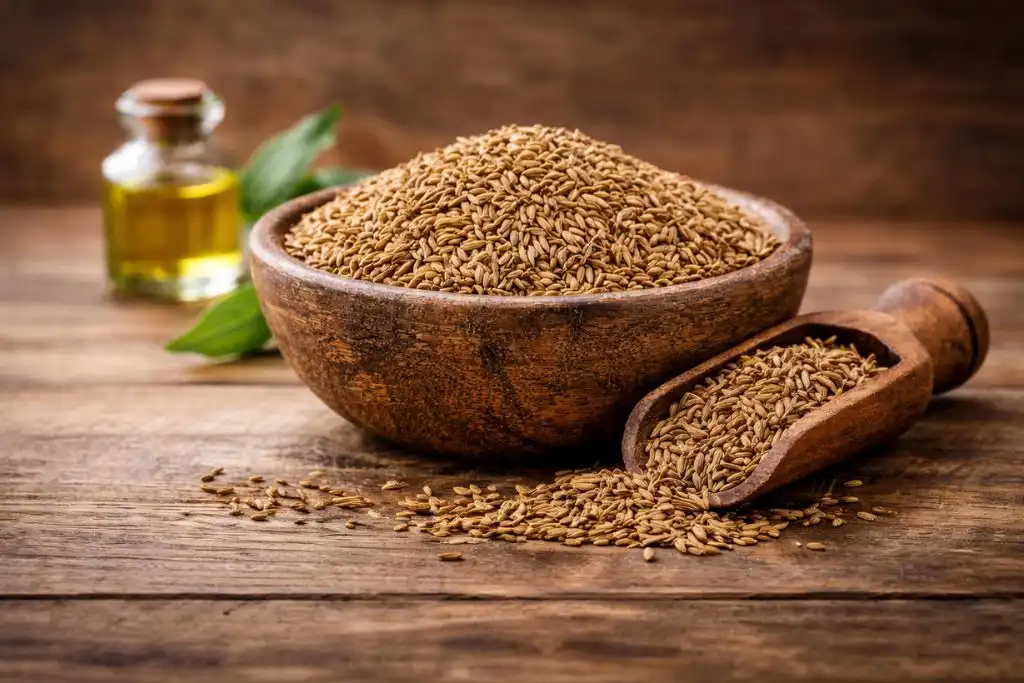

Black seed oil is made by pressing black seeds (Kalonji / Nigella sativa) to extract their oil. It is stronger than whole seeds — and backed by a growing body of clinical research. Here are its 8 most proven benefits for your health, skin, and hair.
📋 Table of Contents
- Black Seed Oil vs Whole Seeds — What Is the Difference?
- How to Choose Good Quality Oil
- Benefit 1 — Boosts Immunity & Fights Infections
- Benefit 2 — Helps with Asthma & Breathing
- Benefit 3 — Reduces Inflammation
- Benefit 4 — Helps with Blood Sugar & Cholesterol
- Benefit 5 — Good for Acne & Skin Conditions
- Benefit 6 — Speeds Up Wound Healing
- Benefit 7 — Supports Hair Growth
- Benefit 8 — Reduces Dandruff & Scalp Problems
- How to Use Black Seed Oil
- How Much Should You Take?
- Side Effects & Who Should Be Careful
- Frequently Asked Questions
Black Seed Oil vs Whole Seeds — What Is the Difference?
Black seed oil comes from pressing the seeds of the Nigella sativa plant. The pressing process concentrates the active compounds — especially one called thymoquinone — into a more potent form than the whole seeds.
Think of it like this: whole seeds are like eating an orange, while the oil is like taking a concentrated vitamin C supplement. Both come from the same source, but the oil packs more into every dose.
The oil is better for: therapeutic health goals, skin applications, and scalp treatments. Whole seeds are better for: everyday cooking and gentle daily maintenance.
⚠️ Not All Black Seed Oils Are Equal
A 2024 study that tested commercial black seed oil products found a 27-fold difference in the active compound (thymoquinone) between the best and worst products. This means a cheap low-quality oil might give you almost no benefit — while a good quality oil at the same dose gives you the full therapeutic effect. Always check: cold-pressed, amber glass bottle, and thymoquinone content listed on the label.
🔗 🌿 Full Guide: All 10 Black Seed Benefits
This article focuses on black seed oil specifically. For the complete black seed guide covering whole seeds, capsules, traditional medicine, and all 10 benefits see:
👉 Black Seed (Kalonji): 10 Proven Benefits, Uses & Side Effects →
How to Choose Good Quality Oil
Because quality varies so much, knowing what to look for when buying black seed oil is just as important as knowing how to use it.
| What to Look For | ✅ Choose This | ❌ Avoid This |
|---|---|---|
| How it was made | Cold-pressed (first press) | Heat-extracted or solvent-extracted |
| Bottle type | Dark amber glass bottle | Clear glass or plastic bottle |
| What the label says | 100% pure Nigella sativa. Thymoquinone % listed. | No compound info. Mixed with other oils. |
| Colour of the oil | Dark amber to reddish-brown | Pale yellow or nearly clear |
| Seed origin | Ethiopian or Turkish seeds (highest quality) | No seed origin listed |
Benefit 1 — Boosts Immunity & Fights Infections
Black seed oil is one of the most researched natural immune boosters available. It helps your body fight off viruses, bacteria, and fungi more effectively.
Studies show it can increase the number of immune cells in your body and help them work better. It also has direct antimicrobial properties — meaning it can kill certain bacteria and fungi on contact.
One impressive finding: when people with a stomach infection called H. pylori took black seed oil alongside their antibiotics, 88% got rid of the infection. The group taking antibiotics alone only had a 55% success rate.
📊 COVID-19 Evidence
A 2024 review of over 1,000 hospitalised COVID-19 patients found that those who took black seed oil had significantly better survival outcomes than those who did not. The researchers attributed this to black seed oil’s combined antiviral and immune-boosting properties. A separate phase 1 safety trial confirmed that taking thymoquinone-rich black seed oil at 200mg daily for 90 days was safe — with no negative effects on liver, kidney, or blood markers.
Benefit 2 — Helps with Asthma & Breathing Problems
If you have asthma, hay fever, or general breathing difficulties, black seed oil may help. This is one of its most consistently supported benefits in clinical trials.
People with asthma who took black seed oil alongside their regular medication reported less coughing, easier breathing, and fewer attacks. Those with hay fever saw reduced sneezing, congestion, and runny nose.
Black seed oil works by relaxing the muscles around the airways (making it easier to breathe) and by reducing the allergic response that causes asthma symptoms in the first place.
📊 Clinical Study Result
A 2019 clinical study gave asthma patients 500mg of black seed oil twice daily for 4 weeks. Their scores on the Asthma Control Test (ACT) — the standard medical tool for measuring asthma severity — improved significantly compared to placebo. A separate study in COPD patients found 1g twice daily for 3 months measurably improved lung function. Always use black seed oil alongside — never instead of — prescribed asthma medication.
Benefit 3 — Reduces Inflammation Throughout the Body
Chronic inflammation is behind many health problems — arthritis, heart disease, skin conditions, digestive issues. Black seed oil is a powerful natural anti-inflammatory.
Studies show that taking black seed oil regularly can reduce inflammation markers in the blood. People with conditions like osteoarthritis and rheumatoid arthritis have reported less joint pain and better movement after using it.
Think of it as a gentler, natural alternative to ibuprofen — it targets many of the same inflammation pathways in the body, but as a daily food supplement rather than a drug.
Benefit 4 — Helps with Blood Sugar & Cholesterol
Black seed oil can help lower blood sugar and reduce bad cholesterol. This makes it particularly useful for people with type 2 diabetes, pre-diabetes, or high cholesterol.
A large review of clinical studies confirmed black seed significantly lowers both fasting blood sugar and LDL (bad) cholesterol. It also helps your body respond better to insulin.
For diabetics: be careful — black seed oil lowers blood sugar meaningfully, so it can interact with diabetes medication. Always tell your doctor before using it. For the full diabetes guide see: black seed for diabetes.
Benefit 5 — Good for Acne & Skin Conditions
Black seed oil is widely used for skin problems — and the science backs this up. Studies show it helps with acne, eczema, psoriasis, and dry skin.
For acne: it kills the bacteria that cause spots and reduces the redness and swelling around pimples. Applying a diluted gel or oil to the face has been shown to reduce acne severity in clinical studies.
For eczema: it reduces the itching, dryness, and inflammation. The healthy fats in black seed oil also help repair the skin barrier — the protective layer that keeps moisture in and irritants out.
Benefit 6 — Speeds Up Wound Healing
Black seed oil helps wounds heal faster. It does this in three ways: it boosts collagen production (which rebuilds skin tissue), speeds up the regrowth of new skin cells, and protects the wound from bacterial infection.
This makes it useful for minor cuts, post-acne scars, and damaged skin. Apply diluted oil to clean, uninfected wounds — do not use on open, actively bleeding, or deeply infected wounds.
Benefit 7 — Supports Hair Growth
Black seed oil is one of the most popular natural hair treatments — used across South Asia, the Middle East, and Africa for generations. There is real evidence behind this traditional use.
A randomised clinical trial found that a lotion containing black seed extract significantly increased hair thickness and density in people with stress-related hair loss (called telogen effluvium) over 3 months. 70% of participants showed improvement.
It works by reducing scalp inflammation (which damages hair follicles), nourishing follicle cells with essential fatty acids, and protecting against the oxidative damage that ages hair follicles prematurely.
For the full hair evidence guide see: black seed oil for hair growth — does kalonji really work?
Benefit 8 — Reduces Dandruff & Scalp Problems
Dandruff is caused by a combination of scalp fungus and inflammation. Black seed oil tackles both. It has antifungal properties that reduce the fungus causing dandruff, and anti-inflammatory properties that calm the irritated, itchy scalp.
Regular scalp massage with diluted black seed oil (2–3 times per week) typically reduces dandruff, itching, and scalp redness within 2–4 weeks of consistent use.
How to Use Black Seed Oil
Taking It Internally
The most popular internal method is ½ teaspoon of cold-pressed black seed oil mixed with raw honey, taken on an empty stomach each morning. The honey improves the strong bitter taste and may help absorption.
🌿 Daily Morning Tonic
- 1
Measure ½ teaspoon of cold-pressed black seed oil
- 2
Mix with 1 teaspoon of raw honey
- 3
Take on empty stomach — 30 minutes before breakfast
- 4
Follow with a glass of warm water. Rinse your mouth after.
Using It on Skin
Always dilute before applying to your face. Mix 1 part black seed oil with 4 parts carrier oil. Apply to clean skin. Leave 20–30 minutes then rinse, or leave overnight. Patch test first.
Using It on Hair & Scalp
Mix 1 part black seed oil with 2 parts coconut or argan oil. Apply to the scalp, massage for 5 minutes, leave for 30 minutes minimum (overnight for best results), then wash out with a gentle shampoo.
| Use | Dilution | How Often |
|---|---|---|
| Internal (daily health) | Undiluted — ½ tsp with honey | Once daily |
| Face (acne, eczema) | 1:4 with carrier oil | Daily or alternate days |
| Scalp (hair growth, dandruff) | 1:2 with carrier oil | 2–3 times per week |
| Body (eczema, psoriasis) | 1:3 with carrier oil | Daily |
How Much Should You Take?
📋 Safety Note on Dosage
A 2021 safety study established the maximum safe daily amount at 900mg of oil or 48.6mg of thymoquinone per day. A phase 1 clinical trial confirmed 200mg daily for 90 days caused no negative effects on liver, kidney, or blood markers. Start with ¼ teaspoon daily for the first week and increase slowly. If you experience stomach upset, take it with food rather than on an empty stomach.
Side Effects & Who Should Be Careful
💊 Diabetes and blood pressure medications
Black seed oil lowers both blood sugar and blood pressure. If you take medication for these, the combination may lower them too much. Always tell your doctor before you start. Monitor your levels more closely in the first 4 weeks.
🩸 Blood thinners (warfarin, aspirin)
Black seed oil can slow blood clotting. If you take blood-thinning medication, this can increase bleeding risk. Discuss with your doctor. Stop taking black seed oil at least 2 weeks before any surgery.
🤰 Pregnancy
Avoid therapeutic doses during pregnancy. Small amounts in food are generally fine. But taking the oil as a supplement may stimulate the uterus. Always check with your doctor first if you are pregnant.
🌿 Skin reactions
Some people get a skin rash from topical use. Always do a patch test first — apply a few drops to your inner wrist and wait 24 hours before using it on your face or scalp.
💊 Chloroquine (malaria medication)
Black seed may make chloroquine less effective. Do not use black seed oil at the same time as chloroquine treatment.
🦷 Tooth enamel
Black seed oil is acidic. Always rinse your mouth with water after taking it internally. Wait 30 minutes before brushing your teeth.
Try Our Free Herb & Tea Benefit Finder
Type black seed or any herb to instantly see its benefits, how to use it, and safety notes.
🔍 Open the Herb & Tea Benefit Finder →Frequently Asked Questions
Black seed oil has 8 main proven benefits: boosting immunity and fighting infections, helping with asthma and breathing problems, reducing inflammation in the body, lowering blood sugar and cholesterol, treating acne and skin conditions like eczema, speeding up wound healing, supporting hair growth, and reducing dandruff and scalp problems. Its main active compound — thymoquinone — is responsible for most of these benefits. The evidence is strongest for immune support, respiratory health, and skin conditions.
For general health, ½ teaspoon (2.5ml) daily is a good starting amount. For specific health goals like asthma, some studies used 500mg (roughly ½ teaspoon) twice daily. The maximum safe daily amount based on a safety study is 900mg of oil. Always start with a small amount — just ¼ teaspoon for the first week — and increase gradually. Take it with honey on an empty stomach each morning for best results. Rinse your mouth with water afterwards.
Not directly to your face — always dilute it first. Mix 1 part black seed oil with 4 parts carrier oil (coconut, jojoba, or almond oil) for face use. For the scalp, you can use a stronger mix — 1 part black seed oil to 2 parts carrier oil. Always do a patch test on your inner wrist and wait 24 hours before applying to your face. Black seed oil has a strong distinctive smell which is normal and fades after washing.
Yes — for most healthy adults, taking ½ to 1 teaspoon of black seed oil daily is safe. A clinical safety trial confirmed it caused no negative effects on the liver, kidneys, or blood at 200mg daily for 90 days. The main safety concern is not direct toxicity but drug interactions — particularly with diabetes medication, blood pressure medication, and blood thinners. If you take any of these, speak to your doctor before starting daily black seed oil.
Look for cold-pressed, 100% pure Nigella sativa oil in a dark amber glass bottle. Check the label shows the thymoquinone content — this tells you the potency. Ethiopian or Turkish seeds tend to give the highest quality oil. Avoid oils in clear plastic or glass bottles, oils mixed with other oils, and oils with no compound information on the label. A 2024 study found up to 27-fold difference in active compound levels between commercial products — so quality really does matter.
Black seed refers to the whole dried seeds of the Nigella sativa plant. Black seed oil is made by cold-pressing those seeds to extract their oil — which concentrates the active compounds, especially thymoquinone, into a more potent form per dose. The oil is better for therapeutic health goals, skin, and hair. The whole seeds are better for everyday cooking and gentle daily supplementation. Both are beneficial — the oil is just stronger per serving.
📚 Related Health Guides
Black Seed (Kalonji): 10 Proven Benefits
The complete pillar guide — all 10 benefits, whole seeds vs oil, traditional medicine, and safety.
Black Seed for Diabetes: Can Kalonji Lower Blood Sugar?
Full evidence guide — dosage, drug interactions, and what to expect.
Black Seed Oil for Hair: Does Kalonji Really Work?
Honest evidence review and step-by-step scalp treatment guide.
How to Use Black Seed Daily: 7 Simple Methods
Step-by-step guide to all 7 ways to take kalonji daily.