Black seed (Kalonji) is safe for most healthy adults when used at normal amounts. The US FDA has classified it as safe to eat as a spice. But like any supplement, there are important side effects and interactions to know about — especially if you take medication or have certain health conditions.
📋 Table of Contents
Is Black Seed Safe to Take?
Black seed (Kalonji / Nigella sativa) has an excellent safety record. No clinical trials to date have reported serious adverse effects in humans at normal doses. The US FDA classifies it as Generally Recognised As Safe (GRAS) when used as a food spice and seasoning.
But this does not mean it is completely without risk. Black seed is a pharmacologically active supplement — it genuinely lowers blood sugar, blood pressure, and affects blood clotting. These effects are what make it beneficial — but they also mean it can cause problems when combined with certain medications or used in the wrong circumstances.
The key rule is simple: culinary amounts are safe for almost everyone. Supplement doses need more care.
🔗 🌿 Want to Know the Benefits First?
This article covers side effects and safety. For the full benefits guide see:
👉 Black Seed (Kalonji): 10 Proven Benefits, Uses & Side Effects →
Common Side Effects
Most side effects from black seed are mild and happen when people take too much too quickly. Starting with a small amount and increasing gradually usually prevents them.
| Side Effect | How Common | When It Happens | What to Do |
|---|---|---|---|
| Stomach upset / nausea | Most common | Taking on empty stomach or too high a dose | Take with food. Reduce dose. Start with ¼ tsp. |
| Bloating or loose stools | Common at start | First week of use — body adjusting | Reduce dose temporarily. Increase water intake. |
| Skin rash (topical) | Occasional | Applying undiluted oil directly to skin | Always dilute. Do patch test first. Stop if rash appears. |
| Low blood sugar | Important risk | When taken with diabetes medication | Monitor blood sugar. Tell your doctor before starting. |
| Low blood pressure | Important risk | When taken with blood pressure medication | Monitor blood pressure. Tell your doctor before starting. |
| Strong smell on breath | Common | After taking black seed oil internally | Normal — mix with honey or yoghurt to reduce |
| Tooth enamel sensitivity | With long-term daily use | Acidic oil left in contact with teeth | Always rinse mouth with water after taking. Wait 30 min before brushing. |
Drug Interactions — The Most Important Section
This is the most critical part of this guide. Black seed is pharmacologically active — it affects real biological processes in the body. This means it can interact with medications in ways that are sometimes dangerous.
🩸 Diabetes medications (metformin, insulin, sulfonylureas)
Black seed lowers blood sugar on its own. Combined with diabetes medication, blood sugar may drop too low — causing hypoglycaemia. Symptoms include shaking, sweating, dizziness, and confusion. This is the most common dangerous interaction. Always tell your doctor before starting black seed if you take any diabetes medication. Monitor your blood sugar more closely for the first 4 weeks.
🫀 Blood pressure medications
Black seed lowers blood pressure. Combined with antihypertensive medication (ACE inhibitors, beta-blockers, diuretics), blood pressure may drop too low — causing dizziness, lightheadedness, or fainting when standing up. Monitor your blood pressure regularly when starting black seed if you are on this type of medication.
🩸 Blood thinners (warfarin, aspirin, heparin)
Black seed oil slows blood clotting. Combined with anticoagulant or antiplatelet medications, the risk of bleeding increases. This is particularly important before surgery. Stop black seed oil at least 2 weeks before any planned operation. If you take warfarin, your INR levels may be affected — tell your doctor.
💊 Chloroquine (malaria treatment)
Black seed may reduce the effectiveness of chloroquine. If you are taking chloroquine for malaria treatment or prevention, avoid black seed for the duration of your course.
💊 Immunosuppressants
Black seed stimulates the immune system. If you take immunosuppressant medication (for example after an organ transplant or for an autoimmune condition), black seed may interfere with the medication’s effect. Always discuss with your specialist before using black seed if you are on immunosuppressants.
💊 Certain antibiotics and antifungals
Black seed’s antimicrobial properties may interact with some antibiotic or antifungal treatments. While this is not well-studied, it is sensible to inform your doctor if you are taking a course of antibiotics and want to use black seed therapeutically at the same time.
Who Should Avoid Black Seed or Use With Caution
| Who | Risk | Advice |
|---|---|---|
| People on diabetes medication | Blood sugar may drop too low | Use only under medical supervision with monitoring |
| People on blood pressure medication | Blood pressure may drop too low | Use with medical supervision and BP monitoring |
| People on blood thinners | Increased bleeding risk | Discuss with doctor. Stop 2 weeks before surgery. |
| Pregnant women (therapeutic doses) | May stimulate uterine contractions | Avoid supplement doses. Small food amounts generally OK. |
| People with low blood pressure | May lower further | Use cautiously at low doses. Monitor regularly. |
| People with Malvaceae family allergy | Possible cross-reactive allergy | Patch test before topical use. Start oral use very slowly. |
| People taking chloroquine | Reduced drug effectiveness | Avoid black seed during chloroquine treatment course |
| People with kidney disease (severe) | Diuretic effect may stress kidneys | Consult nephrologist before therapeutic use |
| Organ transplant recipients | Immune stimulation may conflict with immunosuppressants | Do not use without specialist approval |
Pregnancy & Breastfeeding
Black seed is safe to eat in small food amounts during pregnancy — for example, seeds sprinkled on bread or in a curry. This is normal culinary use and is not a concern.
However, therapeutic doses are a different matter. Taking black seed oil as a supplement, or consuming large amounts daily, is not recommended during pregnancy. Black seed has traditionally been classified as an emmenagogue — meaning it may stimulate uterine contractions at higher doses. This is particularly relevant in the first trimester.
The safest approach during pregnancy is:
✅ Small amounts in cooking — fine
❌ Daily supplement doses of oil or capsules — avoid
❌ Topical therapeutic applications on large skin areas — use caution
✅ Always discuss with your obstetrician if unsure
For breastfeeding: the safety of therapeutic black seed doses during breastfeeding has not been adequately studied. As a general precaution, stick to small culinary amounts while breastfeeding and avoid concentrated supplements.
Is Black Seed Safe for Children?
Small amounts of black seed in food are generally considered safe for children over 2 years old. Many South Asian families routinely add seeds to cooking for the whole family without issue.
For children under 12, therapeutic supplement doses — particularly concentrated black seed oil — are not recommended without paediatric guidance. The blood pressure-lowering effect that is beneficial in adults can be more pronounced in young children where even a modest drop matters more.
The safest approach for children:
✅ Seeds in food — generally fine for children over 2
⚠️ Diluted oil on skin (for eczema or scalp) — patch test first, proceed carefully
❌ Internal supplement doses — consult a paediatrician first
❌ Children under 2 — avoid all forms except as prescribed by a doctor
Side Effects of Topical Use (Skin & Hair)
Black seed oil applied to the skin is generally well-tolerated. But there are a few things to watch out for:
🌿 Contact dermatitis (skin rash)
The most reported topical side effect. Appears as redness, itching, or a rash — usually from applying undiluted oil directly to sensitive skin. Always dilute black seed oil 1:4 with a carrier oil before applying to the face. Always do a 24-hour patch test on your inner wrist before first use on larger areas.
💛 Temporary skin staining
Black seed oil has a dark amber colour that can temporarily stain light skin or blonde hair. This is harmless and washes off. Use old towels and clothing during treatments to avoid staining.
👃 Strong smell
Black seed oil has a very distinctive, pungent, earthy smell. Some people find it strong or unpleasant. The smell fades after washing. Mixing with carrier oils like argan or coconut helps reduce the intensity.
👁️ Eye irritation
Keep black seed oil away from eyes. If it gets into the eyes, rinse immediately with clean water. Do not apply near the eye area.
How to Use Black Seed Safely
Following these simple rules makes black seed safe for almost all healthy adults:
Start Small — Build Up Slowly
Begin with ¼ teaspoon of oil or a small pinch of seeds daily. After one week with no problems, increase to the normal dose. Never jump straight to high doses — this is the cause of most digestive side effects.
Tell Your Doctor
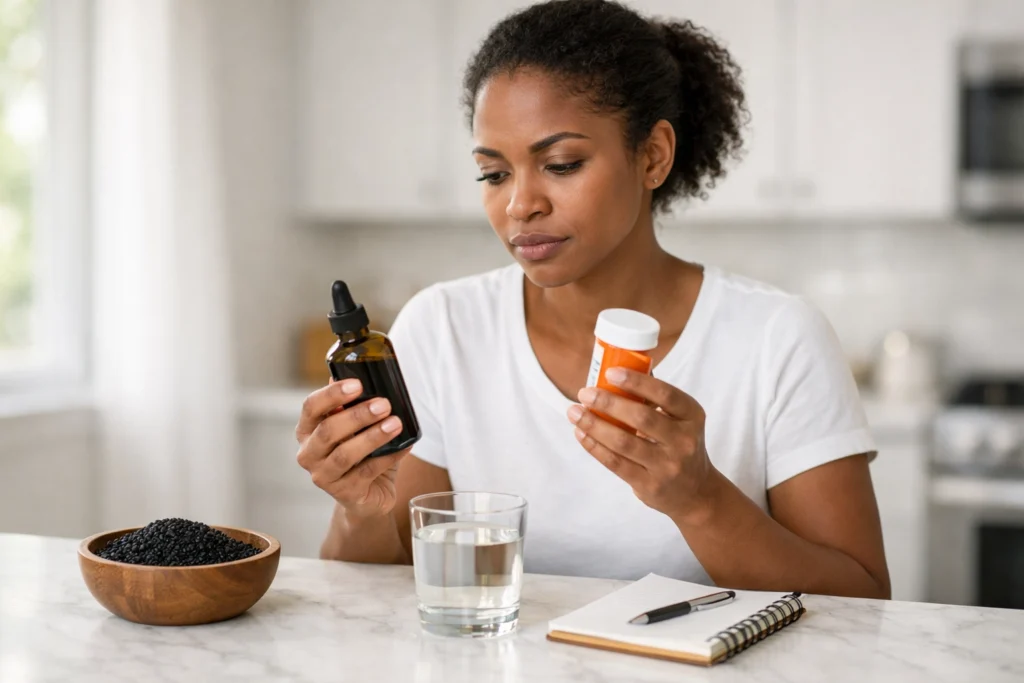
If you take any regular medication — especially for diabetes, blood pressure, or blood thinning — tell your doctor before starting black seed as a daily supplement. Show them this article if helpful.
Choose Quality Products
Buy cold-pressed, 100% pure Nigella sativa oil in a dark amber glass bottle. Poor quality products with low thymoquinone content may not work — but very high-dose concentrated extracts could increase side effect risk.
Do Not Exceed Recommended Amounts
A 2021 safety study established the maximum safe daily amount at 900mg of oil or 48.6mg of thymoquinone. For most people, ½ to 1 teaspoon of oil daily is plenty. More is not always better with black seed.
📊 What Does “GRAS” Mean?
The FDA’s GRAS (Generally Recognised As Safe) classification for Nigella sativa means it is considered safe to use as a food ingredient, spice, and seasoning based on a long history of common use without known harm. This is a positive safety classification — it applies to food amounts. It does not specifically address concentrated supplement doses, which is why medical guidance is still important for therapeutic use.
Try Our Free Herb & Tea Benefit Finder
Type black seed or any herb to instantly see its benefits, safe dosage, and who should be careful.
🔍 Open the Herb & Tea Benefit Finder →Frequently Asked Questions
The most common side effects of black seed are stomach upset and nausea — especially when taken on an empty stomach or at too high a dose. These usually go away if you start with a small amount and increase gradually. More serious risks include low blood sugar when combined with diabetes medication, low blood pressure when combined with antihypertensive drugs, and increased bleeding risk when combined with blood thinners. Topical use may cause skin rashes in some people. Serious side effects are rare at normal doses.
Yes — for most healthy adults, eating black seed daily at normal amounts is safe. The FDA classifies Nigella sativa as Generally Recognised As Safe as a food spice. Clinical studies have shown daily use for up to 12 weeks causes no serious side effects in healthy people. The main exceptions are people on diabetes medication, blood pressure medication, blood thinners, pregnant women at therapeutic doses, and people with severe kidney disease. If you are in any of these groups, check with your doctor first.
Yes — this is the most important safety concern for people with diabetes. Black seed lowers blood sugar on its own. When combined with diabetes medication like metformin, insulin, or sulfonylureas, the combined effect may lower blood sugar dangerously low — causing hypoglycaemia. Symptoms include shaking, sweating, dizziness, rapid heartbeat, and confusion. If you take diabetes medication, always tell your doctor before starting black seed and monitor your blood sugar more closely in the first 4 weeks.
Small amounts in cooking are generally considered safe during pregnancy. But taking black seed oil as a daily supplement or in therapeutic doses is not recommended. Black seed has traditionally been associated with uterine-stimulating effects at higher doses — which raises a concern about miscarriage risk, particularly in the first trimester. Always discuss with your obstetrician before using any herbal supplement during pregnancy. As a general rule — if in doubt, leave it out until after delivery.
At normal doses, black seed is actually good for the liver — it has documented hepatoprotective (liver-protecting) properties and one clinical trial found it improved fatty liver disease. However, at very high doses, some animal studies have noted potential liver stress. A 90-day human clinical safety trial found no negative effects on liver enzymes at 200mg thymoquinone-rich oil daily. The bottom line: normal supplement doses are safe for the liver in healthy adults. People with existing liver disease should consult their doctor before taking therapeutic doses.
کلونجی عام طور پر محفوظ ہے — لیکن کچھ احتیاط ضروری ہے۔ زیادہ مقدار میں لینے سے پیٹ میں تکلیف ہو سکتی ہے۔ ذیابیطس کی دوائیں لینے والوں کے لیے شوگر بہت کم ہو سکتی ہے۔ بلڈ پریشر کی دوائیں لینے والوں کو بھی احتیاط چاہیے۔ حاملہ خواتین زیادہ مقدار سے پرہیز کریں۔ کھانے میں تھوڑی مقدار میں استعمال تقریباً سب کے لیے محفوظ ہے۔
In short: kalonji is safe in normal food amounts for almost everyone. The main risks are for people on diabetes or blood pressure medication — where it can lower levels too much. Pregnant women should avoid therapeutic supplement doses. Always start with a small amount.
📚 Related Health Guides
Black Seed (Kalonji): 10 Proven Benefits
The complete benefits guide — all 10 proven uses with evidence and dosage.
How to Use Black Seed Daily: 7 Simple Methods
Safe ways to take kalonji every day — oil, seeds, powder, capsules, and more.
Black Seed for Diabetes: Can Kalonji Lower Blood Sugar?
Full guide to drug interactions and safe use alongside diabetes medication.
Black Seed Oil Benefits: 8 Proven Uses
How to choose quality oil and use it safely for health, skin, and hair.