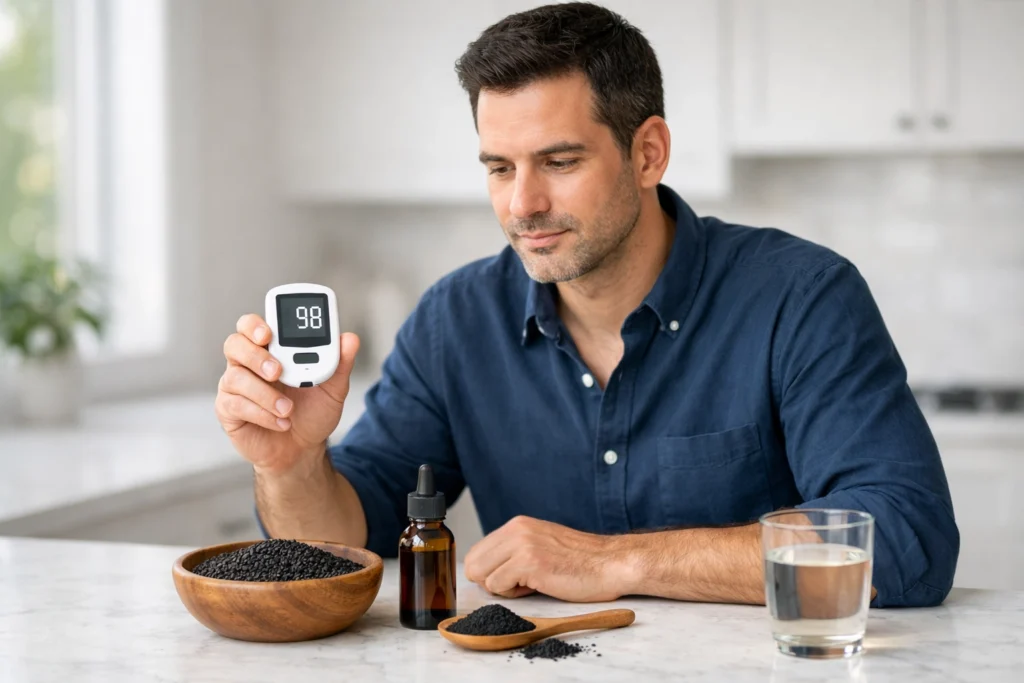

Multiple clinical studies show moringa can reduce blood sugar levels in people with diabetes and prediabetes. But the results are mixed — and it should never replace your diabetes medication.
📋 Table of Contents
Introduction
Diabetes affects over 500 million people worldwide. Blood sugar control is the single most important daily task for anyone living with type 2 diabetes or prediabetes. And many people are searching for natural ways to support their blood sugar alongside their medical treatment.
Moringa has become one of the most talked-about natural options for blood sugar support in 2026. The research is more promising than most people realise — but also more complicated. Some trials show strong results. Others show no effect at all.
🛠️ Check Your Blood Sugar Risk — Take our free Blood Sugar Risk Assessment to understand your risk level today
🔍 Take the Free Blood Sugar Risk Assessment →In this guide we walk through exactly what the science says — honestly, clearly, and without exaggeration. This article is part of our complete Moringa series. For the full nutrition and benefits overview, see our complete Moringa Benefits guide.
How Moringa Affects Blood Sugar
Moringa does not work like diabetes medication. It does not directly stimulate insulin production or block glucose in the way that metformin or other drugs do. Instead, it works through several natural pathways that help your body manage blood sugar more effectively.
Slows Sugar Absorption After Meals
Chlorogenic acid in moringa slows how quickly carbohydrates are broken down and absorbed into your bloodstream after eating. This flattens the post-meal blood sugar spike — one of the most damaging patterns in type 2 diabetes. Animal studies confirm chlorogenic acid consumed before a meal improves glucose tolerance significantly. This is why taking moringa before meals is more effective than taking it at other times.
Improves Insulin Sensitivity
Isothiocyanates in moringa help your cells respond better to insulin. In type 2 diabetes, cells become resistant to insulin — meaning glucose cannot enter them properly and builds up in the blood instead. Isothiocyanates may help reverse this resistance at the cellular level, making insulin more effective. This is similar in concept to how some diabetes medications work — but much milder in effect.
Reduces Liver Glucose Production
Your liver produces glucose overnight and between meals — a process called gluconeogenesis. In type 2 diabetes, this process is often overactive, causing fasting blood sugar to be high even without eating. Animal studies show moringa extracts can reduce glucose production in the liver. This may explain why some clinical trials found moringa lowered fasting blood sugar specifically.
Fights Oxidative Stress and Inflammation
Chronic inflammation and oxidative stress are two of the key drivers of insulin resistance and diabetic complications. Moringa’s quercetin and isothiocyanates are powerful anti-inflammatory and antioxidant compounds. A 2022 review of 23 studies confirmed that moringa significantly reduces oxidative stress markers — which directly supports better glucose metabolism and reduces the risk of long-term diabetic complications.
🔬 The Key Bioactive Compounds
Chlorogenic acid — a polyphenol that slows carbohydrate absorption and improves post-meal glucose response. Isothiocyanates — sulfur compounds that improve insulin sensitivity and reduce liver glucose output. Quercetin — a flavonoid antioxidant that reduces oxidative stress linked to insulin resistance. Glucomoringin — a glucosinolate unique to moringa with glucose-lowering properties in animal models. Together, these compounds create a multi-pathway approach to blood sugar management that no single compound could achieve alone.
What the Research Shows
The moringa and blood sugar research is growing quickly. Here is an honest summary of what the studies actually found — including both the positive results and the limitations.
| Study | Participants | Dose | Result |
|---|---|---|---|
| Randomised trial — fasting glucose | 30 adults with type 2 diabetes | 1.5g/day — 3 months | Significant drop in fasting blood sugar vs placebo |
| Clinical trial — post-meal glucose | Adults with prediabetes | 20g leaf powder — 2 weeks | Reduced post-meal blood sugar spikes |
| RCT — HbA1c and fasting glucose | Prediabetic adults | 2,400mg/day — 3 months | Reduced fasting blood sugar and HbA1c |
| Review of 23 studies — 2022 | Mixed populations | Various doses | Significant reduction in oxidative stress markers |
| Nigerian RCT — type 2 diabetics | 40 diabetic adults | 20–60g leaf/day — 14 days | Improved blood glucose, blood pressure, and lipid profile |
| Multiple other trials | Healthy and diabetic adults | 0.5–8g/day | No significant effect — results inconsistent |
📊 Honest summary: The positive trials used higher doses — 20g of fresh leaves or 1.5–2.4g of concentrated powder per day. Studies using very low doses (under 1g) mostly found no significant effect. The inconsistency across studies is real and important. Moringa is a promising natural support tool for blood sugar — but it is not a reliable standalone treatment for diabetes.
Moringa for Prediabetes
Prediabetes is when your blood sugar is higher than normal but not yet in the diabetic range. It is a critical window — the right changes now can prevent full type 2 diabetes from developing.
This is where moringa shows some of its most promising results. The most impressive study gave adults with prediabetes 20g of moringa leaf powder and found significant reductions in post-meal blood sugar spikes. A 12-week trial using 2,400mg of moringa powder daily found improvements in both fasting blood sugar and HbA1c levels in prediabetic participants.
📊 Why Prediabetes Is the Best Time to Use Moringa
In prediabetes, insulin resistance is mild and the pancreas can still produce adequate insulin. Moringa’s ability to slow glucose absorption, improve insulin sensitivity, and reduce inflammation may be enough to meaningfully move blood sugar back toward normal range — especially when combined with dietary improvements and regular physical activity. Once full type 2 diabetes develops, blood sugar management requires more aggressive intervention including medication. Moringa can still support — but its role becomes more supplementary at that stage.
Moringa for Type 2 Diabetes
If you already have type 2 diabetes and take medication, moringa can be a useful complementary tool — but it requires care. Here is what people with type 2 diabetes need to know.
Multiple small trials show moringa can reduce fasting blood sugar in people with type 2 diabetes. A randomised trial found a statistically significant drop in fasting blood glucose after 3 months of 1.5g moringa leaf powder daily. A Nigerian trial using higher doses found improvements in blood sugar, blood pressure, and cholesterol simultaneously.
But not all trials show these results. Inconsistency is the key limitation of current moringa research for diabetes. What is clear is that moringa is safe to use alongside diabetes medication — provided your doctor monitors your blood sugar closely to adjust medication if needed.
⚠️ Critical safety warning for people with diabetes: Moringa lowers blood sugar. If you take insulin or blood sugar-lowering medication alongside moringa, your blood sugar could drop too low (hypoglycaemia). Symptoms include shakiness, sweating, confusion, and rapid heartbeat. Always tell your doctor you are taking moringa and monitor your blood sugar more frequently when starting. Never reduce your diabetes medication without medical supervision.
📖 Complete Moringa Guide
This article focuses on moringa for blood sugar and diabetes. For all 10 moringa health benefits, full nutrition facts, and dosage guide, read our complete Moringa Benefits guide. For weight management support, see our Moringa for Weight Loss guide.
Can Moringa Lower HbA1c?
HbA1c is a blood test that shows your average blood sugar over the past 2–3 months. It is the gold standard measure for long-term diabetes control. Lowering HbA1c by even 0.5–1% significantly reduces the risk of diabetic complications like kidney disease, nerve damage, and blindness.
A 12-week clinical trial found that prediabetic adults taking 2,400mg of moringa powder daily showed measurable reductions in HbA1c. This is a genuinely significant finding — because most natural supplements do not move HbA1c at all.
📊 HbA1c Study — Key Details
Prediabetic adults took 2,400mg (2.4g) of moringa leaf powder daily for 12 weeks. Results showed reductions in both fasting blood glucose and HbA1c compared to baseline. The study was small and lacked a placebo control arm — which limits how strongly we can interpret the results. Larger, well-controlled trials on moringa and HbA1c are still needed. However, these early findings suggest moringa may support long-term blood sugar control — not just acute post-meal spikes.
How to Use Moringa for Blood Sugar
Timing and dose matter more for blood sugar than for general nutrition. Here is the most evidence-informed approach.
🩸 Moringa Blood Sugar Support Protocol
- 1Add 1 teaspoon of moringa powder (approx. 2–3g) to a glass of warm water.
- 2Squeeze in half a fresh lemon and stir well for 30 seconds.
- 3Drink 15–20 minutes before your largest meal of the day — typically lunch or dinner.
- 4For stronger blood sugar support, take a second dose before your other main meal.
- 5Monitor your blood sugar with your usual testing kit — track fasting readings every morning.
- 6Share your readings with your doctor at your next appointment — especially if you take diabetes medication.
| Goal | Dose | Timing | Duration |
|---|---|---|---|
| Reduce post-meal spikes | 1–2 tsp powder | 15–20 min before meals | Ongoing |
| Lower fasting blood sugar | 1.5–2.4g/day | Morning + before dinner | 8–12 weeks minimum |
| Support HbA1c reduction | 2.4g/day | Split across 2 meals | 12 weeks minimum |
| Prediabetes management | 2–3 tsp/day | Before main meals | 3–6 months ongoing |

Take moringa in warm water 15–20 minutes before your main meal — chlorogenic acid slows sugar absorption and reduces post-meal blood sugar spikes. © DailyHealthLeaf.com
🌿 How should you use Moringa for blood sugar? Type it in our free Herb & Tea Benefit Finder — get preparation method, timing, dosage, and safety notes instantly.
🔍 Try the Herb & Tea Benefit Finder →Side Effects & Safety for Diabetics
Moringa is generally safe — but people with diabetes need to be extra careful. Here are the specific risks for this group.
💊 The Golden Rule for Diabetics Using Moringa
Always tell your doctor before starting moringa. This is not optional advice — it is essential. Your doctor needs to know so they can monitor your blood sugar more closely and adjust your medication dose if moringa is having a meaningful effect. The risk of unmonitored hypoglycaemia is real. A quick conversation with your doctor protects you completely.
Conclusion
Moringa is one of the most promising natural tools for blood sugar support available today. Multiple clinical studies show real reductions in fasting blood sugar, post-meal spikes, and even HbA1c in people with prediabetes and type 2 diabetes. The mechanism is well understood — chlorogenic acid and isothiocyanates are genuinely powerful blood sugar-regulating compounds.
But moringa is not a diabetes cure. Results are inconsistent across trials. Dose matters enormously — lower doses often show no effect. And for anyone on diabetes medication, combining moringa without medical supervision carries real risk.
Used correctly — at the right dose, before meals, with your doctor’s knowledge — moringa is a safe and potentially valuable addition to a diabetes management plan. It works best alongside a low-glycaemic diet, regular exercise, and your prescribed medication. Not instead of them.
Try Our Free Herb & Tea Benefit Finder
Type Moringa or any herb to instantly see its benefits, how to use it, and who should be careful.
🔍 Open the Herb & Tea Benefit Finder →Frequently Asked Questions
Yes — multiple clinical trials show moringa can reduce fasting blood sugar in people with type 2 diabetes. One trial found a significant drop in fasting glucose after 3 months of 1.5g daily. However, results are not consistent across all studies. Moringa works best as a complementary tool alongside prescribed diabetes medication and lifestyle changes — not as a replacement.
The most effective doses in clinical trials were 1.5–2.4g of moringa leaf powder per day — roughly 1–2 teaspoons. Very low doses under 1g showed little to no effect in most studies. Take it in warm water before your main meals for best blood sugar results. Always start at a lower dose and build up gradually — especially if you take diabetes medication.
Moringa and metformin can be taken together — but only with your doctor’s knowledge and monitoring. Both lower blood sugar, and the combined effect could cause your levels to drop too low (hypoglycaemia). Tell your doctor you are adding moringa and check your blood sugar more frequently when you first start. Never adjust your metformin dose without medical advice.
Yes — this is where moringa shows some of its strongest results. A clinical trial found 20g of moringa leaf reduced post-meal blood sugar spikes in prediabetic adults. A 12-week study found reductions in both fasting blood sugar and HbA1c with 2.4g daily. Prediabetes is the ideal time to use moringa — combined with diet and exercise, it may help prevent progression to full type 2 diabetes.
Early evidence suggests it can. A 12-week trial in prediabetic adults taking 2.4g daily showed reductions in HbA1c alongside fasting blood sugar. The study was small and lacked a placebo control — so the results need confirmation in larger trials. This is a promising finding but not yet conclusive. Give moringa at least 12 weeks of consistent use before checking HbA1c response.
Take moringa 15–20 minutes before your main meals for the best blood sugar benefits. Chlorogenic acid in moringa works by slowing carbohydrate absorption from the meal that follows — so timing before eating is more effective than taking it after. If you take two doses per day, take one before lunch and one before dinner for maximum post-meal blood sugar control.
No — absolutely not. Moringa is a natural food supplement with mild to moderate blood sugar effects in some people. Diabetes medication is prescribed because it has consistent, clinically proven, and medically necessary effects on blood glucose. Stopping or reducing diabetes medication to use moringa instead could have serious and dangerous consequences. Always keep taking your prescribed medication unless your doctor tells you otherwise.
Chlorogenic acid in moringa can start reducing post-meal blood sugar spikes from the very first dose — because it acts during digestion to slow sugar absorption. For fasting blood sugar and HbA1c improvements, the clinical trials used 8–12 weeks of consistent daily use. Give moringa at least 3 months before making a judgement on whether it is affecting your longer-term blood sugar markers.