Ashwagandha is one of the most researched Ayurvedic herbs in the world. Used for over 3,000 years, it is now backed by clinical evidence for stress, anxiety, sleep, testosterone, and physical performance.
📋 Table of Contents
Introduction
Ashwagandha is one of the most popular wellness supplements in the world right now — and for good reason. This ancient Ayurvedic herb has earned its place at the top of the adaptogen market through a growing body of genuine clinical research, not just tradition.
It is best known for reducing stress and anxiety — and multiple randomised clinical trials confirm this effect. But research now supports a broader range of benefits: better sleep, higher testosterone, improved muscle strength, sharper focus, and stronger immunity. A 2025 meta-analysis of 15 clinical trials confirmed significant reductions in cortisol and anxiety scores in adults who took ashwagandha consistently.
🛠️ Free Health Tools — BMI Calculator, Sleep Calculator, Intermittent Fasting Calculator & more
🔍 Browse All Free Health Tools →This complete guide covers everything you need to know about ashwagandha — its 10 key benefits, active compounds, traditional roots, proper dosage, side effects including the important liver safety question, and how it compares to other Ayurvedic adaptogens.
What Is Ashwagandha?
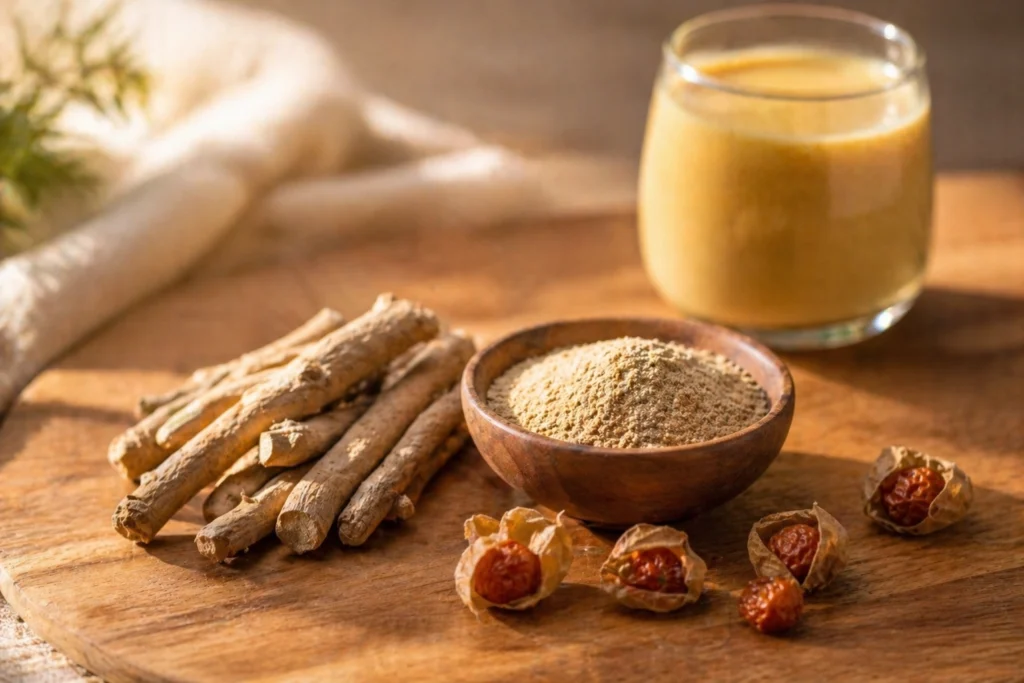
Withania somnifera — commonly called ashwagandha — is a small evergreen shrub native to India, North Africa, and parts of the Mediterranean. Its roots and berries have been used in Ayurvedic medicine for over 3,000 years. The name comes from Sanskrit — ashwa means horse and gandha means smell — referring to the root’s distinctive horse-like odour and its traditional reputation for giving the strength and vitality of a horse.
Ashwagandha is classified as a Rasayana in Ayurveda — a class of herbs used to promote longevity, rejuvenation, and overall vitality — and as an adaptogen in modern herbalism — a substance that helps the body adapt to physical and psychological stress more effectively.
🌱 Quick Plant Facts
Botanical name: Withania somnifera · Family: Solanaceae (nightshade) · Native to: India, North Africa, Mediterranean · Part used: Root (primary), occasionally leaf · Key compounds: Withanolides, alkaloids (somniferine, somnine), saponins, sitoindosides · Classification: Rasayana + Adaptogen
Ashwagandha Names Around the World
| Language / Region | Name | Notes |
|---|---|---|
| English | Ashwagandha / Indian Ginseng / Winter Cherry | “Indian Ginseng” reflects its tonic properties similar to Asian ginseng |
| Sanskrit / Ayurvedic | Ashwagandha / Vajikari / Balya | “Horse smell” — strength-giving root in Ayurveda |
| Arabic | Withania / Anab al-Deeb (عنب الذيب) | Used in traditional Arab medicine for energy and vitality |
| Chinese | Nán fēi zuì jiā (南非醉茄) | Used in TCM as an adaptogenic tonic |
| French | Ginseng Indien / Withanie somnifère | Known in French herbal medicine |
| Spanish | Bufera / Withania | Used in Spanish natural medicine traditions |
| Greek | Withania | Named after the genus in botanical classification |
| Botanical / Latin | Withania somnifera | Always verify this name on supplement labels |
| Hindi / Urdu | Ashwagandha / Asgandh | Widely used name across South Asia |
Key Active Compounds
Ashwagandha’s health benefits come from a rich collection of plant compounds. Withanolides are the most important — they are the compounds most supplement labels use to indicate quality and strength.
| Compound | Type | What It Does |
|---|---|---|
| Withanolides | Steroidal lactones — primary active compounds | Reduce inflammation, fight oxidative stress, support brain health, modulate immune function |
| Withaferin A | Withanolide subtype | Anti-inflammatory, neuroprotective, anti-cancer potential in lab studies |
| Somniferine / Somnine | Alkaloids | Contribute to calming and sleep-supporting properties |
| Sitoindosides VII–X | Glycowithanolides | Antioxidant and adaptogenic activity; memory support |
| Saponins | Plant glycosides | Immune modulation, anti-inflammatory support |
| Iron | Mineral | Ashwagandha root is a notable source of iron — relevant for energy and blood health |
🔬 Why “Standardised to Withanolides” Matters
When buying ashwagandha supplements, look for products that state their withanolide percentage on the label — typically 2.5% to 5% for most reputable products, up to 35% for high-potency extracts. This tells you the active compounds have been measured and verified. Products that do not state withanolide content may contain very little of the actual therapeutic compounds. KSM-66 and Sensoril are two well-studied branded extracts with published clinical research behind them.
10 Benefits of Ashwagandha
These benefits are based on available clinical research. Ashwagandha is not a treatment for any medical condition. Always consult your doctor before starting supplementation.
Reduces Stress and Cortisol
This is ashwagandha’s most researched and most consistently proven benefit. A 2025 meta-analysis of 15 randomised clinical trials confirmed significant reductions in cortisol levels and validated stress scores in adults taking ashwagandha. It works by reducing overactivation of the HPA axis — the hormonal stress pathway that leads to chronically high cortisol. Lower cortisol means less physical and psychological wear on the body. For the full clinical evidence, see our guide on how ashwagandha reduces cortisol and relieves chronic stress naturally.
Relieves Anxiety
Multiple double-blind, placebo-controlled clinical trials have found that ashwagandha significantly reduces anxiety scores — including in people with generalised anxiety and chronic occupational stress. Unlike pharmaceutical anxiolytics, ashwagandha does not cause sedation or dependency. The calming effect appears to work through GABA-mimicking activity of withanolides — the same pathway supported by other Ayurvedic sedative herbs — without the risks associated with benzodiazepines.
Improves Sleep Quality
A 2021 randomised controlled trial found that 600mg of ashwagandha root extract daily for 8 weeks significantly improved total sleep time, sleep quality, and morning feelings of wellbeing. The botanical name somnifera literally means “sleep-inducing” in Latin — reflecting thousands of years of traditional use for sleep. Unlike conventional sleep aids, ashwagandha does not produce morning grogginess. For the full evidence, see our guide on does ashwagandha really improve sleep quality and help with insomnia.
Boosts Muscle Strength
Ashwagandha has been specifically studied in sports science. A randomised, double-blind study found that men who took 600mg of ashwagandha root extract daily for 8 weeks showed significantly greater gains in muscle strength and muscle size compared to placebo — alongside greater reductions in exercise-induced muscle damage. This makes ashwagandha one of the few herbal supplements with genuine clinical evidence for athletic performance enhancement.
Raises Testosterone in Men
Several clinical studies have found that ashwagandha raises testosterone levels in men — particularly in those experiencing stress, reproductive health challenges, or age-related hormonal decline. A study of 43 overweight men found significant increases in testosterone, DHEA-S, and luteinising hormone after 8 weeks. The mechanism involves ashwagandha’s cortisol-lowering effect — since high cortisol directly suppresses testosterone production. Read our full men’s guide on ashwagandha benefits for men — testosterone, fertility, and muscle strength.
Supports Male Fertility
Ashwagandha has been studied specifically for male reproductive health. Clinical trials have shown improvements in sperm count, sperm motility, and semen volume in men with fertility challenges. One study of 46 men with low sperm count found significant improvements in all three sperm quality markers after 90 days. The combined effect of reduced stress hormones, increased testosterone, and direct antioxidant protection of sperm cells drives these improvements.
Supports Cognitive Function
A double-blind, placebo-controlled trial in healthy adults found that 300mg of ashwagandha root extract twice daily for 8 weeks significantly improved reaction time, memory, attention, and information processing speed. A separate study found improvements in memory recall and sustained attention. These cognitive benefits come from ashwagandha’s neuroprotective withanolides — which reduce oxidative stress in brain tissue and support the regeneration of neural connections.
Supports Immune Function
Ashwagandha has well-documented immune-modulating properties. Research shows it increases the activity of natural killer (NK) cells — the immune system’s front-line defence against infections and abnormal cells. It also increases immunoglobulin production, supporting the body’s ability to produce antibodies. These immune benefits are particularly relevant during periods of high stress, which are known to suppress immune function.
May Support Blood Sugar
Several clinical studies have found ashwagandha may help lower fasting blood sugar and improve insulin sensitivity. A 2023 systematic review found positive effects on glucose metabolism in people with type 2 diabetes and prediabetes. The blood sugar effects may be linked to ashwagandha’s anti-inflammatory properties and cortisol reduction — since chronic cortisol elevation is a known driver of insulin resistance.
May Support Heart Health
Research suggests ashwagandha may benefit cardiovascular health through several pathways — reducing LDL cholesterol and triglycerides, improving cardiorespiratory endurance, and lowering blood pressure in people with stress-related hypertension. A study found significant improvements in VO2 max (cardiorespiratory fitness) in healthy adults who took ashwagandha for 8 weeks. These benefits align with its broader role as a stress-reducing, anti-inflammatory adaptogen.
📊 Honest note on evidence: Stress, anxiety, and sleep benefits have the strongest and most consistent clinical evidence across multiple trials. Testosterone, muscle strength, and cognitive benefits are well supported but require consistent daily use for 8–12 weeks. Blood sugar and heart health evidence is promising but less extensive. Always consult your doctor before starting supplementation.
Traditional Ayurvedic Use
In Ayurveda, ashwagandha holds one of the highest classifications — a Rasayana, meaning a rejuvenating tonic that promotes longevity, vitality, and overall health. It was prescribed for physical weakness, sexual debility, nervous disorders, poor memory, insomnia, and chronic fatigue.
| Tradition | Classification | Traditional Uses |
|---|---|---|
| Ayurveda (India) | Rasayana — Balya (strength-giving), Vajikari (aphrodisiac) | Stress, fatigue, sexual debility, muscle weakness, memory, insomnia, nervous disorders |
| Unani (Greco-Arab) | Warm, drying tonic — second degree | General debility, sexual health, nervous system support, arthritis |
| African traditional medicine | Fever herb, tonic | Fever, inflammation, sedation, general tonic |
| Modern herbalism | Adaptogen — stress modulator | Stress, anxiety, fatigue, sleep, athletic performance, hormonal balance |
📊 Clinical Study Spotlight — 2025 Meta-Analysis
A 2025 meta-analysis of 15 randomised controlled trials examined ashwagandha’s effects on cortisol and stress in adults. The pooled results confirmed statistically significant reductions in serum cortisol levels and standardised anxiety scores compared to placebo. The effect was dose-dependent — 600mg daily produced stronger results than 300mg. Duration also mattered — studies running 8 weeks or longer showed greater benefits than shorter trials. This is the strongest published evidence to date for any adaptogen’s stress-reducing effects.
How to Take Ashwagandha
Ashwagandha is available in several forms. The most clinically studied form is standardised root extract in capsules. Traditional use focuses on root powder in warm milk. Both approaches work well depending on your goals.
| Form | How to Use | Best For |
|---|---|---|
| Root extract capsules ⭐ | Take with food — morning or evening | Most convenient — precise, consistent dosing |
| Root powder | Mix into warm milk, smoothie, or golden milk | Traditional Ayurvedic use — whole herb |
| Liquid extract (tincture) | Add drops to water or juice per label | Fast absorption — flexible dosing |
| Ashwagandha tea | Steep root powder or tea bag in hot water 5–10 min | Gentle daily use — calming evening ritual |
| Ashwagandha milk (traditional) | Mix ½ tsp powder into warm milk with honey | Sleep support, stress relief — evening before bed |
🥛 Traditional Ashwagandha Milk — Ayurvedic Recipe
- 1Warm 1 cup of full-fat milk (or oat milk) over low heat — do not boil.
- 2Add ½ tsp ashwagandha root powder and stir well.
- 3Optional: add a pinch of cinnamon, cardamom, and black pepper for absorption.
- 4Simmer on low heat for 2–3 minutes.
- 5Remove from heat. Add ½ tsp raw honey after cooling slightly.
- 6Drink warm 30–60 minutes before bed for sleep and stress support.
🌿 How should you use Ashwagandha? Type it in our free Herb & Tea Benefit Finder — get preparation method, timing, dosage, and safety notes instantly.
🔍 Try the Herb & Tea Benefit Finder →Dosage Guide
💡 What to look for on the label: Choose products standardised to 2.5–5% withanolides from root extract only — not leaf extract. KSM-66 and Sensoril are two well-studied branded ashwagandha extracts with published clinical research. Generic products with no withanolide percentage stated may contain little active compound.
⚠️ Do not exceed recommended doses. Cases of liver injury have been reported — mostly associated with very high doses, leaf-containing products, or multi-ingredient supplements. Stick to 300–600mg of root-only extract from a reputable brand. If using beyond 3 months, discuss with your healthcare provider.
Side Effects & Safety
Ashwagandha is well tolerated by most healthy adults at recommended doses for up to 3 months. But there are important safety considerations — particularly around liver health — that are worth understanding clearly before starting. For the complete safety guide including drug interactions, thyroid effects, and the full liver warning, see our guide to ashwagandha side effects and the liver warning nobody tells you about.
💊 Who Should Avoid Ashwagandha
Pregnant women — safety during pregnancy not established. Some traditional sources associate high doses with uterine stimulation. People with thyroid conditions — ashwagandha may increase thyroid hormone levels, worsening hyperthyroidism. Discuss with your doctor first. People on immunosuppressive drugs — ashwagandha’s immune-boosting properties may counteract these medications. People with autoimmune conditions — ashwagandha may stimulate the immune system and trigger flare-ups in conditions like rheumatoid arthritis or MS. Stop immediately if you notice yellowing of skin, dark urine, or severe abdominal pain — these may be signs of liver injury.
Ashwagandha vs Bacopa Monnieri
Both are powerful Ayurvedic adaptogens — but they work differently and suit different goals.
| Feature | Ashwagandha | Bacopa Monnieri |
|---|---|---|
| Primary benefit | Stress, anxiety, testosterone, sleep, strength | Memory, learning, focus, brain aging |
| Best for | Physical stress, burnout, hormonal balance, athletes | Cognitive performance, students, brain protection |
| Time to results | 2–4 weeks (faster) | 4–8 weeks (gradual) |
| Anxiety relief | ✅ Strong evidence | ✅ Yes — via GABA support |
| Sleep support | ✅ Strong evidence | ✅ Yes |
| Testosterone | ✅ Yes — documented in men | ❌ Not studied |
| Memory and focus | ✅ Some evidence | ✅ Stronger evidence |
| Can be combined? | ✅ Yes — complementary effects. Start each at lower dose and monitor response. | |
Ashwagandha also has a growing body of evidence for women’s health specifically — including perimenopause symptoms, PCOS support, and sexual health. For a full breakdown of female-specific benefits see our guide on ashwagandha benefits for women — hormones, PCOS, and perimenopause support.
Conclusion
Ashwagandha is one of the most well-researched Ayurvedic herbs available today. Its benefits for stress, anxiety, sleep, testosterone, muscle strength, and cognitive function are supported by genuine clinical trials — not just tradition. A 2025 meta-analysis of 15 clinical trials confirmed the cortisol and anxiety-reducing effects that have been documented for decades.
The key to safe, effective use is simple — choose a root-only standardised extract from a reputable brand, take 300–600mg daily with food, give it at least 4–8 weeks to work, and do not use beyond 3 months without medical guidance. Be aware of the rare but real liver injury risk — especially at high doses or with low-quality products.
Ashwagandha works best as part of a broader approach to health — alongside good sleep, regular movement, and a balanced diet. It is a powerful tool in that toolkit, not a replacement for lifestyle foundations.
Try Our Free Herb & Tea Benefit Finder
Type Ashwagandha or any herb to instantly see its benefits, how to use it, and who should be careful.
🔍 Open the Herb & Tea Benefit Finder →Frequently Asked Questions
Ashwagandha is best supported by evidence for reducing stress and cortisol, relieving anxiety, improving sleep quality, raising testosterone in men, boosting muscle strength, and supporting cognitive function. It is classified as an adaptogen — meaning it helps the body manage both physical and psychological stress more effectively. Multiple randomised clinical trials support each of these benefits.
Most people begin noticing effects within 2–4 weeks of consistent daily use. Sleep improvements are often reported within the first 1–2 weeks. Stress and anxiety benefits typically become noticeable at the 4-week mark. Full benefits for testosterone, muscle strength, and cognitive function are generally seen at 8 weeks. Give it at least 4–8 weeks before evaluating whether it is working for you.
Yes — ashwagandha appears well tolerated for daily use for up to about 3 months based on clinical trial data. Beyond 3 months, long-term safety data is limited. Most practitioners suggest cycling — 3 months on, then a 2–4 week break. Always use root-only standardised extract from a reputable brand, stay within 300–600mg per day, and take with food to minimise digestive side effects.
Liver injury from ashwagandha is rare but documented. Most cases involved very high doses, products containing leaf extract, multi-ingredient supplements, or people with pre-existing liver conditions. Root-only standardised extracts at 300–600mg per day have not caused liver injury in clinical trials. Stop immediately and see a doctor if you develop yellowing of skin, dark urine, or severe abdominal pain while taking ashwagandha.
Yes — several clinical studies have found meaningful increases in testosterone levels in men who took ashwagandha consistently. The likely mechanism is ashwagandha’s cortisol-lowering effect — since high cortisol directly suppresses testosterone. Effects are most documented in men with stress, reproductive health challenges, or age-related hormonal decline. Results in young healthy men with already normal testosterone may be more modest.
Both timings have merit. Morning is best for stress management, focus, and energy throughout the day. Evening before bed is best for sleep quality and cortisol reduction overnight — traditional ashwagandha milk is an evening preparation. Many clinical trials used a split dose of 300mg morning and 300mg evening, which gives consistent levels throughout the day. Choose the timing that fits your lifestyle and reason for taking it.
Yes — ashwagandha is studied and used by both men and women. Clinical research confirms benefits for anxiety, stress, sleep, and cognitive function in women. However, ashwagandha should be avoided during pregnancy and used with caution during breastfeeding. Women with hormone-sensitive conditions or thyroid disorders should discuss with their doctor first.
Yes — combining ashwagandha and bacopa is a common and generally safe practice. They have complementary effects: ashwagandha focuses on stress, anxiety, sleep, and physical performance, while bacopa focuses on memory, learning, and brain cell protection. Start each at the lower end of the recommended dose when combining and monitor how your body responds over 4–6 weeks.
Asgandh is the common Hindi and Urdu name for ashwagandha — used widely across Pakistan, India, and the South Asian diaspora. It refers to the same plant (Withania somnifera) and the same root extract used in all the research discussed in this guide. When buying asgandh from South Asian herbal stores, look for the botanical name Withania somnifera on the label to confirm authenticity.
Ashwagandha is not a weight loss supplement. However, it may support weight management indirectly — by reducing cortisol (high cortisol drives abdominal fat accumulation), improving sleep (poor sleep increases hunger hormones), and reducing stress-driven eating. Ashwagandha is best viewed as a metabolic supporter within a balanced lifestyle, not a direct fat burner.