
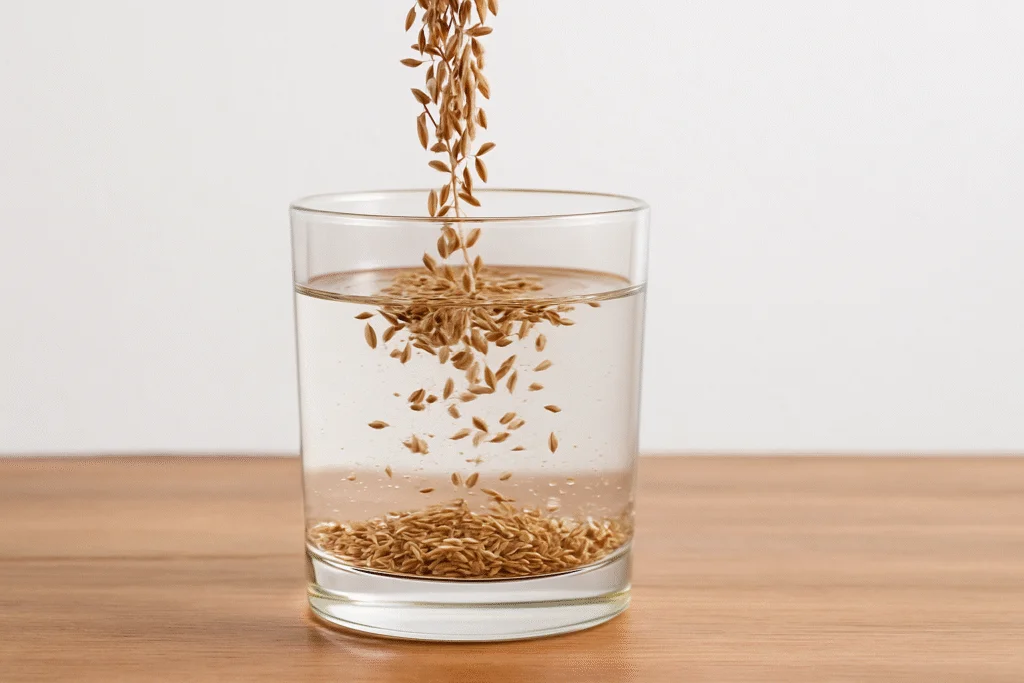
Cumin water (jeera water) is made by soaking or boiling cumin seeds in water. It has been used for centuries to support digestion, reduce bloating, and ease discomfort after heavy meals.
📋 Table of Contents
Introduction
Cumin water is one of the most popular traditional digestive drinks in South Asia and the Middle East. It is made simply by soaking or boiling cumin seeds in water. People have been using it after heavy meals for centuries.
Known as jeera pani in Hindi/Urdu and zeera water across South Asian households, this simple drink is gaining popularity worldwide. Many people now drink it every morning as a gentle, caffeine-free way to prepare the gut for the day.
🛠️ Free Health Tools — Water Intake Calculator, BMI Calculator, Intermittent Fasting Calculator & more
🔍 Browse All Free Health Tools →Modern research is starting to confirm what traditional medicine has known for ages. Cumin contains active compounds — especially thymol and cuminaldehyde — that may help your body produce more digestive enzymes, reduce gas, and support a more comfortable gut.
For the full picture on cumin’s nutrition, all health benefits, and traditional uses, see our complete pillar guide on cumin (jeera/zeera) benefits. This article focuses specifically on how cumin water helps digestion.
What Is Cumin Water?
Cumin water is made by letting the helpful compounds in cumin seeds soak into water — either overnight or by boiling briefly. The result is a lightly flavored, earthy drink that carries cumin’s active compounds in an easy-to-absorb liquid form.
It is usually drunk warm or at room temperature. The most popular times are morning on an empty stomach or right after meals. For a step-by-step preparation guide, see how to make cumin water.
🌍 Names Around the World
| Language / Region | Name |
|---|---|
| English | Cumin Water / Cumin Seed Water |
| Hindi / Urdu | Jeera Pani / Zeera Pani |
| Punjabi | Zeere Da Paani |
| Tamil | Seeragam Tanni |
| Telugu | Jilakarra Neeru |
| Sanskrit / Ayurvedic | Jeeraka Jala |
| Arabic | Ma’ al-Kamun |
Key Active Compounds in Cumin Water
The health benefits of cumin water come from the plant compounds that transfer from the seeds into the water during soaking or boiling.
| Compound | Found In | How It Helps Digestion |
|---|---|---|
| Thymol | Cumin essential oil | Triggers your body to produce more digestive juices |
| Cuminaldehyde | Main aromatic compound | Supports enzyme activity; may fight harmful gut bacteria |
| Flavonoids | Seed skin and flesh | Antioxidant — reduces stress on the gut lining |
| Terpenes | Essential oil | Relieves gas and bloating |
| Iron | Mineral content | Supports energy and oxygen transport — partially present in water |
| Dietary fiber (trace) | Seed solids | Minor gut-friendly effect when you eat the soaked seeds too |
🔬 Soaking vs Eating the Seeds
Soaking and boiling extract the water-soluble compounds from cumin. Some fat-soluble compounds stay in the seeds. For the most benefit, eat the soaked seeds along with the water — not just the liquid.
7 Benefits of Cumin Water for Digestion
Here are the seven main ways cumin water helps your gut. Each benefit has research or strong traditional evidence behind it. Cumin water is not a treatment or cure — always check with your doctor for specific concerns.
🌬️ Reduces Bloating & Gas
Cumin is a natural gas reliever. Its plant compounds relax the smooth muscle in your gut, letting trapped gas pass more easily. This is exactly why jeera water has been recommended after heavy meals for over a thousand years.
⚗️ Helps Your Body Produce More Digestive Enzymes
Research suggests thymol — one of cumin’s key compounds — helps your pancreas produce more enzymes. These enzymes break down fats, carbs, and proteins. Better enzyme activity means smoother, more complete digestion.
🍽️ Eases Post-Meal Heaviness
Feeling too full or heavy after a big meal? This is one of the most common reasons people reach for cumin water. By supporting enzyme activity and reducing gas, it helps your stomach process food more efficiently.
🦠 May Support a Healthy Gut
Cuminaldehyde has shown germ-fighting activity against certain bacteria that cause digestive problems, including E. coli. While these are lab findings, they suggest cumin water may offer mild protective activity for your gut.
🔥 Gentle Bile Stimulation for Fat Digestion
Cumin mildly stimulates bile release from the gallbladder. Bile helps break down fats in the small intestine. This makes cumin water especially useful after high-fat meals. People with gallbladder problems should be careful — see the safety section below.
💧 Hydration with Digestive Support
Cumin water is basically water with added plant compounds. This makes it a hydrating option that also helps digestion. Good hydration helps food move through the gut and softens stools. It is a great option for people who find plain water boring.
🌡️ May Help Soothe an Upset Gut
The flavonoids in cumin — including luteolin and apigenin — have antioxidant and mild calming properties. They may help settle a mildly irritated gut when consumed regularly as part of a balanced diet. For ongoing gut issues, always see your doctor.
Traditional Uses of Cumin Water
Cumin has been used medicinally for over 5,000 years. Its use as a digestive water is well documented in both Ayurvedic and Unani medicine.
| Tradition | Use | Preparation |
|---|---|---|
| Ayurveda | Digestive stimulant; relieves Vata and Kapha imbalances | Boiled jeera water, drunk warm after meals |
| Unani (Tibb) | Stomach tonic; reduces gas and heaviness | Soaked zeera water, drunk in the morning |
| South Asian home remedy | First remedy for bloating, indigestion, loose stools | Warm boiled cumin water; sometimes with ginger |
| Middle Eastern | Post-meal digestive aid; warming to the gut | Hot cumin seed tea with honey |
🔗 Full Guide: Cumin (Jeera/Zeera) — All Benefits & Nutrition
This article focuses on cumin water and digestion. For the complete picture — nutrition, all 10 benefits, Ayurvedic uses, dosage, and side effects — see our full pillar guide:
👉 Cumin (Jeera/Zeera): 10 Benefits, Uses, Nutrition & Side Effects →
How to Make Cumin Water
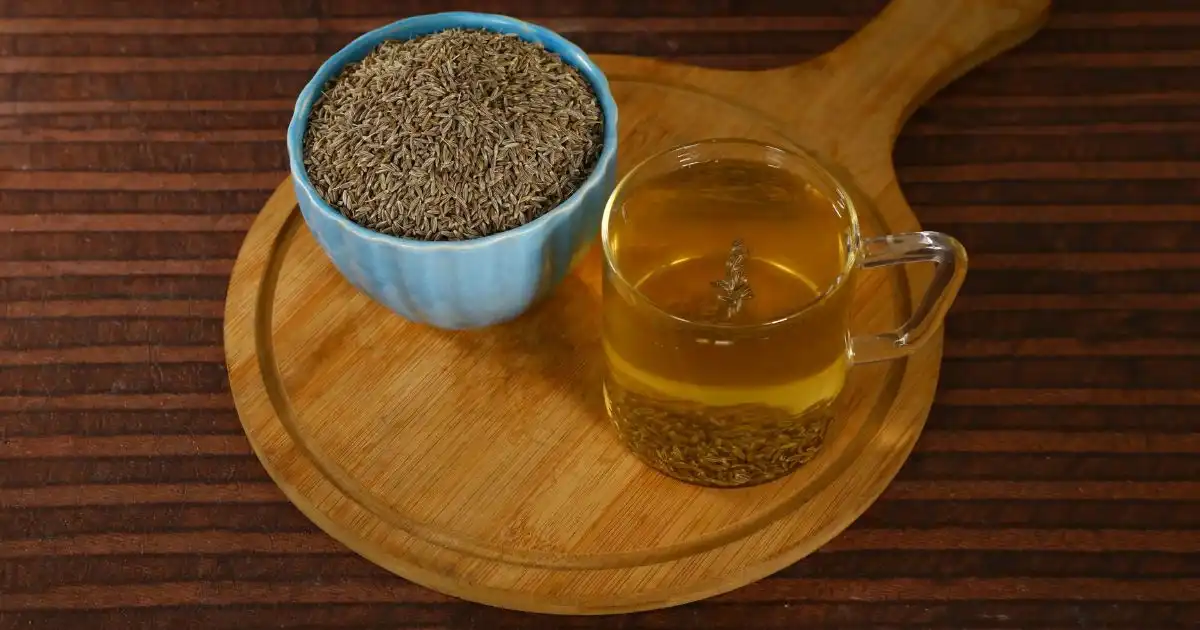
There are two main methods — soaking and boiling. They produce drinks with different strengths. For the full step-by-step with tips and common mistakes, see our dedicated guide on how to make cumin water.
🌿 How should you use cumin? Type it in our free Herb & Tea Benefit Finder — get preparation method, timing, dosage, and safety notes instantly.
🔍 Try the Herb & Tea Benefit Finder →Method Comparison
| Feature | Soaking Method | Boiling Method |
|---|---|---|
| Flavor | Mild, subtle | Stronger, more aromatic |
| Prep time | 8–10 hours (overnight) | 10–12 minutes |
| Best for | Morning routine, sensitive stomachs | Post-meal use, stronger effect |
| Compound strength | Lower concentration | Higher concentration |
| Temp when consumed | Room temperature or slightly warmed | Warm (let cool before drinking) |
⭐ Method 1: Soaking (Overnight) — Milder, Morning Use
Ingredients: 1 tsp whole cumin seeds · 1 glass (250ml) room-temp water · Optional: lemon juice
- 1
Add 1 tsp cumin seeds to a glass of water.
- 2
Cover and soak overnight (8–10 hours).
- 3
In the morning, strain — or eat the seeds along with the water for extra benefit.
- 4
Drink on an empty stomach, 20–30 minutes before breakfast.
⭐ Method 2: Boiling — Stronger, Post-Meal Use
Ingredients: 1 tsp whole cumin seeds · 250–300ml water · Optional: ginger, pinch of rock salt
- 1
Add cumin seeds and water to a small pot.
- 2
Bring to a gentle boil over medium heat.
- 3
Reduce heat. Simmer 5–7 minutes until the water turns golden.
- 4
Let cool until comfortably warm. Strain and drink within 15–30 minutes after a meal.
Best Time to Drink Cumin Water
When you drink cumin water affects what you get out of it. Here is the best timing for each goal.
| Time | Purpose | Notes |
|---|---|---|
| 🌅 Morning (empty stomach) | Gentle digestive warm-up, hydration, metabolism support | Use soaking method — milder. Wait 20–30 min before eating. |
| 🍽️ After meals | Reduces bloating, gas, post-meal heaviness | Boiling method preferred — stronger effect. Drink warm within 15–30 min of eating. |
| 🏃 Post-exercise | Rehydration with trace minerals | A light option — not a full electrolyte replacement. |
| 🌙 Before bed | Not generally recommended | May cause digestive stimulation or acidity in sensitive people when lying down. |
How Much Water Should You Drink Each Day?
Cumin water counts toward your daily fluid intake. Use our free calculator to find your personal hydration target.
💧 Open the Water Intake Calculator →How Much Cumin Water Per Day?
For most healthy adults, one cup per day is enough to get the digestive benefits. Start small to see how your body responds.
Who Should Be Careful with Cumin Water?
Cumin water is safe for most healthy adults in moderate amounts. But these groups should be careful or check with their doctor first.
🤰 Pregnant women
Large medicinal amounts may stimulate uterine contractions. Small cooking amounts are fine. Avoid concentrated daily doses.
🩸 Low blood pressure
Cumin may lower blood pressure mildly. Watch your levels if they are already low.
🟡 Gallbladder conditions
Cumin stimulates bile flow. This can worsen gallstones or bile duct problems. Get medical advice first.
💊 On diabetes medication
Cumin may lower blood sugar further. Watch your glucose levels closely when starting.
🩸 Iron deficiency
In excess alongside iron-rich meals, cumin may mildly reduce iron absorption. Separate them by timing.
🔥 Sensitive digestion / IBS
While cumin water is generally gentle, some people with very sensitive guts may find it aggravates symptoms. Start very small.
For a complete breakdown of all side effects and who should avoid cumin water entirely, see our dedicated safety guide: cumin water side effects and who should avoid it →
Conclusion
Cumin water is one of the simplest and most time-tested digestive remedies in the world. Its plant compounds help your body produce more digestive enzymes, reduce gas, ease bloating, and support a healthier gut environment.
The recipe takes under a minute to prepare (or 10 minutes for the boiled version). One cup a day — morning on an empty stomach or after meals — is all you need. Consistency matters more than quantity.
If you want to go deeper, our full cumin benefits guide covers all 10 health benefits, nutrition, and traditional uses. For comparisons with similar drinks, see cumin water vs fennel water and cumin tea vs cumin water.
Try Our Free Herb & Tea Benefit Finder
Type cumin, fennel, ginger, or any herb to instantly see its key benefits, best time to use, preparation method, and who should be careful.
🔍 Open the Herb & Tea Benefit Finder →Frequently Asked Questions
Yes — cumin water has strong traditional backing and early research support. Its key compounds help your body produce digestive enzymes, reduce gas, and process food more efficiently. It is especially useful after heavy or oily meals. But it is not a medical treatment — individual responses vary.
The two best times are: morning on an empty stomach (using the overnight soak method) to gently activate digestion, or after meals (using the boiling method) to target bloating and heaviness. Avoid drinking it before bed if you have acid reflux. See our full guide on the best time to drink cumin water.
Both work. Soaking overnight makes a milder drink — better for mornings and sensitive stomachs. Boiling extracts more active compounds and makes a stronger drink — better for post-meal bloating and gas. If you are new, start with the soaking method. For a full comparison, see how to make cumin water.
Yes — for most healthy adults, one cup (250ml) per day is safe long-term. It is a food-based drink with no known serious risks at normal amounts. Take occasional breaks (a week off every month). Avoid going over 2 cups per day.
Yes — reducing bloating is one of the most widely reported benefits. Cumin’s plant compounds relax gut muscles and let trapped gas pass more easily. Warm boiled cumin water after a bloat-causing meal is the most practical approach. It works best for diet-related gas.
Yes — both are common additions. Lemon adds vitamin C and a refreshing taste. Raw honey (added after cooling — never in boiling water) adds sweetness and germ-fighting properties. Avoid refined sugar. Do not add milk.
No — they are two different spices with different flavors and compounds. Cumin water is warm and earthy; fennel water is cooler with a mild liquorice taste. Both help digestion, but fennel water is often preferred for acid reflux. For a detailed comparison, see cumin water vs fennel water.
There is limited direct clinical evidence for cumin water and IBS specifically. But cumin’s gas-relieving and mild calming properties may help some IBS symptoms like bloating and cramping. Start very slowly — a quarter cup every other day — since some IBS sufferers are sensitive to spice drinks. Always work with your doctor for IBS management.
Small cooking amounts of cumin are generally safe during pregnancy. But drinking large amounts of concentrated cumin water daily is not recommended, as high doses may stimulate the uterus. If you have digestive discomfort during pregnancy, ask your doctor for safe alternatives.
They work differently. Ginger tea is stronger for nausea and slow stomach emptying. Cumin water is better for gas, bloating, and post-meal heaviness. Many people find combining both on different occasions gives the best overall support. See our guide on ginger tea benefits.