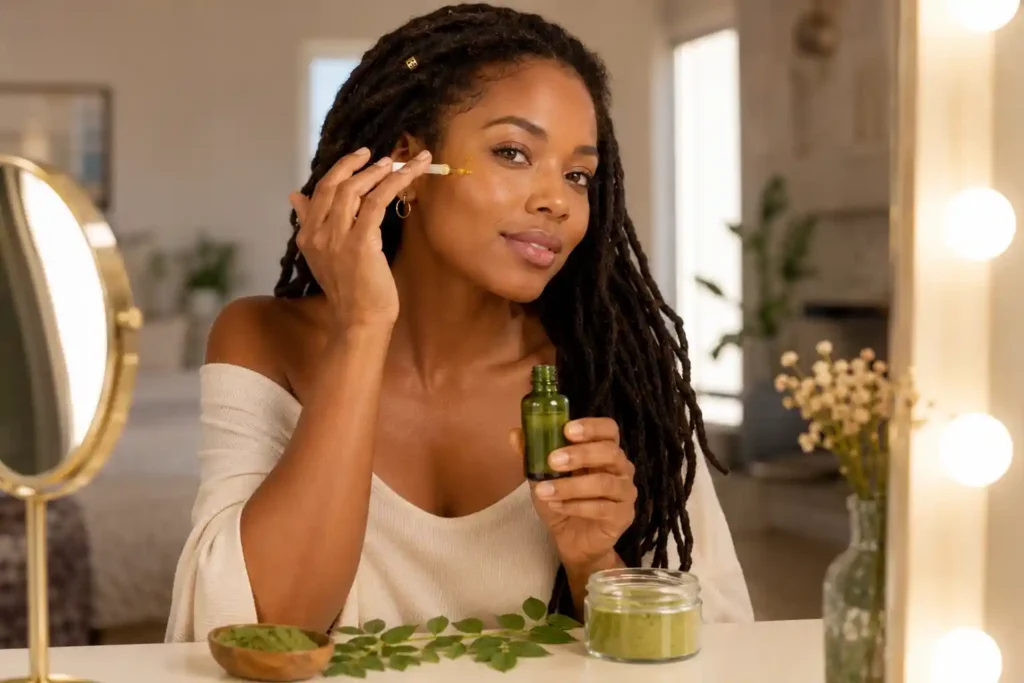
Moringa works on skin and hair from two directions — inside through nutrition, and outside through moringa oil. Both approaches are backed by research and thousands of years of traditional use.
📋 Table of Contents
Introduction
Your skin and hair reflect what happens inside your body. When you are deficient in vitamins A, C, E, iron, or zinc — your skin gets dull, dry, and ages faster. Your hair becomes thin, brittle, and falls out more easily.
Moringa addresses all of these deficiencies at once. It is one of the richest natural sources of every single nutrient that skin and hair need. And a 14-week clinical trial in women specifically showed moringa activates the genes your body uses to make collagen and elastin — the proteins that keep your skin firm and youthful.
🛠️ Free Health Tools — Allergy Symptom Finder, BMI Calculator, Water Intake Calculator & more
🔍 Browse All Free Health Tools →This article covers everything moringa can do for your skin and hair — inside and out. This article is part of our complete Moringa series. For the full overview of all moringa health benefits, see our complete Moringa Benefits guide.
Moringa Benefits for Skin
Moringa works on your skin from the inside. When you take it daily as a powder or supplement, the vitamins, minerals, and antioxidants are delivered directly to your skin cells through your bloodstream. No topical cream can do this as efficiently.
Activates Collagen and Elastin Production
A 14-week randomised clinical trial in healthy women aged 30–65 found that daily oral moringa supplementation activated the genes responsible for producing collagen and elastin — the two structural proteins that keep skin firm, plump, and youthful. It also improved skin microperfusion — the tiny blood vessel network that delivers oxygen and nutrients to skin cells. This is the strongest clinical evidence for any natural supplement and skin aging.
Protects Skin from Aging and UV Damage
Vitamin E in moringa is a powerful fat-soluble antioxidant that sits inside cell membranes — protecting them from oxidative damage caused by UV radiation and pollution. Vitamin C supports collagen synthesis and neutralises free radicals in skin tissue. Quercetin adds another layer of antioxidant protection against UV-triggered cell damage. Together, these three compounds address the main environmental causes of premature skin aging.
Reduces Acne and Skin Inflammation
Acne is an inflammatory condition. Moringa’s isothiocyanates and quercetin reduce the inflammation that drives acne breakouts. Its zinc content helps regulate sebum — the skin oil that when overproduced blocks pores and feeds acne-causing bacteria. Moringa also has natural antibacterial properties. Both oral moringa and topical moringa oil have shown benefit for acne-prone skin in research settings.
Brightens Skin and Reduces Dark Spots
Vitamin C in moringa inhibits an enzyme called tyrosinase — which drives melanin (dark pigment) overproduction in skin. This makes vitamin C one of the most studied natural ingredients for hyperpigmentation and uneven skin tone. Regular moringa use contributes to your daily vitamin C intake, supporting gradual improvement in skin brightness and evening of dark spots over time. Results are subtle but consistent over 8–12 weeks.
Speeds Up Wound Healing
Laboratory studies show moringa extracts may help skin wounds heal more quickly. One mechanism is the reduction of oxidative stress at the wound site — which is one of the main factors that slows healing. A 2022 study found moringa seed oil reduced skin inflammation in animal models of skin edema. Vitamin A in moringa supports tissue repair and regeneration. Zinc helps seal wounds and rebuild the skin barrier.
📊 Clinical Study — Moringa and Skin in Women
A 14-week randomised controlled trial enrolled healthy women aged 30–65. Participants took oral moringa supplementation daily. Skin biopsies at the end of the trial showed upregulation of genes encoding type I and type III collagen, elastin, and fibrillin-1 — all structural proteins critical for youthful, firm skin. Researchers also measured improved skin microperfusion — meaning better blood flow to skin cells. This is the most compelling clinical evidence to date for a natural supplement improving skin aging mechanisms.
Moringa Benefits for Hair
Hair loss and thinning hair affect millions of people. One of the most common and most overlooked causes is nutritional deficiency. Moringa addresses the four most critical nutritional drivers of hair loss in one daily serving.
Reduces Hair Loss from Iron Deficiency
Iron deficiency is the most common nutritional cause of hair loss — especially in women. Your hair follicles need iron-rich blood to stay active and grow. When iron is low, hair follicles enter the resting phase earlier — causing more hair to fall out each day. Moringa is one of the richest plant sources of iron available. A clinical study found moringa supplementation in women with iron-deficiency anaemia significantly increased haemoglobin levels within 3 weeks — directly supporting follicle health.
Strengthens Hair From Root to Tip
Hair is made of keratin — a protein. Your body builds keratin from amino acids. Moringa is one of the few plants that contains all nine essential amino acids — making it a complete protein source. These amino acids provide the building blocks your body needs to build stronger, thicker hair shafts. Zinc in moringa supports the oil glands around each follicle, keeping the scalp environment healthy for hair growth. Regular moringa use strengthens hair over 8–12 weeks of daily use.
Supports Scalp Health and Reduces Dandruff
A healthy scalp is essential for healthy hair. Moringa’s anti-inflammatory and antibacterial properties help address two of the main causes of scalp problems — inflammation and bacterial or fungal overgrowth. Vitamin A in moringa supports sebum production — the natural scalp oil that keeps the scalp moisturised and prevents dryness and flaking. Moringa oil applied topically is particularly effective for dry, irritated, or dandruff-prone scalps.
Protects Hair from Oxidative Damage
Free radicals damage hair follicles and accelerate hair aging — causing premature greying, dullness, and brittleness. Moringa oil is rich in antioxidants including vitamin E, quercetin, and kaempferol. These neutralise free radicals specifically in scalp tissue, protecting follicles from environmental damage caused by UV, pollution, and chemical treatments. Animal studies confirm moringa oil may help prevent oxidative stress-induced hair loss.
Moringa Oil — The Topical Powerhouse
Moringa oil is pressed from moringa seeds — not the leaves. It has a very different profile from moringa leaf powder. It is rich in behenic acid, oleic acid, and vitamin E — which make it one of the most moisturising and stable natural oils available.
Moringa oil has been used in skincare since ancient Egypt — it was found in clay pots in Egyptian tombs. Modern cosmetic chemists prize it for its exceptional stability — it resists going rancid far longer than other plant oils — and its fast-absorbing, non-greasy texture.
| Use | How to Apply | Benefit |
|---|---|---|
| Face moisturiser | 2–3 drops massaged into clean skin morning or night | Deep hydration, anti-aging, non-greasy |
| Acne treatment | Dab directly onto blemishes with a cotton bud | Antibacterial, reduces redness and inflammation |
| Anti-aging serum | Mix 3–4 drops into your usual serum or moisturiser | Boosts antioxidant protection, firms skin |
| Scalp massage | Warm a small amount in palms, massage into scalp for 5 min | Improves circulation, reduces dandruff, feeds follicles |
| Hair mask | Apply to hair from mid-length to ends, leave 20 min, shampoo out | Deep conditioning, reduces breakage and split ends |
| Cuticle oil | A drop massaged into each cuticle daily | Strengthens nails, prevents dryness and cracking |
🔬 Why Moringa Oil Is Unique
Moringa oil contains approximately 70% oleic acid — the same fatty acid found in premium olive and argan oil — which gives it excellent skin penetration and moisturising properties. It also contains behenic acid (6–8%) — rarely found in plant oils — which gives moringa oil its exceptional shelf stability and smooth, conditioning texture. Its oleic acid-to-linoleic acid ratio is ideal for most skin types — moisturising without being too heavy for oily skin or too light for very dry skin.
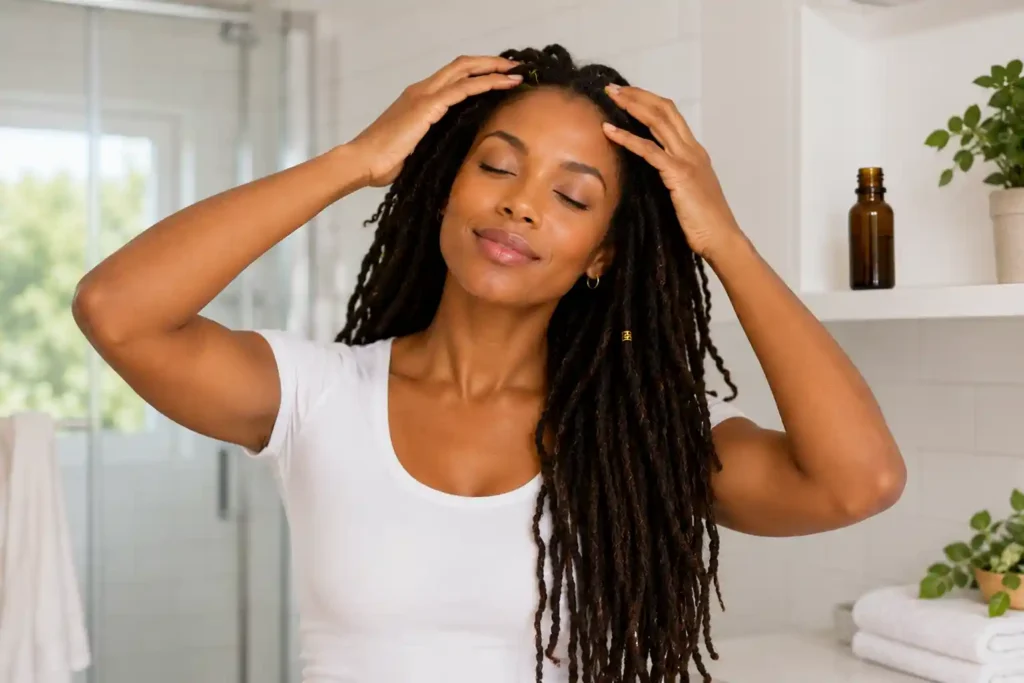
Massage warm moringa oil into your scalp for 5 minutes twice a week — it improves circulation, feeds hair follicles, and reduces dandruff. © DailyHealthLeaf.com
📖 Complete Moringa Guide
This article focuses on moringa for skin and hair. For all 10 health benefits, full nutrition profile, and complete safety information, read our complete Moringa Benefits guide. For moringa powder specifically, see our Moringa Powder Benefits guide.
Inside vs Outside — Which Works Better?
People often ask whether they should take moringa orally or apply it topically. The honest answer is — both work, but in different ways. They are not competing approaches — they complement each other.
| Approach | How It Works | Best For | Time to See Results |
|---|---|---|---|
| Oral moringa powder | Delivers nutrients via bloodstream to all skin and hair cells simultaneously | Collagen, elastin, hair growth, iron, overall glow | 6–12 weeks |
| Topical moringa oil | Directly moisturises, protects, and feeds skin and scalp surface | Acne, dryness, scalp health, dandruff, split ends | 1–4 weeks |
| DIY moringa face mask | Short-term nutrient and antioxidant boost directly on skin surface | Brightening, soothing inflammation, weekly treatment | Immediate + cumulative |
💡 Best approach: Take moringa powder orally every day for deep, lasting skin and hair nutrition. Use moringa oil topically 2–3 times per week for surface-level moisturising, scalp care, and targeted treatment. This inside-out and outside-in combination is what the clinical study participants experienced — and it gives you the best of both approaches.
How to Use Moringa for Skin and Hair
Here are the most practical ways to use moringa for skin and hair — both orally and topically.
✨ Moringa Morning Skin & Hair Routine
- 1Oral dose: Mix 1 teaspoon of moringa powder into warm water with a squeeze of lemon. Drink after breakfast every morning.
- 2Face oil (PM): After cleansing at night, apply 2–3 drops of moringa oil to your face and neck. Massage gently until absorbed.
- 3Scalp treatment (2x weekly): Warm a teaspoon of moringa oil in your hands, massage into scalp for 5 minutes, leave for 30 minutes, then shampoo out.
- 4Weekly face mask: Mix 1 tsp moringa powder + 1 tsp honey + a few drops of lemon juice into a paste. Apply for 10–15 minutes, rinse with warm water.
- 5Hair ends treatment: Apply a small amount of moringa oil to dry or damp hair ends daily to prevent breakage and add shine.
🌿 How should you use Moringa for skin and hair? Type it in our free Herb & Tea Benefit Finder — get preparation method, timing, dosage, and safety notes instantly.
🔍 Try the Herb & Tea Benefit Finder →Side Effects & Safety
Moringa is safe for most people when used correctly. But there are a few things to be aware of for skin and hair use specifically.
⚠️ Patch test before applying moringa oil: Apply a small amount of moringa oil to the inside of your wrist or behind your ear. Wait 24 hours. If you notice redness, itching, or swelling — do not use moringa oil on your face or scalp. Allergic reactions to moringa oil are rare but possible — especially in people with nut or seed allergies.
Conclusion
Moringa is one of the most well-rounded natural tools for skin and hair health available. The clinical evidence for collagen and elastin activation is genuinely impressive. And the nutritional logic is solid — when you give your skin and hair the vitamins, minerals, and antioxidants they need, they respond.
The inside approach — daily moringa powder — takes longer but delivers deeper, more lasting results. The outside approach — moringa oil — works faster on surface-level issues like dryness, dandruff, and acne. Use both together for the best results.
Start with 1 teaspoon of moringa powder in your morning drink every day. Add moringa oil to your evening skincare and weekly scalp routine. Give it 8–12 weeks. Be consistent. That is the formula that clinical research and thousands of years of traditional use both agree on.
Try Our Free Herb & Tea Benefit Finder
Type Moringa or any herb to instantly see its benefits, how to use it, and who should be careful.
🔍 Open the Herb & Tea Benefit Finder →Frequently Asked Questions
Yes — a 14-week clinical trial in women showed oral moringa supplementation activated the genes that produce collagen and elastin in skin. Vitamins A, C, and E in moringa protect skin from aging and free radical damage. Vitamin C also helps reduce dark spots and uneven skin tone. Most people notice visible improvements in skin clarity and radiance after 6–8 weeks of consistent daily use.
Moringa can help with hair loss caused by nutritional deficiency — particularly iron, zinc, and vitamin A deficiency. These are among the most common nutritional causes of hair loss, especially in women. If your hair loss is caused by genetics, hormonal conditions, or medical issues, moringa will have limited effect. But if nutrition is a contributing factor, addressing it with moringa is a sensible and safe approach.
Yes — moringa oil is excellent for facial skincare. It is rich in oleic acid (70%), which penetrates skin deeply without leaving a greasy residue. Its antioxidants protect against UV and environmental damage. Its antibacterial properties help with acne. And its high behenic acid content gives it an unusually smooth, conditioning texture. Apply 2–3 drops to clean skin at night. Do a patch test first if you have sensitive skin.
For oral moringa powder — most people notice improvements in skin hydration and clarity within 4–6 weeks. The clinical trial showed collagen and elastin gene activation at 14 weeks. For topical moringa oil — moisturising and soothing benefits are noticeable within days. Acne improvements typically appear within 2–4 weeks of regular topical use. The combination of oral and topical use gives you both immediate surface improvements and deeper long-term results.
Yes — mix 1 teaspoon of moringa powder with 1 teaspoon of honey and a few drops of lemon juice to make a simple face mask. Apply for 10–15 minutes and rinse with warm water. The moringa provides antioxidants and vitamins. The honey moisturises and has antibacterial properties. The lemon adds vitamin C for brightening. Use once a week as a weekly treatment alongside your daily oral moringa routine.
They work differently and both have value. Moringa oil applied topically directly moisturises the scalp, reduces dandruff, and protects hair from breakage — you see results within a week or two. Moringa powder taken orally feeds hair follicles from inside through improved iron, zinc, and amino acid levels — results take 8–12 weeks but are more fundamental. For best hair results, use both — oil on the scalp twice a week, powder in your morning drink every day.
Yes — moringa addresses acne through two pathways. Orally, its zinc content regulates sebum production and its anti-inflammatory compounds reduce the inflammation that drives breakouts. Topically, moringa oil has antibacterial properties that target acne-causing bacteria, and its oleic acid deeply moisturises without clogging pores. Dab moringa oil directly onto blemishes with a cotton bud for targeted treatment, or add 2–3 drops to your moisturiser for daily prevention.
Yes — moringa oil is safe for colour-treated, chemically-treated, and heat-styled hair. Its fatty acid profile makes it particularly helpful for damaged hair — it fills in gaps in the hair cuticle, reducing porosity and preventing colour fade. Apply it to mid-lengths and ends rather than the scalp if you have oily roots. Use it as a pre-shampoo treatment or leave-in conditioner on the ends of dry or damp hair.