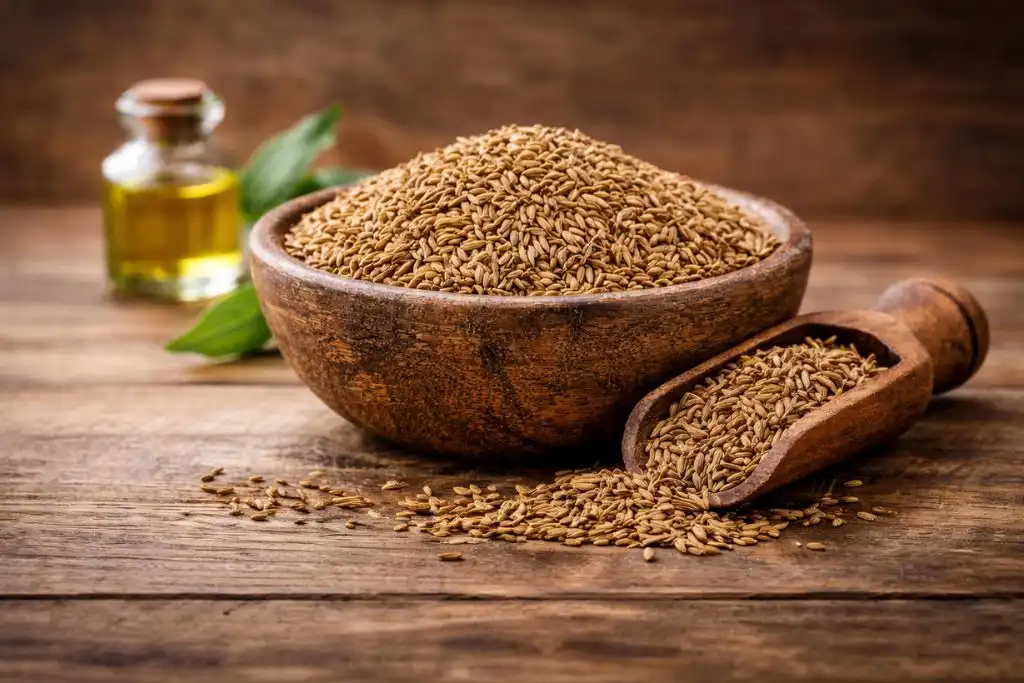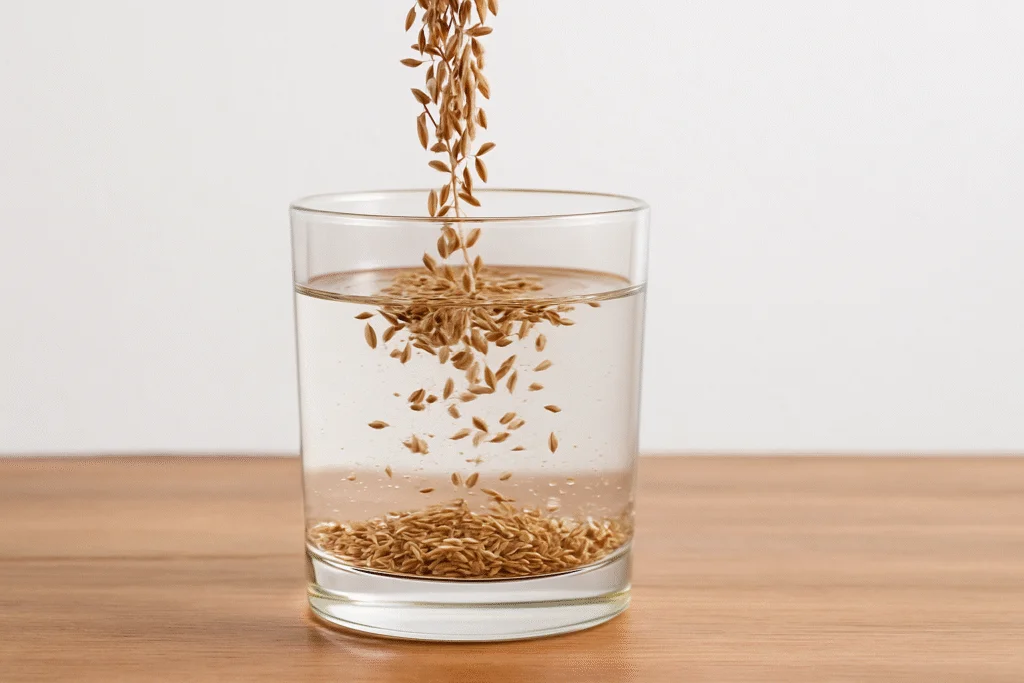
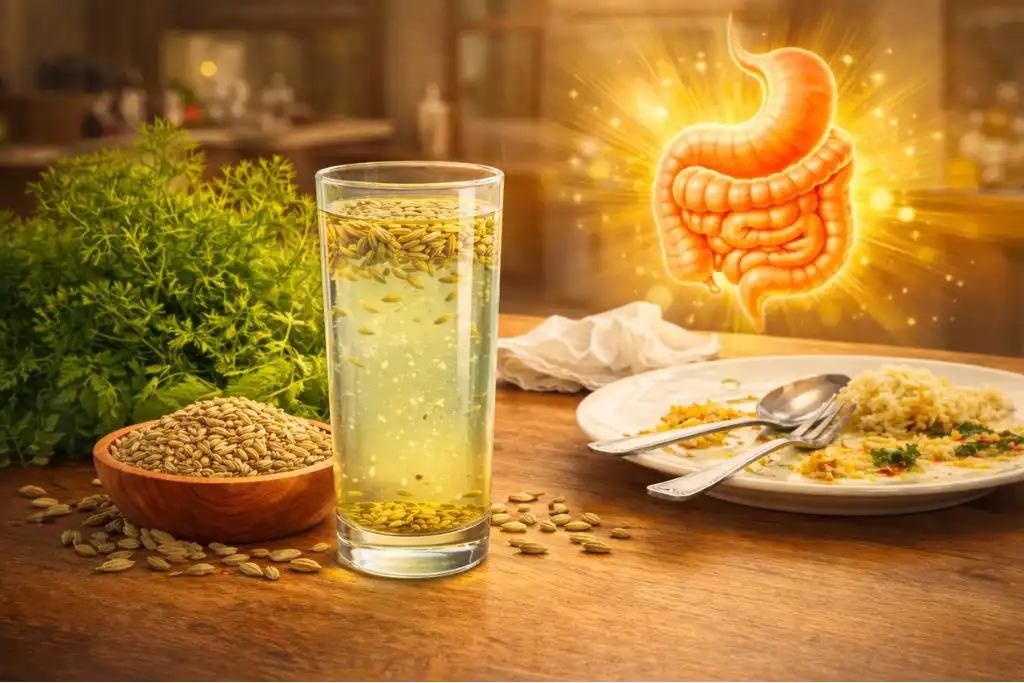
Drinking fennel water after meals is one of the oldest and most widely practised post-meal rituals in South Asia, the Middle East, and the Mediterranean. The science behind this tradition is clear — anethole in fennel seeds directly relaxes intestinal smooth muscle, relieving the bloating, gas, and cramping that commonly follow eating.
📋 Table of Contents
- Introduction
- Why After Meals Specifically?
- The Science Behind Post-Meal Fennel Water
- 5 Benefits of Drinking After Meals
- Which Meals Benefit Most?
- Best Timing — How Soon After Eating?
- Warm vs Room Temperature vs Cold
- How to Prepare Post-Meal Fennel Water
- How Much After Meals?
- Who Should Be Careful?
- FAQs
- Related Health Guides
Introduction
If you have ever visited a South Asian restaurant, you have almost certainly seen it: a small bowl of fennel seeds placed near the exit, offered to every guest after their meal. This is not a random cultural quirk — it is one of the most enduring evidence-supported post-meal practices in the world. Fennel seeds and fennel water have been offered after eating across South Asia, the Middle East, North Africa, and the Mediterranean for thousands of years, for a specific and scientifically validated reason.
The post-meal timing of fennel water is not arbitrary. It works with the body’s natural digestive timeline — taken at the right moment after eating, fennel water’s active compound anethole can reduce bloating before it builds, settle intestinal spasms before they become uncomfortable, and regulate gastric acid production before it causes heartburn. This is preventive digestive care at its simplest.
This article focuses specifically on the post-meal use of fennel water — why the timing matters scientifically, which meal types benefit most, exactly when to drink it, and the specific benefits it delivers in the post-meal window. For the complete guide to fennel seeds and all their benefits, see our complete guide to fennel seeds (Saunf) benefits, nutrition, and traditional uses.
Why After Meals Specifically?
Fennel water can be consumed at any time of day and offers benefits across different timings — but the post-meal window is where it is most immediately and tangibly effective. Here is why:
| Post-Meal Digestive Challenge | How Fennel Water Addresses It |
|---|---|
| Gas accumulation from food fermentation | Anethole & fenchone relax intestinal wall — allow gas to pass naturally |
| Intestinal cramping & spasms | Antispasmodic action of anethole reduces smooth muscle tension |
| Excess gastric acid / heartburn | Anethole moderates gastric secretion; aspartic acid neutralises acid |
| Post-meal breath odour | Anethole’s aromatic antimicrobial properties freshen breath |
| Feeling of heaviness / fullness | Digestive enzyme stimulation improves breakdown of remaining food |
| Nausea after rich or oily meals | Carminative action settles stomach and reduces nausea signals |
The Science Behind Post-Meal Fennel Water
The effectiveness of post-meal fennel water comes down to three well-documented mechanisms of its primary bioactive compounds:
| Compound | Mechanism | Post-Meal Effect |
|---|---|---|
| Anethole | Binds to smooth muscle receptors in the intestinal wall — reduces involuntary contractions | Relieves cramping, bloating, and trapped gas within 15–30 min |
| Fenchone | Carminative — reduces gas formation and facilitates expulsion of existing gas | Reduces flatulence and post-meal heaviness |
| Aspartic acid | Natural anti-flatulent and mild antacid — neutralises excess stomach acid | Reduces acidity, heartburn, and sour taste after meals |
| Volatile oils (general) | Stimulate salivary and digestive enzyme secretion | Improves breakdown of any remaining undigested food |
| Antimicrobial compounds | Reduce oral bacteria responsible for post-meal bad breath | Natural breath freshening lasting 30–60 minutes |
A review published in the Journal of Food Science confirmed fennel seeds’ classical carminative and antispasmodic role. The antispasmodic mechanism is particularly relevant post-meal — food stretches the stomach and intestinal wall, triggering smooth muscle tension that can cause cramping and discomfort. Anethole specifically inhibits this tension response, making it most effective precisely when the digestive system is under the greatest load.
🔗 🌾 Full Guide: Fennel Seeds (Saunf) — Complete Benefits, Nutrition & Uses
This article focuses on the post-meal use of fennel water. For the complete picture — all 10 health benefits, full nutritional data, bioactive compounds, Ayurvedic uses, dosage, and side effects — read our full pillar guide:
👉 Fennel Seeds (Saunf): 10 Benefits, Nutrition, Uses & Side Effects →
5 Specific Benefits of Drinking Fennel Water After Meals
The following are based on available research and traditional use. Fennel water is not a medical treatment. Always consult your doctor before using it for specific health concerns.
🫁 Prevents & Relieves Post-Meal Bloating
Post-meal bloating occurs when gas accumulates in the intestine faster than the gut can expel it — typically from fermentation of undigested food or swallowed air during eating. Anethole and fenchone in fennel water relax the intestinal smooth muscle, allowing this trapped gas to move and pass naturally. Taken 15–30 minutes after a meal — before significant gas has accumulated — fennel water acts preventively, stopping bloating from building rather than just relieving it once it has arrived.
🔥 Reduces Acidity & Post-Meal Heartburn
Heartburn and acid reflux after meals occur when excess gastric acid irritates the oesophagus. Fennel water works through two mechanisms simultaneously: anethole moderates gastric acid production, and aspartic acid — a natural antacid compound in fennel — neutralises excess acid already present. This dual-action approach makes fennel water particularly effective for those who regularly experience post-meal acidity after spicy, fatty, or protein-rich meals. Warm fennel water enhances both effects compared to cold or room-temperature preparations.
😮 Freshens Breath Naturally
Post-meal bad breath is caused primarily by volatile sulphur compounds released by oral bacteria as they metabolise food particles remaining in the mouth. Anethole has documented antimicrobial activity specifically against the bacteria responsible for these compounds. A cup of fennel water after meals reduces oral bacterial activity and replaces post-meal breath odour with the pleasant, fresh anise-like aroma of fennel — providing 30–60 minutes of natural freshness without the sugar or artificial ingredients found in commercial breath fresheners.
🫀 Settles Post-Meal Nausea
Nausea after eating — particularly after rich, heavy, or unfamiliar foods — is commonly caused by delayed gastric emptying or intestinal spasming. Fennel’s antispasmodic and carminative action addresses both root causes. Warm fennel water is the most effective preparation for post-meal nausea — the warmth itself promotes stomach relaxation, while anethole reduces the smooth muscle spasms that create the nauseous sensation. This is a traditional remedy that is particularly popular after heavy celebratory meals, during illness, and during pregnancy (in culinary amounts).
💧 Supports Post-Meal Hydration
Many people do not drink enough water after meals — they feel too full, or they simply forget. Fennel water provides a gentle, flavoured post-meal drink that encourages fluid intake at exactly the time the body needs it most — during active digestion, which requires adequate hydration for optimal enzyme function, nutrient absorption, and gut motility. At just 5–8 kcal per cup with zero sugar, it supports post-meal hydration without adding to the caloric load of the meal just eaten.
Which Meals Benefit Most from Post-Meal Fennel Water?
Not all meals create the same level of post-meal digestive challenge. Fennel water is most beneficial after meals that produce more gas, acid, or digestive load:
| Meal Type | Why It Causes Discomfort | Fennel Water Benefit |
|---|---|---|
| 🍖 Heavy protein meals (meat, pulses) | Protein fermentation in colon produces gas & bloating | ✅ Highly effective — carminative action targets protein fermentation gas |
| 🍟 Oily / fried foods | Slows gastric emptying; increases acid production | ✅ Highly effective — acid moderation + digestive enzyme stimulation |
| 🍛 Spicy foods | Capsaicin irritates gut lining; increases acid | ✅ Very effective — cooling anethole soothes gut irritation |
| 🫘 Legumes / beans / lentils | High oligosaccharide content — most gas-producing foods | ✅ Most effective use case — fennel is the classic legume digestive aid |
| 🥗 Light salads / vegetables | Minimal digestive challenge | ⚠️ Less necessary — but still pleasant and hydrating |
| 🍰 Rich desserts / sweet foods | Sugar fermentation produces gas; may cause bloating | ✅ Good — reduces sugar fermentation gas and freshens sweet-food breath |
| 🍺 Alcohol-accompanied meals | Alcohol irritates gut lining; dehydrates | ✅ Good — rehydration + anti-inflammatory benefit |
Best Timing — How Soon After Eating?
| Timing After Meal | Effect | Best For |
|---|---|---|
| ⚡ Immediately (0–5 min) | Enzyme stimulation begins; prevents gas from building | Preventive — best for heavy meals where bloating is expected |
| ✅ 15–30 minutes after | Optimal window — anethole reaches intestine as digestion peaks | Best all-round timing for most people and most meals |
| ⏱️ 30–60 minutes after | Still effective for gas & acidity relief | Good if you forgot — still addresses ongoing digestive discomfort |
| ❌ 2+ hours after | Digestive peak has passed — less targeted benefit | Still hydrating but not specifically post-meal effective |
Warm vs Room Temperature vs Cold After Meals
| Temperature | Effect | Best For |
|---|---|---|
| ☕ Warm (40–50°C) | Enhances anethole absorption; promotes smooth muscle relaxation; most soothing | ✅ Best overall — especially for cramping, nausea, acidity, cold weather |
| 🌡️ Room temperature | Good effect — standard absorption rate | ✅ Good for everyday use — most convenient year-round |
| ❄️ Cold / chilled | Slower absorption; may cause minor gastric contraction in sensitive individuals | ⚠️ Acceptable in summer — but least effective for digestive benefits |
How to Prepare Post-Meal Fennel Water
⭐ Quick Post-Meal Method (5 Minutes)
Ingredients:
- 1 tsp fennel seeds
- 250ml water
- Optional: squeeze of lemon, pinch of black salt
- 1 Add 1 tsp fennel seeds to 250ml of water in a small saucepan.
- 2 Bring to a gentle boil then simmer for 3–5 minutes.
- 3 Remove from heat and cool to a comfortable drinking temperature (40–50°C).
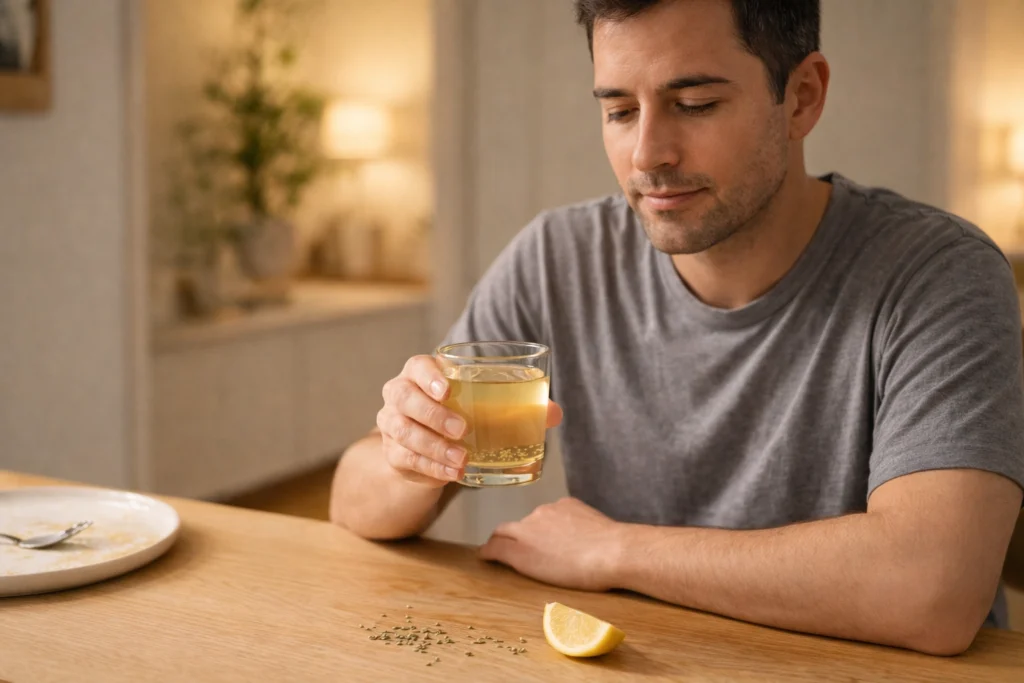
- 4 Strain into a cup and drink warm 15–30 minutes after your meal.
⭐ Batch Preparation (Make Ahead for the Week)
Ingredients:
- 2 tbsp fennel seeds
- 1 litre water
- 1 Add 2 tbsp fennel seeds to 1 litre of cold water the night before.
- 2 Soak overnight (8–10 hours) at room temperature.
- 3 Strain seeds and store the infused water in the refrigerator for up to 3 days.
- 4 Pour a cup and warm gently on the hob or in the microwave before drinking after meals.
For more preparation methods and variations, see our dedicated guide: How to Make Fennel Water at Home — Soaking vs Boiling →
Explore More Digestive Herbs & Teas
Wondering which other herbs support digestion after meals? Use our free Herb & Tea Benefit Finder to instantly compare benefits, timing, and preparation methods.
🔍 Open the Herb & Tea Benefit Finder →How Much Fennel Water After Meals?
Who Should Be Careful?
Fennel water after meals is generally safe for most healthy adults. Specific groups should exercise caution:
For a complete breakdown of all side effects and drug interactions: Fennel Water Side Effects and Who Should Avoid It →
Frequently Asked Questions
Try Our Free Herb & Tea Benefit Finder
Type fennel, cumin, ginger, or any herb or tea to instantly see its benefits, best time to use, preparation method, and who should be careful.
🔍 Open the Herb & Tea Benefit Finder →