
Fennel Water Benefits: 8 Reasons to Drink It Daily + How to Make

Glass and jug of fennel water with fennel seeds, representing digestion support and daily hydration benefits on a clean green background
📋 Summary — Key Takeaways

Fennel water is a traditional herbal infusion made from fennel seeds (Foeniculum vulgare / Saunf) soaked or boiled in water. It delivers the seeds’ water-soluble bioactive compounds — primarily anethole — in a gentle, near-zero calorie form that supports digestion, hydration, and daily wellness.

Only 5–8 kcal per cup — ideal low-calorie daily beverage
Anethole relaxes gut muscle — relieves bloating, gas & cramping
Supports digestion, weight management & skin health
Best drunk warm in the morning or after meals
Overnight soak preferred — gentler and retains more compounds
Caution in pregnancy, hormonal conditions & blood thinners

🌱 Introduction

Fennel water — known as saunf ka pani across South Asia — is one of the most widely consumed traditional herbal drinks in the world. Made simply by soaking or boiling fennel seeds in water, it has been a staple of Ayurvedic and Unani wellness routines for centuries, and its global popularity is now growing rapidly as wellness communities in the US, Europe, and beyond discover its benefits.

What makes fennel water particularly appealing in a modern health context is its combination of near-zero calories, genuine bioactive compounds, and versatility as a daily drink. Unlike many wellness beverages that require expensive ingredients or complicated preparation, fennel water costs almost nothing to make and takes less than 5 minutes using the boiling method — or no active time at all with the overnight soak.

Modern phytochemical research has now confirmed the mechanisms behind fennel water’s traditional uses. Its primary active compound anethole — responsible for the characteristic sweet, anise-like flavour — has documented antispasmodic, carminative, antimicrobial, and mild oestrogenic properties. This explains why fennel water is effective across such a wide range of uses: digestive comfort, hydration habit-building, weight management support, skin health, and more.

This article focuses specifically on fennel water — its benefits, nutritional profile, preparation methods, and best daily use. For the complete guide to fennel seeds including all 10 health benefits and full nutritional data, see our complete guide to fennel seeds (Saunf) benefits, nutrition, and traditional uses.

💧 What Is Fennel Water?

Fennel water is water infused with fennel seeds (Foeniculum vulgare), prepared either by soaking overnight or by briefly boiling. The infusion process extracts a portion of the seeds’ water-soluble volatile oils, flavonoids, and minerals into the water, creating a pale golden, mildly flavoured drink.

It is typically consumed plain — without sugar, honey, or sweeteners — though adding lemon juice is a popular and nutritionally beneficial variation. It can be drunk warm, at room temperature, or chilled depending on preference and purpose.

Fennel Water vs Whole Fennel Seeds — Key Differences

Feature💧 Fennel Water🌿 Whole Seeds (chewed)
Compound concentrationLower — only water-soluble compounds extractedHigher — full oil content released
Gentleness on stomach✅ Very gentle — suitable for sensitive stomachs⚠️ Stronger — may irritate sensitive individuals
Ease of consumption✅ Easy — just drinkRequires chewing — some find texture unpleasant
Best forDaily routine, hydration, morning useImmediate post-meal relief, breath freshening
Calories~5–8 kcal per cup~7 kcal per ½ tsp
Fibre contributionMinimal (fibre stays in seeds)✅ 2.3g per tbsp
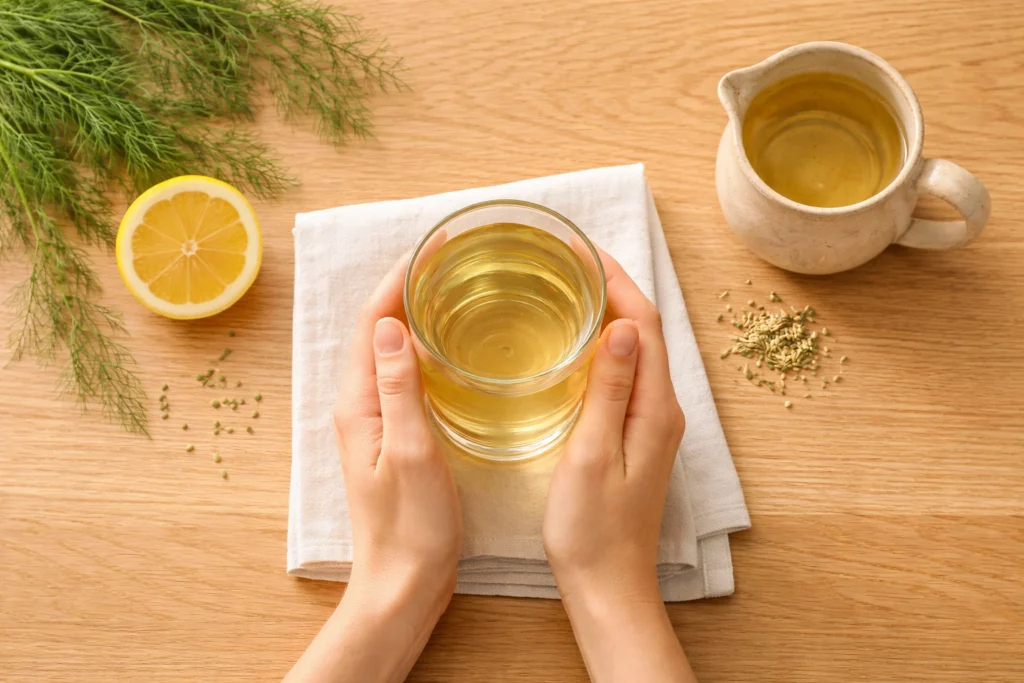
Overhead view of hands holding glass of fennel water on wooden table with fennel seeds and lemon representing daily hydration habit
A glass of fennel (saunf) water — one of the simplest swaps for replacing high-calorie drinks in a daily wellness routine.
Key distinction: Fennel water is not a weaker version of fennel seeds — it is a different preparation that emphasises gentleness, hydration, and daily routine suitability. For immediate post-meal gas relief, chewing seeds is faster. For a sustainable daily wellness habit, fennel water is the better fit.

📊 Nutritional Profile of Fennel Water

Fennel water itself is extremely low in calories — all significant macronutrient content remains in the seeds after straining. What the water does carry are the seeds’ water-soluble bioactive compounds.

Property / NutrientPer 250ml CupNotes
Calories~5–8 kcalNegligible — suitable for any diet plan
Carbohydrates<1 gTrace only
ProteinTraceMinimal in water infusion
FatTraceMinimal in water infusion
Anethole (volatile oil)Present — low concentrationPrimary bioactive compound — antispasmodic
Fenchone (volatile oil)Present — traceCarminative — reduces gas
FlavonoidsTrace — water-soluble fractionAntioxidant activity
PotassiumSmall traceMore bioavailable from whole seeds
ColourPale golden to clearDarker with longer steep / boil

🔗 🌾 Full Guide: Fennel Seeds (Saunf) — Complete Benefits, Nutrition & Uses

This article covers fennel water specifically. For the complete fennel seeds picture — all 10 health benefits, full macro and micronutrient data, bioactive compounds table, Ayurvedic uses, dosage, and side effects — read our full pillar guide:

👉 Fennel Seeds (Saunf): 10 Benefits, Nutrition, Uses & Side Effects →

💚 8 Key Benefits of Fennel Water

The following benefits are based on available research and traditional use. Fennel water is not a medical treatment. Always consult your doctor before using it for specific health concerns.

BENEFIT 01

🫁 Relieves Bloating & Digestive Discomfort

This is fennel water’s most well-known and best-researched benefit. Anethole in the infusion relaxes the smooth muscle lining of the intestinal wall — reducing bloating, trapped gas, and post-meal cramping. Unlike chewing whole seeds which delivers a concentrated burst of volatile oils, fennel water delivers a gentler, more sustained effect — ideal for those with sensitive digestive systems or those who want preventive rather than reactive digestive support.

BENEFIT 02

💧 Supports Daily Hydration Habits

One of fennel water’s most underrated benefits is simply that it makes people drink more water. Many adults struggle to meet daily hydration targets with plain water alone — the mild, pleasant flavour of fennel water makes consistent drinking feel more natural and enjoyable. Replacing one or two daily sugary or caffeinated drinks with fennel water simultaneously improves hydration, reduces calorie intake, and delivers bioactive compounds — a triple benefit from one simple change.

BENEFIT 03

⚖️ Supports Weight Management

At just 5–8 kcal per cup, fennel water is one of the most calorie-efficient flavoured beverages available. Its mild diuretic properties help reduce water retention and bloating that can contribute to temporary weight fluctuations. A 2015 study in Clinical Nutrition Research found fennel tea significantly reduced appetite and increased feelings of fullness in participants. For weight management, morning fennel water on an empty stomach is the most commonly recommended approach — establishing a low-calorie hydration habit that supports satiety through the morning.

BENEFIT 04

🛡️ Antioxidant & Immune Support

Fennel water carries water-soluble fractions of the seeds’ polyphenol antioxidants — rosmarinic acid, chlorogenic acid, and flavonoids — into the infusion. These antioxidants neutralise free radicals and reduce oxidative stress that underlies chronic inflammation. While the concentrations in water are lower than in whole seeds, regular daily consumption contributes meaningfully to cumulative antioxidant intake. The infusion also carries trace vitamin C from the seeds, supporting immune cell function and collagen synthesis.

BENEFIT 05

✨ Supports Skin Health

Fennel water is used both internally and externally for skin health in traditional Ayurvedic and Mediterranean practices. Internally, its antioxidant compounds protect skin cells from oxidative damage — reducing premature ageing, fine lines, and dullness. Its mild diuretic and anti-inflammatory effects help flush out toxins that can contribute to acne and uneven skin tone. Externally, cooled fennel water is used as a gentle toner in Ayurvedic skincare — its antimicrobial and anti-inflammatory properties are particularly beneficial for oily or acne-prone skin.

BENEFIT 06

🌸 Hormonal & Menstrual Comfort

Fennel seeds contain phytoestrogens — plant compounds with mild oestrogen-like activity — and these compounds are partially water-soluble, meaning fennel water carries a gentle fraction of them. Warm fennel water is traditionally consumed during menstruation for cramp relief, drawing on the antispasmodic action of anethole on uterine muscle. For menopausal women, regular fennel water consumption may offer mild support for hot flushes and mood fluctuations — though this should be discussed with a healthcare provider for those with hormone-sensitive conditions.

BENEFIT 07

😮 Freshens Breath Naturally

The aromatic volatile oils in fennel — particularly anethole — have documented antimicrobial activity against the oral bacteria responsible for bad breath. Drinking fennel water after meals provides a gentler, longer-lasting breath-freshening effect compared to chewing seeds. For those who find chewing seeds inconvenient after every meal, a cup of fennel water achieves similar oral freshness while also supporting digestion. This dual benefit makes post-meal fennel water an excellent replacement for mints, gum, or sugar-laden breath fresheners.

BENEFIT 08

🌙 Supports Evening Relaxation & Sleep

Warm fennel water in the evening is a traditional Ayurvedic practice for promoting relaxation and digestive settling before sleep. The antispasmodic properties of anethole reduce the intestinal tension and bloating that can disrupt comfortable sleep. Fennel water is caffeine-free, making it a natural alternative to evening tea or coffee that won’t interfere with sleep onset. The warm temperature itself promotes physical relaxation and signals the body’s wind-down process — a simple, calorie-free addition to an evening wellness routine.

🚰 Fennel Water & Daily Hydration

Adequate daily hydration is one of the most consistently evidence-supported pillars of good health — yet most adults in the US and Europe fall short of recommended daily fluid intake. Fennel water offers a practical solution: it makes hydration more enjoyable without adding meaningful calories, sugar, or caffeine.

BeverageCalories (250ml)Hydration ValueFennel Water Advantage
Plain water0 kcal✅ ExcellentFennel water adds flavour + bioactives
Fennel water5–8 kcal✅ ExcellentFlavour + digestive + antioxidant benefit
Fruit juice110–130 kcal✅ GoodFennel water has 95% fewer calories
Fizzy drinks100–150 kcal⚠️ ModerateFennel water has zero sugar
Herbal tea (sweetened)30–60 kcal✅ GoodFennel water unsweetened = fewer calories
Coffee / tea (with milk)40–80 kcal✅ GoodFennel water is caffeine-free
The hydration habit tip: Replace one daily sugary or caffeinated drink with fennel water. Over a week that saves 700–1,000 kcal while improving hydration quality, adding digestive bioactives, and building a sustainable wellness habit — all for the cost of a few teaspoons of fennel seeds.
💧

How Much Water Should You Drink Daily?

Fennel water contributes to your daily fluid intake target. Use our free Water Intake Calculator to find your personalised daily hydration goal based on your weight and activity level.

💧 Calculate My Daily Water Intake →

🥛 How to Make Fennel Water

🌊 Method 1: Overnight Soak (Recommended for Daily Use)

Ingredients:

  • 1–2 tsp fennel seeds
  • 250–300ml water (room temperature)
  • Optional: squeeze of lemon, pinch of black salt
  1. 1 Add 1–2 tsp fennel seeds to a glass or jug of water in the evening.
  2. 2 Cover and leave at room temperature overnight (8–10 hours).
  3. 3 Strain seeds in the morning using a fine strainer.
  4. 4 Drink warm or at room temperature — add lemon if desired. Avoid sugar.

🔥 Method 2: Quick Boil (Faster — Stronger Flavour)

Ingredients:

  • 1 tsp fennel seeds
  • 300ml cold water
  1. 1 Add fennel seeds to cold water in a small saucepan.
  2. 2 Bring to a gentle boil then simmer 5–7 minutes.
  3. 3 Remove from heat and cool for 3–5 minutes.
  4. 4 Strain and drink warm. Add lemon or honey after cooling if desired.
Best additions for enhanced benefits: Lemon juice (vitamin C + digestion) · Honey after cooling (antimicrobial + palatability) · Ginger slice (anti-inflammatory) · Pinch of black salt (electrolytes + flavour)

For more detailed preparation guidance including fennel tea method and storage tips, see our dedicated guide: How to Make Fennel Water at Home →

Best Time to Drink Fennel Water

TimePurposeNotes
🌅 Morning — empty stomachDigestive preparation, hydration, weight management, detoxMost recommended — overnight soak method preferred
🍽️ After mealsBloating relief, gas, acidity, breath fresheningClassic traditional use — most effective for digestion
☀️ Mid-morning / afternoonHydration, appetite control, energy without caffeineGood coffee/tea replacement for non-morning drinkers
🌙 Evening / before bedRelaxation, IBS comfort, overnight digestive settlingWarm — caffeine-free evening ritual
🏋️ Post-exerciseRehydration, anti-inflammatory recoveryAdd pinch of black salt for electrolytes
🩺 During menstruationCramp relief, hormonal comfort, warmthWarm — drink slowly throughout the day
Most recommended time: Morning on an empty stomach — 20–30 minutes before breakfast. This timing maximises digestive preparation for the day, contributes to morning hydration, and establishes the most consistent daily habit. Evening is the second most popular time — warm fennel water 30 minutes before bed promotes relaxation and comfortable overnight digestion.

For a detailed guide specifically on drinking fennel water after meals and the traditional context, see: Fennel Water After Meals — Traditional Use & Digestive Comfort →

💊 How Much Fennel Water Per Day?

Daily Amount
1–2
cups per day
Seeds Per Cup
1–2
teaspoons
Best Time
Morning
before breakfast
Calories
5–8
kcal per cup
For most healthy adults, 1–2 cups of fennel water daily is safe, well-tolerated, and sufficient to experience its benefits. Start with 1 cup in the morning for the first week and observe your personal digestive response before adding a second cup. More than 2 cups daily offers no additional benefit and may cause mild digestive irritation in sensitive individuals.

⚠️ Who Should Be Careful?

Fennel water is generally safe in moderate amounts for most healthy adults. The following groups should exercise caution:

⚠️ Pregnant women — small amounts are generally fine; avoid large quantities of concentrated fennel water which may stimulate uterine activity
⚠️ Hormone-sensitive conditions — phytoestrogens in fennel may be relevant; consult doctor if you have oestrogen-sensitive conditions
⚠️ Blood thinner users — fennel has mild anticoagulant properties; discuss daily use with your doctor
⚠️ Diabetics on medication — may mildly affect blood sugar; monitor glucose when starting daily use
⚠️ Apiaceae family allergy — fennel is related to carrot, celery, coriander; cross-reactions possible
⚠️ Acid reflux sufferers — fennel water usually helps GERD, but some individuals find it aggravates symptoms; test with small amount first
⚠️ Note: Fennel water in culinary amounts is generally very safe. Concerns primarily arise with large medicinal quantities or concentrated preparations. The 1–2 cups per day guidance keeps intake well within the safe range for most healthy adults.

For the complete side effects guide including drug interactions and who should avoid fennel water entirely: Fennel Water Side Effects and Who Should Avoid It →

Frequently Asked Questions

Is fennel water good for digestion?
Yes — fennel water’s primary active compound anethole has well-documented antispasmodic and carminative properties that relax intestinal smooth muscle, relieve bloating, and reduce gas. It also stimulates digestive enzyme secretion when consumed before or with meals. A review in the Journal of Food Science confirmed fennel seeds’ carminative role. Fennel water provides a gentler, more sustained version of these benefits compared to chewing whole seeds.
Can fennel water help with daily hydration?
Yes — fennel water is an excellent hydration tool. Its mild, pleasant flavour makes it easier to drink consistently compared to plain water for many people. At just 5–8 kcal per cup with zero sugar and no caffeine, it can replace multiple high-calorie or caffeinated drinks throughout the day while contributing to daily fluid intake targets. Many people find they naturally drink more fluid when it tastes like something.
When is the best time to drink fennel water?
Morning on an empty stomach (20–30 minutes before breakfast) is the most recommended time — it maximises digestive preparation, contributes to morning hydration, and establishes a consistent daily habit. After meals is the most traditionally popular timing for immediate bloating and gas relief. Evening is ideal for relaxation and comfortable overnight digestion. Each timing serves a slightly different purpose — choose based on your primary goal.
Can fennel water help with weight loss?
Fennel water does not directly cause weight loss, but it supports a weight management lifestyle in several ways: it is near-zero calorie, its mild diuretic properties reduce water retention, and a 2015 study found fennel tea significantly reduced appetite and increased fullness. Its greatest weight management benefit is as a calorie-free replacement for sugary drinks — this simple swap can save 700–1,000 kcal per week consistently over time.
Is the overnight soak or boiling method better?
Both methods are effective. The overnight cold soak is gentler, retains more of the delicate flavonoid compounds, and requires no active preparation time — ideal for daily routine use. The boiling method is faster, produces a stronger flavour and higher volatile oil concentration, and is better when you want more immediate or more potent digestive effects. For everyday drinking, the overnight soak is recommended. For acute bloating or nausea, the boiled method is stronger.
Can I drink fennel water every day?
Yes — for most healthy adults, 1–2 cups of fennel water daily is safe and well-tolerated. It is consumed daily in millions of South Asian households without concern. Start with 1 cup and observe your personal response over the first week before making it a fixed daily habit. More than 2 cups daily is unnecessary and may cause mild irritation in sensitive individuals.
Does fennel water replace plain water?
No — fennel water complements plain water intake but should not replace it entirely. Plain water remains the primary hydration source and is needed for many bodily functions that require pure water without any added compounds. Think of fennel water as 1–2 cups within your total daily fluid intake — it contributes positively while plain water covers the rest of your hydration needs.
Can I add lemon to fennel water?
Yes — lemon is an excellent and widely used addition to fennel water. Lemon adds vitamin C (immune support and iron absorption), improves the flavour significantly for those who find plain fennel water too mild, and adds a small amount of citric acid that may support digestive activity. Lemon juice adds only 5–10 kcal per squeeze. Avoid adding sugar or honey unless you specifically need to improve palatability — keeping it unsweetened preserves the drink’s calorie-minimal benefit.
🌿

Try Our Free Herb & Tea Benefit Finder

Type fennel, cumin, ginger, or any herb or tea to instantly see its benefits, best time to use, preparation method, and who should be careful.

🔍 Open the Herb & Tea Benefit Finder →
Disclaimer: This article is for general informational and educational purposes only and does not constitute medical advice, diagnosis, or treatment. Individual responses to fennel water may vary. Always consult a qualified healthcare provider before making significant changes to your diet or lifestyle, particularly if you are pregnant, have a hormone-sensitive condition, or are taking prescription medication.
Michael Carter
✍️ Written by

Health Content Writer at DailyHealthLeaf — specializing in natural remedies, herbal wellness, and evidence-based nutrition.

Leave a Comment

Your email address will not be published. Required fields are marked *

Scroll to Top