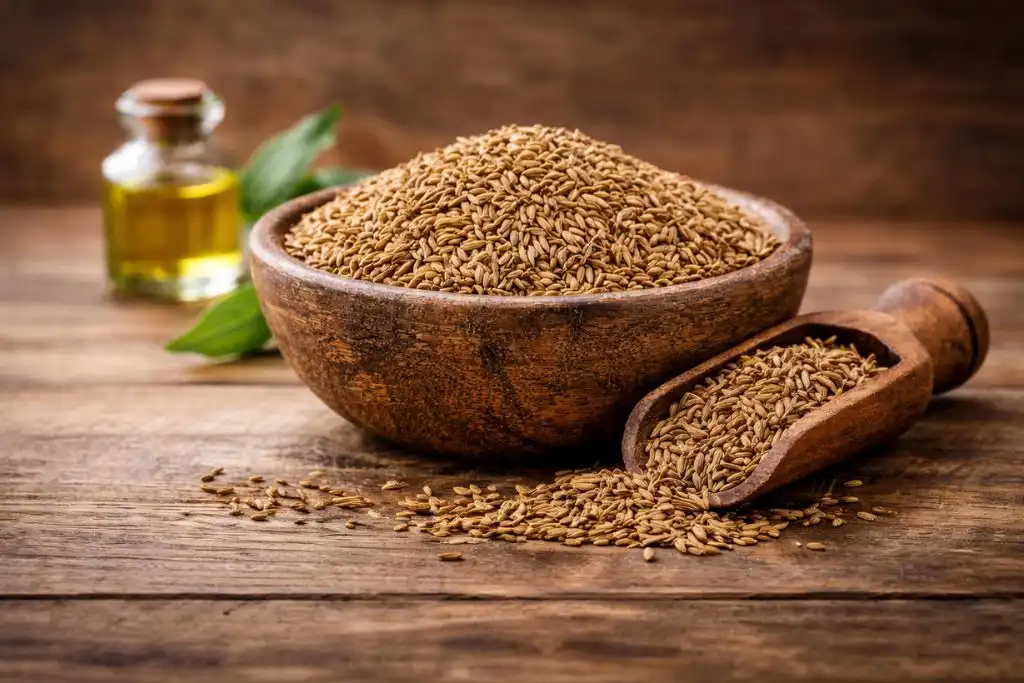

Carom seeds — also known as ajwain — are one of the most powerful medicinal spices in South Asian tradition. A 2025 review in the Journal of Medicinal Plants confirms its anti-inflammatory, antimicrobial, and gastroprotective effects are often comparable to conventional drugs.
📋 Table of Contents
Introduction
Walk into any South Asian kitchen and you will find a small jar of carom seeds on the spice rack. This tiny carom seed has been part of daily cooking and medicine for thousands of years — used for everything from stomach cramps and acidity to cough and congestion. Most South Asian households treat it as a first-aid spice.
Modern science is now confirming what traditional medicine has always known. A comprehensive 2025 review published in the Journal of Medicinal Plants Studies confirmed that carom seeds exhibit anti-inflammatory, antimicrobial, gastroprotective, and cardioprotective effects — often with comparable or greater efficacy than conventional drugs. And searches for carom seeds benefits have surged significantly as global interest in South Asian medicinal herbs continues to grow in 2026.
🛠️ Free Health Tools — BMI Calculator, Water Intake Calculator, Blood Sugar Risk Assessment & more
🔍 Browse All Free Health Tools →In this guide you will learn exactly what carom seeds are, what research says about its benefits, how to use it daily, and who should be careful. Everything is based on real evidence — not tradition alone.
What Are Carom Seeds?
Carom seeds (Trachyspermum ammi) is a small annual plant in the Apiaceae family — the same family as celery, fennel, coriander, and parsley. It is native to Egypt and was introduced to the Indian subcontinent thousands of years ago where it became deeply embedded in both cooking and medicine.
The seeds — which are technically the plant’s fruit — are small, oval, and greyish-brown with fine ridges. They have a very distinctive aroma and flavour — pungent, slightly bitter, and intensely thyme-like. This is because carom seeds contain the same primary compound as thyme: thymol.
Carom seeds are commonly used in Indian, Pakistani, and Bangladeshi cooking — added to breads like paratha and puri, dal dishes, pakoras, and pickles. As a supplement it is taken as carom seed water (carom seed water), chewed raw, or brewed as a tea.
| Language / Origin | Name for Carom Seeds |
|---|---|
| English | Carom Seeds / Bishop’s Weed / Ajowan Caraway |
| Sanskrit / Ayurvedic | Yavani / Ajamoda |
| Chinese | 印度藏茴香 (Yìndù zàng huíxiāng) |
| Arabic | Nankhwah / Thaleb |
| French | Ajowan / Carvi d’Ethiopie |
| Spanish | Ajowan / Semilla de apio |
| Greek | Aiouan |
| Botanical / Latin | Trachyspermum ammi |
| Hindi / Urdu | Ajwain / Ajwan |
Carom Seeds Nutrition Facts
Carom seeds are used in small amounts as a spice — so its nutritional contribution per serving is modest. But its bioactive compound content is remarkable. Here are the key nutritional values per 1 teaspoon (approximately 3g) of carom seeds.
| Nutrient | Per 1 tsp (3g) | Per 100g | Key Benefit |
|---|---|---|---|
| Calories | 10 kcal | 305 kcal | Very low calorie spice |
| Carbohydrates | 1.4g | 43g | Energy |
| Dietary fibre | 0.9g | 21–39g | Digestion, blood sugar |
| Protein | 0.5g | 16g | Muscle, enzymes |
| Fat | 0.3g | 25g | Essential fatty acids |
| Calcium | 25mg (2.5% DV) | 667mg | Bones, teeth |
| Iron | 1.1mg (6% DV) | 16mg | Energy, blood health |
| Phosphorus | 19mg (2% DV) | 443mg | Bone health, energy |
| Essential oil (thymol) | ~2–4% of seed weight | — | Primary bioactive compound |
💡 Key note: Carom seeds’s nutritional value from vitamins and minerals is modest at culinary doses. Its real value comes from its bioactive essential oil compounds — particularly thymol and carvacrol — which are present in high concentrations relative to seed weight and drive most of its health benefits.
Key Active Compounds in Carom Seeds
Carom seeds’s health benefits come almost entirely from its essential oil content. This essential oil makes up approximately 2–4% of the seed weight and contains several powerful bioactive compounds.
| Compound | % in Essential Oil | Key Actions |
|---|---|---|
| Thymol | 35–60% | Digestive, antimicrobial, anti-inflammatory, bronchodilating, calcium channel blocking |
| Carvacrol | 10–25% | Potent antimicrobial, antifungal, anti-inflammatory, antioxidant |
| p-Cymene | 15–25% | Anti-inflammatory, analgesic, antimicrobial |
| Limonene | 5–15% | Antioxidant, digestive, anti-inflammatory |
| Terpinene | Trace | Antioxidant, antimicrobial |
| Flavonoids (luteolin, apigenin) | Trace | Antioxidant, anti-inflammatory |
| Glucosides (ajwanin) | Trace | Cardiac and blood pressure support |
🔬 Why Thymol Matters So Much
Thymol is the same compound that gives thyme its medicinal properties — and carom seeds contain it in much higher concentrations than thyme itself. Thymol works in three specific ways that explain most of carom seeds’s digestive benefits: it stimulates gastric acid secretion — improving breakdown of food; it acts as a carminative — reducing gas formation and helping trapped gas pass; and it inhibits intestinal smooth muscle spasms — reducing cramps and colic. A 2025 systematic review confirmed that carom seeds’s gastroprotective effects are largely driven by thymol’s ability to modulate gut enzyme activity and gut microbiota.
10 Health Benefits of Carom Seeds
These are the most well-supported benefits of carom seeds from traditional use and available research. We are honest about where evidence is strong versus where more human trials are needed.
Relieves Indigestion, Bloating, and Gas
This is the most consistently proven and most widely used benefit. Thymol in carom seeds stimulates the secretion of gastric acids and digestive enzymes — helping your body break down food more completely and quickly. As a carminative, it reduces gas formation and helps trapped gas pass. A WebMD review confirmed active enzymes in carom seeds improve stomach acid flow — relieving indigestion, bloating, and gas. For the full guide on using carom seeds specifically for bloating, gas, and stomach comfort, see our article on how carom seed water relieves bloating, gas, and indigestion naturally.
Powerful Antimicrobial Properties
Carvacrol and thymol in carom seeds have some of the strongest natural antimicrobial properties documented in any spice. Lab studies show carom seeds essential oil is effective against E. coli, Salmonella, Listeria, Staphylococcus aureus, and drug-resistant bacteria. The 2025 systematic review confirmed carom seeds shows “superior antimicrobial activity” — often outperforming conventional antibiotics against some bacterial strains in laboratory conditions. This is why carom seeds has traditionally been used to treat food poisoning, diarrhoea, and gut infections across South Asia.
May Support Blood Pressure
Thymol in carom seeds appears to act as a natural calcium channel blocker — the same mechanism used by some blood pressure medications. Calcium channel blockers prevent calcium from entering blood vessel walls, causing them to relax and widen — reducing blood pressure. Animal studies confirm this mechanism, and carom seed extract has shown blood pressure-lowering effects in controlled experiments. Human clinical trial data is limited — but the mechanism is well-established and explains why carom seeds has been used traditionally as a heart tonic.
Supports Weight Loss and Metabolism
Carom seeds support weight management through three pathways. Its high fibre content keeps you full for longer. Its digestive enzyme stimulation improves nutrient absorption and metabolic efficiency. And thymol’s thermogenic properties may slightly boost calorie burning. Studies also show carom seeds may improve lipid metabolism — reducing fat absorption and improving cholesterol ratios. For the complete evidence on how carom seeds supports weight loss and metabolic health, see our guide on whether carom seeds actually help with weight loss and metabolism.
Clears Respiratory Congestion
Thymol is a proven bronchodilator — it relaxes airway smooth muscle, opening the airways and making breathing easier. This explains carom seeds’s long traditional use for coughs, bronchitis, asthma, and nasal congestion. Inhaling steam from carom seeds boiled in water is a common home remedy across South Asia. The 2025 systematic review confirmed carom seeds exhibit anti-inflammatory and bronchodilator effects relevant to respiratory conditions. The antimicrobial properties of carvacrol also help fight the bacterial and fungal infections that trigger respiratory illness.
Improves Cholesterol Levels
Animal studies show carom seeds extract reduces total cholesterol, LDL (bad) cholesterol, and triglycerides — while improving HDL (good) cholesterol. These effects are driven by thymol and carvacrol’s ability to modulate fat absorption in the gut and improve liver lipid metabolism. While human clinical trial data is limited, these findings align with carom seeds’s traditional use as a heart-health spice. The combination of blood pressure support and cholesterol improvement makes carom seeds particularly relevant for people managing cardiovascular risk factors through diet.
Relieves Acidity and Heartburn
Carom seeds are one of the most trusted natural remedies for acidity and heartburn in South Asian traditional medicine. While thymol stimulates digestive enzymes to break down food faster — reducing the need for excess acid — it also has an antacid-like effect at higher doses. Chewing carom seeds and drinking warm water is the most common home remedy for acidity across Pakistan and India. For a detailed guide on using carom seeds for gas and acidity relief, see our article on how carom seeds relieve gas and acidity naturally.
Has Anti-Inflammatory Properties
Carom seeds essential oil blocks two key inflammatory pathways — NF-κBp65 and STAT3. In one animal study, selenium compounds from carom seeds reduced arthritis severity and paw swelling more effectively than ibuprofen. Flavonoids luteolin and apigenin also contribute to this anti-inflammatory action. This explains traditional uses for joint pain and inflammatory conditions.
Supports Women’s Health
Carom seeds is used across South Asia for menstrual cramp relief — its antispasmodic properties relax uterine smooth muscle and reduce cramping. It is also widely given to new mothers after childbirth in carom seed water and laddoos to support uterine recovery, reduce bloating, and aid digestion. These antispasmodic properties are confirmed in gut muscle studies.
Supports Oral Health
Thymol is the active ingredient in many commercial mouthwashes — including Listerine. Carom seeds therefore has genuine evidence-based oral health benefits. Thymol kills oral bacteria that cause bad breath, cavities, and gum disease. Gargling with warm carom seeds and salt water is a traditional remedy for toothache and sore throat used across South Asia for generations.
📊 Honest note on evidence: Digestive benefits and antimicrobial activity have the strongest evidence — confirmed in multiple studies and consistent with traditional use. Blood pressure, cholesterol, and respiratory benefits are supported by animal studies and mechanistic evidence — but need more human clinical trials. Anti-inflammatory and women’s health benefits are well-supported traditionally and mechanistically. Always use carom seeds as a supportive food/spice alongside medical treatment — not as a replacement.
Carom Seeds in Traditional Medicine
Used in Ayurvedic, Unani, and Siddha medicine for over 3,000 years. Ancient texts describe it as a warming, digestive spice with specific benefits for the stomach, lungs, and uterus.
| Tradition | How Used | Traditional Purpose |
|---|---|---|
| Ayurveda (India) | Seeds chewed raw, added to food, boiled in water, carom seeds oil | Indigestion, colic, worms, respiratory issues, postpartum recovery |
| Unani (Greco-Arab) | Seed decoction, powder with honey, carom seeds oil for topical use | Flatulence, intestinal worms, cough, bronchitis, toothache, joint pain |
| Siddha (South India) | Seed powder in warm water or buttermilk | Digestive disorders, fever, skin diseases, parasitic infections |
| South Asian home medicine | Carom seed water (carom seed water), carom seeds laddoo, carom seeds parathas | Acidity, bloating, postpartum recovery, cough, cold, menstrual cramps |
| Middle Eastern folk medicine | Seed decoction | Digestive complaints, respiratory issues |
📊 2025 Systematic Review — Key Findings
A comprehensive 2025 review in the Journal of Medicinal Plants Studies analysed both preclinical and clinical evidence for carom seeds. The review confirmed: carom seeds essential oil exhibits anti-inflammatory effects comparable to ibuprofen in some models; it shows antimicrobial activity superior to conventional antibiotics against certain strains; it has confirmed gastroprotective properties; and it has documented cardioprotective potential through thymol’s calcium-channel blocking mechanism. The review also identified gut microbiota modulation as an emerging area of interest for future research. The key limitation noted: most strong evidence comes from in vitro and animal studies — more human clinical trials are needed to confirm the full magnitude of these effects.
How to Use Carom Seeds
Carom seeds are one of the most versatile medicinal spices available. You can eat the seeds raw, make carom seed water, brew it as a tea, add it to cooking, or inhale steam for respiratory benefits. For the complete step-by-step guide on all methods, doses, and timings for each health goal, see our article on how to use carom seeds daily for maximum health benefits.
| Form | How to Use | Best For |
|---|---|---|
| Chew raw seeds ⭐ | Chew ½ tsp seeds after meals — drink warm water after | Digestion, acidity, gas, bad breath — immediate relief |
| Carom seed water ⭐ | Boil 1 tsp seeds in 300ml water for 8 min, strain, drink warm | Daily digestion, weight management, acidity, bloating |
| Carom seeds tea | Add seeds to boiling water with ginger and honey, steep, strain | Respiratory relief, cough, congestion, digestive support |
| In cooking | Add ½ tsp to dal, paratha, rice, curry — at the start of cooking | Daily nutritional and digestive benefit from food |
| Dry roasted seeds | Dry roast on low heat 60 seconds — chew or grind into powder | Enhances flavour — good for digestive spice blends |
| Steam inhalation | Boil seeds in water, inhale steam for 5–10 min | Nasal congestion, bronchitis, cough relief |
💧 Basic Carom Seed Water — Daily Morning Habit
- 1Add 1 teaspoon of carom seeds to 300ml of water in a small pot.
- 2Bring to a boil then reduce to a gentle simmer for 8 minutes.
- 3Strain into a cup. The water turns a golden-brown colour with a strong thyme-like aroma.
- 4Optionally add a squeeze of lemon and a small amount of honey.
- 5Drink warm on an empty stomach in the morning for digestion and metabolism benefits. Or drink after meals for acidity and bloating relief.

Drinking warm carom seed water every morning is one of the simplest and most effective daily health habits in South Asian wellness tradition. © DailyHealthLeaf.com
🌿 How should you use Carom seeds? Type it in our free Herb & Tea Benefit Finder — get preparation method, timing, dosage, and safety notes instantly.
🔍 Try the Herb & Tea Benefit Finder →Dosage Guide
There is no official recommended dose for carom seeds. Traditional medicine and available research point to these practical amounts based on the purpose.
| Goal | Method | Amount | Timing |
|---|---|---|---|
| Immediate acidity or gas relief | Chew raw seeds + warm water | ½ tsp seeds | After meals or when symptoms occur |
| Daily digestion and metabolism | Carom seed water | 1 cup (1 tsp seeds) | Morning on empty stomach |
| Weight management | Carom seed water before meals | 1 cup (1 tsp seeds) | 30 minutes before main meals |
| Respiratory relief | Steam inhalation + carom seeds tea | 1–2 tsp seeds in water | As needed — 2–3 times daily during illness |
| General daily health | Add to cooking daily | ¼–½ tsp per dish | Throughout the day in food |
Side Effects & Safety
Carom seeds are safe for most healthy adults at normal culinary and traditional amounts. But a few groups need to be careful — particularly pregnant women and people on blood pressure medication. For the complete safety guide with all drug interactions and who should avoid carom seeds, see our full guide to carom seeds side effects, warnings, and who should avoid it.
💊 Who Should Be Most Careful
Pregnant women — culinary amounts in cooking are generally fine, but therapeutic doses of carom seed water or supplements should be avoided during pregnancy. Thymol may stimulate uterine contractions at high doses. People on blood pressure medication — carom seeds’s thymol has calcium-channel blocking properties that may enhance antihypertensive medication effects. Monitor blood pressure when adding regular carom seed water to your routine. People with Apiaceae family allergies — carom seeds belongs to the same family as celery, coriander, carrot, and fennel. Test a small amount first if you have known sensitivities to these foods.
Conclusion
Carom seeds earn their place as one of the most medicinally powerful everyday spices in South Asian tradition. A 2025 systematic review confirms its anti-inflammatory, antimicrobial, digestive, and cardioprotective effects are real and significant. For digestive relief — from acidity and bloating to gas and indigestion — carom seeds is one of the most effective natural remedies available.
The simplest starting point is carom seed water every morning. Boil one teaspoon of seeds in water, strain, and drink warm. Build this single daily habit and you get digestive support, metabolic benefit, and antimicrobial protection all in one affordable, accessible cup.
Use carom seeds generously in your daily cooking. Chew a few seeds after meals for immediate digestive relief. And if you use it therapeutically for blood pressure or weight management, give it at least 4–8 weeks of consistent use before judging results. Consistency beats quantity every time with medicinal spices.
Try Our Free Herb & Tea Benefit Finder
Type Carom seeds or any herb to instantly see its benefits, how to use it, and who should be careful.
🔍 Open the Herb & Tea Benefit Finder →Frequently Asked Questions
Carom seeds is best known for relieving digestive problems — indigestion, bloating, gas, acidity, and stomach cramps. It also has powerful antimicrobial properties against food-poisoning bacteria, respiratory benefits for cough and congestion, potential blood pressure support through thymol’s calcium-channel blocking effect, and cholesterol-improving properties. In traditional medicine it is also widely used for menstrual cramp relief and postpartum recovery.
They are the same thing. Carom seeds is the Hindi and Urdu name for the spice. Carom seeds is the English name. Bishop’s weed and ajowan caraway are other English names for the same plant (Trachyspermum ammi). All of these names refer to the same small, oval, grey-brown seed with its distinctive thyme-like aroma and pungent flavour.
The two most effective methods are chewing raw seeds and drinking carom seed water. For immediate relief from acidity, bloating, or gas — chew half a teaspoon of carom seeds and drink a glass of warm water. For ongoing digestive support — boil one teaspoon of seeds in 300ml water for 8 minutes, strain, and drink warm every morning. You can also add carom seeds to dal, curries, and parathas in cooking for daily digestive benefit.
Yes — carom seeds in normal culinary amounts and as carom seed water at 1 teaspoon per day is safe for most healthy adults. It has been consumed daily in South Asian cooking and as a traditional remedy for thousands of years without reported harm. Pregnant women should avoid therapeutic amounts. People on blood pressure medication should monitor their readings. Avoid excessive amounts — more than 1–2 teaspoons of seeds per day may cause nausea or mouth irritation.
Carom seeds support weight management through several mechanisms — high fibre content reduces appetite, digestive enzyme stimulation improves metabolic efficiency, and thymol may have mild thermogenic effects. Studies in animals show carom seeds improves lipid metabolism and cholesterol ratios. It is not a fat burner on its own — but as part of a healthy daily routine it makes weight management meaningfully easier. Carom seed water before meals is the most commonly used method for weight support.
Carom seeds in normal cooking amounts is generally considered safe during pregnancy. However, therapeutic doses — such as concentrated carom seed water or carom seeds supplements — should be avoided during pregnancy as thymol may stimulate uterine contractions at high doses. Always consult your doctor before using any herb medicinally during pregnancy.
Carom seeds has a very distinctive, strong flavour that is pungent, slightly bitter, and intensely similar to thyme — because both carom seeds and thyme contain thymol as their primary aromatic compound. The taste is warm and sharp. A little goes a long way — half a teaspoon in a large dish is usually enough. Carom seed water has a milder, more pleasant thyme-like taste that most people find easy to drink.
No — carom seeds and thyme are different plants from different plant families. But they share the same primary aromatic compound — thymol — which is why they smell and taste similar. Carom seeds actually contains thymol in higher concentrations than thyme itself. Carom seeds (Trachyspermum ammi) is from the Apiaceae family. Thyme (Thymus vulgaris) is from the Lamiaceae family. They are not interchangeable in cooking but share many of the same medicinal properties.
Yes — thymol in carom seeds relaxes airway smooth muscle, opening airways and clearing congestion. Carvacrol fights the bacteria and viruses that cause respiratory infections. Inhaling steam from boiled carom seeds is the traditional method for nasal and chest congestion. Warm carom seeds tea with honey and ginger provides both antimicrobial and soothing effects for cough and cold symptoms.