

Black seed oil — cold-pressed from Nigella sativa seeds — is the most concentrated and therapeutically potent form of black seed, delivering higher thymoquinone (TQ) levels per serving than whole seeds. A 2025 comprehensive review confirmed TQ demonstrates antioxidant, anti-inflammatory, immune-stimulating, antiviral, and antibacterial effects across both experimental and clinical settings — an unusual breadth for any single natural compound.
📋 Table of Contents
- Black Seed Oil vs Whole Seeds — Why Oil Is More Potent
- How to Choose Quality Black Seed Oil
- Benefit 1–2: Immune Support & Antimicrobial Power
- Benefit 3–4: Respiratory Health & Inflammation
- Benefit 5–6: Skin Health — Acne, Eczema & Wound Healing
- Benefit 7–8: Hair Growth & Scalp Health
- How to Use Black Seed Oil — Internal & Topical
- Dosage Guide
- Side Effects & Who Should Be Careful
- Conclusion
- Frequently Asked Questions
Black Seed Oil vs Whole Seeds — Why Oil Is More Potent
Black seed oil and black seed (whole seeds) come from the same plant — Nigella sativa — but they are not interchangeable in therapeutic terms. The oil is produced by cold-pressing the seeds to extract their fixed oil content, concentrating the oil-soluble bioactive compounds — particularly thymoquinone (TQ) — at significantly higher levels per gram than the whole seed. Think of the oil as the extracted essence of the seed: more potent, faster-absorbing, and more suitable for therapeutic doses. The seeds are preferable for culinary use and gentle daily supplementation.
However, not all black seed oils are equal — not by a wide margin. A 2024 PMC study analysing commercial black seed oil products found a 27-fold difference in thymoquinone content between the best and worst products tested — from as low as 3.08mg to as high as 809.4mg per 100g of oil. Products on the same shelf, with the same claims on the label, can contain completely different amounts of the compound responsible for the oil’s therapeutic effects. This makes product selection the most critical decision when using black seed oil therapeutically.
For the complete guide to black seed including whole seeds, traditional medicine context, and all 10 health benefits, see our pillar article: black seed (kalonji) benefits, uses, nutrition and side effects.
How to Choose Quality Black Seed Oil
| Factor | ✅ Choose This | ❌ Avoid This | Why It Matters |
|---|---|---|---|
| Extraction method | Cold-pressed (first press) | Heat-extracted, solvent-extracted | Heat degrades thymoquinone — cold pressing preserves it |
| Bottle type | Dark amber glass | Clear glass, plastic | UV light oxidises TQ — amber glass protects it |
| Seed origin | Ethiopian, Turkish, or Egyptian Nigella sativa | Unlabelled seed origin | Seed origin affects TQ concentration — Ethiopian seeds typically highest |
| Certification | Organic certified; TQ content stated | No certification; no TQ content listed | The 27-fold quality variation makes TQ content disclosure essential |
| Processing | Small batch; no additives; short shelf life | Mass-produced; mixed with carrier oils; long shelf life | Freshness preserves TQ; added oils dilute concentration |
| Colour | Dark amber to reddish-brown | Pale yellow or clear | Deep colour indicates higher TQ and phenolic content |
Benefits 1 & 2 — Immune Support & Antimicrobial Power
Immune Modulation & COVID-19 Mortality Reduction
A 2024 meta-analysis of over 1,000 hospitalised COVID-19 patients found that black seed oil was associated with a 78% reduction in mortality risk — one of the most striking findings produced for any natural supplement in recent years. Three small RCTs also confirmed black seed oil helped clear H. pylori infection, with an 88% eradication rate in the black seed oil group versus 55% in the placebo group when added to standard antibiotic therapy. The immune-boosting mechanism of thymoquinone involves increasing T helper cell production, enhancing natural killer cell activity, boosting macrophage phagocytic activity, and increasing interferon production — the signalling proteins that instruct immune cells to mount antiviral defences. A phase 1 randomised double-blind placebo-controlled trial confirmed that thymoquinone-rich black seed oil at 200mg daily for 90 days is safe with no adverse effects on liver, kidney, or haematological parameters — establishing the safety foundation for therapeutic immune use.
Broad-Spectrum Antimicrobial Action
A 2025 comprehensive review published in the Journal of Medicinal Food confirmed that black seed oil demonstrates significant antimicrobial activity against bacteria, viruses, and fungi — making it one of the broadest-spectrum natural antimicrobial agents studied. Thymoquinone disrupts bacterial biofilm formation — the protective matrix bacteria use to shield themselves from antibiotics — which explains the enhanced H. pylori eradication when black seed oil is combined with antibiotics. It has documented activity against methicillin-resistant Staphylococcus aureus (MRSA) — an antibiotic-resistant bacterium that represents a serious clinical challenge. A 2024 study in Scientific Reports confirmed significant antimicrobial and anti-inflammatory potential of Nigella sativa essential oil against oral pathogens. The antifungal spectrum includes activity against dermatophytes (skin fungi), Malassezia (dandruff fungus), and Candida species — relevant for skin and scalp conditions.
📊 Key Antimicrobial Evidence Summary
H. pylori: 88% eradication rate with black seed oil + antibiotics vs 55% antibiotics alone (3 clinical RCTs)
COVID-19 mortality: 78% reduction in mortality risk — 2024 meta-analysis of 1,000+ patients
MRSA: In vitro activity against methicillin-resistant Staphylococcus aureus confirmed
Oral pathogens: Antimicrobial confirmed — 2024 Scientific Reports study
Antifungal: Activity against dermatophytes, Malassezia, and Candida confirmed in multiple studies
Safety at therapeutic dose: 200mg TQ-rich oil daily × 90 days — no adverse effects (phase 1 RCT)
Benefits 3 & 4 — Respiratory Health & Inflammation
Asthma & Respiratory Function
Black seed oil has perhaps its most clinically compelling evidence in respiratory health — specifically asthma. A 2019 clinical study confirmed that 500mg of black seed oil twice daily for 4 weeks significantly improved Asthma Control Test (ACT) scores — the validated clinical tool that measures shortness of breath, nighttime awakenings, and overall asthma impact. A separate study found that patients with COPD (chronic obstructive pulmonary disease) taking 1 gram of cold-pressed black seed oil twice daily for 3 months experienced measurably better pulmonary function. The respiratory mechanisms of black seed oil involve nigellone (a bronchodilator that relaxes bronchial smooth muscle), thymoquinone (suppressing the Th2 immune overactivation that drives allergic asthma and eosinophilic inflammation), and the oil’s antihistamine activity reducing mast cell histamine release in bronchial tissue. For asthma patients using black seed oil as a complement to prescribed treatment, the evidence is meaningfully positive — though it should never replace controller medications.
Systemic Anti-Inflammatory Action
A 2025 umbrella meta-analysis published in Prostaglandins and Other Lipid Mediators — analysing the alleviating effects of Nigella sativa supplements on biomarkers of inflammation and oxidative stress — confirmed significant reductions in CRP, IL-6, TNF-α, and oxidative stress markers across multiple systematic reviews. Thymoquinone’s primary anti-inflammatory mechanism is NF-κB inhibition — blocking the master transcription factor that controls production of all major pro-inflammatory cytokines. It also inhibits COX-1 and COX-2 cyclooxygenase enzymes (the same targets as ibuprofen) and suppresses leukotriene formation. A clinical trial confirmed meaningful benefit of black seed oil for knee osteoarthritis — a double-blind randomised placebo-controlled trial found oral black seed oil significantly improved knee pain and function scores. For rheumatoid arthritis, Cleveland Clinic’s review noted promising evidence from TQ’s anti-inflammatory effects, while emphasising conventional therapy must remain the mainstay. The 2025 review in Advanced Chinese Medicine confirmed black seed’s therapeutic potential across inflammatory and autoimmune conditions.
Benefits 5 & 6 — Skin Health: Acne, Eczema & Wound Healing
Acne Treatment & Skin Condition Support
Cleveland Clinic’s medical review of black seed oil specifically states that “applying a gel containing black seed extract to the skin might help to improve acne” — based on clinical evidence. The anti-acne mechanisms are multi-layered: thymoquinone’s anti-inflammatory action reduces the inflammatory papule response to Cutibacterium acnes, the bacterium’s biofilm is disrupted by TQ’s antibiofilm properties, thymol and carvacrol provide direct surface antimicrobial action, and the oil’s linoleic acid content (omega-6) helps correct the linoleic acid deficiency found in acne-prone sebum — a deficiency that makes sebum thicker and more comedogenic. For eczema, a 2018 study confirmed thymoquinone has immunomodulatory effects on atopic dermatitis — suppressing the Th2 overactivation that drives eczema while reducing IgE and inflammatory cytokines. A 2025 PMC review specifically confirmed Nigella sativa’s cosmeceutical value for skin conditions including acne, eczema, and psoriasis. Research also suggests black seed oil may increase collagen formation — contributing to improved skin texture and reduced scarring.
Wound Healing & Skin Barrier Repair
Black seed oil accelerates wound healing through several simultaneous mechanisms — making it particularly valuable for post-acne scarring, minor skin damage, and the compromised barrier of eczema-affected skin. Thymoquinone promotes wound closure by increasing fibroblast proliferation and collagen synthesis, accelerates re-epithelialisation (replacement of lost skin cells across the wound surface), and provides antimicrobial protection that prevents secondary bacterial infection which delays healing. The essential fatty acids in black seed oil — linoleic acid (omega-6) and oleic acid (omega-9) — directly repair the disrupted lipid layer of the skin barrier. In eczema, where the filaggrin-mediated barrier is defective, these fatty acids substitute for the missing barrier lipids, reducing transepidermal water loss and restoring moisture retention. A 2025 review in Advanced Chinese Medicine confirmed black seed’s therapeutic applications in dermatology including its wound healing and barrier repair properties. Regular topical application of diluted black seed oil builds a progressively stronger skin barrier over weeks of consistent use.
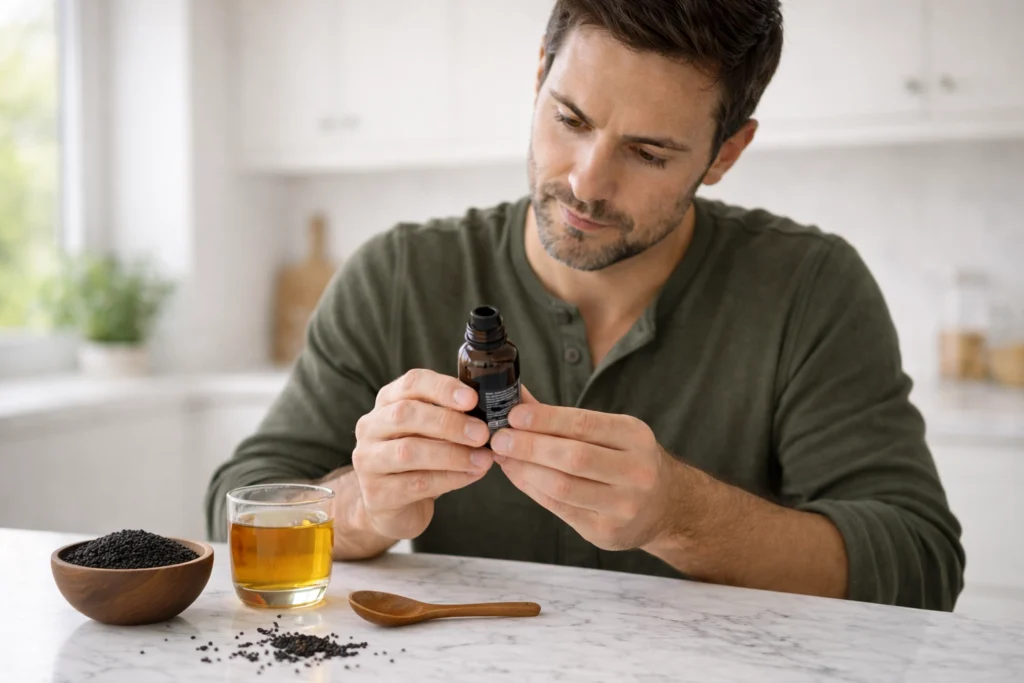
Black seed oil applied to the scalp 2–3 times per week nourishes hair follicles, reduces scalp inflammation, and addresses dandruff through its antifungal action against Malassezia.
Benefits 7 & 8 — Hair Growth & Scalp Health
Hair Growth Stimulation & Hair Loss Prevention
Black seed oil is among the most widely used natural hair growth treatments across South Asian, Middle Eastern, and African communities — and its use is grounded in plausible phytochemical mechanisms. Thymoquinone modulates the immune-mediated inflammation at the hair follicle base that is a key driver of hair follicle miniaturisation in androgenetic and alopecia areata hair loss. The essential fatty acids in black seed oil — linoleic and oleic acid — nourish follicle cells, provide substrate for hair shaft structure, and maintain the sebaceous gland function that lubricates the follicle opening. A 2014 cosmeceutical review confirmed black seed oil’s potential as a topical hair treatment. Antioxidants in the oil protect follicle cells from oxidative damage — a contributing factor to premature hair greying and accelerated follicle ageing. Research has explored thymoquinone’s effects on DHT (dihydrotestosterone) activity — the hormone primarily responsible for pattern hair loss — with some studies suggesting potential DHT-modulating properties, though this requires more clinical research.
Dandruff, Scalp Inflammation & Scalp Health
Dandruff — affecting approximately 50% of adults globally — is driven by two simultaneous factors: overgrowth of Malassezia scalp fungus and inflammatory response to its metabolites. Black seed oil addresses both. Its confirmed antifungal activity against Malassezia and related dermatophytes directly reduces fungal burden on the scalp, while thymoquinone’s anti-inflammatory action reduces the inflammatory scalp response that causes the characteristic flaking and itching. The antimicrobial spectrum of black seed oil — covering bacteria, fungi, and viruses — makes it suitable for seborrhoeic dermatitis (a more severe form of dandruff associated with Malassezia overgrowth), scalp psoriasis, and scalp eczema where the inflammatory and microbial components overlap. Regular scalp massage with black seed oil (2–3 times per week) also improves scalp circulation — delivering nutrients and oxygen to hair follicles while removing metabolic waste products that can inhibit follicle function. For maximum benefit, leave the oil on the scalp for at least 30 minutes before washing out with a gentle, sulphate-free shampoo.
🔗 🌿 Full Guide: Black Seed (Kalonji) — 10 Proven Benefits, Uses & Side Effects
This article focuses specifically on black seed oil. For the complete guide covering whole seeds, ground powder, capsules, all 10 health benefits, traditional medicine context, and full dosage guide — read our pillar article:
👉 Black Seed (Kalonji): 10 Proven Benefits, Uses, Nutrition & Side Effects →
How to Use Black Seed Oil — Internal & Topical Methods
Internal Use
The traditional and most effective internal method is ½ teaspoon (approximately 2.5ml) of cold-pressed black seed oil mixed with raw honey, taken on an empty stomach in the morning. The honey improves palatability (black seed oil has a strong, bitter, peppery flavour) and enhances bioavailability. Start with ¼ teaspoon for the first week and increase gradually to allow the digestive system to adjust. Always take with or immediately after food if stomach sensitivity occurs.
🌿 Traditional Black Seed Oil Morning Tonic
-
1
Measure ½ teaspoon (2.5ml) cold-pressed black seed oil into a small spoon or cup
-
2
Mix with 1 teaspoon raw honey — stir until combined
-
3
Take on an empty stomach, 30 minutes before breakfast
-
4
Follow with a glass of warm water
-
5
Optional additions: small pinch of ground ginger or cinnamon for enhanced anti-inflammatory synergy
Topical Use — Skin
For face and body skin applications, always dilute black seed oil with a carrier oil. Mix 1 part black seed oil with 4 parts carrier oil (coconut, almond, jojoba, or argan). Apply to clean skin, massage gently, leave for 20–30 minutes then rinse if desired — or leave overnight for intensive treatment. For acne spots, apply a small amount of diluted oil directly to the blemish with a cotton swab.
Topical Use — Hair & Scalp
For scalp use, black seed oil can be applied more concentrated — dilute 1:2 with a carrier oil (50% black seed oil, 50% carrier). Part the hair in sections, apply directly to the scalp, massage vigorously for 5–10 minutes to stimulate circulation. Leave for minimum 30 minutes (overnight for best results). Wash out thoroughly with a gentle sulphate-free shampoo. Use 2–3 times per week for hair loss or dandruff treatment.
| Application | Dilution | Method | Frequency |
|---|---|---|---|
| Internal (general wellness) | Undiluted | ½ tsp with honey, morning | Daily |
| Internal (therapeutic) | Undiluted | ½–1 tsp with honey, twice daily | Daily — with medical guidance |
| Face (acne, eczema, anti-aging) | 1:4 with carrier oil | Massage onto clean skin; leave 20–30 min or overnight | Daily or alternate days |
| Acne spots | 1:4 with carrier oil | Apply to spot with cotton swab | 2–3× daily |
| Scalp (hair growth, dandruff) | 1:2 with carrier oil | Section scalp, massage in, leave 30 min minimum | 2–3× per week |
| Body skin (eczema, psoriasis) | 1:3 with carrier oil | Massage onto affected areas; leave 30 min | Daily or twice daily |
Dosage Guide
📋 Dosage by Health Goal
Asthma: 500mg (approximately ½ tsp) twice daily — per 2019 clinical study
COPD: 1g (approximately 1 tsp) twice daily × 3 months — per clinical study; medical supervision required
Immune support / general: ½ tsp (2.5ml) daily with honey
Blood sugar / cholesterol: ½–1 tsp daily — alongside prescribed treatment and monitoring
Skin (topical): Apply diluted 1:4 daily — no internal dose needed for topical use
Hair growth: Scalp application 2–3× weekly — 30+ minutes contact time
Children (over 12): ¼ tsp daily maximum; consult paediatrician first
Side Effects & Who Should Be Careful
🩸 Blood-thinning medications — most important interaction
Black seed oil has anticoagulant properties and may slow blood clotting. Never combine with warfarin, aspirin (at antiplatelet doses), heparin, or other anticoagulants without medical supervision. Stop use at least 2 weeks before any scheduled surgery.
💊 Diabetes and blood pressure medications
Black seed oil significantly lowers blood glucose and blood pressure. Combined with medications for these conditions, dangerous hypoglycaemia or hypotension may occur. Always discuss with your doctor before therapeutic use if on any relevant medication.
🤰 Pregnancy — therapeutic doses only
Black seed oil at food/culinary amounts is safe during pregnancy. Therapeutic doses (½ tsp or more daily) may stimulate uterine contractions. Avoid therapeutic internal doses during pregnancy. Topical use for hair and scalp is generally considered lower risk but discuss with your obstetrician.
🫀 Liver and kidney function
At normal doses (½–1 tsp daily), black seed oil has documented hepatoprotective and nephroprotective properties. The 90-day phase 1 RCT confirmed no adverse effects on liver or kidney function markers at 200mg TQ-rich oil daily. Avoid very high doses if you have existing liver or kidney disease.
🌿 Contact sensitisation (topical)
Black seed oil has a strong characteristic smell and may cause contact sensitisation in some individuals. Always dilute before face application and patch test 24 hours first. Discontinue if redness, stinging, or rash develops.
💊 Chloroquine interaction
Black seed may reduce the effectiveness of chloroquine (used for malaria treatment). Avoid black seed oil during any chloroquine course.
Conclusion
Black seed oil is the most concentrated and therapeutically potent form of Nigella sativa — delivering higher thymoquinone per serving than whole seeds with faster absorption and more versatile application options. The evidence base is compelling: a 2024 meta-analysis showing 78% COVID-19 mortality reduction, 88% H. pylori eradication with antibiotic combination, significant asthma improvement in 4-week trials, confirmed anti-inflammatory effects across multiple meta-analyses, and well-documented skin, hair, and wound healing properties.
The most important practical consideration is product quality — the 27-fold TQ variation between commercial products means a poor-quality oil may provide essentially no therapeutic benefit at normal doses. Choose cold-pressed, amber-bottled, organically certified black seed oil with stated TQ content. Start at ¼ teaspoon daily and increase gradually. Take with honey on an empty stomach for maximum absorption. And always check drug interactions if on any regular medication — the glucose-lowering, blood pressure-lowering, and anticoagulant properties are clinically meaningful.
Try Our Free Herb & Tea Benefit Finder
Type black seed, kalonji, or any herb to instantly see its full benefits, best preparation method, dosage, and safety notes.
🔍 Open the Herb & Tea Benefit Finder →Frequently Asked Questions
Black seed oil is evidence-supported for 8 primary uses: immune modulation and antimicrobial action (including a 2024 meta-analysis showing 78% COVID-19 mortality reduction and 88% H. pylori eradication with antibiotics), respiratory health and asthma improvement (500mg twice daily improved ACT scores in 2019 trial), systemic anti-inflammatory action (2025 umbrella meta-analysis confirmed CRP and IL-6 reduction), acne and eczema treatment (Cleveland Clinic confirms topical gel for acne), wound healing and skin barrier repair, hair growth stimulation, dandruff and scalp health, and blood sugar and cholesterol management (covered more fully in the main black seed benefits guide).
For general wellness, half a teaspoon (approximately 2.5ml) daily with honey is the standard starting dose. For therapeutic goals such as asthma, the 2019 clinical trial used 500mg twice daily. A 2021 safety study established the maximum safe daily limit at 900mg of oil or 48.6mg of thymoquinone. Always start at the lower end — quarter teaspoon daily for the first week — and increase gradually. Product quality matters enormously: a poor-quality oil with low TQ content will require much higher doses to achieve the same effect as a high-quality TQ-rich oil. Look for products that state their thymoquinone content.
Not undiluted — black seed oil has a very strong smell and may cause sensitisation if applied neat to facial skin. Always dilute 1 part black seed oil to 4 parts carrier oil (coconut, almond, jojoba, or argan oil) before applying to the face. Patch test on your inner wrist for 24 hours first. Apply the diluted mixture to clean skin, massage gently, and leave for 20 to 30 minutes before rinsing — or overnight for intensive treatment. For acne spots specifically, apply a small amount of diluted oil with a cotton swab directly to the blemish. Keep away from the eyes.
Black seed oil has plausible and well-reasoned mechanisms for supporting hair growth — anti-inflammatory action reducing follicle inflammation that drives miniaturisation, essential fatty acids nourishing follicle cells, antioxidants protecting follicle tissue from oxidative damage, and antifungal activity addressing scalp conditions that impair hair growth. A cosmeceutical review confirmed its documented use in hair care products. While large-scale human clinical trials specifically for hair growth are still limited, the mechanistic evidence is strong and its widespread traditional use across South Asian, Middle Eastern, and African communities for hair growth has been validated by this compound profile. Apply diluted oil to the scalp 2 to 3 times per week and allow at least 3 months before assessing results — one full hair growth cycle.
The traditional Islamic and most evidence-consistent method is half a teaspoon of cold-pressed black seed oil mixed with raw honey, taken on an empty stomach 30 minutes before breakfast. The honey improves the flavour (black seed oil is bitter and peppery) and may enhance bioavailability. Follow with a glass of warm water. Some studies suggest taking with food reduces gastric side effects. For those who cannot tolerate the taste, standardised capsules containing TQ-rich black seed oil are an effective alternative — look for capsules that state their TQ content to ensure therapeutic dosing.
Yes — at standard doses, daily black seed oil is safe for most healthy adults. A phase 1 randomised double-blind placebo-controlled trial confirmed that TQ-rich black seed oil at 200mg daily for 90 days produced no adverse effects on liver enzymes, kidney function, or haematological parameters. A 2021 safety study established the practical upper limit at 900mg oil or 48.6mg TQ daily. The main safety concerns are drug interactions — specifically with anticoagulants, blood pressure medications, and diabetes medications — rather than direct toxicity of the oil itself at normal doses. Always consult your doctor before daily therapeutic use if you are on any regular medications.
The most important factors are: extraction method (cold-pressed first press — heat processing degrades thymoquinone), bottle type (amber glass — UV light oxidises TQ, making clear bottles a significant quality indicator), seed origin (Ethiopian and Turkish Nigella sativa seeds typically have highest TQ content), certification (organic preferred; TQ content stated on label), and freshness (smaller batches with shorter shelf life have higher active compound retention). A 2024 PMC study found 27-fold TQ variation between commercial products — making these selection criteria the difference between a therapeutic and a placebo-level product. Avoid oils mixed with carrier oils, stored in clear plastic or glass bottles, or sold without any compound analysis data.
They are the same thing — different names for the oil pressed from the seeds of the Nigella sativa plant. Black seed oil, black cumin seed oil, kalonji oil, nigella oil, and habbatus sauda oil all refer to the same product. The different names reflect the plant’s many regional names across cultures. When purchasing, always verify the botanical source on the label is Nigella sativa — not Bunium persicum (a different plant also sometimes called black cumin), Carum carvi (caraway), or any other species. The therapeutic properties described in research apply specifically to Nigella sativa — not to similarly named plants.
📚 Related Health Guides
Black Seed (Kalonji): 10 Proven Benefits, Uses & Side Effects
The complete pillar guide — all 10 benefits, whole seeds vs oil vs capsules, traditional medicine, and full dosage.
Cumin (Jeera) Benefits, Uses & Side Effects
Often confused with black seed — discover cumin’s distinct digestive and metabolic benefits.
Turmeric Milk (Golden Milk): Benefits & Recipe
Curcumin and thymoquinone both inhibit NF-κB — turmeric and black seed oil are powerful anti-inflammatory partners.
Hibiscus Tea Benefits: 12 Science-Backed Reasons
Hibiscus and black seed oil both address blood pressure and blood sugar — highly complementary daily habits.