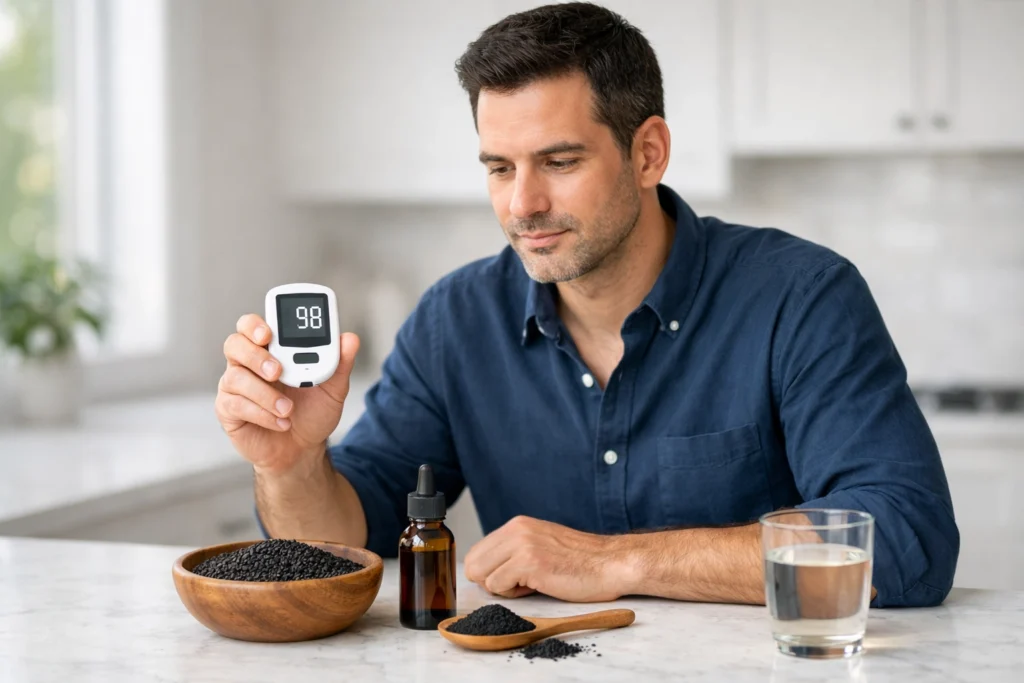

Cinnamon has been studied extensively for its effects on blood sugar. Research shows it may help lower fasting blood glucose and improve insulin sensitivity — but results are mixed and it should never replace diabetes medication.
📋 Table of Contents
Introduction
Cinnamon is one of the most widely researched spices for blood sugar management. For decades, scientists have been studying whether this common kitchen spice can genuinely help people with type 2 diabetes — and the evidence, while not perfect, is encouraging.
Multiple clinical trials and meta-analyses have found that regular cinnamon consumption can help lower fasting blood sugar, reduce post-meal glucose spikes, and improve how well the body responds to insulin. At the same time, some studies have found no benefit — which is why it is important to understand both what the evidence shows and what it does not show.
🛠️ Free Health Tools — BMI Calculator, Calorie Calculator, Intermittent Fasting Calculator & more
🔍 Browse All Free Health Tools →This guide covers the full picture — how cinnamon affects blood sugar, what the research actually shows, the right type and dose to use, safety warnings, and how it fits alongside prescribed diabetes treatment. For the complete overview of cinnamon’s health benefits, see our pillar guide on cinnamon benefits, nutrition, and traditional uses.
How Cinnamon Affects Blood Sugar
Cinnamon works on blood sugar through several different pathways — which is part of what makes it interesting to researchers.
| Mechanism | What Happens | Effect on Blood Sugar |
|---|---|---|
| Mimics insulin activity | Cinnamaldehyde activates insulin receptors on cells, helping them absorb glucose from the blood | Lowers blood sugar directly |
| Improves insulin sensitivity | Helps cells respond better to insulin — reducing insulin resistance | Lowers blood sugar and insulin levels |
| Slows stomach emptying | Food moves more slowly from the stomach into the intestine | Reduces post-meal blood sugar spikes |
| Inhibits digestive enzymes | Slows the breakdown of carbohydrates in the digestive tract | Reduces glucose entering the bloodstream after meals |
| Reduces inflammation | Chronic inflammation worsens insulin resistance — cinnamon’s anti-inflammatory compounds help reduce it | Indirect improvement in blood sugar control |
🔬 The Key Compound: Cinnamaldehyde
Cinnamaldehyde — the compound that gives cinnamon its characteristic flavor and aroma — is the main driver of blood sugar benefits. It helps cells take up glucose more effectively by activating the same pathways that insulin uses. This is why researchers describe cinnamon as having “insulin-mimicking” properties.
What the Research Actually Shows
The research on cinnamon and blood sugar is real — but it is also genuinely mixed. Here is an honest summary of what the evidence shows.
Studies That Show Benefit
A landmark study published in Diabetes Care divided 60 people with type 2 diabetes into groups taking 1g, 3g, or 6g of cinnamon daily for 40 days. All three cinnamon groups saw meaningful reductions in fasting blood glucose (18–29%), triglycerides (23–30%), and LDL cholesterol (7–27%) compared to the placebo groups.
A comprehensive 2025 meta-analysis — covering 28 randomized controlled trials and 3,054 patients with type 2 diabetes — found that cinnamon supplementation significantly reduced fasting blood glucose, post-meal glucose levels, and HbA1c (a measure of long-term blood sugar control). This is the largest and most recent analysis of cinnamon and diabetes to date.
A separate 2019 systematic review found that cinnamon significantly reduced fasting blood sugar and insulin resistance in people with type 2 diabetes and prediabetes compared to a placebo. Some studies also found reductions in HbA1c of 0.27% to 0.83%.
Studies That Show No Benefit
Not all research is positive. A clinical trial of 70 type 2 diabetic patients found no significant difference in fasting blood sugar or HbA1c between cinnamon and placebo groups after 60 days. Several other well-controlled trials have also reported no significant benefit.
| Study / Review | Finding | Dose Used |
|---|---|---|
| 2025 Meta-analysis (28 RCTs, 3,054 patients) | Significant reduction in fasting glucose, post-meal glucose, and HbA1c | Varied — 120mg to 6g daily |
| Diabetes Care landmark study (2003, updated 2025) | 18–29% reduction in fasting blood glucose after 40 days | 1g, 3g, or 6g daily |
| 2019 Systematic review | Significant reduction in fasting glucose and insulin resistance in T2D and prediabetes | 1–6g daily |
| 2018 Review (HbA1c) | Reduced HbA1c by 0.27–0.83% and fasting blood sugar by up to 52.2 mg/dL | Varied |
| Various null studies | No significant effect found | Varied — often lower doses or shorter duration |
Which Type of Cinnamon to Use
This is the most important practical question for anyone using cinnamon for blood sugar support. The two types behave differently and carry different safety profiles.
| Feature | 🟤 Ceylon Cinnamon | 🟠 Cassia Cinnamon |
|---|---|---|
| Botanical name | Cinnamomum verum | Cinnamomum cassia / aromaticum |
| Coumarin content | Very low — safe for daily use | High — liver risk at large daily doses |
| Most studies use which? | Fewer studies — but considered safer | Most diabetes research uses Cassia |
| Blood sugar effect | Promising — milder than Cassia | Stronger effect in studies |
| Best for daily therapeutic use? | ✅ Yes — safest long-term choice | ⚠️ Only in small amounts |
| Available as supplement? | ✅ Yes — look for C. verum on label | ✅ Yes — most common, cheaper |
5 Ways Cinnamon May Help with Blood Sugar & Diabetes
Based on available research, here are the five key ways cinnamon may support people with type 2 diabetes or prediabetes. These are supportive benefits — not medical treatments.
🩸 Lowers Fasting Blood Sugar
The most consistently researched benefit. Studies show that taking 1–6g of cinnamon daily for 40 days or more can reduce fasting blood glucose meaningfully. The 2025 meta-analysis of 28 trials found an average reduction of 15.26 mg/dL in fasting blood glucose in cinnamon users compared to placebo.
This effect is most pronounced in people with poorly controlled blood sugar. People with well-controlled diabetes may see less benefit.
📉 Reduces Post-Meal Blood Sugar Spikes
Cinnamon slows how quickly food leaves the stomach — which reduces the sharp rise in blood sugar that follows a carbohydrate-rich meal. Research has shown that 6g of cinnamon slows stomach emptying and significantly reduces post-meal glucose levels.
This makes cinnamon particularly useful when consumed with or just before meals, especially meals high in carbohydrates or refined sugars.
💉 Improves Insulin Sensitivity
Insulin resistance — where cells stop responding properly to insulin — is the core problem in type 2 diabetes. Cinnamon helps cells respond better to insulin, making it more effective at moving sugar from the blood into cells.
A study of people with PCOS found that 1.5g of cinnamon powder daily for 12 weeks significantly reduced fasting insulin levels and improved insulin sensitivity compared to a placebo.
📊 May Reduce HbA1c
HbA1c is a measure of average blood sugar control over 2–3 months — the most important long-term marker for diabetes management. Multiple studies have found that consistent cinnamon use reduces HbA1c by 0.27–0.83%. While modest, this is a clinically meaningful improvement for long-term diabetes management.
The 2025 meta-analysis confirmed this HbA1c reduction across 28 trials, which strengthens the evidence base significantly.
❤️ Improves Cholesterol and Triglycerides
People with type 2 diabetes are at higher risk for heart disease. Cinnamon addresses several related risk factors simultaneously. The same 40-day cinnamon study found reductions in LDL cholesterol (7–27%) and triglycerides (23–30%) alongside blood sugar improvements.
This cardiovascular benefit makes cinnamon a particularly relevant dietary addition for people managing both diabetes and heart health risk factors.
How to Use Cinnamon for Blood Sugar
🌿 How should you use cinnamon for blood sugar? Type it in our free Herb & Tea Benefit Finder — get preparation method, timing, dosage, and safety notes instantly.
🔍 Try the Herb & Tea Benefit Finder →| Method | How | Best For |
|---|---|---|
| Sprinkle on food | Add ½–1 tsp to oatmeal, yogurt, smoothie, or coffee | Easiest daily habit — reduces post-meal glucose |
| Cinnamon water | Boil 1 Ceylon stick in 300ml water for 10 minutes — drink before or after meals | Blood sugar support, digestion |
| Cinnamon tea | Steep 1 cinnamon stick in hot water for 10–15 minutes | Morning routine, reducing fasting glucose |
| Cinnamon supplement | Ceylon capsules — 500–1,000mg with a meal | Precise dosing, consistent daily intake |
| Add to cooking | Use in curries, stews, or rice dishes | Easy way to increase daily intake |
Best Timing for Blood Sugar Benefits
| Timing | Effect | Recommended For |
|---|---|---|
| 🌅 Morning — before breakfast | Helps reduce fasting blood sugar; sets up metabolism for the day | Daily routine for general blood sugar support |
| 🍽️ Before meals (15–30 min) | Slows stomach emptying; reduces post-meal glucose spike | High-carbohydrate meals |
| 🍽️ With meals | Reduces carbohydrate breakdown; blunts glucose rise | Any large meal |
☕ Blood Sugar Support Cinnamon Water
Best for: Morning use or before meals to support blood sugar control
- 1
Add 1 Ceylon cinnamon stick (or ½ tsp Ceylon cinnamon powder) to 300ml of water.
- 2
Bring to a gentle boil. Simmer for 10 minutes.
- 3
Cool to warm. Strain into a cup.
- 4
Drink 15–30 minutes before your main meal — or first thing in the morning before breakfast.
- 5
Do not add sugar or honey if using for blood sugar control.
Always use Ceylon cinnamon — not Cassia — for daily preparations.
Dosage Guide
Clinical studies have used a wide range of doses. Here is what the evidence suggests for blood sugar support specifically.
Side Effects & Who Should Be Careful
For people managing diabetes, there are specific safety considerations beyond the general cinnamon side effects.
⬇️ Blood sugar too low (hypoglycemia)
This is the most important risk for diabetics. Cinnamon lowers blood sugar — and if you take diabetes medication at the same time, the combined effect may push it too low. Signs include dizziness, shakiness, sweating, and sudden weakness. Monitor your blood sugar closely when starting cinnamon.
🫀 Liver stress (Cassia at high doses)
Cassia cinnamon contains high coumarin levels. Large daily amounts can stress the liver. Use Ceylon for daily therapeutic use. If you have any liver condition, ask your doctor first.
💊 Interaction with diabetes medication
Cinnamon may compound the blood sugar-lowering effect of metformin, insulin, glipizide, and other diabetes drugs. Always inform your doctor if you are adding cinnamon regularly to your routine.
💊 Interaction with blood thinners
Cassia cinnamon’s coumarin has mild blood-thinning properties. If you take warfarin or aspirin, this may compound the anticoagulant effect. Use Ceylon and discuss with your doctor.
🤰 Pregnancy
Normal food amounts are safe. But large therapeutic doses or cinnamon supplements during pregnancy should be discussed with your doctor first.
🫁 Digestive upset
Large amounts of cinnamon can cause mouth irritation, heartburn, or stomach discomfort in some people. Start with smaller amounts and build up gradually.
| Who | Risk | What to Do |
|---|---|---|
| Diabetics on medication | Blood sugar may drop too low (combined effect) | Monitor closely; tell your doctor before starting |
| Liver conditions | Cassia coumarin may stress the liver | Use Ceylon only; seek medical advice |
| Blood thinner users | Coumarin may compound anticoagulant effect | Use Ceylon; inform your doctor |
| Pregnant women | Large doses may stimulate uterus | Food amounts fine; avoid supplements |
| Pre-surgery patients | Blood-thinning and blood sugar effects | Stop supplements 2 weeks before surgery |
Cinnamon vs Diabetes Medication — Important Distinction
This is a critical point that must be stated clearly. Cinnamon is not a replacement for diabetes medication. Here is how to think about it correctly.
| Feature | Cinnamon | Diabetes Medication (e.g. Metformin) |
|---|---|---|
| Evidence strength | Promising but mixed — some studies show no benefit | Strong — extensive clinical evidence |
| Blood sugar reduction | Modest — supportive | Significant — primary treatment |
| Medically recommended? | Not by ADA as a primary treatment | Yes — standard of care |
| Side effects | Mild at food amounts | Varies — GI effects common with metformin |
| Can be used together? | ✅ Yes — as a complementary addition | ✅ Yes — primary treatment |
| Replaces medication? | ❌ Never | ✅ As directed by doctor |
Conclusion
The evidence for cinnamon and blood sugar is more solid than for most herbal remedies — but it is also more nuanced than many headlines suggest. The most recent and comprehensive research (a 2025 meta-analysis of 28 clinical trials) confirms meaningful reductions in fasting blood sugar, post-meal glucose, and HbA1c with regular cinnamon use in people with type 2 diabetes.
The practical takeaways are simple: use Ceylon cinnamon for daily therapeutic purposes, aim for 1–3g per day consistently for at least 40 days, and monitor your blood sugar carefully — especially if you take diabetes medication. Never stop prescribed medication in favor of cinnamon.
Used as a dietary addition alongside proper medical care, cinnamon is a safe, affordable, and potentially meaningful tool in blood sugar management. For all the ways cinnamon supports broader health, see our complete cinnamon benefits guide. For weight management support, see cinnamon for weight loss.
Try Our Free Herb & Tea Benefit Finder
Type cinnamon, turmeric, ginger, or any herb to instantly see its benefits, best time to use, preparation method, and who should be careful.
🔍 Open the Herb & Tea Benefit Finder →Frequently Asked Questions
Yes — the evidence is real but mixed. Multiple clinical trials and a 2025 meta-analysis of 28 studies found that regular cinnamon consumption significantly reduces fasting blood sugar, post-meal glucose, and HbA1c in people with type 2 diabetes. However, some studies have found no benefit. Results seem most consistent in people with poorly controlled blood sugar who use cinnamon daily for at least 40 days.
Clinical studies have used 1–6g per day (about ½ to 1½ teaspoons of powder). Most practitioners and researchers suggest starting with 1g (about ½ teaspoon) of Ceylon cinnamon per day and building up gradually. For supplements, 500–1,000mg of standardized Ceylon cinnamon extract per day is a common recommendation. Always check with your doctor before starting — especially if you take diabetes medication.
Ceylon cinnamon is the better choice for daily therapeutic use. Most diabetes research was actually conducted using Cassia cinnamon, which showed stronger effects in studies — but Cassia contains high levels of coumarin which can stress the liver at large daily doses. Ceylon has very low coumarin and is safe for long-term daily use. Look for Cinnamomum verum on the label to confirm it is Ceylon.
No — never. Cinnamon is a supportive dietary addition, not a medical treatment. The American Diabetes Association does not recommend cinnamon as a primary treatment for blood sugar control. It may complement your prescribed medication, diet, and lifestyle changes — but stopping medication in favor of cinnamon is dangerous. Always work with your doctor.
Most studies showing meaningful blood sugar benefits used cinnamon daily for at least 40 days. Some people may notice changes in 4–6 weeks of consistent daily use. Occasional or irregular use is unlikely to produce measurable effects. Monitor your blood sugar regularly so you can track whether cinnamon is having an impact for you specifically.
Yes — cinnamon water made with Ceylon cinnamon is a practical and low-calorie way to get daily cinnamon into your routine. Drink it in the morning before breakfast or 15–30 minutes before meals to help reduce post-meal blood sugar spikes. Use one cinnamon stick or ½ tsp of Ceylon powder per 300ml of water. Do not add sugar or honey. See our guide on cinnamon water benefits and how to make it.
Yes — this is a real risk for people taking diabetes medication. Cinnamon has blood sugar-lowering properties that may add to the effect of your medication, potentially causing hypoglycemia (blood sugar too low). Signs include dizziness, shakiness, sweating, and sudden weakness. If you take metformin, insulin, or other diabetes drugs, always monitor your blood sugar closely when adding cinnamon regularly to your routine and inform your doctor.
Yes — research suggests cinnamon may be particularly useful for prediabetes. A 2019 systematic review specifically found significant improvements in fasting blood sugar and insulin resistance in people with prediabetes as well as type 2 diabetes. For people in the prediabetes range, adding daily Ceylon cinnamon to a balanced diet alongside regular exercise and a low-glycemic eating pattern is a sensible, low-risk addition.
Dalchini is the Hindi and Sanskrit name for cinnamon — it refers to the same spice. In Urdu it is called darchini. Traditional Ayurvedic and Unani medicine have long used dalchini for blood sugar support, digestion, and metabolic health — and modern research now backs this up. The same considerations apply: use Ceylon variety for daily therapeutic use, aim for consistent daily intake, and never use it to replace prescribed diabetes medication.