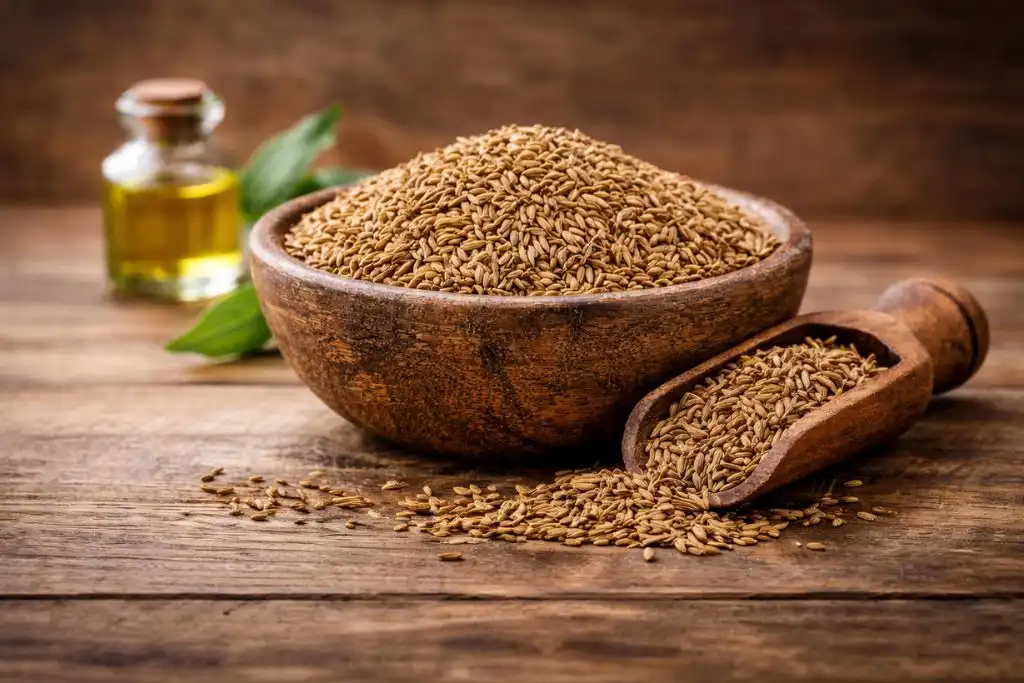
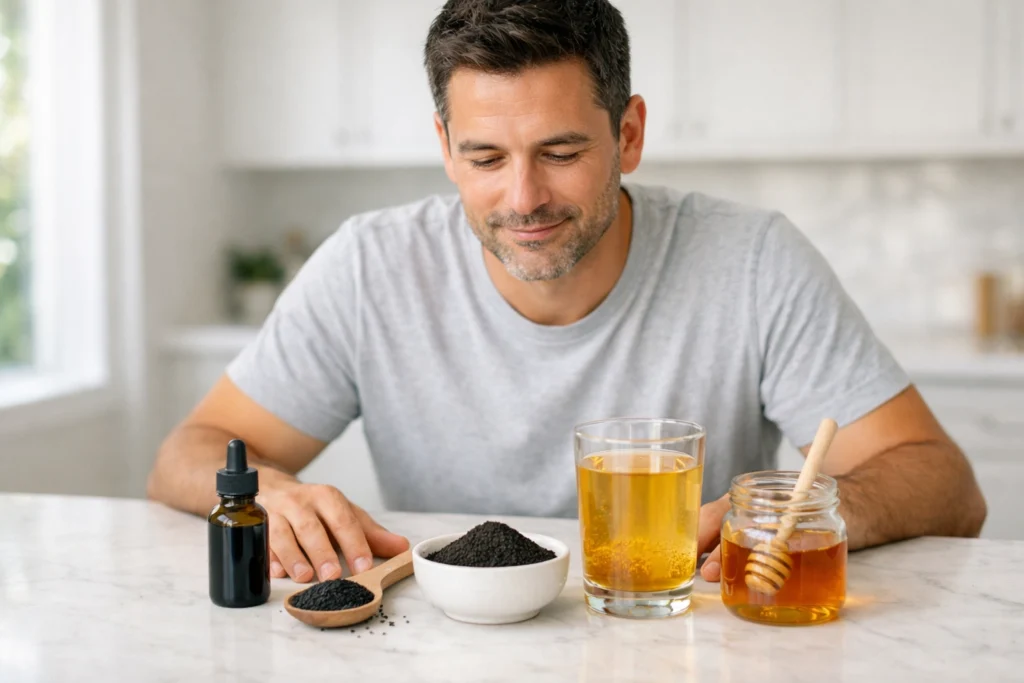
Black seed (Kalonji) can be taken in 7 different ways — from mixing the oil with honey to sprinkling whole seeds on food. The method you choose depends on your health goal. Here is everything you need to know to get started safely.
📋 Table of Contents
- How Should You Take Black Seed?
- Method 1 — Black Seed Oil with Honey
- Method 2 — Whole Seeds on Food
- Method 3 — Black Seed Tea
- Method 4 — Ground Powder in Water
- Method 5 — Capsules
- Method 6 — On Skin for Acne & Eczema
- Method 7 — On Hair & Scalp
- Best Time to Take Black Seed
- Tips for Beginners
- Frequently Asked Questions
How Should You Take Black Seed?
Black seed (Kalonji / Nigella sativa) comes in several forms — whole seeds, ground powder, cold-pressed oil, and capsules. Each one works a little differently. The best method for you depends on what you want to achieve.
Want to help with blood sugar or cholesterol? Ground powder or oil works best. Want to improve your skin? Use the oil topically. Want to add it to your food without changing your routine much? Whole seeds are perfect.
This guide walks you through all 7 methods — simply and clearly — so you can pick what works for you and start today.
🔗 🌿 Full Guide: Black Seed (Kalonji) — 10 Proven Benefits
Want to know why black seed is worth taking? Read our complete benefits guide first:
👉 Black Seed (Kalonji): 10 Proven Benefits, Uses & Side Effects →
Method 1 — Black Seed Oil with Honey (Most Popular)
This is the most traditional and most popular way to take black seed. It comes from Islamic prophetic medicine and has been used for over 1,000 years. Today it is also the method most commonly used in clinical studies.
🌿 The Classic Black Seed Oil Morning Tonic
-
1
Measure ½ teaspoon of cold-pressed black seed oil
-
2
Mix with 1 teaspoon raw honey in a small spoon or cup
-
3
Take it on an empty stomach — 20–30 minutes before breakfast
-
4
Drink a glass of warm water straight after
Why honey? Honey makes the strong, bitter taste of black seed much more pleasant. It may also help your body absorb the oil better. Raw honey also has its own health benefits — it is a natural antimicrobial.
Best for: Blood sugar, cholesterol, immunity, general daily health
How often: Once daily — every morning
Method 2 — Whole Seeds on Food (Easiest)
This is the simplest way to add black seed to your life. Just sprinkle whole seeds onto food you already eat. No measuring, no special preparation — just a quick sprinkle.
Black seed has a flavour similar to a mix of onion, pepper, and oregano. It goes well with many savoury foods. Here are some easy ideas:
| Food | How to Add Black Seed |
|---|---|
| Bread / naan / roti | Press a pinch of seeds onto the surface before baking or eating |
| Rice or biryani | Stir in ½–1 tsp of seeds while cooking |
| Yoghurt (dahi) | Sprinkle ½ tsp on top — mix in and eat |
| Salad | Sprinkle over the top like seasoning |
| Eggs | Add a pinch while frying or scrambling |
| Soup or curry | Stir in ½–1 tsp during cooking |
| Honey | Mix seeds into a jar of honey — eat a spoonful daily |
Best for: General health, digestion, daily maintenance
How much: 1–2 teaspoons per day is a good amount
Method 3 — Black Seed Tea
Black seed tea is a gentle, warm way to get the benefits of kalonji — especially good for breathing problems, a cold, or relaxing in the evening.
🌿 Simple Black Seed Tea Recipe
-
1
Lightly crush 1 teaspoon of whole black seeds using a mortar and pestle or the back of a spoon
-
2
Add to 240ml of hot water (not fully boiling — let it cool for 2 minutes first)
-
3
Steep for 8–10 minutes with a lid on to keep the steam in
-
4
Strain through a fine sieve. Add honey and a squeeze of lemon if you like.
Best for: Coughs, breathing problems, congestion, relaxation
How often: 1–2 cups daily
Note: Tea is milder than oil. You absorb fewer active compounds through tea than through oil — but it is gentler and easier on the stomach.
Method 4 — Ground Powder in Water
Ground black seed powder is more potent than whole seeds. Grinding the seeds breaks them open and releases more of their active compounds into your body.
This method is used in most clinical studies on blood sugar and cholesterol — so if those are your main goals, this is a good choice.
🌿 Black Seed Powder Drink
-
1
Add ½–1 teaspoon of ground black seed powder to a glass
-
2
Pour in 240ml of warm water
-
3
Stir well and drink immediately before it settles
-
4
Add honey or lemon to improve the taste
Best for: Blood sugar management, cholesterol, anti-inflammatory effects
How often: Once or twice daily with meals
📊 What Dose Works for Diabetes?
A 2025 meta-analysis of 16 randomised controlled trials found the most effective dose for type 2 diabetes was 2g of black seed powder per day — taken as 1g with breakfast and 1g with dinner. That is approximately ½ teaspoon total per day split into two doses. Always take with food and monitor your blood sugar closely if you are on diabetes medication. See our full guide: black seed for diabetes.
Method 5 — Capsules (Most Convenient)
If you do not like the strong taste of black seed, capsules are the easiest option. They are odourless, tasteless, and easy to take with water.
Capsules also give you the most consistent dose — each capsule contains a fixed amount, so you know exactly how much you are taking each day.
Standard dose: 500mg–1000mg daily
Best for: Anyone who dislikes the taste, or wants precise dosing for a specific health goal
How to choose: Look for capsules that say “standardised extract” and show a thymoquinone percentage on the label. This tells you the potency.
Method 6 — On Skin for Acne & Eczema
Black seed oil works well when applied directly to the skin. Studies show it can help with acne, eczema, psoriasis, and wound healing.
Important rule: Always dilute before applying to your face. Pure black seed oil is too strong for direct face use and can cause irritation.
🌿 Simple Skin Application
-
1
Patch test first: Put a few drops of diluted oil on your inner wrist. Wait 24 hours. If no redness or itching — it is safe to use.
-
2
Dilute: Mix 1 part black seed oil with 4 parts carrier oil (coconut oil, jojoba oil, or almond oil)
-
3
Apply: Gently massage onto clean skin. For acne spots — use a cotton swab to apply directly to the blemish.
-
4
Leave on: 20–30 minutes then rinse off, or leave overnight for intensive treatment
Best for: Acne, eczema, dry skin, psoriasis patches, wound healing
How often: Daily or alternate days
Note: Black seed oil has a strong smell. This is normal — it fades after washing.
Method 7 — On Hair & Scalp
Black seed oil is one of the most popular natural remedies for hair loss, dandruff, and dry scalp. For hair use, you can apply it more concentrated than on your face.
🌿 Scalp Oil Treatment
-
1
Mix: 1 part black seed oil + 2 parts coconut oil (or argan oil). Warm slightly in your hands.
-
2
Section your hair and apply the oil directly to your scalp along each parting
-
3
Massage in circular motions for 5 minutes. This boosts blood flow to the hair roots.
-
4
Leave for at least 30 minutes — or overnight for best results
-
5
Wash out with a gentle shampoo. Apply shampoo to dry hair first, then add water — this removes oil more effectively.
Best for: Hair loss, dandruff, dry or itchy scalp, hair thinning
How often: 2–3 times per week
Results timeline: Allow 6–12 weeks to see meaningful improvement in hair thickness or reduced hair fall
For a full guide on black seed oil for hair loss see: black seed oil for hair growth — does kalonji really work?
Best Time to Take Black Seed
| Time | Method | Best For |
|---|---|---|
| Morning — empty stomach | Oil with honey | Blood sugar, cholesterol, immunity — best absorption |
| With breakfast | Seeds on food / powder in water | Blood sugar — enzyme inhibition works during the meal |
| With dinner | Second powder dose | Blood sugar management throughout the night |
| Evening | Tea with honey | Breathing problems, relaxation, sleep support |
| Night (before bed) | Scalp oil treatment | Hair growth — overnight contact time for best results |
| After shower | Skin oil application | Skin conditions — skin absorbs oil better after washing |
Tips for Beginners
Start small and build up slowly
Begin with ¼ teaspoon of oil or ½ teaspoon of seeds per day for the first week. Increase to the full dose in week 2. Starting too much too quickly can cause stomach upset or nausea.
Be consistent — results take time
Black seed is not a quick fix. Give it at least 4 weeks before judging the results. For blood sugar and cholesterol, studies ran for 8–12 weeks before measuring the full effect.
Choose cold-pressed oil
Always buy cold-pressed, unrefined black seed oil in a dark amber glass bottle. Heat-processed oil loses much of its active compound (thymoquinone). Clear plastic bottles let in light that degrades the oil.
Store properly
Keep black seed oil in a cool, dark place. The fridge is ideal. Properly stored oil lasts 12–18 months. If it smells rancid — throw it away and get a fresh bottle.
Tell your doctor if you take medication
Black seed lowers blood sugar and blood pressure. If you take medication for these conditions, your doctor needs to know so they can monitor your levels. Never stop your prescribed medication because of black seed — use them together under medical supervision.
Rinse your mouth after taking the oil
Black seed oil is acidic and can affect tooth enamel over time. After taking it, rinse your mouth with water. Wait 30 minutes before brushing your teeth.
Try Our Free Herb & Tea Benefit Finder
Type black seed or any herb to instantly see its benefits, how to use it, and who should be careful.
🔍 Open the Herb & Tea Benefit Finder →Frequently Asked Questions
Yes — you can take it straight from the spoon. But most people find the taste very strong and unpleasant on its own. Mixing with honey or adding to yoghurt makes it much easier to take every day. Mixing also helps protect your tooth enamel from the oil’s acidity. If you can handle the taste, taking it straight is fine — just rinse your mouth with water afterwards.
It depends on your goal. For blood sugar management — take it with or just before meals. The active compounds slow down carbohydrate digestion and work best when food is present. For general health, immunity, and cholesterol — empty stomach in the morning is the traditional and most commonly recommended method. If black seed upsets your stomach, always take it with food.
It depends on what you are using it for. Digestive comfort and reduced bloating — some people notice this within 1–2 weeks. Blood sugar reduction — studies show meaningful results after 4–8 weeks of daily use. Cholesterol improvement — typically 8–12 weeks. Hair and scalp improvement — 6–12 weeks minimum. Skin improvements — 3–6 weeks for most people. The key is consistency. Taking it occasionally will not produce results — daily use at the right dose is essential.
It is better not to cook with black seed oil. High heat destroys thymoquinone — the main active compound that provides the health benefits. If you want to use the oil in food, add it after cooking. You can drizzle a small amount over finished dishes like soups, salads, or cooked vegetables. Whole black seeds are perfectly fine to cook with — they hold up well to heat and are commonly used in South Asian cooking.
Whole seeds in food are generally considered safe for children over 2 years old in small food amounts. For therapeutic doses of oil or supplements — always consult a paediatrician first. Children under 12 should not take concentrated black seed oil as a supplement without medical guidance. The blood pressure-lowering effect of black seed can be more significant in young children. A safer approach for younger children is topical use only — diluted oil applied to the skin for eczema or scalp conditions.
For oil — look for cold-pressed, unrefined, 100% pure Nigella sativa oil in a dark amber glass bottle. Check that the label shows the thymoquinone content. Ethiopian or Turkish seed origin typically gives the highest quality. Avoid oils stored in clear plastic bottles or mixed with other oils. For seeds — buy whole dried black seeds from a reputable health store or spice supplier. For capsules — choose standardised extract capsules that clearly state the thymoquinone percentage per dose.
📚 Related Black Seed Guides
Black Seed (Kalonji): 10 Proven Benefits
The complete guide — all 10 health benefits, nutrition facts, and safety information.
Black Seed Oil Benefits: 8 Proven Uses
How to choose quality black seed oil and use it for health, skin, and hair.
Black Seed for Diabetes: Can Kalonji Lower Blood Sugar?
Clinical evidence, safe dosing, and drug interaction guide for diabetics.
Black Seed Oil for Hair: Does Kalonji Really Work?
Evidence review and step-by-step scalp treatment guide.