
Yes — black seed (Nigella sativa / Kalonji) can measurably lower blood sugar in type 2 diabetic patients, supported by the strongest herbal diabetes evidence available: a 2025 meta-analysis of 16 randomised controlled trials. But it works as a complementary adjunct — not a replacement for prescribed medications — and its glucose-lowering effect means careful drug interaction management is essential.
📋 Table of Contents
- Black Seed & Diabetes — What the Evidence Actually Shows
- The 2025 Meta-Analysis — Key Numbers
- 6 Mechanisms — How Black Seed Lowers Blood Sugar
- Black Seed for Diabetes Complications
- How to Use Black Seed for Diabetes
- Dosage Guide
- Drug Interactions & Safety — Critical for Diabetics
- Black Seed vs Other Antidiabetic Herbs
- Conclusion
- Frequently Asked Questions
Black Seed & Diabetes — What the Evidence Actually Shows
Type 2 diabetes affects over 537 million adults worldwide — a figure projected to reach 783 million by 2045 — making it one of the most urgent chronic disease challenges of our time. Across South Asia, the Middle East, and North Africa, where Nigella sativa (Kalonji) has been a culinary and medicinal staple for centuries, diabetes prevalence is among the highest globally. The question of whether this traditional remedy can genuinely help manage blood sugar is therefore both scientifically important and deeply relevant to hundreds of millions of people who already use it.
The answer, based on the current evidence base, is a carefully qualified yes. Multiple randomised controlled trials, systematic reviews, and now a comprehensive 2025 meta-analysis of 16 RCTs confirm that black seed produces clinically meaningful reductions in fasting blood glucose and HbA1c in type 2 diabetic patients. A 2025 PMC review comparing five major antidiabetic herbs found Nigella sativa demonstrated “consistent positive effects across studies” — the highest evidence rating of the five herbs assessed.
However, this positive evidence comes with equally important clinical caveats. Black seed’s glucose-lowering effect is real enough to cause dangerous hypoglycaemia when combined with prescribed diabetes medications without dose adjustment. It works best as an adjuvant — a complement to prescribed treatment — not as a standalone therapy. And understanding the specific mechanisms through which it works helps explain both its genuine benefits and its appropriate limits. For the complete overview of all black seed health benefits beyond diabetes, see our pillar guide: black seed (kalonji) benefits, uses, nutrition and side effects.
The 2025 Meta-Analysis — Key Numbers
The most comprehensive and up-to-date evidence on black seed and diabetes comes from a 2025 meta-analysis of 16 randomised controlled trials published in ScienceDirect, searching databases up to January 2025 using PRISMA guidelines. This is the gold standard of evidence — pooling results across multiple independent clinical trials to produce the most reliable overall picture.
| Outcome Measure | Change with Black Seed | Statistical Significance | Clinical Meaning |
|---|---|---|---|
| Fasting Blood Glucose (FBG) | −21.43 mg/dL | p = 0.005 ✅ Significant | Meaningful reduction — equivalent to multiple lifestyle interventions combined |
| HbA1c | −0.44% | p = 0.01 ✅ Significant | Clinically meaningful — each 0.1% HbA1c reduction reduces microvascular complication risk by approximately 10% |
| Total Cholesterol (TC) | −18.80 mg/dL | p = 0.04 ✅ Significant | Meaningful cardiovascular risk reduction |
| LDL Cholesterol | −19.53 mg/dL | p = 0.003 ✅ Significant | Major cardiovascular benefit — elevated LDL is the primary heart attack and stroke risk factor in diabetics |
| 2-hour post-prandial glucose | No significant change | Not significant | Post-meal glucose less consistently affected |
| Fasting insulin / HOMA-IR | No significant change | Not significant | Insulin resistance marker not significantly affected in this meta-analysis |
| Triglycerides / HDL | No significant change | Not significant | Triglycerides and good cholesterol not significantly affected |
| Body weight / BMI | No significant change | Not significant | Weight neutral in this diabetic population meta-analysis |
📋 Supporting Individual Clinical Trials
Bamosa et al. (PubMed, 2010): “A dose of 2g per day of Nigella sativa might be a beneficial adjuvant to oral hypoglycaemic agents in type 2 diabetic patients” — the most-cited specific dosage recommendation from direct clinical trial evidence.
2025 PMC review of Middle Eastern antidiabetic herbs: Comparing Nigella sativa, fenugreek, ginger, cinnamon, and curcumin across human RCTs, the review found Nigella sativa demonstrated “consistent positive effects across studies” — the strongest rating of the five herbs for glycaemic control.
ScienceDirect 2024 functional food review: Confirmed efficient protection of islets of Langerhans (the pancreatic cells that produce insulin), beta-cell proliferation, and insulin secretion improvement.
2021 PMC antidiabetic review: Confirmed that N. sativa “can improve glycemic status” and concluded patients with diabetes “may use N. sativa as an adjuvant therapy, which may help to reduce the dose and incidence of adverse effects of modern antidiabetic medicines.”
6 Mechanisms — How Black Seed Lowers Blood Sugar
Understanding how black seed works on blood glucose helps explain both why the evidence is positive and why it should be used as an adjuvant rather than a replacement for prescribed treatment. Black seed operates through six distinct and complementary mechanisms — a multi-target approach that is unusual for a single natural food.
Beta-Cell Protection & Proliferation
The islets of Langerhans are the pancreatic cell clusters that contain beta-cells — the cells responsible for producing insulin. In type 2 diabetes, chronic high blood glucose and oxidative stress progressively damage and destroy beta-cells, worsening insulin deficiency over time. Thymoquinone’s powerful antioxidant action protects beta-cells from oxidative damage, while research published in ScienceDirect confirmed Nigella sativa “efficiently protects the islets of Langerhans” and promotes beta-cell proliferation — meaning it helps preserve and potentially regenerate insulin-producing capacity. This mechanism is particularly significant because most oral diabetes medications work downstream of beta-cell function, not on preserving the cells themselves.
Insulin Secretion Stimulation
Beyond protecting existing beta-cells, thymoquinone directly stimulates insulin secretion from functional beta-cells. A 2021 PMC antidiabetic review confirmed that N. sativa “elevates insulin secretion” and “promotes pancreatic beta-cell proliferation” — increasing the functional insulin-producing capacity of the pancreas. This insulinotropic (insulin-stimulating) effect is one reason black seed can lower fasting blood glucose even in patients who still have some residual beta-cell function. It works through thymoquinone’s modulation of calcium signalling in beta-cells — the same intracellular mechanism that triggers insulin release in response to glucose sensing.
Insulin Receptor Sensitisation
Insulin resistance — where cells fail to respond adequately to insulin’s signal to absorb glucose — is the defining defect of type 2 diabetes. Thymoquinone improves insulin receptor sensitivity at peripheral tissues, particularly in skeletal muscle and fat cells — the two largest sites of glucose disposal in the body. The 2021 PMC review confirmed that N. sativa “motivates the uptake of glucose in fat and skeletal muscle” — directly addressing insulin resistance at the cellular level. This peripheral sensitisation effect complements the beta-cell effects: more responsive insulin receptors mean that even modest increases in insulin secretion produce proportionally greater glucose uptake.
Alpha-Glucosidase & Alpha-Amylase Inhibition
Alpha-glucosidase and alpha-amylase are the intestinal enzymes that break down complex carbohydrates into glucose — driving the post-meal blood glucose spike. By inhibiting these enzymes, black seed slows the conversion and absorption of carbohydrates from food, flattening the post-meal glucose curve and reducing peak blood glucose levels. This is the same mechanism as acarbose — a pharmaceutical alpha-glucosidase inhibitor used in diabetes management. A 2024 ScienceDirect review confirmed this mechanism specifically for Nigella sativa. This enzyme inhibition may explain why individual clinical trials sometimes show stronger effects when black seed is taken with or before meals rather than on an empty stomach.
Cortisol Reduction & Stress Hormone Modulation
Cortisol — the primary stress hormone — directly raises blood glucose by stimulating hepatic gluconeogenesis (glucose production in the liver) and suppressing insulin secretion. Chronically elevated cortisol is a major driver of insulin resistance and worsening glycaemic control in diabetics. A clinical trial confirmed that black seed consumption significantly reduced serum cortisol levels in elderly subjects — from 16.90 to 12.78 µg/L — producing a corresponding reduction in post-meal blood glucose. This cortisol-lowering mechanism operates through thymoquinone’s effects on hypothalamic-pituitary-adrenal (HPA) axis regulation, making black seed uniquely relevant for the large proportion of diabetics whose poor glycaemic control is worsened by chronic stress.
Hepatic Gluconeogenesis Inhibition
In type 2 diabetes, the liver inappropriately continues producing and releasing glucose into the bloodstream even when blood glucose is already elevated — a process called hepatic gluconeogenesis. This is the same mechanism targeted by metformin, the most widely prescribed diabetes medication globally. Thymoquinone has been shown to inhibit hepatic gluconeogenesis — reducing the liver’s inappropriate glucose output and helping normalise fasting blood glucose levels. The mechanism involves thymoquinone’s activation of AMPK (adenosine monophosphate-activated protein kinase) — the same enzyme pathway through which metformin operates. This mechanistic overlap with metformin may partly explain why black seed shows significant effects specifically on fasting blood glucose (where hepatic glucose output is the primary driver) rather than post-prandial glucose.
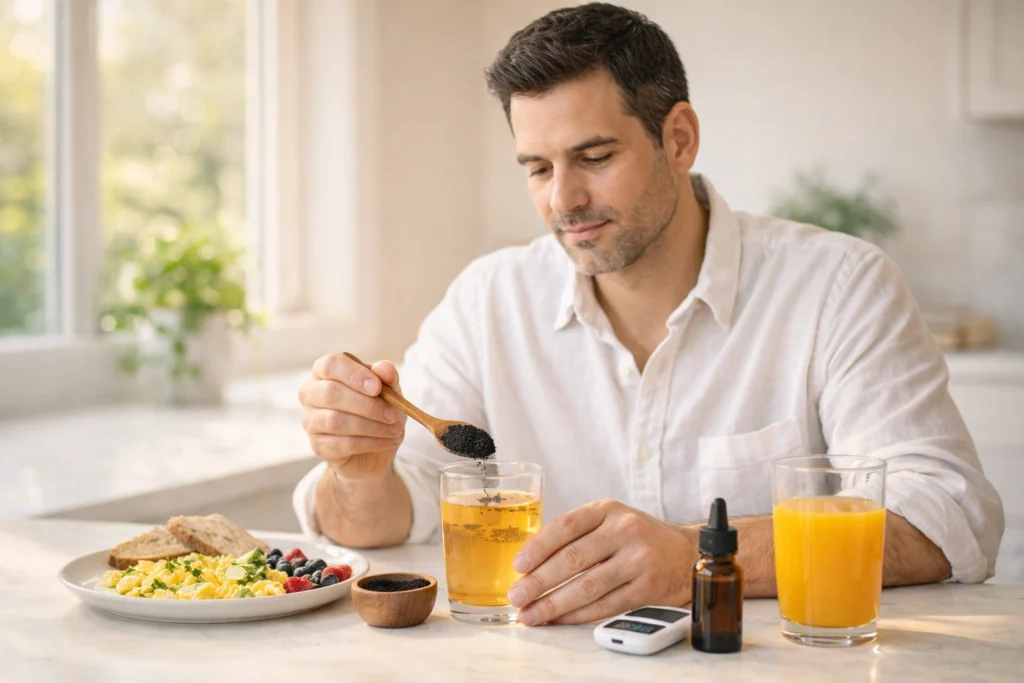
The evidence-based daily dose for type 2 diabetes is 2g of ground black seed powder — split as 1g with breakfast and 1g with dinner to maximise alpha-glucosidase inhibition at meal times.
Black Seed for Diabetes Complications
Type 2 diabetes rarely presents in isolation — it comes accompanied by a cluster of complications that significantly increase morbidity and mortality risk. Black seed’s evidence base extends meaningfully into several of these complication areas:
| Diabetes Complication | Black Seed Evidence | Key Mechanism |
|---|---|---|
| Cardiovascular disease | Strong — 2025 meta-analysis: LDL −19.53 mg/dL, TC −18.80 mg/dL | Phytosterol-mediated cholesterol absorption inhibition; LDL receptor upregulation |
| Hypertension | Good — systematic review confirmed BP reduction across RCTs | Thymoquinone vasorelaxation; ACE inhibitor-like activity; diuretic effect |
| Diabetic nephropathy (kidney) | Moderate — PMC reviews confirm nephroprotective properties | TQ reduces oxidative stress in renal tubules; reduces proteinuria markers |
| Fatty liver (NAFLD) | Moderate — 2014 human clinical trial: improved liver steatosis in 12 weeks | Hepatoprotective antioxidant effect; lipid metabolism modulation |
| Oxidative stress | Strong — 2025 umbrella meta-analysis: CRP, IL-6, MDA all significantly reduced | TQ scavenges ROS; activates Nrf2 antioxidant pathway |
| Chronic inflammation | Strong — NF-κB inhibition; COX-1/2 inhibition confirmed across multiple reviews | Multi-pathway anti-inflammatory — same targets as ibuprofen and aspirin |
| Neuropathy | Emerging — TQ neuroprotective in animal models; 9-week human study: improved cognition in elderly | Reduces neuroinflammation; protects cholinergic neurons from oxidative damage |
How to Use Black Seed for Diabetes
| Form | How to Take | Timing | Evidence Base |
|---|---|---|---|
| Powder (ground seeds) | 1g (¼ tsp) with warm water or mixed into food, twice daily | With or immediately before meals | Strongest — most RCTs used ground seed powder at 1–2g daily |
| Whole seeds | ½–1 tsp chewed with honey or added to food | With meals | Good — culinary use consistent with traditional practice |
| Cold-pressed oil | ½ tsp (2.5ml) with honey, morning | Before breakfast — empty stomach | Good — oil concentrates thymoquinone; several RCTs used oil form |
| Capsules (standardised extract) | 500mg–1000mg daily as directed | With meals | Good — allows consistent TQ dosing; best for monitoring therapeutic effect |
🌿 Black Seed for Diabetes — Daily Protocol
-
1
Start with your doctor’s knowledge
Before starting any black seed protocol for diabetes management, inform your doctor or diabetologist. Show them this article or the PubMed reference for the 2025 meta-analysis. Ask them to increase your blood sugar monitoring frequency for the first 4 weeks.
-
2
Week 1–2 — start low
Begin with ½g (approximately ⅛ tsp) ground black seed powder mixed into warm water with honey, once daily with breakfast. Monitor fasting blood glucose daily and note any changes.
-
3
Week 3–4 — increase to clinical dose
If tolerated and blood glucose is responding without hypoglycaemia, increase to 1g (¼ tsp) twice daily — with breakfast and with dinner. This reaches the 2g daily dose confirmed effective in the PubMed clinical trial.
-
4
Monitor and report
Keep a blood glucose log. At 6–8 weeks, share your readings with your doctor. If blood glucose has improved significantly, your doctor may consider adjusting your prescribed medication dose — never adjust it yourself.
-
5
Ongoing maintenance
For ongoing use, 1–2g daily of black seed powder (or equivalent in oil or capsule form) with meals is safe for most healthy adults as an adjuvant. HbA1c testing every 3 months provides the best measure of long-term impact.
Dosage Guide for Diabetes
📋 Dosage Notes
Most cited clinical dose: 2g/day ground black seed powder — from the Bamosa et al. PubMed clinical trial specifically studying type 2 diabetic patients on oral hypoglycaemic agents
Split dosing is better: Twice daily (1g morning + 1g evening with meals) provides more consistent enzyme inhibition throughout the day than a single daily dose
With meals for best glycaemic effect: Taking black seed with or just before carbohydrate-containing meals maximises the alpha-glucosidase inhibition effect — slowing carbohydrate digestion at the time it matters most
Minimum trial period: 8 weeks before assessing fasting blood glucose response; 12 weeks for HbA1c (which reflects 3-month average glucose)
Do not exceed: 3g/day of whole seeds or equivalent without medical supervision — higher doses have been used in some studies but the safety profile at doses above 3g/day has not been as thoroughly established
Drug Interactions & Safety — Critical for Diabetics
💊 Metformin — most common combination
Black seed and metformin share a common mechanism (hepatic gluconeogenesis inhibition via AMPK pathway). Combined use may produce additive glucose-lowering effects. Monitor fasting blood glucose more frequently when starting black seed alongside metformin. Report significant drops (below 80 mg/dL fasting) to your doctor promptly.
💉 Insulin — highest hypoglycaemia risk
The combination of insulin and black seed carries the highest risk of hypoglycaemia. Insulin lowers blood glucose directly; black seed adds beta-cell stimulation and peripheral sensitisation. Never start black seed at therapeutic doses without your doctor’s knowledge and agreement if on insulin. Increased blood glucose monitoring (before meals and at bedtime) is essential.
💊 Sulfonylureas (glibenclamide, glipizide, glimepiride)
Sulfonylureas stimulate insulin secretion — the same mechanism as one of black seed’s pathways. Combined use has significant additive hypoglycaemia risk. This combination requires close medical supervision and frequent blood glucose monitoring particularly in the first 4–6 weeks.
💊 Blood pressure medications
Many type 2 diabetics are also on antihypertensive medications. Black seed also lowers blood pressure through separate mechanisms. Combined use may cause hypotension (low blood pressure). Monitor blood pressure when starting black seed if on antihypertensive medications.
🩸 Anticoagulants (warfarin, aspirin)
Black seed oil has mild anticoagulant properties. Diabetics on aspirin for cardiovascular protection or warfarin should discuss black seed oil use with their doctor before starting. Whole seeds at culinary doses have a lower interaction risk than concentrated oil.
🤰 Pregnancy and gestational diabetes
Black seed at medicinal doses is not recommended during pregnancy due to potential uterine-stimulating effects. Gestational diabetes should be managed exclusively through prescribed medical protocols. Do not use black seed as a diabetes supplement during pregnancy.
Black Seed vs Other Antidiabetic Herbs
A 2025 PMC review compared five major antidiabetic herbs used in Middle Eastern and South Asian medicine across human RCTs and meta-analyses. Here is how black seed compares:
| Herb | FBG Effect | HbA1c Effect | Evidence Consistency | Best Use Case |
|---|---|---|---|---|
| Black Seed (Nigella sativa) | −21.43 mg/dL ✅ | −0.44% ✅ | ⭐⭐⭐⭐⭐ Consistent positive across studies | Type 2 diabetes adjuvant; metabolic syndrome |
| Fenugreek (Methi) | Significant ✅ | Significant ✅ | ⭐⭐⭐⭐ Good — second strongest evidence | Post-meal glucose; insulin resistance |
| Cinnamon (Dalchini) | Moderate ✅ | Moderate | ⭐⭐⭐ Moderate — enhanced glucose transport | Post-meal glucose spike reduction |
| Ginger (Adrak) | Moderate ✅ | Limited | ⭐⭐⭐ Moderate — carbohydrate enzyme regulation | Inflammation associated with insulin resistance |
| Curcumin (Turmeric) | Moderate ✅ | Moderate | ⭐⭐⭐ Moderate — bioavailability challenge | Diabetic inflammation; oxidative stress |
Black seed ranked highest for evidence consistency and breadth of effect — the only herb in this comparison that simultaneously addresses fasting blood glucose, HbA1c, LDL cholesterol, blood pressure, and inflammation with significant clinical trial evidence. For a comprehensive article on fenugreek — the second-strongest evidence herb for diabetes — see our upcoming fenugreek benefits guide.
🔗 🌿 Full Guide: Black Seed (Kalonji) — 10 Proven Benefits, Uses & Side Effects
This article focuses specifically on black seed and diabetes. For the complete guide covering all 10 health benefits, whole seeds vs oil vs capsules, traditional medicine context, skin and hair benefits, and full dosage guide — read our pillar article:
👉 Black Seed (Kalonji): 10 Proven Benefits, Uses, Nutrition & Side Effects →
Conclusion — Should Diabetics Use Black Seed?
The evidence supporting black seed as an adjuvant diabetes therapy is among the strongest available for any natural supplement — with a 2025 meta-analysis of 16 RCTs confirming significant reductions in fasting blood glucose and HbA1c, a 2025 PMC comparative review ranking it as the most consistently effective of five major antidiabetic herbs, and a well-established mechanistic framework involving six distinct and complementary blood sugar-lowering pathways.
For most type 2 diabetic patients, incorporating black seed at 2g/day of ground powder (or equivalent in oil or capsule form) alongside prescribed treatment is a reasonable, evidence-grounded decision — with the critical provisos of informing your doctor before starting, increasing blood glucose monitoring in the first 4–6 weeks, and never adjusting prescribed medication doses yourself based on improved readings.
The additional benefits black seed provides beyond blood glucose — significantly reducing LDL cholesterol, blood pressure, and systemic inflammation — make it particularly valuable for the typical type 2 diabetic who faces all of these risk factors simultaneously. As the 2021 PMC review concluded, it “may help to reduce the dose and incidence of adverse effects of modern antidiabetic medicines” — a meaningful benefit for patients managing long-term medication regimens. For information on black seed oil specifically for therapeutic use see our guide: black seed oil benefits and proven uses.
Try Our Free Herb & Tea Benefit Finder
Type black seed, kalonji, or any herb to instantly see its full benefits, best preparation method, dosage, and safety notes.
🔍 Open the Herb & Tea Benefit Finder →Frequently Asked Questions
Yes — a 2025 meta-analysis of 16 randomised controlled trials in type 2 diabetic patients confirmed that black seed supplementation significantly reduced fasting blood glucose by 21.43 mg/dL (p=0.005) and HbA1c by 0.44% (p=0.01). A separate 2025 PMC review of Middle Eastern antidiabetic herbs ranked Nigella sativa as having the most consistent evidence across studies. However black seed works as an adjuvant — a complement to prescribed diabetes medication — not as a replacement. Its glucose-lowering effect is real enough to cause hypoglycaemia when combined with diabetes medications without dose adjustment, making medical supervision essential.
The most evidence-supported dose for type 2 diabetes is 2g per day of ground black seed powder — from a PubMed clinical trial specifically studying black seed as an adjuvant to oral hypoglycaemic agents. This is approximately ½ teaspoon of ground seeds, taken in two divided doses of 1g each with breakfast and dinner. If using cold-pressed oil, the equivalent is approximately ½ to 1 teaspoon daily. Always start at half the target dose for the first 1–2 weeks and increase gradually while monitoring blood glucose more frequently. Discuss the protocol with your doctor before starting.
Yes — but with careful monitoring. Black seed and metformin share a common mechanism of action (hepatic gluconeogenesis inhibition via the AMPK pathway), so combined use may produce additive glucose-lowering effects stronger than either alone. This is actually the basis for the clinical trial recommendation of black seed “as a beneficial adjuvant to oral hypoglycaemic agents.” The concern is additive hypoglycaemia — especially if your current metformin dose already keeps your blood sugar well controlled. Always inform your doctor before combining them, increase your fasting blood glucose monitoring frequency for the first 4 weeks, and report any readings below 80 mg/dL fasting to your doctor promptly.
Fasting blood glucose effects can begin appearing within 2–4 weeks of consistent daily use at 2g per day. However HbA1c — the most reliable measure of long-term blood sugar control — reflects a 3-month average and requires a minimum of 8–12 weeks before you can see meaningful change. Clinical trials typically ran for 3 months to measure full HbA1c impact. For practical monitoring, measure fasting blood glucose daily for the first 4 weeks to detect any response or hypoglycaemia risk, then have your HbA1c tested at 12 weeks to assess the full therapeutic effect.
Yes — black seed is potentially well-suited for pre-diabetes management, where the goal is preventing progression to full type 2 diabetes. Its six blood-sugar-lowering mechanisms address the core defects of pre-diabetes: mild insulin resistance, borderline beta-cell function, and early hepatic glucose dysregulation. A clinical study in pre-diabetic women using hibiscus-stevia tea found meaningful fasting blood glucose reductions — suggesting early intervention with natural supplements is effective before the defects become severe. For pre-diabetic individuals not yet on medication, the hypoglycaemia risk from black seed is lower, making it a reasonable lifestyle intervention under nutritional guidance. Combine with dietary carbohydrate reduction, regular exercise, and routine blood glucose monitoring.
The majority of clinical trials showing significant blood glucose reduction used ground black seed powder (1–2g daily) — making this the most evidence-consistent form for diabetes specifically. Ground powder maximises the surface area for digestive enzyme contact, enhancing alpha-glucosidase inhibition at the gut level where carbohydrate absorption occurs. Cold-pressed oil is effective and concentrates thymoquinone but has more variable TQ content between brands. Standardised capsules provide the most consistent and measurable dosing for those who want to track their therapeutic intake precisely. Whole seeds are least effective for diabetes — the intact seed coat limits digestive access to active compounds. For maximum effect take any form with or immediately before carbohydrate-containing meals.
No — black seed cannot reverse type 2 diabetes on its own. The evidence supports it as a meaningful adjuvant that reduces fasting blood glucose and HbA1c, protects pancreatic beta-cells from further damage, and addresses associated cardiovascular risk factors. These are valuable clinical effects but they do not constitute reversal. Type 2 diabetes reversal — defined as achieving normal blood glucose without medication — is primarily achieved through significant weight loss (typically 10–15% body weight), caloric restriction, and sustained lifestyle change. Black seed can support this process by improving insulin sensitivity and protecting beta-cell function, but it cannot substitute for the fundamental metabolic changes required for diabetes reversal. Think of black seed as a valuable supporting tool within a comprehensive diabetes management strategy, not a standalone cure.
Kalonji at culinary doses (½–1 tsp seeds daily) is generally considered safe for most diabetic patients, including those with mild diabetic nephropathy. Research actually confirms nephroprotective properties — thymoquinone reduces oxidative stress in renal tubule cells and has been shown to reduce markers of kidney damage in studies. However if you have moderate to severe kidney disease (eGFR below 45), the mild diuretic effect of black seed and its impact on blood pressure should be discussed with your nephrologist before starting therapeutic doses. Never take concentrated supplements without medical clearance if your kidney function is compromised. The most important kidney protection for diabetics remains tight glycaemic control — which black seed directly supports as an adjuvant.
📚 Related Health Guides
Black Seed (Kalonji): 10 Proven Benefits, Uses & Side Effects
The complete pillar guide — all 10 benefits including cardiovascular, immunity, skin, and hair.
Black Seed Oil Benefits: 8 Proven Uses for Health, Skin & Hair
How to choose quality black seed oil and use it therapeutically — including internal dosing protocols.
Turmeric Milk (Golden Milk): Benefits & Recipe
Curcumin has antidiabetic and anti-inflammatory properties — a complementary daily habit alongside black seed.
Hibiscus Tea Benefits: 12 Science-Backed Reasons
Hibiscus tea also reduces post-prandial blood glucose and blood pressure — highly complementary to black seed for diabetics.