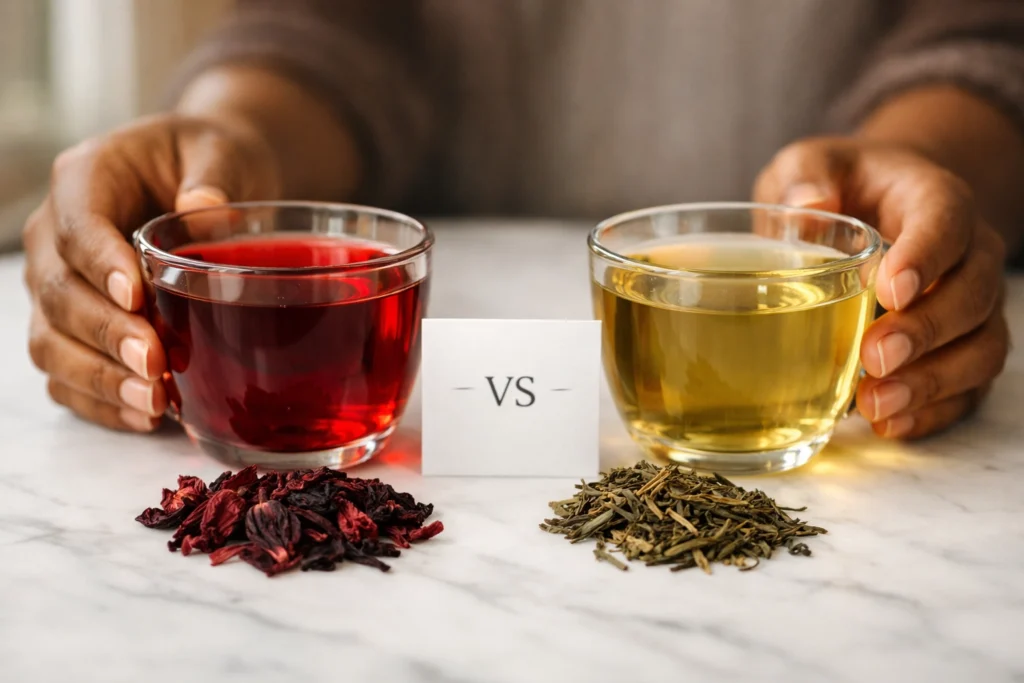

Hibiscus tea is not just a pretty pink drink. It is packed with compounds that genuinely benefit your skin — and a 2025 clinical trial of 98 people proved it. Here is what the science says about hibiscus tea and your skin.
📋 Table of Contents
Why Hibiscus Tea Is Good for Skin
Hibiscus tea is sometimes called “nature’s Botox” — and while that is a bit dramatic, the skin benefits are genuinely impressive and now backed by real clinical research.
The secret is in hibiscus’s unique combination of compounds. It contains natural fruit acids that exfoliate your skin, powerful antioxidants that protect against ageing, and specific plant chemicals that help your skin make more collagen and hyaluronic acid. No single skincare ingredient does all of this at once.
In 2025 a proper clinical trial — the gold standard of evidence — confirmed that people who took hibiscus extract daily for 12 weeks had measurably better skin hydration, fewer wrinkles, and more elastic skin than those on placebo. This is not just marketing — it is real science.
🔗 🌺 Hibiscus Tea for Psoriasis & Eczema
This article covers general skin benefits. For the specific guide on hibiscus for inflammatory skin conditions see:
👉 7 Proven Benefits of Hibiscus Tea for Psoriasis & Eczema →
10 Skin Benefits of Hibiscus Tea
Protects Your Collagen
Collagen is what keeps your skin firm and smooth. As you get older, your body breaks it down faster than it builds it. Hibiscus helps in two ways — it helps your body make more collagen, and it slows the enzymes that break existing collagen down.
The result is firmer, smoother skin that ages more slowly.
🔬 The Science
Hibiscus contains myricetin — a compound that directly blocks collagenase, the enzyme that degrades collagen. Hibiscus acid (a unique compound in the calyx) stimulated collagen production by 48% in human skin cell studies. Vitamin C in hibiscus is also an essential building block for collagen synthesis. This triple action — build more, stabilise it, slow the breakdown — is what earns hibiscus the anti-ageing reputation.
Keeps Skin Elastic & Bouncy
Elastin is the protein that lets your skin spring back into position. When elastin breaks down, skin starts to sag and lose its definition. Most anti-ageing products focus only on collagen — but hibiscus protects elastin too.
This is why hibiscus is called “nature’s Botox” — preserving elastin helps skin stay firm and lifted.
Deeply Hydrates Skin
Hibiscus stimulates your skin to produce more hyaluronic acid — the molecule that holds moisture in your skin cells. More hyaluronic acid means plumper, more hydrated skin from the inside out.
The 2025 clinical trial confirmed measurable improvement in deep skin moisture after 12 weeks of daily hibiscus supplementation.
🔬 The Science
Hibiscus acid stimulated hyaluronic acid production by 24% in human dermal fibroblast cells — published in PMC. This is different from applying hyaluronic acid serum topically. Hibiscus stimulates your skin’s own production machinery, giving deeper and longer-lasting hydration. Hibiscus also contains mucilage — a natural humectant that attracts and locks moisture on the skin surface when applied topically.
Gently Exfoliates — No Harsh Chemicals
Hibiscus contains natural fruit acids — called AHAs — that dissolve the bonds holding dead skin cells together. This gently clears away dull, flaky surface skin to reveal fresher, brighter skin underneath.
For acne-prone skin this is especially useful — it keeps pores clear and prevents the buildup that causes blackheads.
Fights Acne Bacteria
Acne is partly caused by bacteria infecting clogged pores. Hibiscus has natural antimicrobial properties that fight the two main acne-causing bacteria — C. acnes and S. aureus.
It also reduces the redness and swelling around pimples — making existing breakouts less angry and painful.
Fades Dark Spots & Uneven Tone
Dark spots and uneven skin tone are caused by too much melanin in certain areas. Hibiscus addresses this in two ways — the fruit acids speed up the shedding of pigmented surface cells, and other compounds slow down melanin production.
Results take 8–12 weeks of consistent use — but the improvement is gradual and gentle.
Adds Natural Glow & Radiance
Dull, tired-looking skin is mostly caused by free radical damage from sun, pollution, and stress. Hibiscus is packed with antioxidants — especially anthocyanins — that neutralise free radicals before they can dull your skin.
The 2025 trial confirmed improved skin surface smoothness — which directly translates to a more radiant, light-reflecting complexion.
Helps Protect Against Sun Damage
Hibiscus is not a sunscreen — it does not replace SPF. But drinking it daily adds a layer of internal UV protection. The antioxidants absorb some UV rays and neutralise the damage they cause to skin cells.
Think of it as internal sun protection that works alongside your regular SPF — not instead of it.
Helps Skin Heal Faster
Hibiscus extract has been shown to speed up wound healing. It stimulates the production of fibronectin — a protein that helps skin pull together and heal. It also has antimicrobial properties that protect healing skin from infection.
This makes it useful for post-acne scars, minor skin damage, and dry cracked skin.
Soothes Inflamed Skin — Eczema & Psoriasis
For people with eczema, psoriasis, or easily irritated skin, hibiscus’s anti-inflammatory properties are very useful. Applied as a cold compress it reduces redness, itching, and swelling directly on the affected skin.
For the full eczema and psoriasis guide see: 7 proven benefits of hibiscus tea for psoriasis and eczema.
What the 2025 Clinical Trial Proved
In 2025 researchers ran a proper clinical trial to test hibiscus tea and skin. This type of study — randomised, double-blind, placebo-controlled — is the highest quality evidence possible.
98 adults aged 35–60 took either hibiscus extract or a placebo every day for 12 weeks. The results were clear and positive across every skin measure tested.
| What Was Measured | Result After 12 Weeks |
|---|---|
| Skin hydration | ✅ Significantly improved vs placebo |
| Wrinkle depth | ✅ Significantly reduced vs placebo |
| Skin elasticity | ✅ Significantly improved vs placebo |
| Skin barrier (water loss) | ✅ Significantly improved vs placebo |
| Deep moisture content | ✅ Significantly improved vs placebo |
| Skin surface smoothness | ✅ Improved vs placebo |
Drinking vs Applying — Which Works Better?
The honest answer is that they work differently — and the best results come from doing both.
| Skin Goal | Better Method | Why |
|---|---|---|
| Collagen support | Both | Drinking delivers compounds through the bloodstream; topical adds direct contact |
| Deep hydration | Drinking | Stimulates your skin’s own hyaluronic acid production from inside |
| Exfoliation & pore clarity | Topical only | AHAs work on the skin surface — they are broken down before reaching skin when swallowed |
| Acne control | Topical wins | Direct contact with bacteria and pores |
| Dark spots | Topical wins | AHAs and tyrosinase inhibition work directly at the pigment site |
| UV protection | Drinking | Antioxidants reach all skin layers through the bloodstream |
| Eczema & psoriasis | Both equally | Internal reduces systemic inflammation; topical soothes directly |
🎯 Best Strategy for Most People
Drink 1–2 cups daily for collagen protection, deep hydration, UV protection, and a natural glow — these are systemic benefits that topical use cannot give you.
Apply as a toner 3–4 evenings per week for exfoliation, acne, dark spots, and direct skin brightening — these surface effects work best with direct skin contact.
How to Use Hibiscus Tea for Skin
Method 1 — Drink It Daily
Brew 1–2 teaspoons of loose dried hibiscus calyxes in 240ml of hot water for 7–8 minutes. Drink 1–2 cups daily. Use loose calyxes — not tea bags — for the highest concentration of active compounds.
Drink through a straw to protect your teeth from the acidity. Rinse your mouth with water after. Drink with or after food to reduce stomach discomfort.
Method 2 — Facial Toner for Brightening & Acne
Brew a normal-strength cup of hibiscus tea. Strain well. Let it cool completely. Pour into a clean glass bottle and store in the fridge.
Apply to your clean face with a cotton pad each evening. Wait 60 seconds then apply your moisturiser. Use within 48 hours. Always patch test first.
Method 3 — Cold Compress for Inflammation
Brew a double-strength cup (3–4 tsp per 240ml). Strain, cool, then refrigerate until cold. Soak a clean cotton cloth in the cold tea and apply to red, itchy, or inflamed skin areas for 10–15 minutes. Follow immediately with moisturiser.
For the complete step-by-step compress guide see: how to make a hibiscus tea compress for psoriasis.
| Method | Best For | How Often |
|---|---|---|
| Drinking | Collagen, hydration, UV protection, glow | 1–2 cups daily |
| Facial toner | Brightening, acne, pores, dark spots | Every evening |
| Cold compress | Eczema, psoriasis, redness, inflammation | 3–4 times per week |
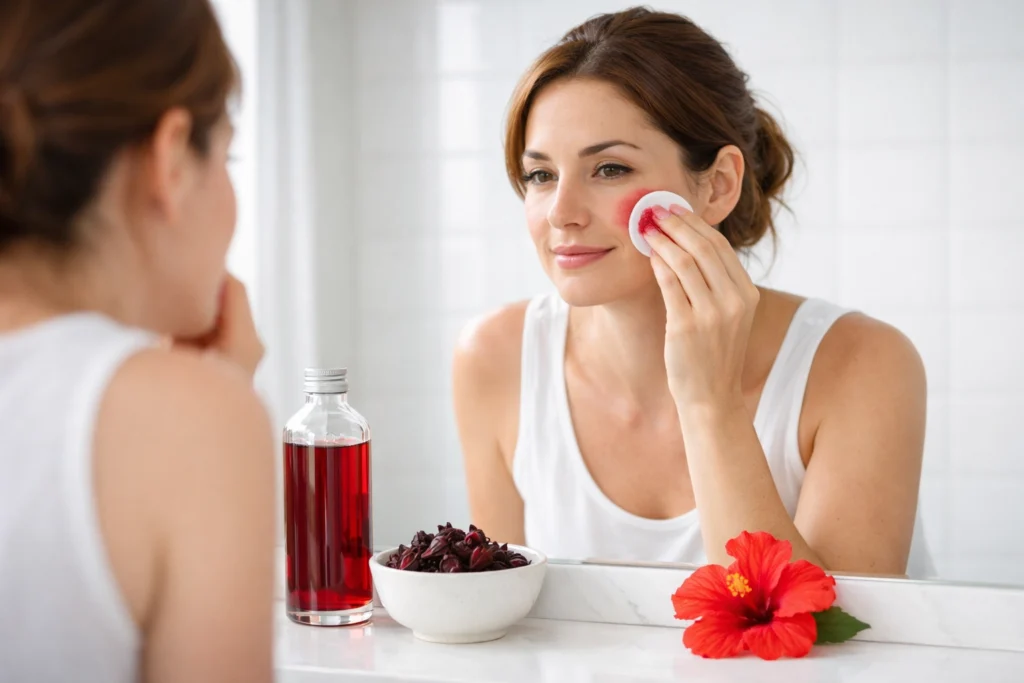
Hibiscus tea applied as a natural toner helps tighten pores, brighten skin tone, and reduce redness.
💡 For Homemade Hibiscus Toner — 4 Important Tips
1. Use distilled water. Tap water contains minerals and chlorine that can affect the stability and skin compatibility of homemade toner. Always use distilled (demineralised) water for any water-based skin product.
2. Test the pH before applying. The ideal skin-safe pH for a facial toner is 4.5–5.5. Hibiscus tea can be quite acidic — test your finished toner with pH strips and dilute with distilled water if needed to reach this range. Applying a toner that is too acidic can irritate the skin barrier.
3. Use a preservative if storing. Any water-based product can grow bacteria and mould within days at room temperature. If you plan to keep your toner for more than 2–3 days, add a cosmetic-grade preservative system. Without a preservative, store in the fridge and use within 3 days.
4. Steep below 40°C. To preserve the Vitamin C content of your hibiscus infusion, steep in water cooled to below 40°C rather than boiling water. This applies to both drinking tea and skincare preparations.
How Much and How Often?
📅 When Will You See Results?
Week 1–2: Skin feels softer after toner use. Pores look cleaner. Minor breakouts may reduce.
Week 3–4: Skin tone looks more even. Slight improvement in hydration and glow.
Week 6: The clinical trial showed measurable improvements in hydration and skin barrier at 6 weeks.
Week 8–12: Meaningful reduction in fine lines, improved elasticity, and fading of dark spots.
Important: Stopping use reverses the benefits over time — consistency is everything.
Side Effects to Know About
🦷 Tooth enamel — most common concern
Hibiscus tea is naturally acidic. Drinking it every day without protection can slowly damage tooth enamel. Always drink through a straw and rinse your mouth with water straight after. Wait 30 minutes before brushing your teeth.
☀️ Sun sensitivity after topical use
The fruit acids in hibiscus make your skin more sensitive to UV. Only apply hibiscus toner or compress in the evening. If you apply it in the morning, always use SPF 30+ before going outside — without it you risk sunburn and more dark spots.
🩸 Blood pressure medication
Hibiscus naturally lowers blood pressure. If you take medication for blood pressure, the combination may lower it too much. Talk to your doctor before drinking hibiscus tea daily. For the full drug interaction guide see: hibiscus tea side effects and drug interactions.
🤰 Pregnancy — avoid completely
Do not use hibiscus during pregnancy — internally or topically on large skin areas. It may stimulate uterine contractions. This applies to tea, supplements, and concentrated topical use.
🌿 Skin sensitivity — patch test first
Always test hibiscus tea on your inner wrist for 24 hours before applying to your face. Allergic reactions are rare but possible. If you develop redness or itching — stop use.
🔴 Temporary skin tinting
Hibiscus tea may leave a faint pinkish tint on your skin from the anthocyanins. This is completely harmless and fades within 20–30 minutes. Avoid wearing white clothes immediately after topical application.
Try Our Free Herb & Tea Benefit Finder
Type hibiscus or any herb to instantly see its skin benefits, how to use it, and who should be careful.
🔍 Open the Herb & Tea Benefit Finder →Frequently Asked Questions
Yes — and this is backed by a proper clinical trial. A 2025 randomised double-blind placebo-controlled trial in 98 participants confirmed that daily hibiscus extract significantly improved skin hydration, reduced wrinkle depth, improved elasticity, and strengthened the skin barrier compared to placebo after 12 weeks. Cell studies also confirm hibiscus acid stimulates collagen production by 48% and hyaluronic acid by 24% in human skin cells. The evidence is genuine and growing.
Early results from topical use — softer skin, cleaner pores, slightly brighter complexion — typically appear within 1–2 weeks. Improvements in hydration and skin tone usually become visible at 3–4 weeks. The clinical trial showed measurable structural improvements at 6 weeks. Meaningful changes in fine lines, elasticity, and dark spots take 8–12 weeks of consistent daily use. Stopping use reverses the benefits — consistency is essential.
Yes — cooled hibiscus tea applied as a toner is safe and effective for most skin types. Brew it, strain well, cool completely, and apply with a cotton pad to clean skin. Leave 60 seconds then moisturise. Use in the evening only — the fruit acids increase sun sensitivity. Patch test on your inner wrist for 24 hours first. The natural pink tint from anthocyanins fades within 20–30 minutes — it is harmless.
Yes — hibiscus tackles acne in three ways at once. The natural fruit acids (AHAs) gently clear pores by removing dead skin cell buildup. The antimicrobial compounds kill the bacteria that cause acne. And the anti-inflammatory properties reduce the redness and swelling around existing spots. Applied as an evening toner, hibiscus provides gentle but comprehensive acne support without the dryness and irritation of harsh conventional treatments like benzoyl peroxide.
Yes — confirmed by the 2025 RCT. Wrinkle depth significantly decreased in the hibiscus group vs placebo after 12 weeks. Hibiscus works by protecting collagen from breaking down, stimulating new collagen production, preserving elastin, and neutralising the free radicals that accelerate skin ageing. This multi-angle approach makes it more comprehensively anti-ageing than single-ingredient supplements like plain collagen powder.
Yes — through two mechanisms. The fruit acids speed up skin cell turnover, gradually shedding the pigmented surface cells that make up dark spots. Other compounds in hibiscus slow down melanin production at its source. Results take 8–12 weeks of consistent topical use. For best results combine evening toner application with daily drinking and daily SPF use — sun exposure is the main driver of new dark spots and will undo the brightening work if unprotected.
1–2 cups of well-brewed loose-leaf hibiscus tea per day is the recommended amount for skin benefits. Use 1–2 teaspoons of dried hibiscus calyxes per 240ml cup, brewed for 7–8 minutes. Loose calyxes give a higher concentration of active compounds than tea bags. Drink through a straw and rinse your mouth with water after each cup to protect your teeth from the acidity. Combine with 3–4 evenings of topical toner use per week for the best overall skin results.
📚 Related Health Guides
7 Proven Benefits of Hibiscus Tea for Psoriasis & Eczema
Hibiscus for inflammatory skin conditions — anti-inflammatory and antihistamine guide.
How to Make a Hibiscus Tea Compress for Psoriasis
Complete step-by-step topical application guide with brewing strength and technique.
Hibiscus Tea Side Effects: What to Know Before Drinking Daily
Drug interactions, dental precautions, and who should avoid hibiscus tea.
Does Hibiscus Tea Stop Eczema Itching?
The research on hibiscus and the itch-scratch cycle — how and why it helps.