Fennel water and cumin water are both traditional seed-infused drinks with distinct flavors, active compounds, and cultural roles. Neither is universally better — the right choice depends on your taste, timing, and digestive needs.
📋 Table of Contents
- Introduction
- What Is Fennel Water?
- What Is Cumin Water?
- Names Around the World
- Key Active Compounds Compared
- Flavor & Sensory Comparison
- Nutritional Comparison
- Traditional & Cultural Use
- Best Time to Drink Each
- Which Should You Choose?
- Can They Be Combined?
- Who Should Be Careful?
- Conclusion
- FAQs
- Related Health Guides
Introduction
Fennel seeds and cumin seeds are found in almost every traditional kitchen across South Asia, the Middle East, and the Mediterranean. Both have been used in food and wellness for thousands of years. And both make popular seed-infused waters. But they are very different drinks.
Fennel water is mild, naturally sweet, and refreshing. Cumin water is earthy, warming, and stronger. They work through different active compounds and suit different situations. Knowing which one to reach for — and when — makes a real difference.
🛠️ Free Health Tools — Water Intake Calculator, BMI Calculator, Intermittent Fasting Calculator & more
🔍 Browse All Free Health Tools →This guide compares both drinks side by side — covering flavor, active compounds, traditional uses, best timing, nutrition, and safety. For the full profile of each spice, see our guides on fennel seeds benefits and cumin (jeera/zeera) benefits.
What Is Fennel Water?
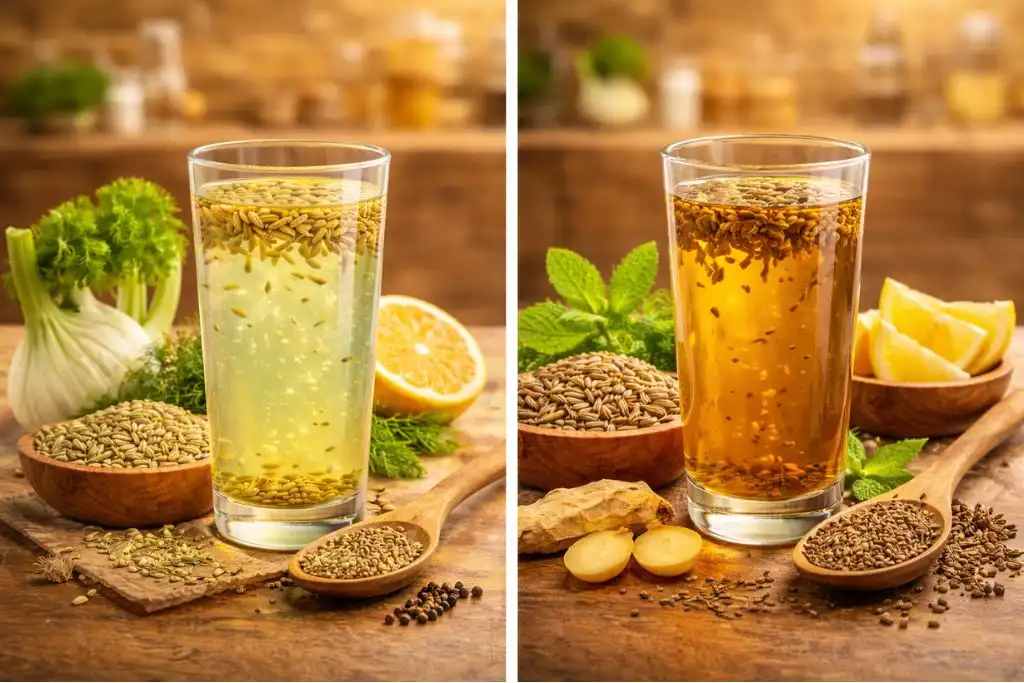
Fennel water is made by soaking or boiling dried fennel seeds (Foeniculum vulgare) in water. The result is a pale yellow, naturally sweet, mildly aromatic drink. It has been used in Ayurvedic and Unani medicine for centuries — most commonly as a post-meal digestive and a soothing evening drink.
In South Asian households, fennel seeds and fennel water are offered to guests after meals. The tradition is rooted in fennel’s ability to freshen breath and ease post-meal heaviness. In Mediterranean and Middle Eastern cultures, fennel has been used since ancient times for digestion and women’s health.
🌱 Key Compound: Anethole
Anethole — the main active compound in fennel seeds — gives fennel water its sweet, anise-like flavor. It relaxes gut muscles, reduces gas and bloating, and gives fennel its traditionally soothing digestive effect. The same compound is found in anise and star anise.
What Is Cumin Water?
Cumin water is made by soaking or boiling dried cumin seeds (Cuminum cyminum) in water. The result is a pale amber to golden-brown drink with an earthy, warm, and slightly sharp flavor. It is deeply familiar in South Asian and Middle Eastern cooking and wellness.
Cumin water has been a cornerstone of Ayurvedic morning routines for centuries — drunk on an empty stomach to activate digestion before the day’s first meal. Research confirms several of these traditional uses, including cumin’s effects on digestive enzyme stimulation, gas reduction, blood sugar balance, and weight management.
🌱 Key Compounds: Thymol & Cuminaldehyde
Thymol stimulates bile and digestive enzyme production. Cuminaldehyde reduces gas by targeting the gut bacteria that produce it. Together they make cumin water one of the most functionally active seed-infused waters in traditional medicine.
Names Around the World
| Language / Region | 🌾 Fennel / Fennel Water | 🌱 Cumin / Cumin Water |
|---|---|---|
| English | Fennel / Fennel Water | Cumin / Cumin Water |
| Hindi / Urdu | Saunf / Saunf ka Pani | Jeera / Zeera / Jeera Pani |
| Tamil | Sombu / Sombu Thanneer | Jeerakam / Jeerakam Thanneer |
| Telugu | Sopu / Sopu Neeru | Jeelakarra / Jeelakarra Neeru |
| Bengali | Mauri / Mauri Jol | Jira / Jira Jol |
| Sanskrit / Ayurvedic | Shatapushpa | Jiraka |
| Arabic | Shamar / Ma’ al-Shamar | Kammoun / Ma’ al-Kammoun |
Key Active Compounds Compared
The differences between fennel water and cumin water come down to their active plant compounds. Each drink works through a different set of these.
| Compound | Found In | What It Does |
|---|---|---|
| Anethole | Fennel | Relaxes gut muscles, reduces gas, mild calming effect, sweet anise flavor |
| Fenchone | Fennel | Reduces gas, germ-fighting properties, slight bitter note |
| Thymol | Cumin | Triggers bile and digestive enzyme production; warming effect |
| Cuminaldehyde | Cumin | Reduces gas by targeting gas-producing gut bacteria; earthy aroma |
| Apigenin / Luteolin | Both | Antioxidants; reduce inflammation; support gut lining |
| Flavonoids | Both | Broad antioxidant activity; protect cells from damage |
Flavor & Sensory Comparison
Flavor is often the deciding factor when choosing between these two drinks. The difference is significant and immediately noticeable from the first sip.
| Sensory Quality | 🌾 Fennel Water | 🌱 Cumin Water |
|---|---|---|
| Primary taste | Mildly sweet, smooth, refreshing | Earthy, warm, slightly sharp |
| Aroma | Light, anise-like, floral | Strong spice aroma, savory |
| Aftertaste | Clean, slightly cooling | Lingering warmth, robust |
| Color | Very pale yellow to clear | Pale amber to golden-brown |
| First-time friendliness | High — easy for most palates | Moderate — stronger flavor to get used to |
| Palatability cold | Pleasant at room temperature | Better warm — cold can feel harsh |
For people new to herbal waters, fennel water is usually the easier starting point. Cumin water’s flavor is deeply familiar in South Asian and Middle Eastern households but may take a few days to get used to for first-time drinkers.
Nutritional Comparison (per 250ml glass)
Both drinks are almost calorie-free. Their value comes from active plant compounds — not from calories or nutrients.
| Nutrient | 🌾 Fennel Water | 🌱 Cumin Water |
|---|---|---|
| Calories | ~2–3 kcal | ~4–5 kcal |
| Carbohydrates | ~0.5g | ~0.8g |
| Protein | Trace | Trace |
| Fat | Trace | Trace |
| Sugar | None added | None added |
| Caffeine | None | None |
| Key active compounds | Anethole, fenchone | Thymol, cuminaldehyde |
Traditional & Cultural Use
Both spices have been used in traditional medicine for thousands of years. But they have distinct cultural roles that reflect their different properties.
Fennel Water in Traditional Medicine
In Ayurveda, fennel is considered balancing for all three doshas — making it one of the most widely recommended spices in the tradition. Fennel water is prescribed as a post-meal digestive and a soothing evening drink. It is also one of the few herbal waters traditionally used for infant colic in South Asian practice, though concentrated preparations should not be given to infants without medical guidance.
In Unani medicine, fennel is used for gas, colic, and urinary support. In Mediterranean traditions, fennel preparations have been recommended since ancient times for digestion and nursing mothers.
Cumin Water in Traditional Medicine
In Ayurveda, cumin is a heating spice prescribed specifically for people with slow or weak digestion. The morning empty-stomach jeera water routine is one of the most consistently recommended Ayurvedic practices. In Unani medicine, cumin is classified as a warming, drying spice used for poor appetite, gas, and digestive weakness.
In Islamic traditional medicine (Tibb-e-Nabawi), cumin holds a particularly elevated status — it is referenced in hadith as having broad healing properties, giving it deep cultural and religious significance in Muslim-majority communities across South Asia, the Middle East, and North Africa.
| Tradition | 🌾 Fennel Water Use | 🌱 Cumin Water Use |
|---|---|---|
| Ayurveda | Post-meal digestive, all-dosha balancer | Morning digestive tonic, digestive fire activator |
| Unani | Gas, colic, urinary support | Appetite stimulant, warming digestive |
| Islamic Tibb | General digestive use | Highly revered — broad traditional use |
| Mediterranean | Post-meal, nursing support | Digestive spice in food and herbal teas |
| South Asian households | Post-meal mouth freshener and digestif | Morning empty-stomach wellness routine |
Best Time to Drink Each
Timing is one of the clearest practical differences between these two drinks.
🌿 Not sure which herb suits you best? Type fennel or cumin in our free Herb & Tea Benefit Finder — get timing, dosage, and preparation tips instantly.
🔍 Try the Herb & Tea Benefit Finder →| Time of Day | 🌾 Fennel Water | 🌱 Cumin Water |
|---|---|---|
| Morning (empty stomach) | Possible — mild enough | ✅ Most recommended timing |
| Before meals | Occasionally, for appetite | ✅ 15–20 min before for enzyme activation |
| After meals | ✅ Most traditional and recommended | ✅ Effective for post-meal heaviness |
| Evening / night | ✅ Suitable — light and calming | ⚠️ Not ideal — allow 1–2 hrs before bed |
| During illness | Soothing for throat and nausea | Warming for colds and congestion |
| During Ramadan (sehri/iftar) | Gentle option at iftar | ✅ Popular at both sehri and iftar |
⏰ Full Timing Guide for Cumin Water
For a detailed breakdown of every timing option for cumin water — morning vs after meals, before meals, and evening — see: Best Time to Drink Cumin Water →
Which Should You Choose?
Both drinks have real digestive benefits — they just work differently and suit different situations.
🌾 For Gentle, Soothing Relief
Fennel water is better if your post-meal discomfort feels more like cramping, spasms, or mild nausea than sharp gas or bloating. It is also a better choice if you have acid reflux — fennel is less likely to stimulate stomach acid than cumin.
Fennel water is also the right choice in the evening when you want a calming, light drink rather than a stimulating one.
🌱 For Active Digestive Stimulation
Cumin water is stronger if your main concern is gas, bloating, or slow digestion after large, oily, or protein-rich meals. Thymol directly speeds up fat digestion, while cuminaldehyde targets gas-producing gut bacteria at the source.
Cumin water is also the better choice for morning metabolic support and weight management goals — areas where clinical evidence for cumin is more established.
🌾 If You Are New to Herbal Waters
Fennel water’s mild, naturally sweet flavor makes it much easier to start with. The jump from plain water or commercial drinks to fennel water is smooth. Starting with fennel water and gradually adding cumin water is a practical approach for building a daily herbal water habit.
🌱 For Traditional Morning Routines
If your wellness approach is rooted in Ayurvedic or Unani practice, cumin water has a more prominent therapeutic role in both traditions than fennel. The morning empty-stomach jeera water routine is one of the most consistently recommended practices in South Asian wellness traditions.
Can They Be Combined?
Yes — fennel and cumin seeds are used together in many traditional cooking and wellness preparations across South Asia and the Middle East. When infused together in water, anethole from fennel and thymol/cuminaldehyde from cumin work well alongside each other.
Fennel’s muscle-relaxing action combines with cumin’s enzyme-stimulating and gas-reducing action to cover both spasm-type discomfort and gas-type bloating at the same time. Fennel also softens cumin’s sharper flavor, making the combined drink easier to enjoy.
⭐ Combined Fennel & Cumin Water — Simple Recipe
Best for: Post-meal use, or as a general daily digestive drink that balances both flavor profiles.
- 1
Combine ½ tsp fennel seeds and ½ tsp cumin seeds in a glass or small pot.
- 2
Add 250ml of water.
- 3
Soak overnight (8 hours) and strain in the morning — or bring to a gentle boil, simmer 4–5 minutes, cool to warm, then strain.
- 4
Optional: add a few drops of lemon juice. Avoid sugar.
Keep to a combined 1 teaspoon of seeds total per 250ml. Using more does not increase benefits and makes the flavor too strong.
Who Should Be Careful?
Both drinks are safe for most healthy adults at 1–2 glasses per day. But these specific groups should take care.
🤰 Pregnant women — fennel especially
Fennel contains plant compounds that mildly mimic estrogen and may affect the uterus in large amounts. Culinary amounts in cooking are generally safe. But drinking fennel water as a regular daily beverage during pregnancy should be discussed with your doctor. Cumin in small amounts requires similar caution.
🌸 Hormone-sensitive conditions — fennel
Fennel’s estrogen-like compounds may not be appropriate for people with estrogen-dependent cancers, endometriosis, or uterine fibroids. Ask your specialist before regular use.
🔥 Acid reflux / GERD — cumin
Cumin stimulates stomach acid production. On an empty stomach, this can worsen acid reflux. People with GERD should use cumin water after meals — or choose fennel water, which is gentler on acid.
💊 Blood thinners — cumin especially
Cumin has mild blood-thinning properties that may interact with warfarin or aspirin. Talk to your doctor before drinking cumin water regularly if you take these medications.
💉 Diabetes medication — cumin
Cumin may lower blood sugar further when combined with diabetes medication. Monitor your levels and tell your doctor if you start a daily cumin water habit.
👶 Infants — both
Neither concentrated fennel water nor cumin water should be given to infants without specific medical guidance. Infant digestive and immune systems need different safety considerations from adults.
Conclusion
Fennel water and cumin water are both excellent traditional drinks with real digestive credentials. They are not competitors — they are complements. Each works best in different situations and at different times of day.
Choose fennel water for gentle post-meal relief, evenings, or if you are new to herbal waters. Choose cumin water for mornings, stronger digestive stimulation, or weight management support. Or rotate between both depending on your meal and mood.
For more detail on each drink separately, see our guides on cumin water benefits for digestion, fennel water after meals, and the safety profile of each in cumin water side effects and fennel water side effects.
Try Our Free Herb & Tea Benefit Finder
Type fennel, cumin, ginger, or any herb to instantly see its benefits, best time to use, preparation method, and who should be careful.
🔍 Open the Herb & Tea Benefit Finder →Frequently Asked Questions
Fennel water is mildly sweet and refreshing with a light anise-like quality. Cumin water is earthy, warm, and noticeably stronger with a savory spice aroma. The difference is significant — most people will have a clear preference from the first sip. Fennel water is easier for new drinkers. Cumin water’s flavor is deeply familiar in South Asian and Middle Eastern households.
Both help with bloating but work differently. Fennel water is better for cramping-type bloating and spasms — its main compound relaxes gut muscles. Cumin water is better for gas-type bloating — its main compound targets the gut bacteria that produce gas. For most people, cumin water after meals is the stronger choice for gas and flatulence. Fennel water is better for abdominal discomfort that feels more like cramping or spasm.
Cumin water has stronger research support for weight management. A clinical study found daily cumin use was linked to measurable reductions in body weight, waist size, and body fat over 8 weeks. Fennel water has less clinical research on weight specifically. For weight goals, cumin water in the morning is the more evidence-backed choice — though neither drink is a standalone solution for weight loss.
Yes — a common approach is cumin water in the morning on an empty stomach for digestive activation, and fennel water after dinner or in the evening for a lighter, calming drink. Keep total seed-infused water to 1–2 glasses per day across both. Avoid either on a very empty stomach if you have acid sensitivity.
Yes — exactly the same drink. Saunf is the Hindi and Urdu name for fennel seeds (Foeniculum vulgare), so saunf ka pani simply means fennel water. The seeds, preparation method, and health properties are identical. Mauri (Bengali), sombu (Tamil), and shamar (Arabic) all refer to the same fennel plant.
Fennel water is the safer choice for people with acid reflux or GERD. Cumin water stimulates stomach acid production, which can worsen reflux — especially on an empty stomach. If you have acid reflux and want to use cumin water, drink it after meals rather than in the morning. Fennel water is gentler and less likely to trigger acid-related symptoms.
Fennel water is more consistently associated with post-meal use across traditional cultures. Offering fennel seeds or fennel water to guests after meals is a long-standing South Asian and Middle Eastern tradition. Cumin water is also used after meals — especially after heavy, oily food — but its primary traditional role is the morning empty-stomach routine, which sets it apart from fennel’s more post-meal identity.
Both are almost calorie-free — about 2–3 kcal per cup for fennel water and 4–5 kcal for cumin water. Neither contains meaningful amounts of macronutrients or minerals when consumed as a water infusion. Their practical nutritional difference is essentially zero. The meaningful difference is in their active plant compounds — anethole in fennel vs thymol and cuminaldehyde in cumin — which produce different effects in the body despite similar nutritional profiles.
Fennel water’s main interaction concern is with hormonal medications (HRT, birth control pill) and estrogen-sensitive cancer treatments — because fennel contains plant estrogens. Cumin water’s main concerns are blood thinners (warfarin, aspirin) and diabetes medication — because cumin has mild blood-thinning and blood sugar-lowering effects. If you take any prescription medication regularly, tell your doctor or pharmacist about your herbal water habit.