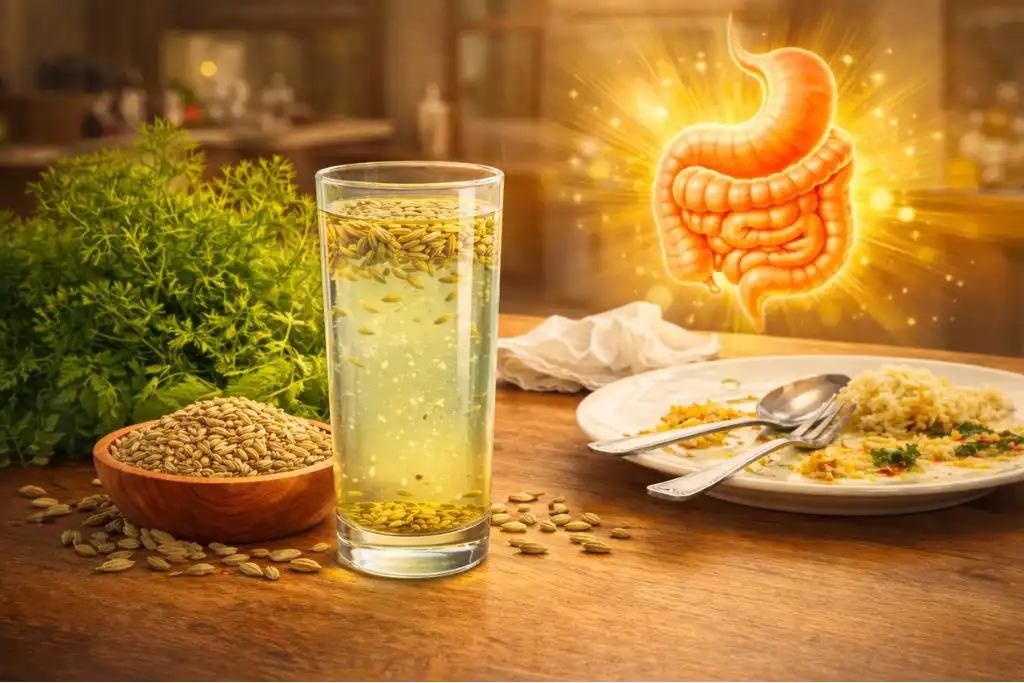
Drinking fennel water after meals is one of the oldest post-meal traditions in South Asia, the Middle East, and the Mediterranean. The active compound anethole relaxes gut muscles — relieving the bloating, gas, and cramping that often follow eating.
📋 Table of Contents
Introduction
If you have ever visited a South Asian restaurant, you have almost certainly seen it — a small bowl of fennel seeds near the exit, offered to every guest after their meal. This is not a random tradition. Fennel seeds and fennel water have been offered after eating across South Asia, the Middle East, and the Mediterranean for thousands of years for a very specific reason: they work.
The timing matters. Taken 15–30 minutes after eating, fennel water’s active compound anethole can reduce bloating before it builds, settle stomach spasms, and help manage excess acid — all at the same time. It is simple, natural, and backed by both traditional use and modern research.
🛠️ Free Health Tools — Water Intake Calculator, BMI Calculator, Intermittent Fasting Calculator & more
🔍 Browse All Free Health Tools →This article focuses specifically on the post-meal use of fennel water — why the timing works, which meals benefit most, and exactly when to drink it. For the full guide to fennel seeds and all their benefits, see our complete guide to fennel seeds (saunf) benefits.
Why After Meals Specifically?
Fennel water can be drunk at any time of day. But the post-meal window is where it is most immediately useful. Here is why.
| Post-Meal Problem | How Fennel Water Helps |
|---|---|
| Gas building up after eating | Anethole relaxes gut muscles — lets gas pass naturally |
| Stomach cramping and spasms | Anethole reduces muscle tension in the gut |
| Excess stomach acid / heartburn | Anethole moderates acid; aspartic acid neutralises it |
| Bad breath after eating | Anethole’s germ-fighting properties freshen breath |
| Feeling heavy and full | Digestive enzyme boost helps break down remaining food |
| Nausea after a rich meal | Settles the stomach and reduces nausea signals |
The Science Behind Post-Meal Fennel Water
The effectiveness of fennel water comes from three well-documented compounds in the seeds.
| Compound | What It Does | Post-Meal Effect |
|---|---|---|
| Anethole | Relaxes the smooth muscle lining your gut | Relieves cramping, bloating, and trapped gas within 15–30 min |
| Fenchone | Reduces gas formation and helps expel existing gas | Reduces flatulence and post-meal heaviness |
| Aspartic acid | Natural mild antacid — neutralises excess stomach acid | Reduces acidity, heartburn, and sour taste after meals |
| Volatile oils | Trigger your body to produce more digestive enzymes | Helps break down any remaining undigested food |
| Antimicrobial compounds | Reduce the bacteria in your mouth that cause bad breath | Natural breath freshening lasting 30–60 minutes |
🔬 How It Works in Simple Terms
When you eat, food stretches your stomach and gut walls. This can trigger muscle tension, cramping, and gas. Anethole in fennel water tells those muscles to relax — which is exactly why it works best when your digestive system is under the most pressure — right after a meal.
🔗 Full Guide: Fennel Seeds (Saunf) — All Benefits & Nutrition
This article focuses on post-meal use. For the complete picture — all 10 benefits, nutrition, traditional uses, and side effects — see our pillar guide:
👉 Fennel Seeds (Saunf): 10 Benefits, Nutrition, Uses & Side Effects →
5 Benefits of Drinking Fennel Water After Meals
These benefits are based on available research and traditional use. Fennel water is not a medical treatment. Always check with your doctor for specific health concerns.
🫁 Prevents and Relieves Bloating
Post-meal bloating happens when gas builds up faster than your gut can release it. Anethole and fenchone relax your gut muscles, letting trapped gas move and pass naturally.
Taken 15–30 minutes after a meal, fennel water acts before bloating peaks — stopping it from building rather than just treating it after it arrives.
🔥 Reduces Acidity and Heartburn
Heartburn after meals happens when too much stomach acid irritates the food pipe. Fennel water works two ways at once: anethole helps slow acid production, and aspartic acid neutralises the acid that’s already there.
Warm fennel water is especially effective after spicy, fatty, or heavy protein meals.
😮 Freshens Breath Naturally
Post-meal bad breath comes from bacteria in your mouth breaking down food particles. Anethole fights these bacteria and replaces the odour with fennel’s fresh, mild anise aroma.
This gives you 30–60 minutes of natural freshness — with no sugar or artificial ingredients.
🫀 Settles Post-Meal Nausea
Nausea after eating — especially after rich or heavy food — is often caused by stomach spasms or slow digestion. Fennel’s compounds relax gut muscles and help your stomach empty more smoothly.
Warm fennel water is the most effective version here. The warmth itself helps relax the stomach, while anethole handles the spasms.
💧 Supports Post-Meal Hydration
Many people don’t drink enough water after meals — they feel too full. Fennel water gives you a gentle, flavored drink that encourages hydration at exactly the time your body needs it most.
At just 5–8 calories per cup with zero sugar, it adds hydration without adding to the calories of your meal.
Which Meals Benefit Most?
Not every meal creates the same digestive challenge. Fennel water is most useful after meals that produce more gas, acid, or digestive load.
| Meal Type | Why It Causes Discomfort | Fennel Water Benefit |
|---|---|---|
| 🫘 Legumes — dal, lentils, beans, chickpeas | Hardest-to-digest carbs — most gas-producing foods | ✅ Most effective — fennel is the classic legume digestive aid |
| 🍖 Heavy protein meals | Protein breakdown in the gut produces gas and bloating | ✅ Highly effective — reduces fermentation gas |
| 🍟 Oily and fried foods | Slows stomach emptying; increases acid | ✅ Highly effective — acid control + digestive enzyme boost |
| 🍛 Spicy meals | Irritates gut lining; increases acid production | ✅ Very effective — anethole soothes gut irritation |
| 🍰 Rich desserts | Sugar fermentation produces gas; bloating follows | ✅ Good — reduces gas and freshens sweet-food breath |
| 🥗 Light salads / simple snacks | Minimal digestive challenge | ⚠️ Less needed — still pleasant and hydrating |
Best Timing — How Soon After Eating?
| Timing After Meal | Effect | Best For |
|---|---|---|
| ⚡ Immediately (0–5 min) | Starts enzyme activation; prevents gas from building | Preventive — best before a heavy meal you know will cause bloating |
| ✅ 15–30 minutes after | Best window — anethole reaches the gut as digestion peaks | Best all-round timing for most people and most meals |
| ⏱️ 30–60 minutes after | Still effective for gas and acidity relief | Good if you forgot — still addresses ongoing discomfort |
| ❌ 2+ hours after | Digestive peak has passed — less targeted benefit | Still hydrating but not specifically post-meal effective |
Warm vs Room Temperature vs Cold
| Temperature | Effect | Best For |
|---|---|---|
| ☕ Warm (40–50°C) | Best absorption; promotes gut muscle relaxation; most soothing | ✅ Best overall — especially for cramping, nausea, and acidity |
| 🌡️ Room temperature | Good effect — normal absorption rate | ✅ Fine for daily routine use |
| ❄️ Cold / chilled | Slower absorption; may cause minor gut tightening in sensitive people | ⚠️ OK in summer — but least effective for digestive benefits |
How to Prepare Post-Meal Fennel Water
🌿 Which herbs help most after meals? Type fennel or any herb in our free Herb & Tea Benefit Finder — get timing, dosage, and preparation instantly.
🔍 Try the Herb & Tea Benefit Finder →⭐ Quick Post-Meal Method (5 Minutes)
Ingredients: 1 tsp fennel seeds · 250ml water · Optional: squeeze of lemon, pinch of black salt
- 1
Add 1 tsp fennel seeds to 250ml of water in a small pot.
- 2
Bring to a gentle boil. Simmer 3–5 minutes.
- 3
Remove from heat. Cool to a comfortable drinking temperature.
- 4
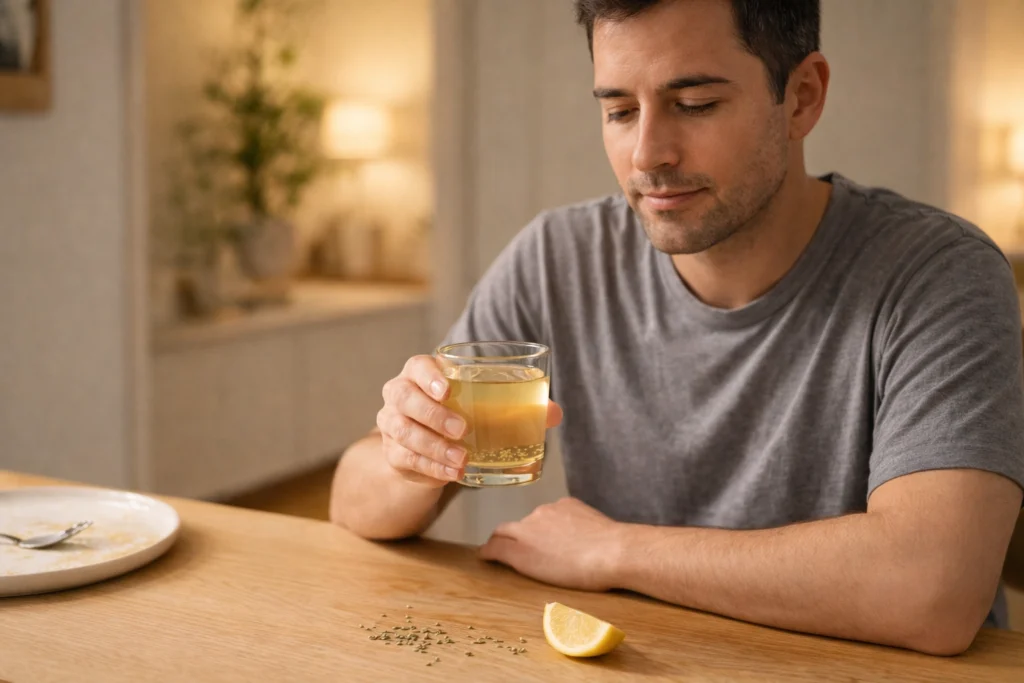
Strain into a cup. Drink warm 15–30 minutes after your meal.
⭐ Batch Preparation — Make Ahead for the Week
Ingredients: 2 tbsp fennel seeds · 1 litre water
- 1
Add 2 tbsp fennel seeds to 1 litre of cold water the night before.
- 2
Soak overnight (8–10 hours) at room temperature.
- 3
Strain and store in the fridge for up to 3 days.
- 4
Pour a cup and warm gently before drinking after meals.
For more preparation methods and variations, see our dedicated guide: How to Make Fennel Water at Home →
How Much Fennel Water After Meals?
Who Should Be Careful?
Fennel water after meals is safe for most healthy adults. But these groups should be careful.
🔥 GERD sufferers
Fennel generally helps acid reflux — but some people find it makes symptoms worse. Test with a small amount first.
🤰 Pregnant women
One cup after meals in normal amounts is generally fine. Avoid large or concentrated amounts. Ask your doctor.
💊 Blood thinner users
Fennel has mild blood-thinning properties. Check with your doctor before daily use.
🚽 IBS with diarrhea
Fennel’s mild laxative effect may worsen loose stools in some people. Reduce the amount if this happens.
🌸 Hormone-sensitive conditions
Fennel contains plant estrogens. If you have a hormone-sensitive condition, seek medical advice before regular use.
🤧 Apiaceae allergy
Fennel belongs to the same plant family as carrot, celery, and coriander. Cross-reactions are possible if you are allergic to these.
For a complete breakdown of all side effects and drug interactions, see Fennel Water Side Effects and Who Should Avoid It →
Conclusion
Fennel water after meals is one of the simplest and most time-tested digestive habits in the world. One cup, drunk warm, 15–30 minutes after eating — that is all it takes to help your body manage gas, acidity, bloating, and breath naturally.
It works best after heavy meals — especially legumes, oily food, and spicy dishes. Warm is always better than cold. And chewing a few fennel seeds right after the meal, then following with warm fennel water 15–20 minutes later, gives you the most complete benefit of all.
For all the ways fennel supports your health beyond post-meal use, see our full fennel seeds benefits guide. To compare fennel water with cumin water for digestion, see cumin water vs fennel water.
Try Our Free Herb & Tea Benefit Finder
Type fennel, cumin, ginger, or any herb to instantly see its benefits, best time to use, preparation method, and who should be careful.
🔍 Open the Herb & Tea Benefit Finder →Frequently Asked Questions
The tradition is backed by real science. Anethole in fennel relaxes gut muscles, reducing bloating and cramping. Fenchone reduces gas. Aspartic acid neutralises stomach acid. Together these compounds tackle the most common post-meal discomforts at the same time — which is why this habit developed independently across so many food cultures.
The best window is 15–30 minutes after finishing your meal. This is when digestion is in full swing and gas from food is just starting to build. Anethole taken at this point stops the bloating cycle before it peaks. Immediately after the meal also works well as a preventive step for heavy meals.
Warm is consistently better for post-meal digestion. Warmth helps relax your stomach muscles and improves how your body absorbs anethole. Cold temperatures can tighten the gut — the opposite of what you need. Room temperature is a fine everyday option.
Fennel water is most effective after legume-heavy meals — dal, lentils, beans, chickpeas. These are the most gas-producing foods you can eat. It also works very well after heavy protein meals, oily or fried food, and spicy dishes. After a light salad or snack, it is pleasant but less necessary.
Yes — one cup after your main meal daily is safe and well established. If you eat multiple large meals, one cup after each is generally fine. Keep total daily intake to 1–2 cups across the whole day. This practice has been standard in millions of South Asian households for generations.
Lemon is a great addition — it adds vitamin C and a fresh taste. Add it after the water has cooled slightly. Honey (½ tsp, added to warm — not hot — water) is fine for those who prefer a little sweetness. Avoid sugar, which adds gas-producing fermentation — the opposite of what you want.
Both work but in slightly different ways. Chewing seeds gives faster, more immediate gas relief and breath freshening. Fennel water gives a gentler, more sustained effect plus post-meal hydration. Many people do both — chew a few seeds right after the meal, then follow with warm fennel water 15–20 minutes later.
Yes — this is one of its most consistent post-meal benefits. Anethole helps slow excess acid production and aspartic acid neutralises acid already present. Warm fennel water after spicy, oily, or heavy protein meals is the most targeted option. Results are usually felt within 20–30 minutes. If you regularly have significant acid reflux, discuss management options with your doctor.