Fennel seeds (saunf) have been used as a post-meal digestive remedy for thousands of years. Modern research now explains exactly why they work — and confirms what traditional medicine has known all along.
📋 Table of Contents
Introduction
Have you ever noticed a small bowl of green seeds at the exit of a South Asian restaurant? Those are fennel seeds — known as saunf in Hindi/Urdu. They have been offered after meals for centuries across South Asia, the Middle East, and the Mediterranean.
This is not just tradition. It is practical folk medicine that modern science has now confirmed. Fennel seeds contain natural compounds that work directly on your digestive system — relaxing gut muscles, reducing gas, and helping your body break down food.
This article covers fennel seeds specifically for digestion — how they work, what conditions they help, and how to use them. For the full picture on fennel seeds, see our complete guide to fennel seeds (Saunf) benefits and nutrition.
🛠️ Free Health Tools — Water Intake Calculator, BMI Calculator, Intermittent Fasting Calculator & more
🔍 Browse All Free Health Tools →How Fennel Seeds Support Digestion
Fennel seeds work on your digestive system in several different ways. Each one targets a different part of how your gut works.
| How It Works | What Happens | What You Feel |
|---|---|---|
| Relaxes gut muscles | Anethole softens the intestinal wall | Less cramping, bloating, and trapped gas |
| Boosts digestive enzymes | Volatile oils trigger enzyme release | Food breaks down more easily |
| Reduces gas production | Fenchone helps expel existing gas | Less flatulence and post-meal heaviness |
| Controls stomach acid | Anethole moderates excess acid | Less heartburn and acidity |
| Feeds gut bacteria | 2.3g fibre per tbsp supports gut motility | More regular bowel movements |
Key Digestive Compounds
The digestive benefits of fennel come from specific natural compounds in the seeds. Here is what each one does.
| Compound | What It Does for Digestion |
|---|---|
| Anethole | Relaxes gut muscles, reduces stomach acid, relieves cramping |
| Fenchone | Reduces gas, fights harmful gut bacteria |
| Estragole | Antimicrobial — targets bad gut bacteria, supports gut balance |
| Aspartic acid | Natural gas reducer — one of the most effective found in food |
| Dietary fibre (2.3g/tbsp) | Feeds good gut bacteria, supports regular bowel movement |
| Quercetin | Reduces intestinal inflammation — helpful in IBS |
| Rosmarinic acid | Reduces gut wall inflammation |
🔗 🌾 Full Guide: Fennel Seeds (Saunf) — Complete Benefits, Nutrition & Uses
This article focuses on digestive benefits only. For all 10 health benefits, full nutritional data, Ayurvedic uses, and side effects, read our full guide:
👉 Fennel Seeds (Saunf): 10 Benefits, Nutrition, Uses & Side Effects →
6 Specific Digestive Benefits of Fennel Seeds
These benefits are based on research and traditional use. Fennel seeds are not a medical treatment. Always talk to your doctor before using them for a digestive condition.
🌿 Relieves Bloating & Gas After Meals
This is fennel’s best-known digestive benefit. It relaxes the intestinal wall and lets trapped gas escape naturally.
Most people feel relief within 15–30 minutes of chewing fennel seeds or drinking warm fennel tea after a heavy meal.
📊 What the Research Shows
A review in the Journal of Food Science confirmed fennel seeds’ role as a natural carminative. Anethole and fenchone work together to relax the intestinal wall and reduce gas.
⚗️ Stimulates Digestive Enzymes
Fennel’s natural oils help your body release more digestive enzymes. This means proteins, fats, and carbohydrates break down more completely.
Less undigested food reaches your colon — which means less fermentation and less gas. This makes fennel useful both before and after a heavy meal.
🔥 Reduces Acidity & Heartburn
Fennel helps with acidity in two ways. It lowers the amount of stomach acid your body produces. And it contains aspartic acid, which neutralises excess acid already present.
Chewing fennel slowly after meals or drinking warm fennel water are the most effective methods for acid relief.
🫁 Soothes Intestinal Cramps
Cramping pains in the gut are caused by involuntary muscle contractions. Anethole in fennel inhibits these contractions and provides direct relief.
Warm fennel tea works especially well for cramps — the heat helps the active compounds absorb faster and the warmth relaxes the abdomen.
💩 Supports Bowel Regularity
Each tablespoon of fennel seeds has about 2.3g of dietary fibre. This feeds the good bacteria in your gut and helps keep bowel movements regular.
Fennel also has a mild natural laxative effect — gentle enough for everyday use without the harsh side effects of pharmaceutical laxatives.
🦠 Protects Against Harmful Gut Bacteria
Fennel seeds have natural antimicrobial activity against common gut pathogens. They help reduce harmful bacterial overgrowth that can cause chronic bloating and digestive problems.
This means fennel does not just relieve discomfort — it actively helps keep your gut environment balanced and healthy.
📊 What the Research Shows
Research published in Phytotherapy Research confirmed fennel’s antimicrobial activity against E. coli, Staphylococcus aureus, and several Candida strains.
Fennel Seeds & IBS / Acid Reflux
Two of the most common digestive conditions — IBS and acid reflux (GERD) — have both been studied in relation to fennel.
Fennel Seeds & IBS
IBS affects around 10–15% of people worldwide. It causes abdominal pain, bloating, gas, and unpredictable bowel habits. Fennel’s ability to relax gut muscles directly targets the cramping that drives IBS symptoms.
A clinical study found fennel oil significantly reduced colic in infants — a condition that works very similarly to adult IBS. Adult trials are ongoing, but the science behind fennel’s role is solid.
Fennel Seeds & Acid Reflux (GERD)
Fennel may help with GERD in two ways at once. It reduces how much stomach acid your body makes. And it relaxes the muscle at the bottom of the oesophagus that can spasm and worsen reflux.
Warm fennel tea — not cold water — is the best preparation for GERD. The warmth strengthens the antispasmodic effect and avoids cold-temperature irritation that can make reflux worse.
Fennel Seeds & Gut Health
Your gut contains trillions of bacteria that affect digestion, immunity, mood, and metabolism. Fennel seeds support this gut community in two important ways.
| How Fennel Helps | Effect on Your Gut |
|---|---|
| Prebiotic fibre (2.3g/tbsp) | Feeds good bacteria like Lactobacillus and Bifidobacterium |
| Antimicrobial compounds | Suppresses harmful gut pathogens without harming good bacteria |
| Anti-inflammatory polyphenols | Reduces gut wall inflammation that disrupts bacterial balance |
| Better food digestion | Less undigested food in the colon means less gas-producing fermentation |
Best Ways to Use Fennel Seeds for Digestion
| Method | Best For | How to Prepare |
|---|---|---|
| 🌿 Chew whole after meals | Immediate gas relief, fresh breath, enzyme activation | ½ tsp raw or roasted saunf — chew slowly for 2–3 minutes |
| ☕ Warm fennel tea | IBS cramping, acid reflux, nausea, acute bloating | 1 tsp lightly crushed seeds, steep in boiling water 7–10 min |
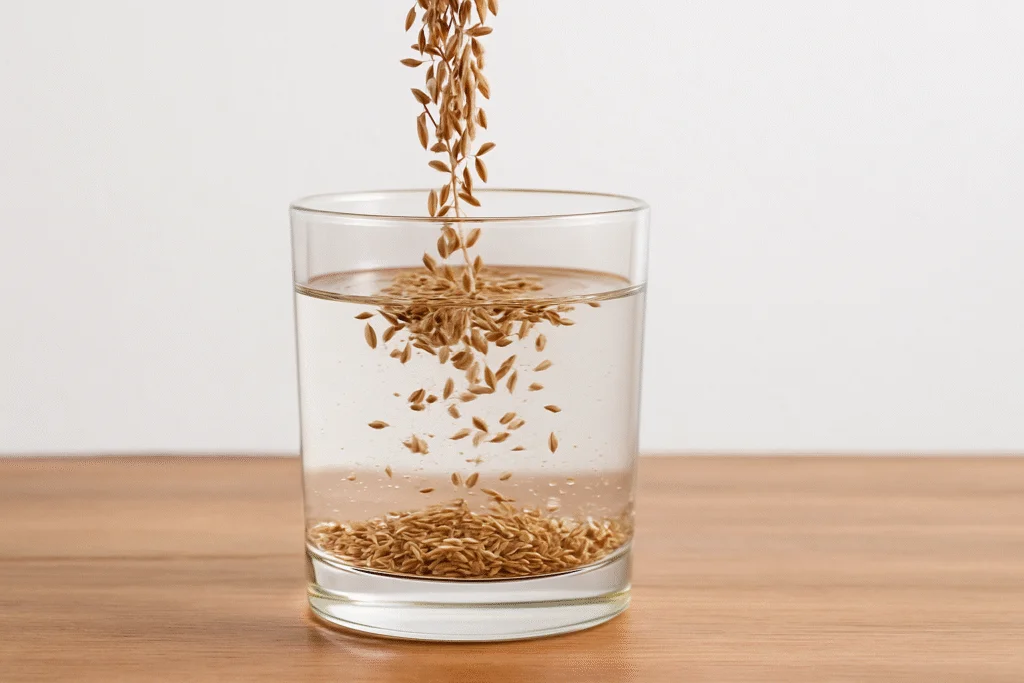
| 💧 Saunf water (overnight soak) | Morning digestive routine, gentle daily support | 1–2 tsp seeds soaked in 250ml water overnight — drink in morning |
| 🍳 Added to cooking | Everyday digestive nutrition and fibre intake | Add to hot oil before cooking vegetables, dal, or rice |
| 🥤 Fennel seed powder | Easy consistent daily use | ½ tsp ground saunf in warm water with a little honey |

For step-by-step preparation methods, see: How to Make Fennel Water at Home →
🌿 How should you use fennel seeds? Type fennel into our free Herb & Tea Benefit Finder — get preparation method, timing, dosage, and safety notes instantly.
🔍 Try the Herb & Tea Benefit Finder →Best Time to Take Fennel Seeds for Digestion
Timing matters. Here is when to use fennel seeds to get the most out of them.
| When | Method | Why It Helps |
|---|---|---|
| 🌅 Morning — empty stomach | Warm saunf water (overnight soak) | Prepares digestion for the day; supports bowel regularity |
| 🍽️ Before a heavy meal | Chew ¼ tsp or drink fennel tea | Activates digestive enzymes — reduces post-meal bloating |
| 🍽️ Immediately after meals | Chew ½ tsp raw or roasted saunf | Gas relief, acidity control, breath freshening |
| ☀️ Mid-afternoon | Fennel tea | Hydration; soothes afternoon digestive sluggishness |
| 🌙 Before bed | Warm fennel tea | Relieves IBS cramping; supports overnight bowel motility |
| 🤢 During acute indigestion | Warm fennel tea — steep 10 min | Longer steeping = more active compounds = faster relief |
For the full guide on timing after meals, see: Fennel Water After Meals — Traditional Use & Digestive Comfort →
How Much Fennel Seeds Per Day for Digestion?
Who Should Be Careful?
Fennel seeds are safe for most healthy adults in normal food amounts. But some groups should take care — especially when using fennel for a specific digestive condition.
For a complete breakdown of side effects, see: Fennel Water Side Effects and Who Should Avoid It →
Try Our Free Herb & Tea Benefit Finder
Type fennel or any herb to instantly see its benefits, how to prepare it, and who should be careful.
🔍 Open the Herb & Tea Benefit Finder →Frequently Asked Questions