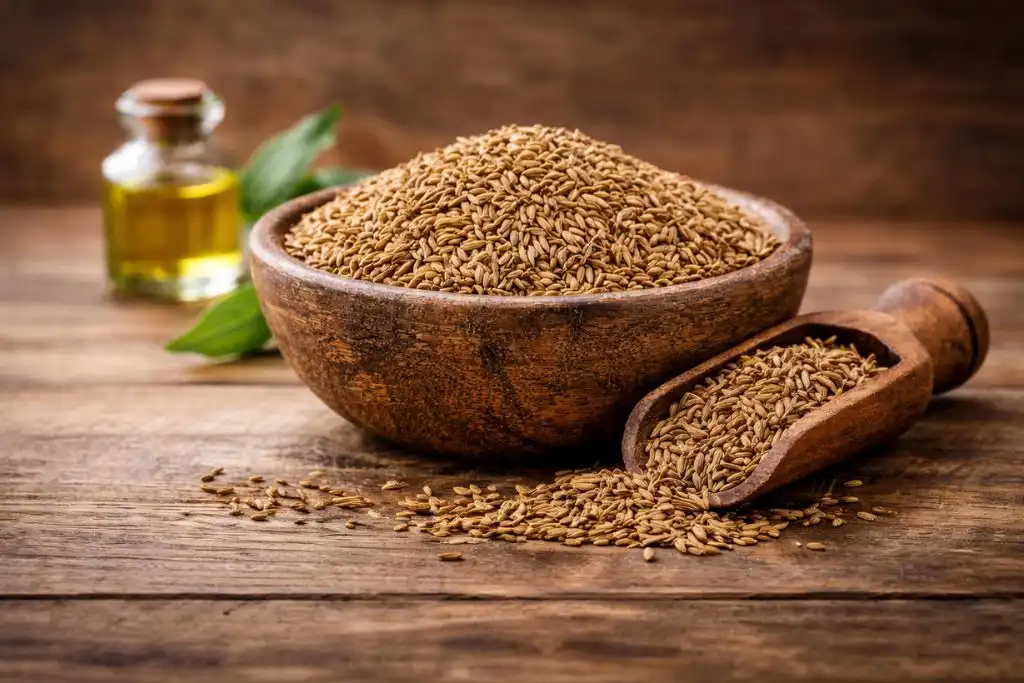

Cumin tea and cumin water come from the same seeds — but how you make them makes a big difference. One is a gentle daily drink. The other is a stronger, faster-acting remedy for when you really need it.
📋 Table of Contents
- Introduction
- What Is Cumin Water?
- What Is Cumin Tea?
- How Preparation Affects Active Compounds
- Nutritional Comparison
- Taste, Aroma & Colour
- How to Make Each — Step by Step
- Key Benefits Comparison
- Best Timing & Traditional Uses
- Head-to-Head Comparison Table
- Which Should You Choose?
- Who Should Be Careful?
- FAQs
- Related Health Guides
Introduction
Cumin tea and cumin water sound almost the same. Both use cumin seeds. Both are herbal drinks. Both have been used in traditional wellness for centuries.
But they are not the same drink. The way you make them changes what you get. Cumin water is light and gentle — a mild daily habit. Cumin tea is stronger and more concentrated — better for when you need faster relief.
This guide explains the differences clearly. You will know exactly which to use and when.
For the full story on cumin itself, see our complete guide to cumin (Jeera / Zeera) benefits and nutrition. For cumin water’s role in digestion, see our cumin water benefits for digestion guide.
🛠️ Free Health Tools — Water Intake Calculator, BMI Calculator, Intermittent Fasting Calculator & more
🔍 Browse All Free Health Tools →What Is Cumin Water?
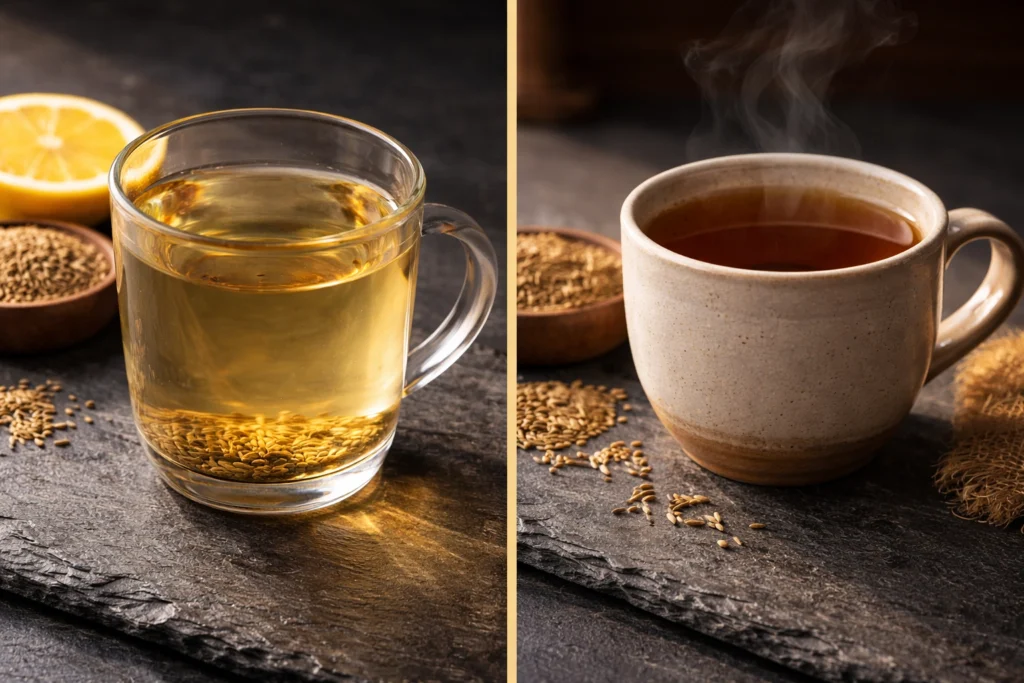
Cumin water is made by soaking cumin seeds in cold water overnight — or by briefly boiling them for a few minutes. You strain the seeds out and drink the liquid. It is pale golden, mild, and slightly earthy.
Across South Asia it is called jeera pani or zeera pani. Most people drink it first thing in the morning, unsweetened. It is gentle enough for most people to have every single day.
What Is Cumin Tea?
Cumin tea is made by steeping cumin seeds in near-boiling water for 5–10 minutes. The hot water and longer steeping time pull out much more of the seeds’ natural compounds. The result is a darker, stronger, more aromatic drink.
People drink cumin tea when they need faster relief — after a heavy meal, during illness, or for acute bloating. Because it is stronger, it is not a drink you need every day. Think of it as your go-to remedy rather than a daily habit.
How Preparation Affects Active Compounds
This is the most important difference between the two drinks. The same seeds produce very different results depending on how you prepare them.
🔬 How It Works
Hot water extracts more of cumin’s volatile oils — especially thymol and cuminaldehyde. A cold overnight soak extracts them more slowly and gently. This is why cumin tea is stronger and faster-acting than cumin water, even though both use the same seeds.
| Factor | 💧 Cumin Water | ☕ Cumin Tea |
|---|---|---|
| Water temperature | Cold / room temp or brief boil | 90–100°C near-boiling |
| Steeping / soak time | 8–10 hours or 3–5 min boil | 5–10 minutes |
| Seeds preparation | Whole seeds | Whole or lightly crushed |
| Compound concentration | Low to moderate | Moderate to high |
| Overall strength | Mild | Strong |
| Good for daily use? | ✅ Yes | ⚠️ Occasional use is better |
Nutritional Comparison (Per 250ml Cup)
Both drinks are almost calorie-free. The main difference is in how much of cumin’s active compounds end up in your cup.
| Nutrient / Property | 💧 Cumin Water | ☕ Cumin Tea |
|---|---|---|
| Calories | ~5–7 kcal | ~6–8 kcal |
| Carbohydrates | Less than 1 g | Less than 1 g |
| Protein | Trace | Trace |
| Fat | Trace | Trace |
| Active compound level | Low to moderate | Moderate to high |
| Colour | Pale golden / near-clear | Amber to golden-brown |
| Aroma intensity | Subtle, mild | Strong, pungent |
Taste, Aroma & Colour
You can tell the two apart immediately — by colour, smell, and taste.
| Feature | 💧 Cumin Water | ☕ Cumin Tea |
|---|---|---|
| Taste | Mild, earthy, slightly bitter | Strong, warm, bitter-spicy |
| Aroma | Subtle, gentle earthy note | Bold, pungent, unmistakably cumin |
| Colour | Pale golden to near-clear | Amber to golden-brown |
| Aftertaste | Clean, mild | Lingering warm spice |
| Good for beginners? | ✅ More accessible — milder | ⚠️ Strong — takes getting used to |
| Good to add | Lemon juice, pinch of black salt | Honey (after steeping), lemon |
| Serving temperature | Warm or room temperature | Always warm — best when hot |
How to Make Each — Step by Step
💧 Cumin Water — Method 1: Overnight Soak (Recommended)
What you need:
- 1 tsp whole cumin seeds
- 250–300ml water (room temperature)
- Optional: squeeze of lemon, pinch of black salt
- 1 Add 1 tsp cumin seeds to a glass of water in the evening.
- 2 Cover and leave at room temperature overnight (8–10 hours).
- 3 Strain the seeds in the morning and drink warm or at room temperature.
- 4 Add lemon juice if you like. Skip sugar to keep calories low.
💧 Cumin Water — Method 2: Quick Boil (5 Minutes)
What you need:
- 1 tsp whole cumin seeds
- 300ml cold water
- 1 Add cumin seeds to cold water in a small saucepan.
- 2 Bring to a boil, then reduce and simmer for 3–5 minutes.
- 3 Remove from heat, cool slightly, strain and drink warm.
☕ Cumin Tea — Standard Method
What you need:
- 1 tsp cumin seeds (lightly crushed optional — makes it stronger)
- 250ml near-boiling water (90–100°C)
- Optional: ½ tsp honey added after steeping, slice of fresh ginger
- 1 Lightly crush the cumin seeds if you want a stronger cup. This is optional.
- 2 Place seeds in a cup or tea infuser.
- 3 Pour near-boiling water over the seeds.
- 4 Cover and steep for 5–10 minutes. Longer = stronger.
- 5 Strain, add honey or lemon if you like, and drink warm.
🌿 How should you use cumin? Type it into our free Herb & Tea Benefit Finder — get preparation method, timing, dosage, and safety notes instantly.
🔍 Try the Herb & Tea Benefit Finder →Key Benefits Comparison
Both drinks share the same base ingredient. But their different strengths mean each one shines in slightly different situations.
💧 Gentle Daily Digestive Support
Cumin water is mild enough to drink every day. It gives your digestive system a steady, gentle boost each morning.
This consistent daily habit is where cumin water performs best. Small amounts over time add up to real support.
⚖️ Good for Weight Management Routines
Cumin water is the most commonly used preparation for weight management. At just 5–7 calories, it replaces high-calorie morning drinks easily.
A 2014 study found regular cumin consumption was linked to reduced body fat over 8 weeks. Cumin water is the right fit for a daily routine.
🔥 Fast-Acting Digestive Relief
Cumin tea works faster than cumin water. Its higher concentration of active compounds stimulates digestion more quickly.
For sudden bloating, post-meal heaviness, or indigestion — a cup of warm cumin tea often brings noticeable relief within minutes.
🔬 How It Works
Hot steeping extracts higher concentrations of thymol and cuminaldehyde. These compounds stimulate pancreatic enzyme secretion more rapidly than a cold-soak infusion.
🤒 Cold, Flu & Nausea Relief
Warm cumin tea is the better choice when you are ill. The stronger compound levels, the warmth of the drink, and the aromatic steam all help together.
Adding honey and fresh ginger makes it one of the most widely used home remedies across South Asia, the Middle East, and North Africa.
🔗 🌿 Full Guide: Cumin (Jeera / Zeera) — Benefits, Nutrition & Side Effects
Both drinks draw their benefits from the same seed. For the complete picture — full nutrition, all benefits, dosage, and side effects — read our full guide:
👉 Cumin (Jeera / Zeera): Benefits, Uses, Nutrition & Side Effects →
Best Timing & Traditional Uses
Choosing the right drink at the right time makes a real difference.
| Situation | 💧 Cumin Water | ☕ Cumin Tea |
|---|---|---|
| 🌅 Morning — empty stomach | ✅ Ideal — gentle daily habit | ⚠️ Can be too strong for sensitive stomachs |
| 🍽️ Before a meal | ✅ Gently primes digestion | ✅ Stronger enzyme activation |
| 🍽️ After a heavy meal | ✅ Good for regular use | ✅ Better for immediate relief |
| 🤒 During cold / flu / sore throat | ⚠️ Milder effect | ✅ Best choice — stronger compounds |
| 🌙 Evening / before bed | ✅ Gentle — suitable for most | ⚠️ Strong flavour may be stimulating |
| 📅 Daily regular habit | ✅ Made for this | ❌ Too concentrated for every day |
| 🏋️ Post-exercise | ✅ Good hydration base | ✅ More anti-inflammatory compounds |
| 🤰 Pregnancy | ✅ Small culinary amounts safe | ⚠️ Stronger — use moderately, ask your doctor |
Head-to-Head Comparison Table
| Feature | 💧 Cumin Water | ☕ Cumin Tea |
|---|---|---|
| Base ingredient | Cuminum cyminum seeds | Cuminum cyminum seeds |
| Preparation method | Cold soak or brief boil | Hot steep 5–10 minutes |
| Water temperature | Cold / room temp or 100°C | 90–100°C near-boiling |
| Compound concentration | Low to moderate | Moderate to high |
| Flavour intensity | Mild, subtle | Strong, pungent |
| Colour | Pale golden / clear | Amber / golden-brown |
| Calories (250ml) | ~5–7 kcal | ~6–8 kcal |
| How often to use | Daily — 1–2 cups | Occasional — 1 cup when needed |
| Best for | Daily habit, weight management, hydration | Acute relief, illness, targeted use |
| How digestion is helped | Gentle, builds over time | Fast, stronger effect |
| Good for beginners? | ✅ More accessible | ⚠️ Strong taste — start slowly |
| Preparation time | Overnight (8–10h) or 5 min boil | 10–15 minutes total |
| Safe for sensitive stomachs? | ✅ Generally yes | ⚠️ May irritate some — take with food |
| During illness | ⚠️ Mild effect | ✅ Preferred preparation |
Which Should You Choose?
Here is a simple guide to help you decide.
| Your Situation | Best Choice | Why |
|---|---|---|
| Building a daily morning habit | 💧 Cumin water | Mild enough for daily use — easy to prepare overnight |
| Acute bloating after a large meal | ☕ Cumin tea | Higher concentration works faster for immediate relief |
| Weight management routine | 💧 Cumin water | Better for consistent daily use — more researched for this |
| Cold, sore throat, or nausea | ☕ Cumin tea | Stronger antimicrobial compounds — warmth helps too |
| Sensitive stomach | 💧 Cumin water | Gentler — much less likely to cause irritation |
| New to cumin drinks | 💧 Cumin water | Milder flavour — a much easier place to start |
| Post-exercise recovery | ☕ Cumin tea | More anti-inflammatory compounds per cup |
| Pregnancy (moderate amounts) | 💧 Cumin water | Lower concentration — safer for regular use |
Who Should Be Careful?
Both drinks are safe for most healthy adults at moderate amounts. Cumin tea needs a little more care because it is stronger.
Try Our Free Herb & Tea Benefit Finder
Type cumin or any herb to instantly see its benefits, how to prepare it, and who should be careful.
🔍 Open the Herb & Tea Benefit Finder →Frequently Asked Questions