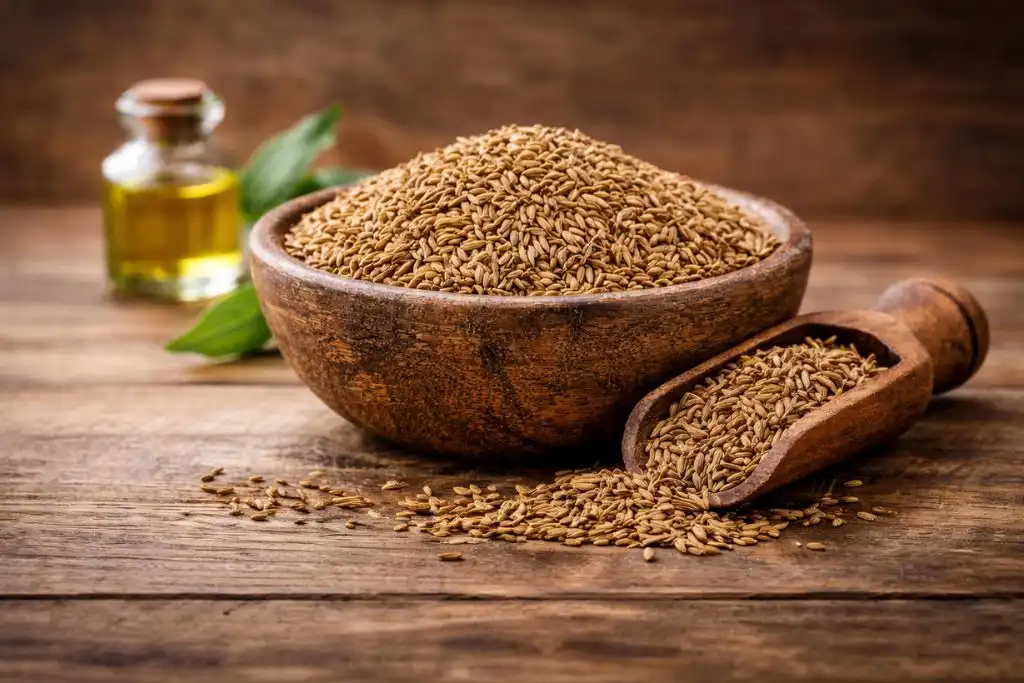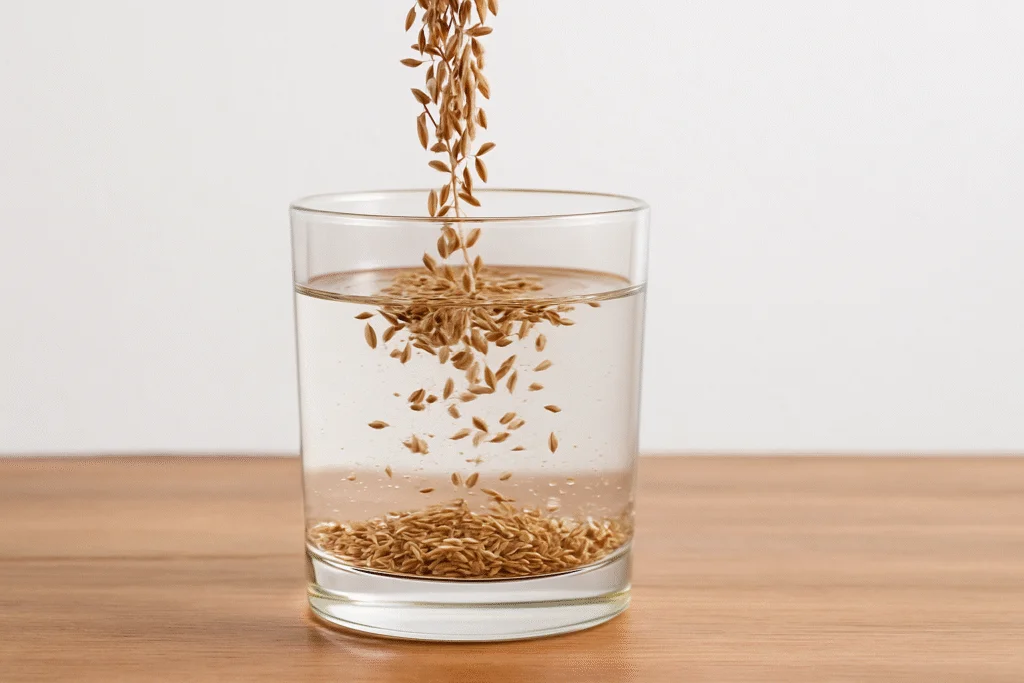
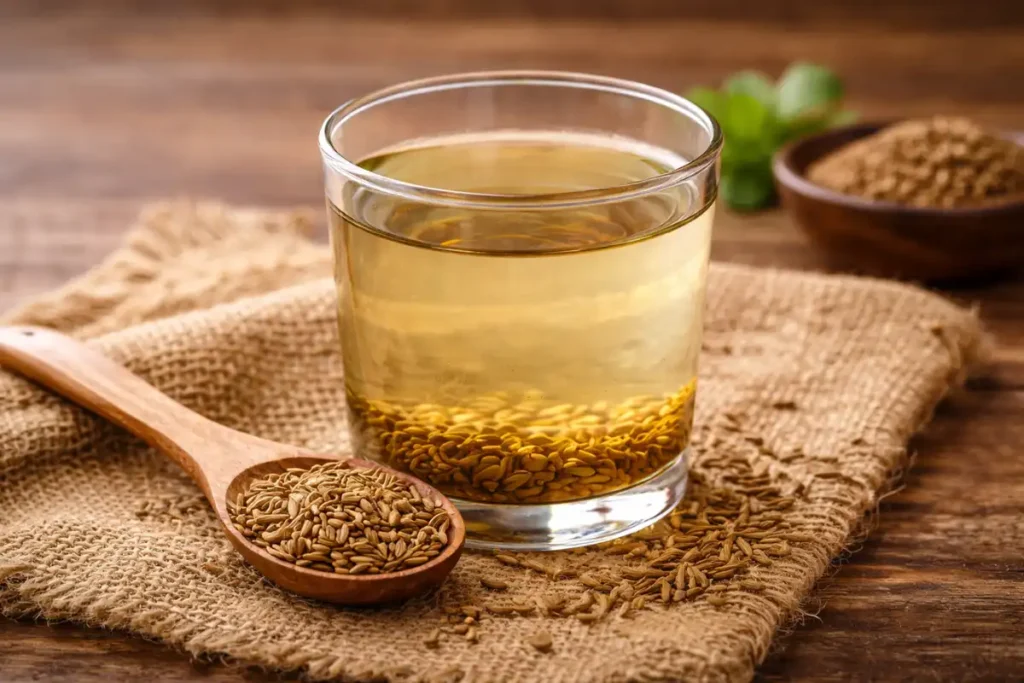
Cumin water (Jeera water) is a simple, caffeine-free drink made by soaking or boiling cumin seeds (Cuminum cyminum) in water. It has been used in Ayurvedic and South Asian wellness traditions for centuries as a gentle daily digestive drink.
📋 Table of Contents
- Introduction
- What Is Cumin Water?
- Cumin Names Around the World
- Nutritional Profile
- Ingredients
- Method 1: Overnight Soaking
- Method 2: Boiling Method
- Method 3: Lemon Cumin Water
- Which Method Is Better?
- Best Time to Drink
- How Much Per Day?
- Tips for Best Results
- Who Should Be Careful?
- Frequently Asked Questions
Introduction
Cumin water is one of the simplest herbal drinks you can prepare at home — requiring nothing more than a teaspoon of seeds and a glass of water. Yet behind its modest preparation lies centuries of traditional use across South Asia, the Middle East, and North Africa, where cumin has long been valued not just as a cooking spice but as a daily wellness ingredient.
Known as Jeera pani or Zeera ka paani in South Asia, this drink is traditionally consumed first thing in the morning or after meals as a gentle digestive aid. It has become popular globally in recent years as more people look for natural, low-calorie alternatives to support their wellness routines.
In this complete guide, you will find everything you need to prepare cumin water correctly — from the two most effective methods and the best time to drink it, to practical tips, preparation variations, and important safety information.
What Is Cumin Water?
Cumin water is a herbal infusion made by soaking or simmering Cuminum cyminum seeds in water. The process allows the seeds’ naturally occurring water-soluble compounds — including volatile oils, flavonoids, and phenolic acids — to diffuse into the water, producing a lightly flavoured, mildly aromatic drink.
Unlike most herbal teas, cumin water contains no caffeine and minimal calories, making it one of the most accessible and neutral wellness drinks available. It can be consumed warm, at room temperature, or slightly cooled depending on personal preference and the season.
In Ayurvedic tradition, cumin is classified as a deepana (digestive stimulant) and pachana (digestive enzyme supporter) herb — meaning it was specifically used to kindle digestive fire and improve the processing of food. These traditional classifications align with modern research exploring cumin’s effects on gastric motility and enzyme secretion.
🌱 Quick Plant Facts
Botanical name: Cuminum cyminum
Family: Apiaceae (same as fennel, coriander, and dill)
Native to: Eastern Mediterranean and South Asia
Part used: Dried seed (technically a fruit)
Key active compounds: Cuminaldehyde, Thymol, Cymene, Flavonoids, Terpenes
Cumin Names Around the World
Cumin is one of the most widely used spices globally and carries many names across languages and cultures. Knowing these can help when sourcing the correct seed for your cumin water preparation:
| Language / Region | Name for Cumin | Notes |
|---|---|---|
| Hindi / Urdu | Jeera / Zeera (जीरा) | Most common South Asian name |
| Arabic | Kammūn (كمون) | Used across Middle Eastern cooking |
| Spanish | Comino | Central to Latin American cuisine |
| Turkish | Kimyon | Used in Turkish and Central Asian dishes |
| Swahili | Bizari / Kamoni | Common in East African cooking |
| Tamil | Jeeragam (சீரகம்) | South Indian traditional use |
| Persian / Farsi | Zireh (زیره) | Used in Persian rice dishes and teas |
| Sanskrit / Ayurveda | Jiraka / Krishnajiraka | Classified as deepana (digestive stimulant) in Ayurveda |
Nutritional Profile of Cumin Water
Plain cumin water (water in which seeds have been soaked or briefly boiled) is extremely low in calories. The seeds themselves are nutritionally dense, but because they are strained out before drinking, very little of their fat, protein, or fibre content transfers into the water. The primary compounds that do transfer are water-soluble volatile oils and phenolic compounds:
| Nutrient | Per Glass (250 ml) — Plain Cumin Water |
|---|---|
| Calories | Approximately 3–7 kcal |
| Total Fat | Trace (from essential oils) |
| Carbohydrates | Trace |
| Protein | Trace |
| Dietary Fibre | 0 g (seeds are strained out) |
| Caffeine | 0 mg |
| Key compounds in water | Cuminaldehyde, Thymol, Flavonoids, Terpenes |
| Key Compound | Type | Notes |
|---|---|---|
| Cuminaldehyde | Volatile aldehyde | Primary aromatic compound; characteristic cumin scent and flavour |
| Thymol | Monoterpene phenol | Studied for antimicrobial properties; contributes to digestive activity |
| Cymene (p-cymene) | Aromatic hydrocarbon | Contributes to essential oil profile; antioxidant properties studied |
| Flavonoids | Polyphenols | Apigenin and luteolin present; antioxidant compounds |
| Terpenes | Volatile oils | Partially water-soluble; contribute to the mild flavour of cumin water |
Ingredients for Cumin Water
One of the best things about cumin water is its simplicity. You do not need any special equipment or unusual ingredients:
📋 Basic Ingredients (All Methods)
Essential:
• 1 teaspoon cumin seeds (plain, unroasted) — approximately 2.5 g
• 250 ml (1 glass) clean drinking water
Optional additions:
• ½ lemon (juice only) — for lemon cumin water
• 1 tsp raw honey — adds sweetness (add after cooling, not to boiling water)
• Small pinch of black pepper — traditional addition in some Ayurvedic preparations
• ¼ tsp dried ginger powder — warming variation
Method 1: Overnight Soaking Method (Most Traditional)
This is the most widely used traditional preparation and the gentlest method — ideal for people with sensitive digestion or those new to cumin water. The long soaking time allows a gradual, full extraction of water-soluble compounds without heat.
🥛 Overnight Soaking Method
Prep time: 2 minutes active · 8–10 hours soaking
Makes: 1 glass (approximately 250 ml)
- 1Measure 1 teaspoon of plain, unroasted cumin seeds into a clean glass.
- 2Pour 250 ml of clean drinking water over the seeds.
- 3Optionally, lightly crush the seeds first using the back of a spoon to help release more compounds — this is optional but increases extraction.
- 4Cover the glass with a small plate or lid to keep it clean overnight.
- 5Leave to soak for 8–10 hours (overnight is ideal — prepare before bed, ready in the morning).
- 6In the morning, strain the water through a fine mesh strainer into a clean glass, discarding the soaked seeds.
- 7Drink at room temperature or warm gently for 1–2 minutes if preferred warm. Add lemon juice if desired. Drink before breakfast on an empty stomach for the most traditional use.
The soaked water will have a pale golden colour with a mild, earthy cumin aroma. This is normal.
Method 2: Boiling Method (Quick Preparation)
The boiling method is faster and produces a stronger-flavoured drink. Heat accelerates the extraction of volatile compounds from the seeds, which is why the resulting water has a deeper colour and more pronounced taste. This method is popular when you do not have time for overnight soaking.
⚡ Boiling Method
Prep time: 2 minutes · Cook time: 5–7 minutes
Makes: 1 glass (approximately 200–220 ml after evaporation)
- 1Add 1 teaspoon of plain cumin seeds to a small saucepan.
- 2Pour 300 ml of water into the saucepan (use more than 250 ml as some water will evaporate during boiling).
- 3Place on medium heat and bring to a gentle boil.
- 4Once boiling, reduce the heat to low and simmer for 5–7 minutes. The water will turn a warm golden-amber colour.
- 5Turn off the heat and allow the water to cool for 5–8 minutes until it is comfortably warm — not scalding hot.
- 6Strain through a fine mesh strainer into your cup, discarding the seeds.
- 7Drink warm. Add a squeeze of lemon or a small amount of honey once cooled if desired.
Note: The boiled version has a noticeably stronger, earthier flavour than the soaked version. If you find it too strong, reduce to ½ teaspoon of seeds or reduce the simmering time to 3–4 minutes.
Method 3: Lemon Cumin Water (Popular Variation)
This is one of the most popular variations of cumin water globally. The addition of fresh lemon juice adds vitamin C and a pleasant brightness that balances the earthy, slightly bitter taste of cumin. It is particularly popular as a morning drink.
🍋 Lemon Cumin Water
Prep time: 2 minutes · Soak/cook time: per chosen method above
Makes: 1 glass
- 1Prepare cumin water using either Method 1 (overnight soaking) or Method 2 (boiling) as described above.
- 2Once strained into your glass, allow to cool slightly if it was boiled — it should be warm but not hot.
- 3Squeeze the juice of half a fresh lemon into the cumin water and stir.
- 4If using honey, add 1 teaspoon of raw honey now and stir until dissolved. Never add honey to boiling water as heat degrades its beneficial compounds.
- 5Drink warm or at room temperature. Best consumed in the morning before breakfast.
Which Method Is Better? A Full Comparison
Both methods produce effective cumin water — the right choice depends on your schedule, flavour preference, and digestive sensitivity. Here is a detailed comparison:
| Feature | Soaking Method | Boiling Method |
|---|---|---|
| Prep time | 2 min active + 8–10 hrs soaking | 10–12 minutes total |
| Flavour | Mild, subtle, earthy | Stronger, more pronounced, slightly bitter |
| Colour | Pale golden / very light | Warm amber / golden-brown |
| Compound extraction | Gradual cold extraction (gentler) | Heat-accelerated (more intensive) |
| Best for | Sensitive digestion, beginners, traditional use | Quick preparation, stronger taste preference |
| When to prepare | Night before — ready in the morning | Anytime — ready in 10 minutes |
| Effort | Very low (mostly waiting) | Low (requires stovetop attention) |
Best Time to Drink Cumin Water
Timing can influence how effectively cumin water fits into your routine. Here is what traditional practice and general wellness guidance suggest:
| Time | Traditional / Common Use | Notes |
|---|---|---|
| Morning — empty stomach | Most traditional and widely recommended time | Allow 20–30 minutes before eating breakfast |
| Before meals | Used to prepare the digestive system before eating | 10–15 minutes before a meal |
| After meals | Commonly used to reduce post-meal heaviness or bloating | Wait 15–20 minutes after finishing eating |
| Mid-morning | Caffeine-free alternative between breakfast and lunch | Good for hydration throughout the day |
| Evening | Sometimes used after dinner | Avoid late at night if prone to acidity or reflux |
How Much Cumin Water Per Day?
Cumin water is a mild and generally well-tolerated drink, but moderation remains important as with all herbal preparations:
Tips for Best Results
Small details in preparation can make a meaningful difference to both the taste and effectiveness of cumin water. Here are the most important practical tips:
| Tip | Why It Matters |
|---|---|
| ✅ Use plain, unroasted cumin seeds | Roasting alters the volatile oil profile; plain seeds give the most traditional result |
| ✅ Prepare fresh each day | Freshly prepared cumin water has better flavour and avoids bacterial growth from storing soaked water too long |
| ✅ Always strain before drinking | The seeds are not meant to be consumed with the water; straining gives a cleaner, more comfortable drink |
| ✅ Lightly crush seeds before soaking (optional) | Crushing breaks the seed coat slightly, allowing more compounds to dissolve into the water during soaking |
| ✅ Use clean, filtered water | The quality of your base water affects the final taste; filtered water is preferable to heavily chlorinated tap water |
| ✅ Add lemon after cooling | Vitamin C in lemon is heat-sensitive; add after the water has cooled slightly to preserve it |
| ✅ Add honey after cooling | Honey’s beneficial compounds are degraded by high heat; always add to warm (not hot) water |
| ❌ Do not add sugar | Sugar is unnecessary and adds calories without any benefit to the preparation |
| ❌ Do not use pre-ground cumin powder | Powder makes the water gritty and cloudy and is harder to strain effectively |
| ❌ Do not store soaked water for more than 12 hours at room temperature | Bacterial growth can occur; refrigerate if you need to store longer than overnight |
Who Should Be Careful with Cumin Water?
Cumin water prepared from whole seeds in the amounts described above is considered mild and generally safe for most healthy adults. However, certain groups should exercise caution:
Frequently Asked Questions
Conclusion
Cumin water is one of the simplest wellness drinks you can prepare at home — requiring just one teaspoon of seeds and a glass of water. Whether you choose the overnight soaking method for its gentle, traditional approach or the boiling method for quick preparation, both produce an effective and easy-to-drink result.
The key to getting the most from cumin water is consistency and moderation. One glass per day using freshly prepared seeds is sufficient for most adults. Always strain the seeds before drinking, use plain unroasted seeds, and avoid adding sugar. A squeeze of lemon and a small amount of honey are the most beneficial and flavour-enhancing optional additions.
As with all herbal preparations, individual responses may vary. Start with the soaking method if you are new to cumin water, observe how your body responds over the first week, and adjust accordingly.