📋 Summary — Key Takeaways
Ginger tea is a caffeine-free herbal drink made from Zingiber officinale root. With just 2–5 calories per cup, it is one of the most studied and widely consumed herbal drinks in the world — backed by traditional medicine and growing modern research.
✓ Completely caffeine-free — safe any time of day, including evenings
✓ Only 2–5 calories per cup (plain) — ideal for calorie-conscious drinkers
✓ Key compound: gingerol — studied for anti-inflammatory & digestive properties
✓ May support digestion, nausea relief, immunity & blood sugar balance
✓ Safe for most adults at 1–3 cups per day in moderate amounts
✓ Pregnant women and those on blood-thinning medication should consult a doctor first
📋 Table of Contents
- Introduction
- What Is Ginger Tea?
- Names Around the World
- Nutritional Profile & Calories
- Key Bioactive Compounds
- Health Benefits of Ginger Tea
- Best Time to Drink Ginger Tea
- How to Make Ginger Tea
- How Much Per Day?
- Who Should Be Careful
- Ginger Tea vs Green Tea vs Chamomile Tea
- Frequently Asked Questions
Introduction
Ginger tea has been a part of traditional wellness practices for thousands of years — from Ayurvedic medicine in South Asia to traditional Chinese medicine and Middle Eastern home remedies. Today it is one of the most popular herbal drinks in the world, consumed daily by millions of people across every continent. Whether you call it ginger tea, adrak chai, or zanjabil, the drink is simple to prepare, widely available, and backed by a growing body of research exploring its potential health properties. Its primary active compound — gingerol — has been studied for anti-inflammatory, antioxidant, and digestive effects in numerous peer-reviewed trials. But is ginger tea actually good for you? How much should you drink, and when? And who should exercise caution? In this complete guide we cover everything — including health benefits, calorie content, preparation methods, and safety considerations — so you can make an informed decision about adding ginger tea to your daily routine.🔬 At a Glance: One cup (240 ml) of plain ginger tea contains approximately 2–5 calories, no fat, no protein, and no caffeine. Its health value comes almost entirely from its bioactive plant compounds — particularly gingerol — rather than conventional nutritional content.
What Is Ginger Tea?
Ginger tea is an herbal infusion made from the root of the ginger plant, Zingiber officinale. Unlike green tea or black tea, it is not derived from the Camellia sinensis plant and contains absolutely no caffeine — making it suitable at any time of day, including the evening. The drink is prepared by steeping fresh ginger slices or dried ginger powder in hot water for 5–10 minutes. It has a warm, spicy, slightly peppery flavour and a distinctly sharp aroma that comes from its active compounds, primarily gingerol and shogaol. The taste can range from mildly warming to intensely pungent depending on the amount of ginger used and how long it is steeped. Ginger has been used in Ayurvedic, Unani, and traditional Chinese medicine for over 3,000 years. In South Asia it is commonly added to chai as adrak chai and used as a trusted home remedy for cold, flu, and digestive discomfort. In the Middle East and East Asia it is equally embedded in daily wellness traditions.🌍 Quick Plant Facts
Botanical name: Zingiber officinale Family: Zingiberaceae Native to: South and Southeast Asia Part used: Rhizome (underground root stem) Key active compound: Gingerol (fresh root), Shogaol (dried/heated)Ginger Tea Names Around the World
Ginger tea is known by many names across cultures and languages. Here is a quick reference to its most common names:| Language / Region | Name | Notes |
|---|---|---|
| Hindi / Urdu | Adrak chai / Adrak wali chai (अदरक की चाय) | Most common South Asian name; adrak = ginger |
| Arabic | Zanjabil (زنجبيل) | Classical name; widely used across Middle East |
| Korean | Saeng-gang cha (생강차) | Traditional Korean ginger tea |
| Japanese | Shōga-yu (生姜湯) | Ginger hot water — a winter warming drink |
| Chinese | Jiāng chá (姜茶) | Used in Traditional Chinese Medicine (TCM) |
| Swahili | Chai ya tangawizi | Common in East Africa |
| Sanskrit / Ayurveda | Vishwabheshaj / Nagara | Means “universal medicine” in Ayurvedic texts |
Nutritional Profile of Ginger Tea
Plain ginger tea is extremely low in calories and contains no significant macronutrients. Most of its wellness value comes from bioactive plant compounds rather than conventional nutrients like vitamins or minerals. Here is the approximate nutritional profile per standard cup (240 ml):| Nutrient | Amount per Cup (240 ml, plain) | % Daily Value |
|---|---|---|
| Calories | 2–5 kcal | <1% |
| Total Fat | 0 g | 0% |
| Carbohydrates | 0.5–1 g | <1% |
| Protein | 0 g | 0% |
| Dietary Fiber | Trace | — |
| Sodium | <1 mg | 0% |
| Potassium | Trace amounts | — |
| Magnesium | Trace amounts | — |
| Caffeine | 0 mg | 0% |
Calories in Ginger Tea — By Preparation Type
The calorie count changes significantly depending on what you add. Here is a quick reference:| Type of Ginger Tea | Approximate Calories |
|---|---|
| Plain ginger tea — no additions | 2–5 kcal |
| Ginger tea with 1 tsp honey | 22–25 kcal |
| Ginger tea with 1 tsp sugar | 18–20 kcal |
| Ginger lemon tea | 5–8 kcal |
| Ginger tea with 100 ml whole milk | 50–60 kcal |
| Ginger tea with 100 ml skimmed milk | 35–40 kcal |
💡 Calorie Tip: Plain ginger tea without sugar or milk is one of the lowest-calorie warm drinks you can consume — making it an excellent replacement for high-sugar beverages as part of a calorie-conscious lifestyle.
Key Bioactive Compounds in Ginger
The health properties of ginger tea come almost entirely from its naturally occurring plant compounds. Understanding these helps explain why ginger tea behaves so differently from plain hot water — and why the form of ginger (fresh vs dried) affects the tea’s properties:| Compound | Found In | Primary Studied Properties |
|---|---|---|
| Gingerol | Fresh ginger root | Primary bioactive compound — anti-inflammatory, antioxidant, digestive support, characteristic flavour |
| Shogaol | Dried or heated ginger | Forms when gingerol is dried or cooked; stronger antioxidant activity than gingerol in some studies |
| Paradol | Both fresh and dried | Antioxidant properties; related structurally to gingerol |
| Zingerone | Cooked / dried ginger | Mild pungent aroma; anti-inflammatory properties studied in animal models |
| Zingiberene | Essential oil fraction | Characteristic ginger aroma; antimicrobial properties studied in vitro |
| Flavonoids | Whole ginger root | Broad antioxidant activity; support cellular protection from oxidative stress |
Health Benefits of Ginger Tea
The following benefits are based on available research and traditional use. Ginger tea is not a treatment or cure for any medical condition. Always consult your doctor before using ginger tea for specific health concerns.Benefit 01
🫶 May Support Healthy Digestion
Ginger has one of the longest documented histories of use as a digestive aid across Ayurvedic, Unani, and traditional Chinese medicine systems. Research suggests that gingerol and shogaol may help support gastric motility — the process by which food moves efficiently through the digestive tract — reducing the likelihood of sluggish digestion and bloating. Many people find that a warm cup of ginger tea after meals reduces feelings of heaviness, fullness, or mild digestive discomfort. While clinical evidence in humans is still building, ginger’s traditional role as a digestive herb is one of the most consistently supported across multiple cultures and thousands of years of use.Benefit 02
🤢 Studied for Nausea Relief
Ginger is one of the most researched natural remedies for nausea in the scientific literature. Multiple controlled clinical studies have explored its potential to help with nausea associated with motion sickness, chemotherapy-induced nausea, and morning sickness during early pregnancy. The mechanism is believed to involve gingerol’s action on serotonin receptors in the gut and brain. While results across these studies are generally promising, it is important to note that pregnant women should consult their doctor before using ginger tea medicinally, as high therapeutic doses are not considered safe during pregnancy. Culinary amounts are generally regarded as acceptable.Benefit 03
🔥 Contains Anti-Inflammatory Compounds
Gingerol has been studied extensively for its potential anti-inflammatory properties. At the cellular level, it has been shown to inhibit the synthesis of pro-inflammatory prostaglandins and leukotrienes — signalling molecules that drive inflammation. Chronic low-grade inflammation is associated with a wide range of health conditions, and including anti-inflammatory foods and drinks as part of a balanced diet is broadly considered beneficial. Ginger tea may be one practical and enjoyable component of an anti-inflammatory lifestyle — particularly when used consistently over time as part of a diet rich in whole foods, vegetables, and other plant-based compounds.Benefit 04
🛡️ May Support Immune Function
Ginger contains antioxidants — including gingerol, shogaol, and various flavonoids — that may help the body manage oxidative stress, which is a driver of immune dysregulation. Traditionally, ginger tea with honey and lemon has been used as a home remedy during cold and flu season across South Asia, the Middle East, and East Asia for centuries. While ginger tea is not a cure for viral infections, staying well-hydrated with warm herbal drinks during illness is generally supportive of recovery. The warming properties of ginger may also provide symptomatic comfort during respiratory congestion.Benefit 05
🩸 May Help with Blood Sugar Balance
Some early-stage clinical research suggests that ginger compounds may support healthy blood glucose levels when consumed consistently as part of a balanced diet. A 2015 randomized controlled trial published in the Journal of Ethnopharmacology found that ginger supplementation had a beneficial effect on fasting blood sugar and HbA1c in people with type 2 diabetes, though the doses used were higher than typical tea consumption. People managing diabetes or taking blood sugar-lowering medication should be particularly cautious — ginger may interact with these medications and produce additive effects. Always discuss with a healthcare professional before using ginger tea therapeutically for blood sugar management.Benefit 06
☕ A Warming Caffeine-Free Alternative
Beyond its studied health properties, ginger tea is simply a warming, comforting, and genuinely enjoyable drink. For people trying to reduce their coffee or black tea intake, ginger tea offers a satisfying warm beverage with zero caffeine and almost zero calories — making it a meaningful lifestyle upgrade without the stimulant dependency risk. Replacing just one or two high-calorie, high-sugar beverages per day with plain ginger tea is a small but sustainable change that can support overall calorie management and hydration goals over the long term.Best Time to Drink Ginger Tea
Because ginger tea is caffeine-free, it is one of the most flexible herbal drinks in terms of timing. However, certain times of day align better with specific wellness goals:| Time of Day | Purpose / Benefit | Notes |
|---|---|---|
| Morning — empty stomach | Gentle digestive warm-up to start the day | Well-tolerated by most; avoid if prone to acid reflux |
| Before or after meals | May support digestion; reduce post-meal heaviness | After meals is generally better for sensitive stomachs |
| Mid-afternoon | Caffeine-free energy alternative to coffee or black tea | Ideal for those avoiding afternoon caffeine |
| When feeling unwell | Warming and hydrating during cold or flu | Add honey and lemon for additional soothing effect |
| Evening / before bed | Calming and caffeine-free — safe in moderate amounts | Keep to 1 mild cup; avoid strong brew if prone to reflux |
⚠️ Note on Evening Use: Avoid drinking large amounts of strong ginger tea late at night if you are prone to acid reflux or GERD (gastroesophageal reflux disease). Ginger can occasionally trigger or worsen reflux symptoms in sensitive individuals, particularly when consumed in large quantities or on an empty stomach close to bedtime.
How to Make Ginger Tea
Ginger tea can be prepared in several ways depending on what you have available and how strong you prefer the flavour. Here are three methods — from the most traditional to the quickest:🫚 Method 1: Fresh Ginger Tea (Recommended)
Fresh ginger produces the most flavourful, aromatic tea and retains the highest levels of active gingerol compounds. This is the most traditional and highly recommended method. You need: 1 to 2 inch piece of fresh ginger root · 250 ml (1 cup) water · Optional: honey, lemon, or a cinnamon stick- 1Wash the fresh ginger root thoroughly under clean running water.
- 2Peel the ginger using the edge of a spoon or a peeler, then slice into thin rounds or small pieces.
- 3Add 250 ml of water to a small saucepan and bring to a gentle boil.
- 4Add the ginger slices to the boiling water and reduce the heat to low.
- 5Simmer on low heat for 5–7 minutes. For a stronger tea, simmer for up to 10 minutes.
- 6Remove from heat and strain the tea through a fine sieve into your cup.
- 7Add honey or lemon to taste if desired. Drink warm.
⚡ Method 2: Ginger Powder Tea (Quick Method)
When fresh ginger is not available, dried ginger powder is a convenient alternative. Note that powder produces a stronger, slightly different flavour — start with a smaller amount.- 1Bring 250 ml of water to a full boil.
- 2Add ¼ to ½ teaspoon of dried ginger powder to your cup.
- 3Pour the hot water over the powder and stir well to combine.
- 4Allow to steep for 3–5 minutes.
- 5Strain if needed and add honey or lemon to taste. Drink warm.
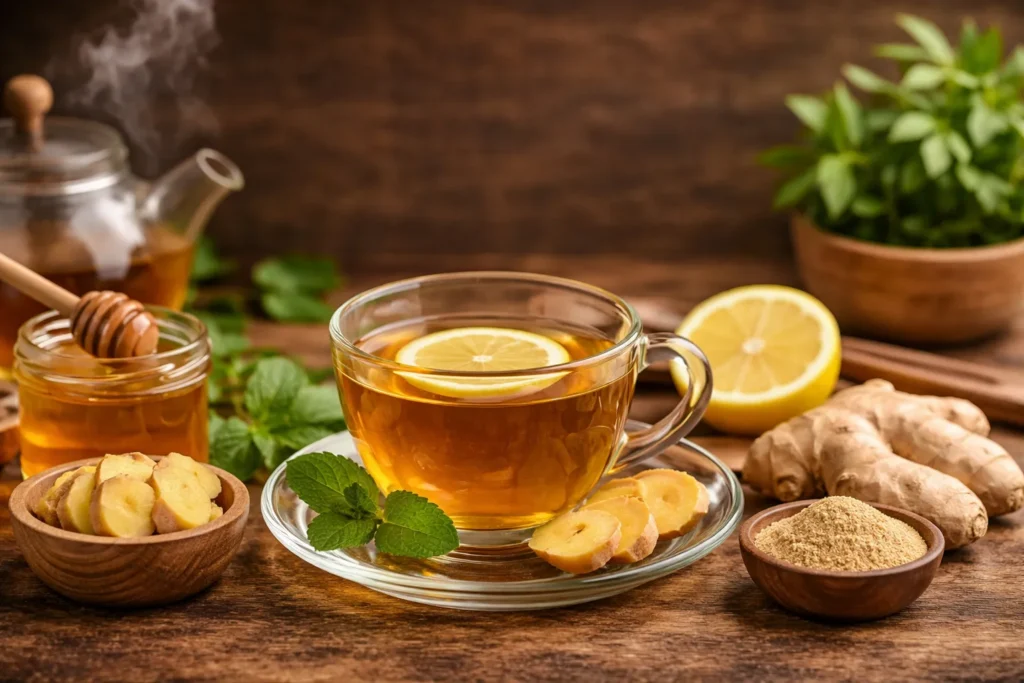
🍋 Method 3: Ginger Lemon Honey Tea
This classic combination is one of the most popular ginger tea preparations worldwide — warming, soothing, and particularly popular during cold and flu season.- 1Prepare fresh ginger tea using Method 1 above (steps 1–6).
- 2Once strained into your cup, squeeze the juice of half a fresh lemon into the tea.
- 3Allow the tea to cool slightly — it should be warm but not boiling hot.
- 4Add 1 teaspoon of raw honey and stir until fully dissolved. Drink warm.
How Much Ginger Tea Per Day?
For most healthy adults, 1–3 cups of ginger tea per day is considered a moderate and appropriate amount. This aligns with both traditional use guidelines and the amounts most commonly used in clinical research.Minimum
1
cup/day
General wellness maintenance
Recommended
1–3
cups/day
Moderate daily use for most adults
Max Advised
4
cups/day
Upper limit; may cause GI discomfort
Ginger Extract
<4–5
g/day
Beyond this may cause digestive issues
💡 Moderation Matters: Consuming very large amounts of ginger daily — beyond 4–5 grams of ginger extract — may cause digestive discomfort, heartburn, or loose stools in some individuals. As with all herbal drinks, more is not necessarily better. If you are using ginger tea for a specific health reason, discuss appropriate amounts with a healthcare professional.
Who Should Be Careful with Ginger Tea?
Ginger tea is generally safe for most healthy adults when consumed in moderate amounts. However, the following groups should exercise caution and consult a healthcare professional before regular use:🤰 Pregnant women — Small amounts in cooking are generally considered safe, but medicinal doses should be discussed with a doctor or midwife
💊 Blood-thinning medication users — Ginger may have mild anticoagulant properties; consult your doctor before regular use
📉 Low blood pressure — Ginger may have a mild blood pressure-lowering effect; monitor carefully
🔥 Acid reflux / GERD — Ginger may trigger or worsen reflux symptoms in sensitive individuals, especially in large amounts
🩺 Diabetes medication users — Ginger may interact with blood sugar-lowering drugs; discuss with your doctor
🏥 Before surgery — It is generally advised to avoid ginger supplements before surgical procedures; consult your doctor
| Group | Guidance |
|---|---|
| Pregnant women | Small culinary amounts generally safe; medicinal doses should be discussed with a doctor |
| Blood-thinning medication | Ginger may have mild anticoagulant properties; consult your prescribing physician |
| Very low blood pressure | Ginger may exert a mild hypotensive effect; monitor and discuss with doctor |
| Acid reflux / GERD | May trigger reflux in sensitive individuals, especially in large amounts or on empty stomach |
| Diabetes medication | May interact with blood sugar-lowering drugs; always discuss with healthcare provider |
| Pre-surgery | Generally advised to avoid ginger supplements before procedures; consult your surgeon |
Ginger Tea vs Green Tea vs Chamomile Tea
Each of these popular herbal and functional teas has distinct strengths and best-use scenarios. Here is how they compare:| Feature | Ginger Tea | Green Tea | Chamomile Tea |
|---|---|---|---|
| Caffeine | None ✅ | Low–Medium ⚠️ | None ✅ |
| Best for | Digestion, nausea, immunity | Energy, antioxidants, metabolism | Sleep, relaxation, anxiety |
| Calories (plain) | 2–5 kcal | 2–3 kcal | 1–2 kcal |
| Taste | Warm, spicy, pungent | Grassy, slightly bitter | Mild, floral, apple-like |
| Best time | Morning / after meals | Morning / afternoon | Evening / before bed |
| Key compound | Gingerol, Shogaol | EGCG (catechins) | Apigenin |
| Traditional use | Ayurvedic, Unani, TCM | East Asian wellness | European herbal medicine |
| Safe at night? | ✅ Yes (moderate amounts) | ⚠️ May disrupt sleep | ✅ Yes — promotes sleep |
💡 Bottom Line: Ginger tea is particularly well-suited for digestive support, nausea relief, and a warming caffeine-free drink at any time of day. Green tea is better for focus and antioxidant support. Chamomile is the go-to choice for evening wind-down. You do not have to choose just one — many people rotate between all three depending on their needs.
Frequently Asked Questions
Can I drink ginger tea every day?
▼
Yes, most healthy adults can drink ginger tea daily in moderate amounts of 1–3 cups. It is completely caffeine-free and generally well-tolerated across a wide range of ages and lifestyles. Daily ginger tea consumption aligns with both traditional wellness practices and the amounts explored in clinical research. If you have any underlying health conditions or take prescription medication — particularly blood thinners or diabetes medication — consult your doctor before making it a daily habit.
How many cups of ginger tea per day is safe?
▼
For most healthy adults, 1–3 cups per day is considered a moderate and appropriate amount. Consuming very high amounts — equivalent to more than 4–5 grams of ginger extract daily — may cause digestive discomfort, heartburn, or loose stools in some individuals. As with all herbal drinks, moderation is key. If you are using ginger tea for a specific therapeutic purpose, discuss appropriate quantities with your healthcare provider.
Does ginger tea help with weight loss?
▼
Ginger tea itself does not directly cause weight loss. However, replacing high-calorie, high-sugar beverages with plain ginger tea — which contains only 2–5 calories per cup — can meaningfully support calorie management as part of a balanced lifestyle. Some research also suggests that gingerol may have a mild thermogenic effect, but the practical impact on weight loss from tea consumption alone is minimal. There is no credible evidence that ginger tea alone produces significant weight loss without accompanying dietary and lifestyle changes.
How many calories are in ginger tea?
▼
Plain ginger tea with no additions contains approximately 2–5 calories per 240 ml cup — making it one of the lowest-calorie warm drinks available. Adding honey contributes around 20–22 calories, white sugar around 18–20 calories, and milk adds 35–60 calories depending on whether it is skimmed or whole. For the lowest-calorie option, drink it plain or with just a small squeeze of lemon (which adds approximately 3–5 calories).
Is ginger tea good on an empty stomach?
▼
For most people, a cup of warm ginger tea in the morning on an empty stomach is well-tolerated and may provide a gentle digestive warm-up to start the day. However, individuals with acid reflux, GERD, or a particularly sensitive stomach may find it more comfortable to consume ginger tea with or shortly after a light meal rather than on a completely empty stomach. If you experience any nausea or stomach discomfort when taking it first thing in the morning, try having a small bite of food beforehand.
Can I drink ginger tea during pregnancy?
▼
Small amounts of ginger used in everyday cooking are generally considered safe during pregnancy. Some clinical research suggests that ginger may help reduce morning sickness symptoms in early pregnancy. However, medicinal doses of ginger — including concentrated ginger tea consumed in large quantities — should always be discussed with your doctor or midwife before use during pregnancy. High therapeutic doses of ginger are not recommended during pregnancy, particularly in the later trimesters.
Does ginger tea have caffeine?
▼
No — ginger tea is completely caffeine-free. Ginger is not derived from the Camellia sinensis plant (the source of all true teas including green, black, white, and oolong tea), so it contains zero caffeine naturally. This makes ginger tea suitable at any time of day, including evenings, and an excellent option for people who are caffeine-sensitive, pregnant, or simply trying to reduce their caffeine intake.
Is ginger tea good for digestion?
▼
Ginger has been used as a digestive aid in traditional medicine for thousands of years and is one of its most consistently documented traditional uses. Research suggests that gingerol and shogaol may support gastric motility — helping food move through the digestive tract more efficiently. A warm cup of ginger tea after meals may help with sensations of bloating, heaviness, or mild indigestion for many people. Individual responses do vary, and ginger tea is not a replacement for medical treatment of diagnosed digestive conditions.
Can I add milk to ginger tea?
▼
Yes. Ginger tea with milk — similar to traditional adrak chai in South Asia — is very popular and perfectly fine to consume. Adding 100 ml of whole milk increases the calorie content to approximately 50–60 calories per cup, while skimmed milk adds 35–40 calories. Some people find that milk softens the sharpness and spiciness of ginger, making the drink more palatable. Note that some research suggests milk proteins may bind to certain plant antioxidants, potentially reducing their bioavailability — but this is unlikely to be clinically significant at typical tea consumption levels.
What is the best time to drink ginger tea?
▼
The best time depends on your goal. For digestive support, drink it after meals. For a warming morning ritual and gentle digestive warm-up, have it first thing in the morning. During illness, drink throughout the day for warmth and hydration — add honey and lemon for extra soothing benefit. For a calming caffeine-free evening drink, a mild cup of ginger tea before bed is generally suitable for most people. If you are prone to acid reflux, avoid strong ginger tea late at night.
Conclusion
Ginger tea is a simple, caffeine-free herbal drink with a 3,000-year history of traditional use and a growing body of modern scientific research behind it. With just 2–5 calories per cup in its plain form, it is one of the most calorie-efficient warm beverages you can add to your daily routine. Its potential benefits for digestive support, nausea relief, immune function, and anti-inflammatory activity make it a genuinely valuable addition to a balanced, health-conscious lifestyle — particularly when used as a replacement for high-sugar, high-calorie drinks. As with all herbal drinks, moderation is key, and ginger tea is not a substitute for professional medical advice or treatment.🍵 Our Recommendation: Start with 1 cup of fresh ginger tea daily — prepared using Method 1 with 1 inch of fresh ginger root. Drink it after your largest meal for digestive support, or first thing in the morning as a warming ritual. Give it 2–4 weeks of consistent use before assessing how your body responds.
Disclaimer: This article is for general informational and educational purposes only and does not constitute medical advice, diagnosis, or treatment. Individual responses to ginger tea may vary. The information provided is not a substitute for professional medical consultation. Always consult a qualified healthcare professional before making significant dietary changes or using herbal remedies for specific health conditions, particularly if you are pregnant, breastfeeding, taking prescription medications, or managing a chronic health condition.