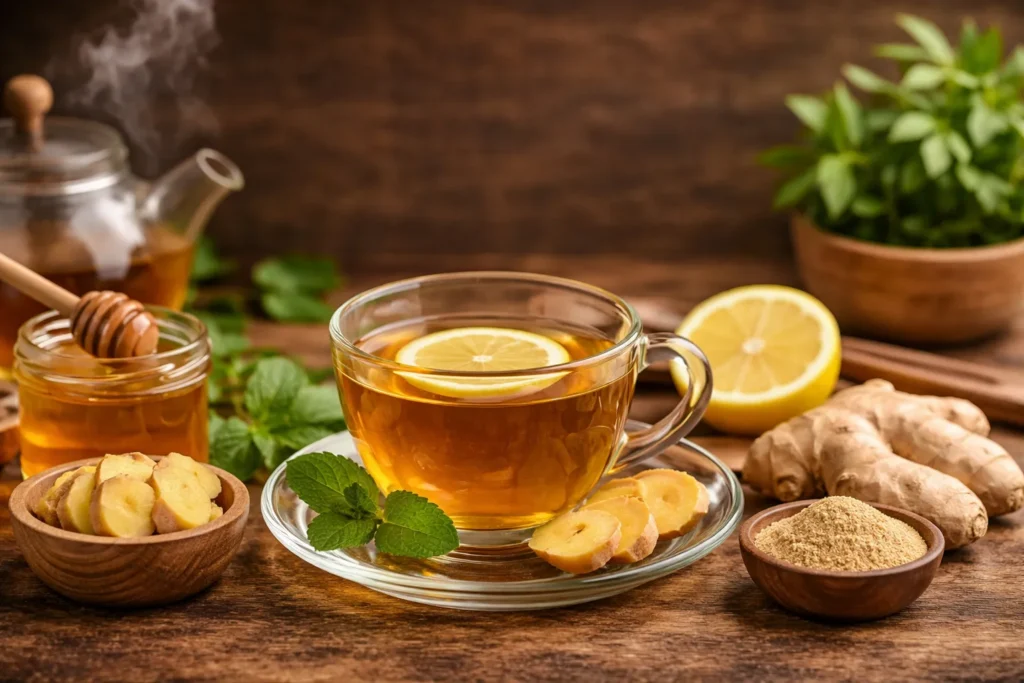
Ginger tea is a caffeine-free herbal drink made by steeping fresh or dried ginger root in hot water. It has been used for over 3,000 years for digestive support, nausea relief, and immune function.
📋 Table of Contents
Introduction
Ginger tea has been part of traditional wellness for thousands of years — from Ayurvedic medicine in South Asia to Chinese medicine and Middle Eastern home remedies. Today it is one of the most popular herbal drinks in the world.
Whether you call it ginger tea, adrak chai, or adrak wali chai, the drink is simple to make, easy to find, and backed by growing research. But is it actually good for you? How much should you drink? And when is the best time?
🛠️ Free Health Tools — Water Intake Calculator, BMI Calculator, Intermittent Fasting Calculator & more
🔍 Browse All Free Health Tools →This guide covers everything — health benefits, calories, three preparation methods, the best timing, safe dosage, and who should be careful. If you enjoy herbal wellness drinks, you may also like our guides on turmeric milk (golden milk) benefits, cumin (jeera) benefits, and fennel seeds (saunf) benefits.
What Is Ginger Tea?
Ginger tea is an herbal drink made from the root of the ginger plant, Zingiber officinale. Unlike green tea or black tea, ginger tea contains no caffeine. This makes it suitable at any time of day, including evenings.
You make it by steeping fresh ginger slices or dried ginger powder in hot water for 5–10 minutes. It has a warm, spicy, slightly peppery flavor and a distinct aroma that comes from its main active compound — gingerol.
Ginger has been used in Ayurvedic, Unani, and traditional Chinese medicine for over 3,000 years. In South Asia it is commonly added to chai and used as a home remedy for cold, flu, and digestive discomfort.
🌍 Names Around the World
Urdu / Hindi: Adrak chai · Arabic: Zanjabil tea · Korean: Saeng-gang cha · English: Ginger tea / Ginger infusion
Nutritional Profile & Calories
Plain ginger tea is very low in calories. Most of its value comes from its active plant compounds rather than vitamins or minerals.
Key Active Compounds in Ginger
| Compound | What It Does |
|---|---|
| Gingerol | Main active compound — studied for digestion, nausea relief, and anti-inflammatory effects |
| Shogaol | Formed when ginger is dried or cooked — antioxidant activity |
| Paradol | Related to gingerol — antioxidant properties |
| Zingerone | Gives ginger its mildly pungent aroma |
Calories in Ginger Tea
| Type of Ginger Tea | Calories (approx.) |
|---|---|
| Plain ginger tea — no additions | 2–5 kcal |
| Ginger tea with 1 tsp honey | 22–25 kcal |
| Ginger tea with 1 tsp sugar | 18–20 kcal |
| Ginger lemon tea | 5–8 kcal |
| Ginger tea with 100ml whole milk | 50–60 kcal |
| Ginger tea with 100ml skimmed milk | 35–40 kcal |
6 Health Benefits of Ginger Tea
Here are the six main reasons people drink ginger tea. Each benefit has research or strong traditional evidence behind it. Ginger tea is not a treatment or cure — always check with your doctor for specific concerns.
🌿 May Support Healthy Digestion
Ginger has been used as a digestive aid across many traditional medicine systems. Research suggests gingerol and shogaol may help food move through your digestive system more smoothly.
Many people find a warm cup of ginger tea after meals helps reduce feelings of heaviness or bloating. If you also use fennel seeds for digestion, ginger tea makes a natural companion.
🤢 Studied for Nausea Relief
Ginger is one of the most researched natural remedies for nausea. Multiple studies have explored its potential for motion sickness, chemotherapy-related nausea, and morning sickness during pregnancy.
Results are promising. But pregnant women should check with their doctor before using ginger tea medicinally. High doses are not recommended during pregnancy.
🔥 Contains Anti-Inflammatory Compounds
Gingerol has been studied for its anti-inflammatory properties. Chronic inflammation is linked to many health problems. Including anti-inflammatory foods and drinks in your diet is generally considered helpful.
Ginger tea may be one small part of an anti-inflammatory lifestyle. For another powerful anti-inflammatory drink, see our guide on turmeric milk (golden milk).
🛡️ May Support Immune Function
Ginger contains antioxidants that may help your body handle oxidative stress. Ginger tea with honey and lemon has been a go-to home remedy during cold and flu season for generations.
It is not a cure for illness. But staying hydrated with warm herbal drinks during sickness is generally good for recovery.
🩸 May Help with Blood Sugar Balance
Some early research suggests ginger compounds may support healthy blood sugar levels when used regularly as part of a balanced diet.
But if you take diabetes medication, be careful. Ginger may interact with blood sugar-lowering drugs. Talk to your doctor first. Cumin (jeera) also shows similar blood sugar support properties.
☕ Warming & Comforting
Beyond its studied properties, ginger tea is simply a warming, comforting drink. Replacing high-calorie, high-sugar drinks with plain ginger tea is a small but meaningful lifestyle improvement.
At just 2–5 calories per cup, it gives you warmth, flavor, and wellness support with almost no caloric cost.
Best Time to Drink Ginger Tea
When you drink ginger tea affects what you get from it. Here is the best timing for each goal.
| Time | Purpose |
|---|---|
| 🌅 Morning — empty stomach | Gentle digestive warm-up to start the day |
| 🍽️ Before or after meals | May help with digestion and reduce post-meal heaviness |
| ☀️ Mid-afternoon | Caffeine-free energy alternative to coffee or black tea |
| ❄️ When feeling unwell | Warming and hydrating during cold or flu |
| 🌙 Evening | Calming and caffeine-free — safe before bed in moderate amounts |
How to Make Ginger Tea — 3 Methods
🌿 How should you use ginger? Type it in our free Herb & Tea Benefit Finder — get preparation method, timing, dosage, and safety notes instantly.
🔍 Try the Herb & Tea Benefit Finder →🫚 Method 1: Fresh Ginger Tea (Recommended)
Fresh ginger gives the most flavor and the highest level of active compounds.
Ingredients: 1–2 inch piece of fresh ginger root · 250ml water · Optional: honey, lemon, cinnamon stick
- 1
Wash the ginger root well under clean water.
- 2
Peel with a spoon or peeler. Slice into thin rounds or small pieces.
- 3
Add 250ml water to a small pan. Bring to a gentle boil.
- 4
Add the ginger slices to the boiling water.
- 5
Reduce heat and simmer on low for 5–7 minutes. For stronger tea, simmer up to 10 minutes.
- 6
Remove from heat. Strain through a fine sieve into a cup.
- 7
Add honey or lemon to taste if desired. Drink warm.
⚡ Method 2: Ginger Powder Tea (Quick Method)
- 1
Boil 250ml water.
- 2
Add ¼ to ½ teaspoon of dried ginger powder to your cup.
- 3
Pour hot water over the powder. Stir well.
- 4
Steep 3–5 minutes.
- 5
Strain if needed. Add honey or lemon to taste.
🍋 Method 3: Ginger Lemon Honey Tea
- 1
Prepare fresh ginger tea using Method 1 above.
- 2
Squeeze the juice of half a lemon into the strained tea.
- 3
Add 1 teaspoon of raw honey. Stir until dissolved.
- 4
Drink warm. Do not add honey to boiling water — always add after straining to preserve its properties.
How Much Ginger Tea Per Day?
For most healthy adults, 1–3 cups per day is a safe and reasonable amount.
Who Should Be Careful with Ginger Tea?
Ginger tea is safe for most healthy adults. But these groups should be careful.
🤰 Pregnant women
Small cooking amounts are generally safe. But medicinal doses should be discussed with your doctor. Some research supports ginger for morning sickness, but high doses are not recommended.
💊 On blood-thinning medication
Ginger may have mild blood-thinning properties. Talk to your doctor before drinking it regularly.
🩸 Very low blood pressure
Ginger may have a mild effect on blood pressure. Be cautious if yours is already low.
🔥 Prone to acid reflux or GERD
Ginger can trigger reflux in some sensitive people, especially in large amounts.
✂️ Surgery scheduled
Avoid ginger supplements before surgery. Talk to your doctor about timing.
Ginger Tea vs Green Tea vs Chamomile Tea
Each of these popular teas has its own strengths. Here is how they compare.
| Feature | 🫚 Ginger Tea | 🍵 Green Tea | 🌼 Chamomile Tea |
|---|---|---|---|
| Caffeine | None | Low–Medium | None |
| Best for | Digestion, nausea, immunity | Energy, antioxidants | Sleep, relaxation |
| Calories (plain) | 2–5 kcal | 2–3 kcal | 1–2 kcal |
| Taste | Warm, spicy, pungent | Grassy, slightly bitter | Mild, floral, apple-like |
| Best time | Morning / after meals | Morning / afternoon | Evening / before bed |
| Traditional use | Ayurvedic, Unani, TCM | East Asian wellness | European herbal medicine |
Ginger tea is the best choice for people who want digestive support or a warming caffeine-free drink. You can explore all three — and many more — using our free Herb and Tea Benefit Finder.
Conclusion
Ginger tea is a simple, caffeine-free herbal drink with a long history and growing scientific interest. At just 2–5 calories per cup, it is an excellent replacement for high-sugar drinks.
Its potential benefits for digestion, nausea relief, and immune support make it a valuable addition to a balanced, health-conscious lifestyle. Fresh ginger gives the best flavor and the highest active compound levels. The lemon-honey version is a classic home remedy during cold season.
As with all herbal drinks, moderation is key. If you enjoy herbal wellness drinks, explore our guides on turmeric milk benefits, cumin benefits, and fennel seeds benefits.
Try Our Free Herb & Tea Benefit Finder
Type ginger, turmeric, cumin, or any herb to instantly see its key benefits, best time to use, preparation method, and who should be careful.
🔍 Open the Herb & Tea Benefit Finder →Frequently Asked Questions
Yes — most healthy adults can drink ginger tea daily at 1–3 cups. It is caffeine-free and generally well-tolerated. If you have health conditions or take medication, check with your doctor first.
For most adults, 1–3 cups per day is a safe amount. More than 4–5 grams of ginger extract daily may cause digestive discomfort in some people.
Ginger tea itself does not directly cause weight loss. But replacing high-calorie, high-sugar drinks with plain ginger tea (2–5 calories) can support calorie management as part of a balanced lifestyle. There is no evidence that ginger tea alone produces significant weight loss.
Plain ginger tea has about 2–5 calories per cup (240ml). Adding honey adds around 20 calories, sugar adds about 18, and milk adds 35–60 calories depending on the type.
For most people, a cup of warm ginger tea in the morning on an empty stomach is fine and may support digestion. But people with acid reflux or a sensitive stomach may prefer it with or after food.
Small amounts in cooking are generally safe. Some research supports ginger for morning sickness. But medicinal doses of ginger tea should be discussed with your doctor or midwife first.
No. Ginger tea is completely caffeine-free, making it suitable at any time of day including evenings. This is a key difference from green tea or black tea.
Ginger has been used as a digestive aid in traditional medicine for centuries. A cup of warm ginger tea after meals may help with heaviness or bloating for many people, though responses vary. For more digestive support, try pairing it with fennel seeds or cumin water.
Yes. Ginger tea with milk — similar to traditional adrak chai — is very popular in South Asia. Milk adds about 50–60 calories per cup and softens the spiciness of ginger.
It depends on your goal. For digestion, drink after meals. For a warming morning drink, have it first thing. During illness, drink throughout the day for warmth and hydration. A mild ginger tea before bed is fine for most people.
📚 Related Health Guides
Turmeric Milk (Golden Milk): Benefits, Recipe & How to Make It
Curcumin pairs with gingerol for a powerful anti-inflammatory combination.
Cumin (Jeera / Zeera): 10 Benefits, Uses & Nutrition
Another digestive powerhouse — cumin’s benefits for metabolism, iron, and blood sugar.
Fennel Seeds (Saunf): 10 Benefits, Nutrition & Uses
The classic post-meal digestive seed — pairs naturally with ginger in herbal routines.
7 Proven Benefits of Hibiscus Tea for Psoriasis & Eczema
Another caffeine-free herbal tea with strong anti-inflammatory evidence for skin health.