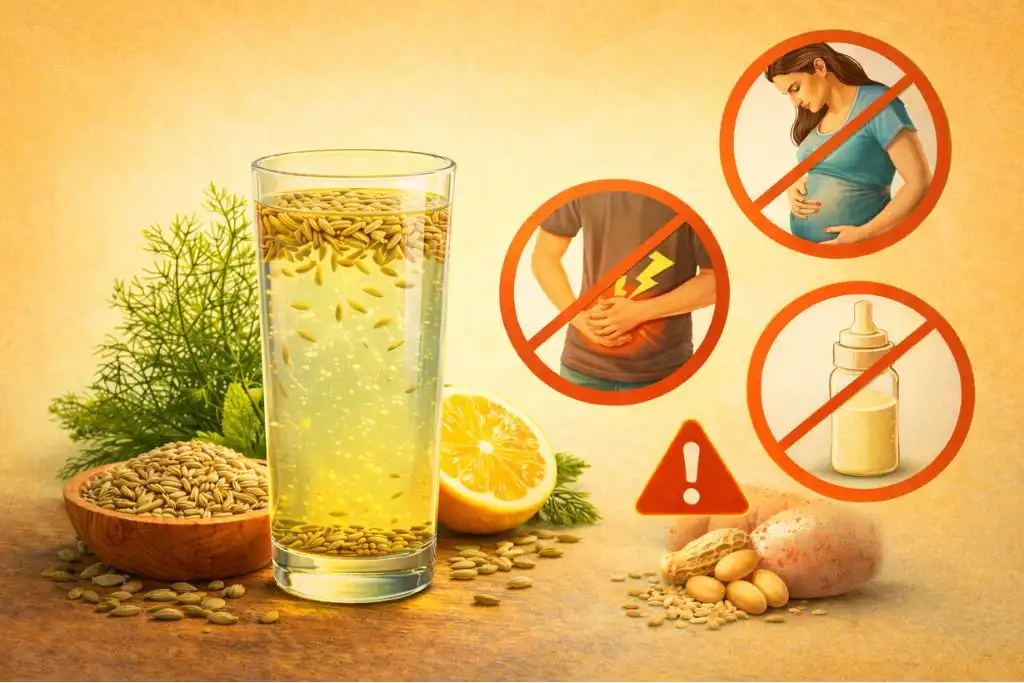
Fennel water is safe for most healthy adults. But certain groups should limit or avoid it — and knowing who they are is just as important as knowing the benefits.
📋 Table of Contents
Introduction
Fennel water — known as saunf ka paani — is a traditional herbal drink used across South Asia, the Middle East, and the Mediterranean for centuries. People drink it after meals to ease bloating, reduce acidity, and support digestion. It is simple, low-calorie, and backed by traditional use.
But like any herbal drink, fennel water is not suitable for everyone. The same active compounds that help digestion can cause problems in certain people — especially when consumed in large amounts or under specific health conditions.
🛠️ Free Health Tools — Water Intake Calculator, BMI Calculator, Intermittent Fasting Calculator & more
🔍 Browse All Free Health Tools →This guide covers all known side effects of fennel water, who should avoid it, drug interactions to be aware of, and how to consume it safely. For the full health benefits of fennel seeds, see our complete guide on fennel seeds (saunf) benefits, nutrition, and traditional uses.
What Is Fennel Water?
Fennel water is made by soaking or boiling dried fennel seeds (Foeniculum vulgare) in plain water. The helpful plant compounds in the seeds dissolve into the liquid. The result is a light, mildly sweet, aromatic drink with almost no calories.
⚠️ Fennel Water vs Concentrated Fennel Products
Home-prepared fennel water contains far lower levels of active compounds than fennel essential oil, supplement capsules, or very strong medicinal fennel teas. Most side effects reported in research relate to high-dose supplement or essential oil forms — not the mild drink most people make at home. This difference is important when weighing the risks.
| Language / Region | Name |
|---|---|
| Hindi / Urdu | Saunf / Saumph (سونف) |
| English | Fennel Seeds / Sweet Fennel |
| Sanskrit / Ayurvedic | Shatapushpa / Misreya |
| Arabic | Shamar (شمار) |
| Bengali | Mauri / Mouri |
| Tamil | Sombu |
| Punjabi | Sounf |
Active Compounds & Why They Matter for Safety
Understanding what is in fennel water helps explain both its benefits and its potential side effects.
| Compound | What It Does | Safety Relevance |
|---|---|---|
| Anethole | Main active compound — relaxes gut muscles, reduces gas | Acts like mild estrogen in high doses — relevant in pregnancy and hormone-sensitive conditions |
| Fenchone | Supports digestion and reduces spasms | May irritate the gut if consumed in large amounts |
| Plant estrogens | Mimic mild estrogen activity in the body | May affect hormone-sensitive conditions at high doses |
| Quercetin / Apigenin | Antioxidants with anti-inflammatory properties | May mildly affect blood clotting in very large amounts |
6 Possible Side Effects of Fennel Water
These side effects are mainly linked to too much fennel water or individual sensitivities. At 1–2 glasses per day in healthy adults, side effects are uncommon.
🫃 Digestive Discomfort
Fennel water is a digestive aid — but too much can have the opposite effect. Large amounts may overstimulate the gut, causing mild stomach cramping, nausea, or loose stools. People with sensitive digestion or existing gut disorders are more likely to experience this. Start with half a glass and build up slowly.
🤧 Allergic Reactions
Fennel belongs to the same plant family as celery, carrot, coriander, cumin, and parsley. If you are allergic to any of these, you may also react to fennel water. Signs include skin itching or hives, nasal congestion, sneezing, or digestive upset. Severe reactions are rare but require immediate medical attention.
⚖️ Hormonal Effects
Fennel contains plant compounds that mildly mimic estrogen in the body. In most healthy adults drinking normal amounts, this effect is small. But in people with hormone-sensitive conditions — such as estrogen-dependent cancers, endometriosis, or uterine fibroids — regular daily intake may need extra caution. The more fennel water you drink, the more these compounds build up.
🩸 Mild Blood-Thinning Effect
Fennel’s plant compounds may have a mild blood-thinning effect. At one or two glasses per day, this is not a concern for most people. But if you already take blood-thinning medication like warfarin or aspirin, regular large amounts of fennel water may add to the effect. Always tell your doctor if you drink it regularly.
☀️ Skin Sensitivity to Sunlight (Rare)
Some plants in the same family as fennel are linked to increased skin sensitivity to sunlight. This effect is mostly seen from direct skin contact with plant sap, not from drinking fennel water. It is rare and included here for completeness — it is unlikely to affect most people drinking normal amounts.
👶 Risk for Infants
Fennel water is sometimes used in traditional practice as a home remedy for infant colic. But current pediatric guidance does not support giving herbal drinks to infants under 6 months. Their digestive and immune systems are still developing. If considering fennel water for an older infant, ask your pediatrician first.
Who Should Avoid or Limit Fennel Water?
Fennel water is safe for most healthy adults. But these specific groups should be careful or check with their doctor first.
🤰 Pregnant women
Small cooking amounts of fennel in food are generally safe. But drinking fennel water as a daily beverage — especially in larger amounts — should be discussed with your doctor first. High doses may affect hormonal balance and possibly stimulate the uterus.
🍼 Breastfeeding mothers
Fennel is traditionally used to support milk production in small amounts. But large daily quantities are not recommended. Plant estrogens may transfer into breast milk. Check with your healthcare provider about your specific intake.
🌸 Hormone-sensitive conditions
If you have estrogen-sensitive cancer, endometriosis, uterine fibroids, or a related hormonal condition, talk to your specialist before regular fennel water use. The plant estrogen effect is mild at low doses but builds up over time.
🤧 Fennel or Apiaceae allergy
If you are allergic to fennel, celery, carrot, coriander, cumin, or any related plant, avoid fennel water entirely. Cross-reactions between these plants are well documented.
✂️ Pre-surgery patients
Because fennel may mildly affect blood clotting, stop regular fennel water use 1–2 weeks before any scheduled surgery. Tell your surgical team about any herbal drinks you take regularly.
👶 Infants under 6 months
Do not give fennel water to young infants without explicit guidance from a pediatrician. Their systems are too immature for herbal compounds.
| Who | Risk | What to Do |
|---|---|---|
| Pregnant women | Plant estrogens; possible uterine stimulation | Ask your doctor or midwife before regular use |
| Breastfeeding mothers | Plant estrogens may transfer to breast milk | Limit amounts; check with healthcare provider |
| Hormone-sensitive conditions | Plant estrogen effect may worsen condition | Seek specialist advice |
| Apiaceae allergy | Cross-reactive allergic response | Avoid entirely |
| Pre-surgery patients | Mild blood-thinning effect | Stop 1–2 weeks before surgery |
| Infants under 6 months | Immature gut and immune system | Do not give without pediatric guidance |
| People on long-term medication | Possible drug interactions (see below) | Talk to your doctor or pharmacist |
Drug Interactions
Fennel water at normal amounts poses a low interaction risk for most people. But if you take any of these medications regularly, it is worth a conversation with your doctor or pharmacist.
🌿 Not sure if fennel suits you? Type it in our free Herb & Tea Benefit Finder — get safety notes, dosage, and who should be careful instantly.
🔍 Try the Herb & Tea Benefit Finder →| Medication Type | Possible Interaction | What to Do |
|---|---|---|
| Blood thinners (warfarin, aspirin, clopidogrel) | Fennel may add to blood-thinning effect — possible increased bleeding risk | Talk to your doctor; monitor regularly |
| Hormonal medications (HRT, birth control pill) | Plant estrogens in fennel may add to or compete with estrogen effects | Ask your healthcare provider |
| Estrogen-sensitive cancer treatments (tamoxifen) | Plant estrogens may theoretically affect treatment | Avoid fennel water; ask your oncologist |
| Certain antibiotics (ciprofloxacin) | Fennel may slightly reduce absorption of some antibiotics | Take medication at least 2 hours apart from fennel water |
| Diabetes medication | Fennel may have a mild blood sugar-lowering effect — possible additive drop | Monitor blood glucose; tell your doctor |
How to Use Fennel Water Safely
For most healthy adults without the risk factors above, fennel water is a pleasant daily drink. Follow these rules to use it safely.
| Safety Rule | Why It Matters |
|---|---|
| Start with half a glass | Test your tolerance before committing to a daily habit |
| Do not exceed 2 glasses per day | Beyond this, plant estrogen buildup increases without added benefit |
| Take periodic breaks | A few days off per week or a week off per month is sensible |
| Stop if you notice any allergic symptoms | Skin reactions, unusual gut upset, or breathing difficulty need prompt attention |
| Pregnant or breastfeeding? Ask your doctor | Always check before making it a regular habit during these periods |
| Use overnight soak for daily use | Gentler concentration — better for sensitive stomachs and daily routines |
💧 Safest Home Preparation — Overnight Soak
- 1
Add 1–2 tsp of whole fennel seeds to a clean glass (250ml).
- 2
Fill with filtered water at room temperature.
- 3
Cover and soak overnight (8–10 hours minimum).
- 4
Strain through a fine mesh strainer in the morning.
- 5
Drink at room temperature or slightly warm. No sweeteners needed.
The overnight soak produces a milder concentration than boiling — gentler on the gut and better for daily use.
For both preparation methods in full detail, see our step-by-step guide: How to Make Fennel Water at Home →
Fennel Water vs Concentrated Fennel Products
Not all fennel products carry the same risk. The form you use matters a lot when thinking about safety.
| Product Form | Strength | Plant Estrogen Level | Safety for General Use |
|---|---|---|---|
| Fennel seeds in cooking | Very low | Minimal | ✅ Safe for most people including pregnant women in normal cooking amounts |
| Fennel water — overnight soak | Low | Low | ✅ Safe for most healthy adults at 1–2 glasses per day |
| Fennel tea — boiled 5–7 minutes | Moderate | Moderate | ⚠️ Safe in moderation; caution in pregnancy and hormone-sensitive conditions |
| Fennel supplement capsule | High | High | ⚠️ Ask your healthcare provider before use |
| Fennel essential oil (internal) | Very high | Very high | ❌ Do not use internally without explicit medical guidance |
🔗 Full Guide: Fennel Seeds (Saunf) — All Benefits & Nutrition
This article focuses on side effects and safety. For the complete picture — 10 benefits, nutrition, traditional uses, and dosage — see our pillar guide:
👉 Fennel Seeds (Saunf): 10 Benefits, Nutrition, Uses & Side Effects →
Conclusion
Fennel water is a mild, traditional herbal drink with a long history of safe use. For most healthy adults, 1–2 glasses per day is well tolerated and may offer real digestive benefits. The key groups who need to be careful are pregnant women, people with hormone-sensitive conditions, those with an Apiaceae allergy, and anyone on blood thinners or hormonal medication.
The most important thing to understand is the difference between home-prepared fennel water and concentrated fennel products. Most side effects reported in research relate to high-dose supplement or essential oil forms — not the gentle drink you make at home with a teaspoon of seeds.
Start with half a glass, observe your response, and keep to 1–2 glasses per day. For how to prepare it correctly, see how to make fennel water at home. For timing and post-meal use, see fennel water after meals.
How Much Water Should You Drink Per Day?
Fennel water adds to your daily fluids but should not replace plain water. Use our free calculator to find your personal hydration target.
💧 Try the Water Intake Calculator →Try Our Free Herb & Tea Benefit Finder
Type fennel, cumin, ginger, or any herb to instantly see its benefits, best time to use, preparation method, and who should be careful.
🔍 Open the Herb & Tea Benefit Finder →Frequently Asked Questions
Yes — though side effects are uncommon at moderate amounts. Fennel water is well tolerated by most healthy adults at 1–2 glasses per day. Too much may cause mild digestive discomfort, nausea, or stomach heaviness. People with Apiaceae allergies, hormone-sensitive conditions, or on certain medications face a higher risk. Always start with a small amount.
For most healthy adults without the risk factors in this article, 1–2 glasses daily is safe. It is wise not to drink any single herbal drink in very high amounts every day without breaks. Taking a few days off per week or a week off per month is a sensible approach. If you have a health condition or take medication, check with your doctor first.
Groups who should avoid or limit fennel water include: pregnant women (especially in large amounts), people with a known fennel or Apiaceae allergy, anyone with hormone-sensitive conditions like estrogen-dependent cancers or endometriosis, people preparing for surgery, those taking blood thinners or hormonal medication, and infants under 6 months without pediatric guidance.
Yes — particularly in people with allergies to the same plant family (carrot, celery, coriander, cumin, parsley). Cross-reactions between these plants are documented. Signs include skin itching or hives, nasal congestion, sneezing, or digestive upset. Severe reactions are rare but require immediate medical attention. Stop use and see a doctor if any reaction occurs.
Small amounts of fennel seeds as a cooking spice in food are generally safe during pregnancy. But drinking fennel water as a regular daily beverage — especially in larger amounts — should be discussed with your doctor or midwife first. The concern is plant estrogens and evidence that high doses of fennel’s active compounds may stimulate uterine activity. Fennel supplements and essential oils should be avoided during pregnancy entirely without medical clearance.
Yes — fennel may interact with blood thinners (warfarin, aspirin), where its mild blood-thinning compounds may add to the effect; hormonal medications (HRT, birth control pill), where plant estrogens may interfere; estrogen-sensitive cancer treatments like tamoxifen; and some antibiotics. If you take any prescription medication regularly, tell your doctor or pharmacist about your fennel water habit.
Fennel water should not be given to infants under 6 months without explicit advice from a pediatrician. Their digestive and immune systems are still developing. Introducing herbal compounds at this age risks digestive upset, possible allergic sensitization, and displacing breast milk or formula. For older infants, consult your pediatrician before use.
More than 2–3 glasses per day on a regular basis is generally considered too much for most adults. Beyond this, the risk of digestive discomfort and plant estrogen buildup increases without any extra benefit. The traditional use of fennel seeds is 1–2 teaspoons per day — drinks made from much more than this on a sustained basis are unnecessary and not recommended.
Yes — home-prepared fennel water is much milder than supplement capsules or fennel essential oil. The water contains far lower levels of active compounds. Most side effects reported in research relate to high-dose supplement or essential oil forms — not the gentle infusion you make at home with a teaspoon of seeds. The same safety categories apply (plant estrogens, allergens, drug interactions) but the risk threshold is much higher with plain fennel water.