Hibiscus tea (Hibiscus sabdariffa) is rich in anthocyanins, flavonoids, and natural alpha-hydroxy acids that work together to reduce inflammation, calm itching, and support skin barrier repair — making it one of the most promising herbal teas for managing psoriasis and eczema symptoms naturally.
📋 Table of Contents
- Introduction — Hibiscus Tea and Skin Conditions
- What Is Hibiscus Tea? Names, Origins & Varieties
- Nutritional Profile & Key Bioactive Compounds
- 7 Proven Benefits for Psoriasis & Eczema
- Hibiscus in Traditional Medicine
- How to Use Hibiscus Tea for Skin Relief
- Hibiscus Tea Recipe — Brew & Compress Method
- Recommended Dosage
- Side Effects & Safety Precautions
- Frequently Asked Questions
Introduction — Can Hibiscus Tea Really Help Psoriasis & Eczema?
Psoriasis affects approximately 125 million people worldwide, while eczema (atopic dermatitis) impacts up to 20% of children and 10% of adults globally — making them two of the most prevalent chronic skin conditions on the planet. Both are characterised by persistent inflammation, relentless itching, and skin barrier dysfunction that significantly diminishes quality of life. While pharmaceutical treatments remain the cornerstone of clinical care, interest in evidence-based natural remedies has grown dramatically.
Enter Hibiscus sabdariffa — the vivid crimson flower behind one of the world’s most consumed herbal teas. Known as karkadé in the Middle East, sorrel in the Caribbean, and Roselle in botanical circles, this flower has occupied a respected place in African, Asian, and Latin American traditional medicine for centuries. Its dried calyxes are not merely flavourful — they contain an exceptionally dense matrix of anti-inflammatory, antioxidant, and antimicrobial bioactive compounds that directly address the mechanisms driving both psoriasis and eczema.
A 2025 systematic review published in Food Science & Nutrition (Wiley) analysed research from 2019 to 2024 and confirmed that hibiscus extract consistently demonstrates meaningful anti-inflammatory activity across multiple pathological conditions. A 2024 comprehensive review in PMC further confirmed significant antimicrobial activity against Staphylococcus aureus — the bacterium that colonises over 90% of eczema patients’ skin and actively triggers flare-ups. This is a plant the science is catching up to rapidly.
In this article, we examine 7 specific, evidence-informed benefits of hibiscus tea for psoriasis and eczema — covering the underlying biochemistry, practical application methods, safe dosage, side effects, and a complete content cluster strategy for health bloggers covering this topic.
What Is Hibiscus Tea? Names, Origins & Varieties
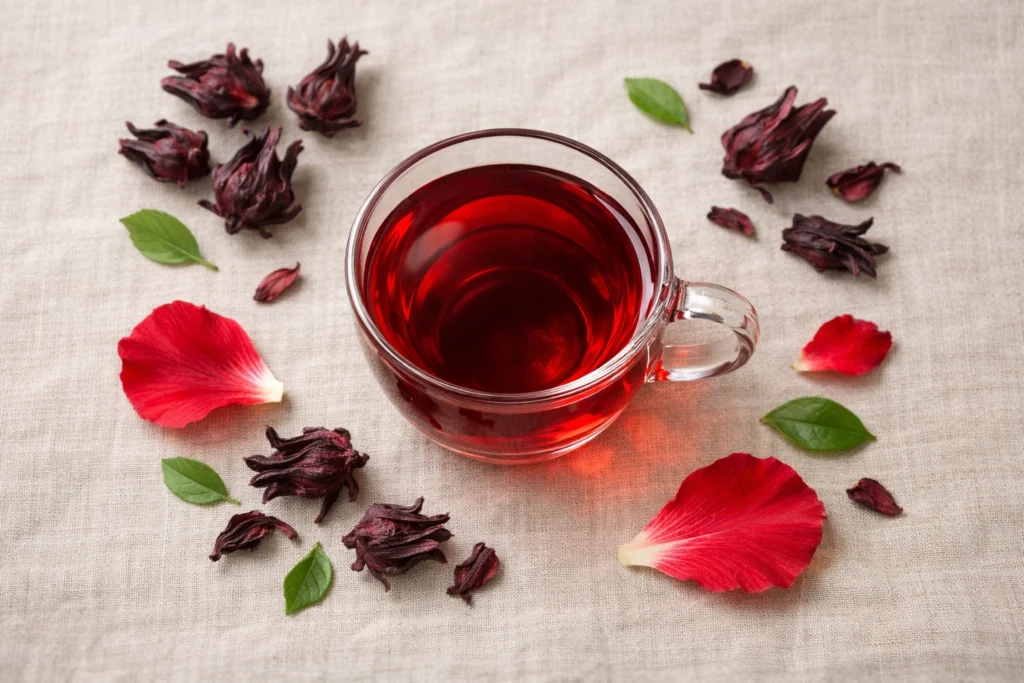
Hibiscus sabdariffa is a flowering plant in the mallow family (Malvaceae), native to West Africa and now widely cultivated across tropical and subtropical regions worldwide. The tea is made not from the petals themselves, but from the dried calyxes — the fleshy, deep-red structures that encase the flower bud. These calyxes are harvested, dried, and steeped in hot water to produce a tart, ruby-red infusion with a flavour profile reminiscent of cranberry and pomegranate.
There are several hundred species in the Hibiscus genus, but Hibiscus sabdariffa (Roselle) is the primary medicinal and culinary variety. It is sometimes confused with ornamental hibiscus species (Hibiscus rosa-sinensis), which have overlapping but distinct medicinal properties. For skin benefits, research most consistently points to H. sabdariffa — the species used in hibiscus tea.
| Language / Region | Local Name | Also Known As |
|---|---|---|
| Botanical (Latin) | Hibiscus sabdariffa | Roselle, Red Sorrel |
| Arabic / Middle East | Karkadé (كركديه) | Sour Tea |
| Caribbean / West Indies | Sorrel | Jamaica Flower |
| Mexico / Latin America | Flor de Jamaica | Agua de Jamaica |
| West Africa (Nigeria) | Zobo / Zoborodo | Bissap (Senegal) |
| South Asia (Hindi/Urdu) | Lal Ambadi / Patwa | Gurhal (ornamental sp.) |
| Southeast Asia (Thai) | Krajeab (กระเจี๊ยบ) | Roselle tea |
| English (global) | Hibiscus Tea | Red Zinger, Hibiscus Flower Tea |
Nutritional Profile & Key Bioactive Compounds
Hibiscus tea is naturally very low in calories, caffeine-free, and provides a modest range of micronutrients per cup. Its true therapeutic value, however, lies not in conventional macronutrients but in its exceptionally dense phytochemical profile — particularly anthocyanins, which give the tea its characteristic deep-red colour and account for the majority of its skin benefits.
| Nutrient | Per 240ml Cup | % Daily Value (approx.) | Skin Relevance |
|---|---|---|---|
| Calories | ~3 kcal | <1% | — |
| Vitamin C | 12–15 mg | 13–17% | Collagen synthesis, antioxidant |
| Potassium | ~50 mg | 1% | Cellular hydration |
| Magnesium | ~8 mg | 2% | Stress regulation, inflammation control |
| Calcium | ~10 mg | 1% | Skin barrier function |
| Iron | ~0.4 mg | 2% | Cellular oxygen delivery |
| Caffeine | 0 mg | 0% | Stress-neutral (no cortisol spike) |
| Total Anthocyanins | 50–200 mg* | — | Primary anti-inflammatory agent |
*Anthocyanin content varies widely by product and brewing method. 2024 research (Journal of Food Science) found commercial hibiscus products ranged from <0.001% to 2.372% total anthocyanins — loose-leaf calyxes consistently outperformed tea bags.
Key Bioactive Compounds Relevant to Skin Health
| Compound | Type | Primary Mechanism for Skin |
|---|---|---|
| Delphinidin-3-sambubioside | Anthocyanin | Inhibits NF-κB; anti-inflammatory, antioxidant |
| Cyanidin-3-sambubioside | Anthocyanin | Lowers IgE & histamine; antihistamine effect |
| Quercetin | Flavonoid | Blocks COX enzymes; reduces redness and swelling |
| Kaempferol | Flavonoid | Anti-inflammatory; leukotriene inhibitor |
| Malic acid | Organic acid / AHA | Gentle chemical exfoliant; dissolves dead skin bonds |
| Citric acid | Organic acid / AHA | Exfoliates; balances skin pH toward healthy range |
| Hibiscus acid | Unique organic acid | Vasorelaxant; reduces systemic vascular inflammation |
| Ascorbic acid (Vit. C) | Vitamin | Collagen synthesis; antioxidant; immune modulation |
| Beta-carotene | Carotenoid | Anti-inflammatory; reduces redness and irritation |
| Phenolic acids | Polyphenols | Antimicrobial; free radical neutralisation |
7 Proven Benefits of Hibiscus Tea for Psoriasis & Eczema
Potent Anti-Inflammatory Action That Targets the Root Cause
Both psoriasis and eczema are fundamentally inflammatory diseases — driven by an overactive immune system that floods the skin with pro-inflammatory cytokines and prostaglandins. Hibiscus anthocyanins (delphinidin and cyanidin) directly inhibit NF-κB signalling, one of the primary molecular pathways that orchestrates chronic skin inflammation. Simultaneously, the flavonoids quercetin and kaempferol block cyclooxygenase (COX) enzymes and inhibit leukotriene formation — the same biochemical targets as many pharmaceutical anti-inflammatory drugs, but through a gentler, dietary route. A 2025 systematic review in Food Science & Nutrition confirmed consistent anti-inflammatory activity from hibiscus extract across studies from 2019–2024.
Natural Antihistamine Effect — Breaks the Itch-Scratch Cycle
The defining symptom of both psoriasis and eczema — the maddening, relentless itch — is largely histamine-driven. Histamine is released by dermal mast cells in response to immune triggers, and scratching in turn releases more histamine, creating the “itch-scratch cycle” that damages skin further and raises infection risk. Hibiscus polyphenols and anthocyanins have been shown in published research to lower IgE levels (the antibody that triggers mast cell histamine release) and inhibit histamine-related transcription factors. In a controlled animal study comparing hibiscus tea extract to diphenhydramine hydrochloride (a pharmaceutical antihistamine), hibiscus demonstrated comparable effectiveness at reducing histamine-induced scratch behaviour. Community reports from psoriasis patient forums note skin “calming entirely within an hour” of drinking hibiscus tea during acute flare-ups.
Deep Antioxidant Protection Against Flare-Triggering Free Radicals
People with psoriasis and eczema exhibit measurably higher levels of oxidative stress compared to those with healthy skin — an imbalance between free radical production and the body’s antioxidant capacity. This oxidative burden directly damages skin cell membranes, disrupts the protective lipid barrier, and amplifies inflammatory signalling in a self-reinforcing cycle. Hibiscus tea is one of the richest dietary sources of antioxidants, combining anthocyanins, vitamin C, beta-carotene, and phenolic acids to neutralise free radicals before they cause cellular damage. A clinical study found that participants who regularly consumed high-antioxidant beverages including herbal teas experienced approximately 10% less measurable skin ageing compared to low-antioxidant groups — reflecting the direct impact of dietary antioxidant intake on skin health outcomes.
Natural AHAs That Gently Dissolve Psoriasis Plaques and Renew Skin
One of hibiscus’s most remarkable skincare properties — and a key differentiator from other herbal teas — is its content of naturally occurring alpha-hydroxy acids (AHAs), primarily malic acid and citric acid. These gentle chemical exfoliants dissolve the cohesive bonds between dead skin cells, encouraging their shedding and accelerating skin cell renewal. For psoriasis sufferers, this is exceptionally valuable: psoriasis causes skin cells to proliferate up to ten times faster than normal, creating thick, silvery plaques of accumulated cells on the skin surface. Natural AHAs gently break down these plaques without the physical irritation of scrubbing, which can trigger Köbner phenomenon (new plaques forming at sites of skin trauma). Unlike synthetic AHA formulations, which can sting on compromised skin, hibiscus-derived AHAs are delivered alongside anti-inflammatory and soothing anthocyanins — making them far better tolerated on sensitive psoriatic or eczema skin.
Restores the Skin Moisture Barrier — Essential for Both Conditions
A dysfunctional skin moisture barrier is central to both eczema and psoriasis. When the skin cannot retain water effectively, it becomes dry, cracked, and hypersensitive — creating entry points for pathogens and allergens that perpetuate the inflammatory cycle. In eczema, filaggrin protein deficiency is the most common genetic contributor to barrier failure. In psoriasis, rapid cell turnover prevents proper barrier formation. Hibiscus polysaccharides act as natural humectants — they attract water and help retain it within the skin tissue. Topically applied cooled hibiscus tea forms a light moisture-retaining film on the skin surface, reducing trans-epidermal water loss (TEWL) — a key clinical measurement of barrier integrity. When consumed as tea, hibiscus also contributes to systemic hydration, supporting the baseline water content of skin cells.
Antimicrobial Properties That Protect Compromised Skin
Eczema and psoriasis regularly compromise skin integrity, creating open, cracked areas that are highly vulnerable to secondary bacterial and fungal infection. Staphylococcus aureus colonises the skin of over 90% of eczema patients and actively worsens flare-ups by triggering additional immune activation. A 2024 comprehensive review in PMC confirmed that hibiscus extracts demonstrate significant antimicrobial activity against Staphylococcus aureus, Escherichia coli, Streptococcus mutans, Klebsiella pneumoniae, and Candida albicans — all organisms that can colonise compromised skin in inflammatory skin conditions. The antimicrobial activity is attributed to hibiscus phenolic acids, organic acids (particularly citric and malic acids, which create an inhospitable acidic environment for bacteria), and the direct membrane-disrupting action of its flavonoid compounds.
Stress Reduction That Helps Prevent Stress-Triggered Flare-Ups
Stress is one of the most consistently documented triggers for both psoriasis and eczema flare-ups — and not merely anecdotally. Psychological stress activates the hypothalamic-pituitary-adrenal (HPA) axis, raising cortisol levels which paradoxically dysregulate immune function over time, increasing inflammatory cytokine production and lowering the threshold for skin inflammation. Addressing stress is therefore a clinically legitimate component of both conditions’ management. Hibiscus tea is completely caffeine-free, making it inherently calming rather than stimulating. It also provides magnesium — a mineral with well-established roles in nervous system regulation and stress response modulation, deficiency of which is associated with heightened stress reactivity. The act of brewing and drinking warm herbal tea activates parasympathetic nervous activity (“rest and digest”), further dampening the acute stress response that triggers skin flares. Several psoriasis community members specifically note that hibiscus tea brings a “general sense of calm” alongside its direct skin benefits.
Hibiscus in Traditional Medicine for Skin Conditions
Long before modern pharmacology confirmed hibiscus’s anti-inflammatory and antimicrobial credentials, traditional healing systems across multiple continents had independently arrived at the same conclusion: this flower is medicine for the skin.
🌍 Ayurvedic Medicine (India)
In Ayurveda, Hibiscus rosa-sinensis — the ornamental cousin — is classified as a “cooling” herb that pacifies Pitta dosha (the dosha associated with inflammation, heat, and skin conditions). The flowers are used in Ayurvedic preparations to treat inflammatory skin disorders, and the bark is the official source of the traditional drug “parisha,” historically used for skin conditions. The anti-Pitta properties of hibiscus align with its modern-understood anti-inflammatory mechanisms.
🌍 West African Traditional Medicine
In Nigeria and surrounding West African countries, H. sabdariffa calyxes (Zobo/Bissap) have been used for centuries in treatments for skin rashes, infections, and inflammatory conditions. The plant crossed the Atlantic during the transatlantic slave trade and became embedded in Caribbean healing traditions, where it continues to be used for skin complaints including rashes and itching alongside its more widely known cardiovascular applications.
🌍 Middle Eastern & North African Medicine (Unani)
In Unani medicine — the Greco-Arabic healing tradition practiced across the Middle East and South Asia — hibiscus (karkadé) is classified as having “cold and dry” qualities that make it appropriate for conditions characterised by heat and inflammation, including inflammatory skin eruptions. Unani practitioners have used hibiscus preparations both internally and externally for centuries for skin-related complaints.
🌍 Caribbean & Latin American Folk Medicine
Across Jamaica, Trinidad, and Mexico, hibiscus (sorrel / flor de Jamaica) has been applied topically as a poultice for inflammatory skin conditions, wounds, and irritations. The fruit acids (AHAs) in hibiscus calyxes were intuitively understood to “soften” thickened or rough skin — a use case now confirmed by modern dermatological science.
How to Use Hibiscus Tea for Psoriasis & Eczema Relief
Hibiscus tea can be used both internally (as a daily beverage) and externally (as a topical compress, rinse, or soak) for skin conditions. The combination of both approaches generally produces the best results, as internal consumption addresses systemic inflammation while topical application delivers compounds directly to affected skin areas.
| Method | How to Use | Frequency | Best For |
|---|---|---|---|
| Hot tea (internal) | 1–2 tsp loose calyxes or 1 tea bag in 240ml water at 85–90°C; steep 5–8 min | 1–2 cups daily | Systemic inflammation, histamine, stress |
| Iced tea (internal) | Brew double-strength, refrigerate; drink cold (especially in summer or when hot flushes trigger flares) | 1–2 cups daily | Cooling flares triggered by heat/sweating |
| Skin compress (topical) | Brew double-strength, cool completely, soak clean cloth, apply to affected area 10–15 min | 3–4× per week | Direct itch relief, plaque softening |
| Skin rinse (topical) | Pour or spray cooled tea over affected area after bathing; let rest 1–2 min, pat dry gently | Daily after shower | pH restoration, antimicrobial, AHA exfoliation |
| Sitz bath / foot soak | Add 4–6 cups of strong brewed hibiscus tea to a lukewarm (not hot) bath; soak 15–20 min | 2–3× per week | Widespread eczema, lower body psoriasis |
Best Timing for Maximum Benefit
| Time of Day | Recommended Use | Reason |
|---|---|---|
| Morning (with or after breakfast) | 1 cup hot tea | Starts the anti-inflammatory effect early; avoid on completely empty stomach if acid-sensitive |
| Midday / afternoon | Iced hibiscus tea | Caffeine-free so no sleep disruption; maintains antioxidant levels through the day |
| Evening (1 hr before bed) | 1 cup warm tea | Maximises stress-reducing, parasympathetic effect; supports sleep (crucial for skin repair) |
| During a flare-up (acute) | Tea + topical compress simultaneously | Combined systemic + topical antihistamine effect for faster itch relief |
| After showering / bathing | Skin rinse with cooled tea | Skin is more permeable post-washing — better absorption of topical compounds |
Hibiscus Tea Recipe — For Drinking & Topical Compress
🌺 Anti-Inflammatory Hibiscus Tea (Drink & Compress)
Makes: 2 cups (one to drink, one for topical compress) | Prep time: 10 minutes | Brew time: 8 minutes
Ingredients:
- 3 teaspoons dried hibiscus calyxes (loose-leaf) or 2 hibiscus tea bags
- 480ml filtered water, boiled then cooled to ~85–90°C
- 1 teaspoon raw honey (optional — anti-inflammatory, skin-soothing)
- 1 small slice fresh ginger (optional — synergistic anti-inflammatory)
- Squeeze of lemon juice (optional — enhances anthocyanin bioavailability)
-
1
Boil & cool water
Bring 480ml of filtered water to a full boil, then remove from heat and let stand for 2–3 minutes until temperature drops to approximately 85–90°C. Using a thermometer ensures optimal brewing temperature.
-
2
Add hibiscus & steep
Place loose-leaf calyxes in a tea strainer or teapot (or use tea bags). Pour the cooled water over the hibiscus. Add fresh ginger if using. Steep for 7–8 minutes — longer than most teas to maximise anthocyanin extraction.
-
3
Strain & divide
Remove hibiscus and ginger. Pour half (approximately 240ml) into your cup to drink. Pour the remaining half into a clean glass container and set aside.
-
4
Sweeten your cup (optional)
Add raw honey and lemon juice to the drinking portion. Stir gently. Drink while warm for maximum systemic benefit.
-
5
Cool the topical portion
Allow the reserved half to cool to room temperature, then refrigerate for 15–20 minutes. Soak a clean cotton cloth or gauze pad in the cooled tea and apply as a compress to affected skin areas for 10–15 minutes.
-
6
Pat dry & moisturise
Gently pat skin dry. Follow immediately with your regular fragrance-free moisturiser while skin is still slightly damp — the hibiscus AHAs will have mildly exfoliated the surface, making it more receptive to moisture absorption.
Recommended Dosage of Hibiscus Tea for Skin Conditions
There is no standardised clinical dosage for hibiscus tea specifically for psoriasis or eczema. The following recommendations are based on traditional use, published herbal medicine guidelines, and the research literature on hibiscus consumption for inflammatory conditions. Always start with the lower end and adjust based on tolerance.
📅 How Long Before You See Results?
Herbal remedies work more gradually than pharmaceutical treatments. Most people report initial improvement in itching intensity and redness within 2–4 weeks of daily consumption. Meaningful improvement in plaque frequency or eczema flare-up severity typically requires 6–12 weeks of consistent daily use. Topical compresses may provide more immediate soothing relief during acute episodes. Give it at least 8 weeks of daily use before assessing full benefit.
Try Our Free Herb & Tea Benefit Finder
Type any herb or tea — including hibiscus — to instantly discover its benefits, best time to use, how to prepare it, and who should be careful.
🔍 Open the Herb & Tea Benefit Finder →Side Effects & Safety Precautions
Hibiscus tea has an excellent safety profile for most healthy adults and is well tolerated at normal consumption levels of 1–3 cups per day. However, there are several important precautions that apply, particularly for those on medications or in specific health circumstances.
🩸 Blood Pressure Medications
Hibiscus has demonstrated clinically meaningful blood pressure-lowering effects in multiple randomised controlled trials. If you take antihypertensive medications (ACE inhibitors, beta-blockers, diuretics), hibiscus tea may have an additive effect causing blood pressure to drop too low (hypotension). Consult your doctor before using regularly.
🤰 Pregnancy & Breastfeeding
Hibiscus is traditionally contraindicated in pregnancy as it may stimulate uterine contractions (emmenagogue effect), potentially increasing risk of miscarriage — particularly in early pregnancy. Avoid hibiscus tea during pregnancy. Breastfeeding safety has not been adequately studied; err on the side of caution.
💊 Diabetes Medications
Research suggests hibiscus may lower blood glucose levels. If you take insulin or oral hypoglycaemic agents, hibiscus tea may enhance their effect and cause hypoglycaemia. Monitor blood sugar levels closely and discuss with your healthcare provider.
🦷 Tooth Enamel Erosion
Hibiscus tea is naturally acidic (pH ~2.5–3.5). Frequent consumption without rinsing can gradually erode tooth enamel over time. Drink through a straw, and always rinse your mouth with plain water after consuming hibiscus tea. Do not brush teeth immediately after drinking.
🌿 Allergic Reactions
Hibiscus allergy is rare but possible, particularly in individuals with existing allergies to plants in the Malvaceae family (including okra and cotton). Symptoms can include skin rash, hives, or in rare cases anaphylaxis. Discontinue use immediately and seek medical advice if any allergic reaction occurs.
🫀 Liver Health (High Doses)
Some studies in animals have noted potential hepatotoxic effects at very high doses of hibiscus extract. At normal tea consumption levels (1–3 cups daily), no liver toxicity has been reported in humans. However, concentrated hibiscus supplements should be used with caution by those with existing liver conditions.
📚 Related Health Guides You May Find Helpful
Is Ginger Tea Good for You? Benefits, Best Time & How to Make It
Anti-inflammatory, digestion, immunity — ginger tea pairs perfectly with hibiscus for skin health.
Turmeric Milk (Golden Milk): Benefits, Recipe & How to Make It
Curcumin in turmeric is one of the most studied natural anti-inflammatories for skin conditions.
Bacopa Monnieri: The #1 Trending Brain Herb of 2026 (Science-Backed)
Stress worsens skin flares — Bacopa is one of the most powerful adaptogens for stress relief.
Ginger Tea for Digestion Comfort
Gut health and skin health are closely linked — improving digestion may reduce inflammatory skin flares.
Frequently Asked Questions
Yes — there is both scientific and anecdotal evidence supporting this. Hibiscus anthocyanins (primarily cyanidin-3-sambubioside) lower IgE and histamine levels, which are the principal biochemical drivers of itching in psoriasis. A published controlled animal study demonstrated that hibiscus tea extract reduced histamine-induced itching comparably to diphenhydramine hydrochloride (a pharmaceutical antihistamine). Community members with psoriasis have reported meaningful itch relief within an hour of drinking hibiscus tea during flare-ups, consistent with its rapid antihistamine action. Results vary between individuals, and hibiscus should be used as a complement to — not a replacement for — prescribed treatments.
Yes, topical application of cooled hibiscus tea to eczema-affected skin is generally safe and may provide soothing benefit. The natural AHAs (malic and citric acid) gently exfoliate dead skin cells, the anthocyanins deliver anti-inflammatory action, and the mildly acidic pH helps restore the skin’s natural acid mantle disrupted in eczema. Apply as a compress (soak a clean cloth, rest on skin for 10–15 min) or as a gentle rinse after bathing. Do not apply to open, actively oozing, or infected skin wounds without medical guidance. Always perform a patch test on a small area first — leave for 24 hours and monitor for any reaction before wider use.
Herbal remedies work more gradually than pharmaceutical treatments and require patience and consistency. Most people notice initial improvement in itching intensity and skin redness within 2–4 weeks of daily consumption. More significant improvement in flare-up frequency, plaque severity, or eczema symptoms typically becomes apparent after 6–12 weeks of consistent daily use. Topical compresses may provide more immediate soothing relief during acute episodes. It is recommended to commit to at least 8 weeks of daily use (1–2 cups per day) before drawing conclusions about efficacy for your particular condition.
Hibiscus, green tea, and oolong tea are the three most evidence-supported herbal teas for psoriasis specifically. Green tea’s EGCG (epigallocatechin gallate) has been shown in research to regulate Caspase-14 activity and normalise the disrupted skin cell production cycle that characterises psoriasis. A Japanese study found that eczema sufferers who drank 3 cups of oolong tea daily experienced significantly reduced itching after just one week. Hibiscus stands out for its superior combination of antihistamine action, AHA-mediated plaque softening, and antimicrobial protection — properties not found together in any other single herbal tea. Many people find rotating between all three provides the most comprehensive benefit across the different mechanisms of their condition.
Hibiscus tea is generally considered safe for children over the age of 2 in small amounts, but you should always consult your child’s paediatrician or dermatologist before introducing any herbal remedy into their routine. The main concern in children is hibiscus’s blood pressure-lowering effect — in a young child, even a moderate reduction in blood pressure could be significant. A safer approach for young children may be to use hibiscus only topically (as a diluted compress rather than as a beverage), avoiding any systemic effects while still delivering local anti-inflammatory and antimicrobial benefits to affected skin areas. Always dilute the tea with an equal volume of water for any topical application on a child’s skin.
No significant interaction between hibiscus tea and common psoriasis medications (methotrexate, biologics, topical corticosteroids) has been documented in the literature. The primary drug interaction concern with hibiscus is with antihypertensive and antidiabetic medications, not with immunomodulatory drugs used for psoriasis. That said, as a general precaution, always disclose any herbal remedies to your dermatologist or prescribing physician. Hibiscus’s immune-modulating properties are subtle and dietary rather than pharmacological, making clinically significant drug interactions less likely at normal tea consumption levels.
Both offer genuine but distinct benefits for eczema, and they work well in combination. Chamomile (particularly Matricaria chamomilla) is rich in bisabolol and apigenin, which have strong topical anti-inflammatory and antimicrobial effects — chamomile has historically been used in cream form for eczema in European traditional medicine. Hibiscus offers superior antihistamine activity through anthocyanins (chamomile has minimal antihistamine effect), natural AHAs for skin renewal, and higher antioxidant capacity. For itching specifically, hibiscus has a stronger evidence base. For general skin soothing and barrier support, chamomile is excellent topically. Using chamomile topically and hibiscus as a daily tea provides complementary benefits that address eczema from multiple directions.
Yes, hibiscus tea may help with scalp psoriasis through both internal and topical routes. Drinking hibiscus tea daily addresses the systemic inflammation that drives scalp psoriasis just as it does with plaque psoriasis elsewhere on the body. Topically, a cooled hibiscus tea rinse can be applied to the scalp after shampooing — left for 2–3 minutes before rinsing off — to deliver AHAs (which gently help loosen scalp plaques and buildup), anthocyanins (anti-inflammatory), and to restore scalp pH. Do not use hibiscus tea as a scalp treatment if your scalp skin is broken, bleeding, or actively infected. It does not replace medicated shampoos or treatments prescribed for scalp psoriasis.
Yes — consistently and significantly so. A 2024 study in the Journal of Food Science analysed 29 commercial hibiscus products and found dramatic variation in anthocyanin content between product types. Loose-leaf dried calyxes contained the highest concentrations of anthocyanins, while commercial tea bags — particularly those ground to fine particles and exposed to oxygen during manufacturing — contained substantially less. The mechanical grinding and oxidation process that creates uniform tea bag particles degrades heat-sensitive anthocyanins and polyphenols. For therapeutic use, always choose whole or roughly chopped dried hibiscus calyxes and brew using a strainer or French press. Store in an airtight container away from light and heat.
Daily consumption of 1–2 cups of hibiscus tea is generally considered safe for healthy adults with no contraindications (not pregnant, not on antihypertensive medications, no liver conditions). Long-term daily use at moderate amounts has been studied in the context of blood pressure management without significant adverse effects being reported. For skin conditions, consistency is important — the anti-inflammatory benefits require sustained dietary intake to maintain reduced systemic inflammation levels. If you are on any medications, have existing health conditions, or are planning long-term daily use, mention it to your healthcare provider. Maintain good dental hygiene practices (rinsing after drinking) given hibiscus’s acidity.