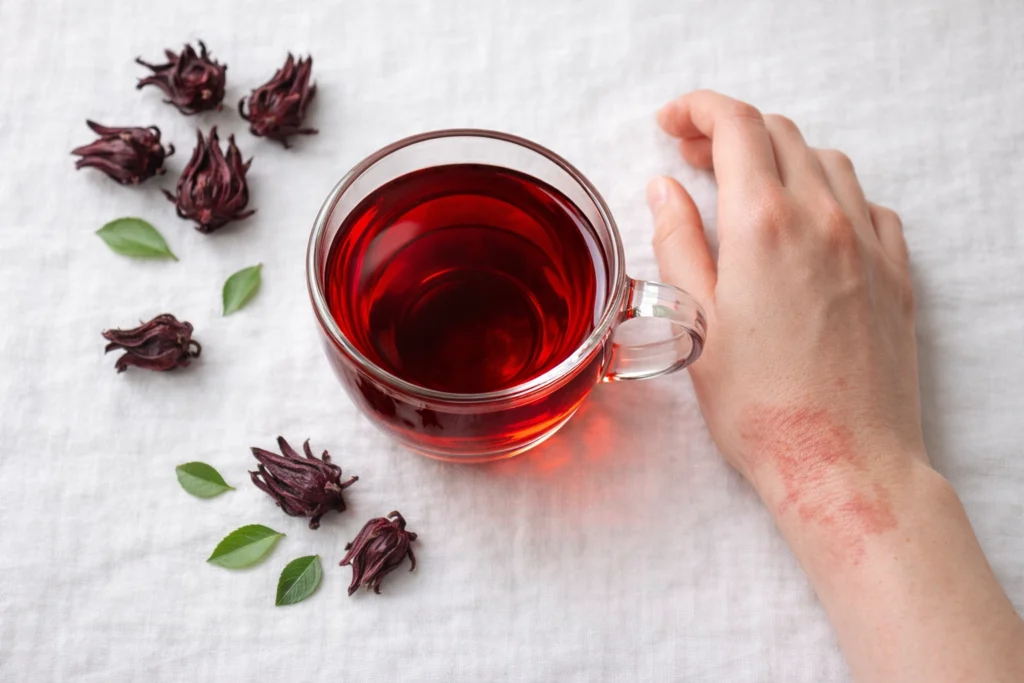
Hibiscus tea (Hibiscus sabdariffa) contains anthocyanins and polyphenols that target the histamine-driven itch cycle of eczema — lowering IgE levels, reducing mast cell activity, and inhibiting the inflammatory pathways that make eczema skin so relentlessly itchy.
📋 Table of Contents
- Why Eczema Itching Is So Hard to Stop
- The Science of Eczema Itch — What’s Actually Happening
- How Hibiscus Tea Targets Eczema Itching
- What the Research Actually Says
- Hibiscus Tea and the Low-Histamine Approach
- How to Use Hibiscus Tea to Stop Eczema Itch
- Hibiscus Tea vs Antihistamine Tablets — How They Compare
- Other Teas That Help Eczema Itching
- Dosage & Timing
- Side Effects & Who Should Avoid It
- Frequently Asked Questions
Why Eczema Itching Is So Hard to Stop
If you have eczema, you already know that the itch is not a minor inconvenience — it is relentless, disruptive, and often more distressing than the visible skin changes themselves. Research confirms this: eczema-related itch significantly impairs sleep in up to 60% of patients, and the “itch-scratch cycle” — where scratching triggers more inflammation, which triggers more itching — is one of the most difficult aspects of the condition to break. Over 31 million Americans live with some form of eczema, and for many, managing the itch is the number one daily priority.
Standard approaches include antihistamine tablets, topical corticosteroids, and newer biologics like dupilumab. But antihistamines have limited evidence for eczema-type itch specifically (because much of eczema itching is non-histaminergic — more on that below), and long-term corticosteroid use carries significant side effects. Many people are actively seeking safer, evidence-informed complementary approaches — and hibiscus tea is emerging as one of the most scientifically interesting options.
In this article we take a deep, research-led look at whether and how hibiscus tea can stop eczema itching — examining the mechanisms, the studies, and exactly how to use it for maximum effect. This is a cluster article from our full guide: 7 Proven Benefits of Hibiscus Tea for Psoriasis & Eczema.
The short answer: yes, hibiscus tea has genuine antipruritic (anti-itch) properties backed by peer-reviewed research — but it works differently from standard antihistamines, and understanding how it works helps you use it far more effectively.
The Science of Eczema Itch — What’s Actually Happening in Your Skin
To understand why hibiscus works, you first need to understand what is actually driving eczema itch. It is more complex than most people realise — and this complexity is why standard antihistamines often disappoint eczema patients.
The Histamine-IgE Pathway
Eczema is driven by an overactive immune response, predominantly Th2-skewed inflammation. In sensitised individuals, exposure to allergens or irritants triggers mast cells and basophils to release histamine — a chemical messenger that binds to H1 and H4 receptors on sensory nerve fibres in the skin, generating the itch signal sent to the brain. Elevated IgE (immunoglobulin E) — the antibody that arms mast cells for histamine release — is found in the majority of eczema patients. Research shows that patients with atopic dermatitis release almost double the amount of histamine from skin upon immune challenge compared to healthy controls.
Non-Histaminergic Itch Pathways
Here is the complication: eczema itch is not only histamine-driven. Research published in 2024 confirms that multiple non-histaminergic pathways contribute to eczema itch — including IL-31 (a cytokine that acts directly on nerve fibres), nerve growth factor (NGF), substance P, TSLP (thymic stromal lymphopoietin), and the MrgprA3 receptor pathway. This is precisely why oral H1 antihistamines — which only block histamine receptors — have shown limited efficacy for eczema itch in clinical trials, and why a broader-acting natural approach like hibiscus (which targets multiple inflammatory pathways simultaneously) may actually be more effective for some patients.
🧬 Key Itch Drivers in Eczema
Histamine (H1R + H4R) · IgE-mediated mast cell activation · IL-31 cytokine · IL-4 and IL-13 (Th2 cytokines) · Nerve growth factor (NGF) · TSLP · NF-κB inflammatory pathway · Staphylococcus aureus colonisation · Skin barrier dysfunction → moisture loss → dryness itch
| Itch Driver | Role in Eczema Itch | Does Hibiscus Target It? |
|---|---|---|
| Histamine (H1R) | Primary itch signal; released by mast cells on allergen exposure | ✅ Yes — anthocyanins lower histamine & IgE levels |
| IgE antibodies | Arms mast cells for histamine release; elevated in 80%+ of eczema | ✅ Yes — hibiscus reduces serum IgE in studies |
| NF-κB pathway | Master regulator of inflammation; drives cytokine production | ✅ Yes — anthocyanins inhibit NF-κB signalling |
| IL-6, TNF-α cytokines | Pro-inflammatory signals that amplify itch response | ✅ Yes — hibiscus suppresses IL-6 by ~85% in one study |
| Staph aureus on skin | Triggers additional immune activation; worsens itch cycle | ✅ Yes — hibiscus antimicrobial against S. aureus |
| Skin dryness / TEWL | Mechanical itch from compromised moisture barrier | ✅ Yes — AHAs + polysaccharides support skin hydration |
| IL-31 cytokine | Directly activates sensory nerve fibres for non-histamine itch | ⚠️ Indirect — anti-inflammatory effect may reduce IL-31 environment |
| NGF / Substance P | Sensitise nerve fibres; contribute to chronic itch | ⚠️ Possible — quercetin may modulate NGF; needs more study |
How Hibiscus Tea Targets Eczema Itching — 5 Mechanisms
Lowers IgE and Histamine Levels — Directly
The anthocyanins in hibiscus tea — particularly delphinidin-3-sambubioside and cyanidin-3-sambubioside — have been shown to lower serum IgE levels and reduce histamine concentrations in the skin. Published research on tea polyphenols confirmed that tea extract lowers IgE and histamine levels and inhibits histamine-related transcription factors — reducing both the trigger signal (IgE) and the released messenger (histamine) that drives mast cell-mediated itch. Lower circulating IgE means fewer armed mast cells ready to fire histamine on the next allergen encounter.
Inhibits NF-κB — the Master Switch of Skin Inflammation
NF-κB (nuclear factor kappa-light-chain-enhancer of activated B cells) is the central molecular regulator of inflammatory responses in skin cells. When activated — by allergens, irritants, Staphylococcus aureus, or other triggers — it drives the production of pro-inflammatory cytokines (IL-6, TNF-α, IL-1β) that sustain and amplify the itch-inflammation cycle. Hibiscus anthocyanins directly inhibit NF-κB signalling. A 2025 study published in Frontiers in Pharmacology confirmed that tea extract significantly reduced NF-κB fluorescence intensity in treated cells (p<0.01), demonstrating potent NF-κB pathway suppression. By turning down this master switch, hibiscus reduces the entire downstream cascade that perpetuates eczema flare-ups.
Reduces Mast Cell Infiltration and Degranulation
Mast cells are the primary producers of histamine in skin tissue. In eczema, they infiltrate affected areas in abnormally high numbers and degranulate (release their histamine payload) more readily than in healthy skin. Research on hibiscus and related tea extracts has shown that tea polyphenols reduce mast cell infiltration in skin tissue, as confirmed by toluidine blue staining in animal models of allergic dermatitis. Fewer mast cells in skin = less histamine reservoir available for release during flare-ups. This is a structural, longer-term antipruritic effect that builds over weeks of consistent consumption.
Reduces Epidermal Hyperplasia — Breaking the Scratch Damage Cycle
Scratching eczema skin damages the epidermis, causing epidermal hyperplasia — abnormal thickening of the outer skin layer — which further disrupts the skin barrier, increases nerve fibre exposure, and lowers the itch threshold, creating a vicious cycle. A 2025 study in Frontiers in Pharmacology confirmed that tea extracts significantly reduced epidermal thickness (p<0.01) comparable to the dexamethasone positive control group — demonstrating a reversal of the scratch-damage cycle at the tissue level. Critically, a study on Hibiscus syriacus (a closely related species) showed it reduced epidermal thickness by 62.9% in DNCB-induced atopic dermatitis mice — 1.5 times more effectively than prednisolone.
Antimicrobial Against Staph Aureus — Removes a Key Itch Trigger
Staphylococcus aureus colonises the skin of over 90% of eczema patients. Beyond causing secondary infections, it actively worsens eczema by triggering additional IgE production, stimulating mast cell activation, and producing toxins that act as superantigens — amplifying the inflammatory response. It is one of the most underappreciated drivers of eczema itch. A 2024 comprehensive review confirmed that hibiscus extracts demonstrate significant antimicrobial activity against S. aureus. Reducing S. aureus burden on the skin — through both internal anti-inflammatory consumption and topical hibiscus tea rinses — removes one of the key perpetuators of the itch cycle.
What the Research Actually Says
It is important to be transparent: there are no large-scale randomised controlled trials specifically testing Hibiscus sabdariffa tea as a standalone treatment for human eczema itch. The evidence base is currently composed of animal studies, in vitro research, related-species studies, and clinical data on hibiscus for inflammatory conditions broadly. This is the honest picture — and it is still genuinely promising.
| Study | Year | Finding Relevant to Eczema Itch | Evidence Level |
|---|---|---|---|
| Hibiscus syriacus in DNCB-induced atopic dermatitis mice (MDPI Plants) | 2025 | Reduced serum IgE by 26.6%, scratching frequency significantly reduced, epidermal thickness reduced 62.9% — outperforming prednisolone | Animal model |
| Tea extracts in histamine-induced dermatitis model (PMC, Pharmaceuticals) | 2024 | Tea polyphenols lower IgE and histamine; reduce mast cell infiltration; reduce epidermal hyperplasia comparable to dexamethasone (p<0.01) | Animal model + in vitro |
| Anti-eczema potential of tea extracts (Frontiers in Pharmacology) | 2025 | Tea extracts inhibit NF-κB signalling, reduce DNCB-induced epidermal thickening, modulate mast cell degranulation and Th2 cytokines | Animal model + in vitro |
| Hibiscus antimicrobial comprehensive review (PMC) | 2024 | Significant antimicrobial activity against S. aureus — the bacterium colonising 90%+ of eczema patients and driving itch | Systematic review |
| Hibiscus sabdariffa anti-inflammatory review (Food Science & Nutrition) | 2025 | Consistent anti-inflammatory activity confirmed across 14 studies from 2019–2024 | Systematic review |
| Oolong tea clinical trial (Japanese study) | Classic | 3 cups oolong daily → less itching after 1 week; 50% reported eczema improvement after 1 month in human patients | Human clinical trial |
| Community reports (psoriasis/eczema forums) | Ongoing | Multiple anecdotal reports of hibiscus tea calming itch “within an hour” during acute flare-ups | Anecdotal/experiential |
Hibiscus Tea and the Low-Histamine Approach to Eczema
An underappreciated dimension of eczema itch management is the dietary histamine connection. Research published in the European Society of Medicine confirms that a histamine-rich diet can directly aggravate eczema symptoms in a subset of patients — and a low-histamine diet produced significant improvement in eczema in 12 of 36 patients in a clinical study after just one week.
This is where hibiscus tea occupies an interesting dual role. Unlike fermented foods, aged cheeses, wine, and processed meats — which are high in dietary histamine and can worsen eczema — hibiscus tea is naturally low in histamine while simultaneously containing compounds that lower the body’s own histamine production. It is one of the few beverages that can legitimately be called both “safe for a low-histamine approach” and “actively antihistaminic.”
🍽️ Eczema-Friendly vs Eczema-Aggravating Beverages
Aggravate eczema itch (high histamine / histamine-liberating): Red wine, beer, fermented kombucha, black tea (fermented), energy drinks, citrus juices in large amounts
Support eczema management (low histamine + anti-inflammatory): Hibiscus tea ✅ · Chamomile tea ✅ · Rooibos tea ✅ · Peppermint tea ✅ · Filtered water ✅
Substituting hibiscus tea for caffeinated or fermented beverages in your daily routine is therefore a two-pronged strategy: you remove a histamine source while adding a histamine-lowering, anti-inflammatory drink. For eczema patients sensitive to dietary histamine, this simple swap can make a meaningful difference to background itch levels.
How to Use Hibiscus Tea to Stop Eczema Itch
There are two complementary approaches — internal (drinking the tea) and external (topical application). For eczema itch specifically, combining both gives the best results: the internal route reduces systemic histamine and IgE over time, while the topical route delivers immediate localised antipruritic and antimicrobial effects to the skin surface.
| Method | Instructions | When to Use | Effect Timeline |
|---|---|---|---|
| Daily tea (internal) | 1–2 tsp loose calyxes in 240ml water at 85–90°C, steep 7–8 min, drink 1–2 cups daily | Morning and/or evening — consistent daily use | 2–4 weeks for itch reduction; 6–12 weeks for flare-up frequency |
| Acute itch compress | Brew double-strength, cool in fridge 20 min, soak clean cotton cloth, apply to itchy area 10–15 min | During active itching or flare-up onset | Minutes — immediate cooling and antihistamine effect |
| Post-bath skin rinse | Pour cooled hibiscus tea over affected areas after bathing, rest 2 min, pat dry gently | Daily after showering — skin is more permeable | Cumulative — improves with daily use over weeks |
| Soak (widespread itch) | Add 4–6 cups strong hibiscus tea to lukewarm (not hot) bath, soak 15–20 min | During severe or widespread eczema flare-ups | Immediate relief + cumulative antimicrobial benefit |
Step-by-Step: Hibiscus Compress for Acute Eczema Itch Relief
🌺 Emergency Itch-Relief Hibiscus Compress
Time: 25 minutes total | Cost: Under $1 | Best for: Acute itching, flare-up onset, nighttime itch episodes
-
1
Brew double-strength tea
Add 3–4 teaspoons of loose-leaf dried hibiscus calyxes (or 2–3 tea bags) to 240ml of water at 85–90°C. Steep for 10 minutes. The stronger concentration maximises anthocyanin delivery to the skin surface.
-
2
Cool completely
Allow the brewed tea to cool to room temperature, then refrigerate for 15–20 minutes. Cold application provides additional immediate itch relief through cooling of sensitised nerve fibres — adding a physical antipruritic effect on top of the chemical one.
-
3
Apply compress
Soak a clean, soft cotton cloth or sterile gauze pad in the cooled tea. Wring out slightly so it is damp but not dripping. Lay gently over the itchy area — do not rub. Hold or secure in place for 10–15 minutes. Do not apply to open, broken, or actively weeping skin without medical guidance.
-
4
Leave to air dry briefly
Remove the compress and allow skin to air dry for 1–2 minutes. You will notice the deep-red anthocyanins may temporarily tint the skin slightly — this is harmless and fades within minutes.
-
5
Seal in with moisturiser immediately
Apply your regular fragrance-free emollient or prescribed moisturiser while the skin is still slightly damp from the hibiscus tea. This seals the anthocyanins and moisture into the skin and prevents the rapid moisture loss that triggers dryness-related itch.
Hibiscus Tea vs Antihistamine Tablets — How They Compare for Eczema Itch
One of the most common questions is: should I just take an antihistamine tablet? Here is an honest, evidence-based comparison.
| Factor | Hibiscus Tea | Oral H1 Antihistamines |
|---|---|---|
| Targets histamine-driven itch | ✅ Yes — lowers histamine & IgE | ✅ Yes — blocks H1 receptors |
| Targets non-histaminergic itch | ✅ Yes — NF-κB, IL-6, TNF-α, barrier repair | ❌ No — only blocks H1 receptor |
| Reduces IgE levels | ✅ Yes (shown in studies) | ❌ No — blocks effect but doesn’t lower levels |
| Anti-inflammatory beyond itch | ✅ Yes — broad spectrum | ❌ Minimal anti-inflammatory effect |
| Antimicrobial (Staph aureus) | ✅ Yes | ❌ No |
| Sedation / drowsiness | ✅ None | ⚠️ Yes (especially 1st generation) |
| Speed of relief (acute) | ⚠️ Moderate — minutes topically, weeks orally | ✅ Fast — 30–60 minutes orally |
| Long-term safety | ✅ Excellent (food-safe herb) | ⚠️ Caution with chronic use |
| Cost | ✅ Very low (~$0.30–1 per day) | ⚠️ Moderate (varies) |
| Evidence in eczema specifically | ⚠️ Emerging — strong mechanistic, limited clinical | ⚠️ Limited — systematic review shows no high-level evidence |
Other Teas That Help Eczema Itching
Hibiscus is not the only tea with evidence for eczema itch. The following work through overlapping but distinct mechanisms and can be used alongside hibiscus for a comprehensive approach.
| Tea | Key Compounds | Itch-Relevant Mechanism | Best Evidence |
|---|---|---|---|
| Hibiscus ⭐ Best for itch | Anthocyanins, quercetin, AHAs | Lowers IgE + histamine; NF-κB inhibition; antimicrobial; barrier repair | Animal models + systematic reviews (2024–2025) |
| Oolong tea | Polyphenols, tea catechins | Anti-allergenic polyphenols reduce histamine response | Human clinical trial — 50% improvement in 1 month |
| Green tea | EGCG (epigallocatechin gallate) | Reduces pro-inflammatory cytokines IL-17, TNF-α; modulates skin cell production | Animal studies + clinical moisturiser studies |
| Chamomile | Bisabolol, apigenin | Anti-inflammatory, mild sedative (reduces stress-triggered flares) | Traditional use; topical cream studies |
| Rooibos | Aspalathin, nothofagin | Antioxidant; anti-allergenic; caffeine-free and very low in histamine | In vitro studies; well tolerated by sensitive skin |
| Peppermint | Menthol, rosmarinic acid | Menthol activates TRPM8 receptors — creates cooling sensation that overrides itch signal | Topical evidence; cooling effect well-documented |
Dosage & Timing for Eczema Itch Relief
| Time of Day | Method | Why It Works |
|---|---|---|
| Morning (with breakfast) | 1 cup hot hibiscus tea | Starts systemic anti-inflammatory and IgE-lowering effect for the day; avoid on completely empty stomach if acid-sensitive |
| After showering | Cooled hibiscus tea skin rinse | Skin is most permeable post-wash — best window for topical compound absorption |
| During an itch episode | Cold compress | Cold + anthocyanins = combined physical and chemical antipruritic effect for fast relief |
| Evening (1 hr before bed) | 1 cup warm hibiscus tea | Caffeine-free — calms stress response, supports sleep quality which is critical for skin repair |
| Nighttime itch episodes | Pre-made cold spray bottle of hibiscus tea | Immediate access without brewing — spritz on itchy patches, pat in gently |
Side Effects & Who Should Avoid Hibiscus Tea
Hibiscus tea has an excellent safety profile at normal consumption levels (1–3 cups per day) and is classified as a Class 1 herb — meaning it is very safe both topically and orally. However, certain groups should exercise caution.
🩸 On blood pressure medication
Hibiscus lowers blood pressure. Combined with antihypertensive drugs it may cause blood pressure to drop too low. Consult your doctor first.
🤰 Pregnant or breastfeeding
Hibiscus may stimulate uterine contractions (emmenagogue effect). Avoid during pregnancy. Breastfeeding safety is unstudied — err on the side of caution.
💊 On diabetes medication
Hibiscus may lower blood glucose. Monitor blood sugar carefully if using insulin or oral hypoglycaemics alongside hibiscus tea.
🌿 Malvaceae plant allergy
Rare but possible. If you are allergic to okra, cotton, or related plants, introduce hibiscus cautiously. Perform a patch test before topical use.
🦷 Tooth enamel (acid)
Hibiscus tea is naturally acidic (pH ~2.5–3.5). Drink through a straw and rinse your mouth with water after drinking. Do not brush immediately after.
🩹 Open or infected eczema skin
Do not apply hibiscus tea topically to actively weeping, infected, or broken skin without medical guidance. If eczema is infected, see a doctor before trying topical herbal approaches.
Try Our Free Herb & Tea Benefit Finder
Type hibiscus, chamomile, rooibos, or any other herb or tea to instantly see its benefits, best time to use, preparation method, and who should be careful.
🔍 Open the Herb & Tea Benefit Finder →Frequently Asked Questions
For topical use (cold compress applied directly to itchy skin), many people notice a calming effect within minutes — this is partly the physical cooling effect and partly the immediate antihistamine action of surface-applied anthocyanins. For internal use (drinking the tea), the IgE-lowering and systemic anti-inflammatory effects build over time: most people notice reduced itch intensity within 2–4 weeks of daily consumption, with more significant improvement in flare-up frequency after 6–12 weeks. For acute flare-up episodes, combining a cup of hot tea with a cold compress applied simultaneously gives the fastest combined response.
For pure speed of acute relief, oral antihistamines act faster (30–60 minutes) than hibiscus tea consumed orally. However, clinical evidence shows that H1 antihistamines have limited efficacy for eczema itch because much of eczema itch is non-histaminergic — driven by IL-31, NGF, TSLP, and other pathways antihistamines cannot touch. Hibiscus, conversely, targets NF-κB (reducing multiple cytokines simultaneously), lowers IgE, reduces mast cell activity, and addresses skin barrier function — covering a broader range of itch mechanisms. It is best viewed as a complementary approach: use it consistently as a daily support strategy, and discuss acute episode management with your dermatologist.
Yes — cooled hibiscus tea applied as a compress or rinse is generally safe on eczema-affected skin, and many people find it soothing. The key requirements: always use cooled tea (never hot), always do a patch test first (apply a small amount to your inner wrist and wait 24 hours), and never apply to open wounds, actively weeping, or infected skin. After application, follow immediately with your regular emollient or prescribed moisturiser while skin is still slightly damp. The mild acidity of hibiscus tea (pH ~2.5–3.5) also helps restore the skin’s natural acid mantle, which is disrupted in eczema (healthy skin pH is 4.5–5.5).
Yes, and it does so at multiple points in the cycle simultaneously. It reduces the histamine and IgE that trigger the initial itch signal. The cooled topical compress provides immediate cooling relief that reduces the urge to scratch. Over time, consistent use reduces epidermal hyperplasia (the skin thickening caused by repeated scratching) — this is one of the most important findings from hibiscus animal studies, where epidermal thickness was reduced by up to 62.9%. Thinner, more normal epidermal structure means a lower itch threshold and less sensitivity to future triggers. This structural benefit is what distinguishes hibiscus from purely symptomatic approaches.
Loose-leaf dried hibiscus calyxes significantly outperform tea bags for therapeutic use. A 2024 study in the Journal of Food Science analysed 29 commercial hibiscus products and found that loose-leaf calyxes consistently delivered the highest anthocyanin concentrations. Commercial tea bags undergo grinding and oxidation during manufacturing that degrades heat-sensitive anthocyanins and polyphenols — the very compounds responsible for the antipruritic effects. For eczema itch specifically, always source whole or roughly cut dried hibiscus calyxes and brew in a tea strainer or French press. Store in an airtight, light-proof container.
For topical use (diluted compress), hibiscus tea is generally gentle enough for children’s skin. Always dilute with an equal amount of water for children under 12, perform a patch test first, and monitor for any reaction. For internal consumption in children, always consult your paediatrician or dermatologist first — hibiscus has blood pressure-lowering properties that require professional assessment before use in young children. The topical-only approach is safer for younger children and still delivers meaningful anti-inflammatory, antimicrobial, and cooling itch-relief benefits directly to affected skin.
For maximum antipruritic benefit: use 2–3 teaspoons of loose-leaf dried hibiscus calyxes per 240ml serving. Heat water to 85–90°C (not fully boiling — this degrades anthocyanins). Steep for 7–8 minutes. For a topical compress, brew double-strength (4–5 tsp per 240ml) and cool completely before applying. Adding a squeeze of lemon juice to the drinking portion may enhance anthocyanin bioavailability. Raw honey (if not avoiding histamine liberators) adds complementary anti-inflammatory and antimicrobial properties. Do not add milk — dairy may bind polyphenols and reduce their bioavailability.
No — never discontinue prescribed eczema treatments (topical corticosteroids, calcineurin inhibitors, biologics like dupilumab, or oral medications) without discussing with your dermatologist first. Hibiscus tea is a complementary approach that can work alongside your prescribed treatment plan — not a replacement for it. The goal of adding hibiscus tea is to support your body’s inflammatory response from a dietary direction, potentially reducing background itch and flare-up frequency over time, while your medical treatment manages acute disease control. Always be transparent with your dermatologist about any herbal remedies you are using.
📚 Related Health Guides
7 Proven Benefits of Hibiscus Tea for Psoriasis & Eczema
The full pillar guide — all 7 benefits, traditional uses, dosage, and complete cluster strategy.
Is Ginger Tea Good for You? Benefits, Best Time & How to Make It
Ginger’s gingerols pair synergistically with hibiscus anthocyanins for enhanced anti-inflammatory effect.
Turmeric Milk (Golden Milk): Benefits, Recipe & How to Make It
Curcumin is one of the most studied natural COX inhibitors for inflammatory skin conditions.
Bacopa Monnieri: The #1 Trending Brain Herb of 2026
Stress is one of the top eczema flare triggers — Bacopa is a powerful adaptogen for stress resilience.