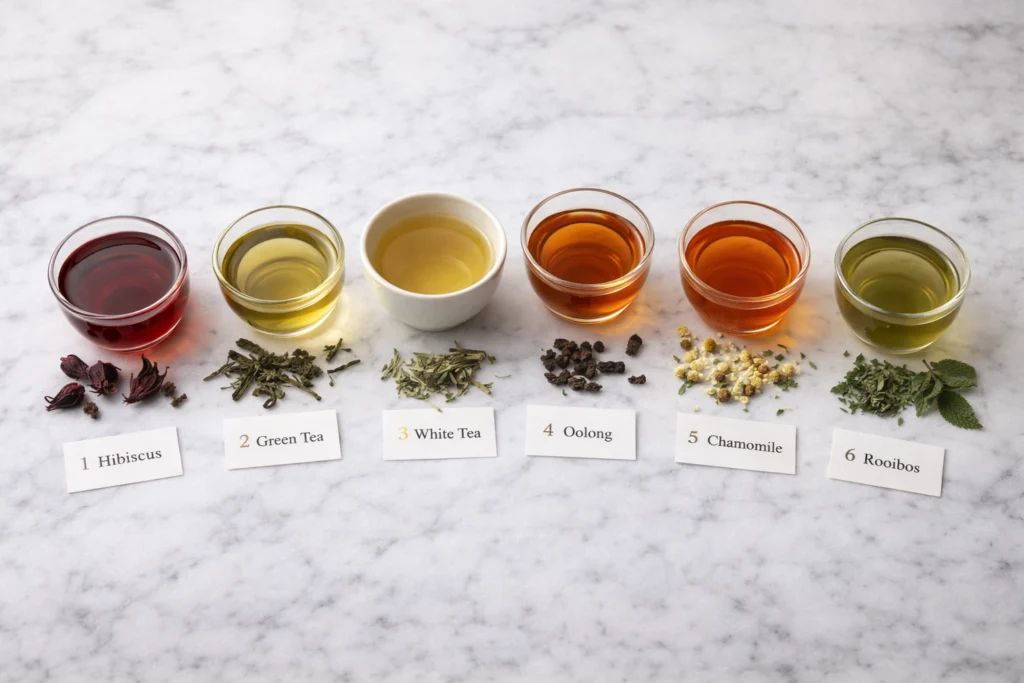
Multiple herbal teas contain scientifically validated compounds that target the inflammation, oxidative stress, and immune dysregulation driving psoriasis. Ranked here from most to least evidence-supported — each tea works through a distinct mechanism, and combining two or three strategically covers far more biological ground than any single option alone.
📋 Table of Contents
- Why Herbal Tea for Psoriasis? The Science Behind It
- How We Ranked These 7 Teas
- #1 Green Tea — Best Overall for Psoriasis
- #2 Hibiscus Tea — Best for Itch + Inflammation Combined
- #3 White Tea — Strongest Anti-Psoriatic in Clinical Study
- #4 Oolong Tea — Only Tea with Human Clinical Trial Evidence
- #5 Chamomile Tea — Best for Stress-Triggered Flare-Ups
- #6 Rooibos Tea — Best Caffeine-Free Daily Option
- #7 Nettle Tea — Best for Immune Modulation
- Full Comparison Table
- How to Combine Teas for Maximum Benefit
- Brewing Tips for Maximum Therapeutic Benefit
- Dosage Guide
- Side Effects & Who Should Be Careful
- Frequently Asked Questions
Why Herbal Tea for Psoriasis? The Science Behind It
Psoriasis affects an estimated 125 million people worldwide — roughly 2–4% of the global population. It is a chronic autoimmune condition in which an overactive immune system accelerates skin cell production, causing thick, scaly plaques, persistent inflammation, and relentless itching. Current pharmaceutical treatments — from topical corticosteroids to biologics like dupilumab — are effective but often expensive, carry long-term side effects, and don’t work for everyone. A 2025 systematic review in Complementary Therapies in Medicine analysing 20 randomised controlled trials confirmed that certain herbal interventions demonstrate genuine promise in reducing psoriasis severity — with some showing results comparable to conventional treatments.
Herbal teas are particularly interesting as a dietary approach because they deliver high concentrations of bioactive polyphenols, flavonoids, and other plant compounds directly into systemic circulation — where they can modulate the immune pathways, cytokine production, and oxidative stress that drive psoriasis from the inside. They are not cures. But the evidence for several specific teas as meaningful complementary support is growing steadily and is now backed by peer-reviewed research including animal models, in vitro studies, and human clinical data.
This article ranks the 7 best herbal teas for psoriasis flare-up relief — ordered by the strength and specificity of evidence, and explaining exactly why each one works at the molecular level so you can make an informed choice. This is a cluster article from our main guide: 7 Proven Benefits of Hibiscus Tea for Psoriasis & Eczema.
How We Ranked These 7 Teas
Each tea was evaluated across four criteria, weighted by importance:
| Ranking Criteria | Weight | What We Looked For |
|---|---|---|
| Psoriasis-specific evidence | 40% | Studies directly on psoriasis models or patients — not just general anti-inflammatory research |
| Mechanism relevance | 30% | Does it target the specific pathways driving psoriasis — IL-17, TNF-α, NF-κB, keratinocyte proliferation, Caspase-14? |
| Evidence quality | 20% | Human RCT > animal model > in vitro > traditional use. Higher quality = higher rank |
| Safety & accessibility | 10% | Is it safe for daily long-term use? Is it widely available and affordable? |
#1 Green Tea — Best Overall for Psoriasis
Botanical name: Camellia sinensis (unfermented) | Key compound: EGCG (epigallocatechin-3-gallate) | Caffeine: Low–moderate
Green tea earns the top spot because it is the only tea with direct, specific evidence of targeting the core biological defect in psoriasis. Researchers at the Medical College of Georgia identified that green tea regulates Caspase-14 — the protein that governs the life cycle of skin cells. In psoriasis, this process is fundamentally disrupted, causing skin cells to multiply up to ten times faster than normal. Green tea’s EGCG compound restores more normal Caspase-14 expression, slowing this runaway cell production at its genetic root.
A 2024 study published in PMC confirmed that EGCG significantly improves psoriasiform pathological markers (p<0.01) in imiquimod-induced psoriasis models — reducing skin thickness, cell proliferation (measured by Ki-67 marker), redness, scaling, and immune cell infiltration. EGCG also inhibits NF-κB and reduces TNF-α and IL-6 — two of the primary cytokines driving plaque formation. A separate research study confirmed that green tea extract, when applied topically to psoriasis-like lesions in mice, cleared the lesions, while oral consumption reduced skin inflammation and immune system hyperactivity simultaneously.
🔬 Green Tea Research Snapshot
Caspase-14 regulation: Restores the disrupted skin cell lifecycle unique to psoriasis
NF-κB inhibition: Reduces the master inflammatory switch
TNF-α + IL-17 reduction: Targets the primary cytokines driving plaque formation (2024 PMC study)
PCNA normalisation: Returns proliferating cell nuclear antigen to normal basal-layer distribution
Best evidence level: Multiple animal studies + in vitro RCT-level data
How to use: Brew 1–2 tsp loose-leaf green tea in 85°C water (never boiling — green tea becomes bitter and loses EGCG potency above 85°C). Steep 2–3 minutes. Drink 2 cups daily, ideally 30 minutes after meals to minimise stomach irritation. Note: green tea contains moderate caffeine — if sensitive, switch to decaffeinated green tea or limit to morning use.
#2 Hibiscus Tea — Best for Itch + Inflammation Combined
Botanical name: Hibiscus sabdariffa | Key compounds: Anthocyanins (delphinidin, cyanidin), malic acid, citric acid | Caffeine: Zero
Hibiscus tea ranks second because it uniquely combines multiple mechanisms that no other single herbal tea matches simultaneously. While green tea excels at the Caspase-14 / cell proliferation pathway, hibiscus addresses the inflammation + itch + plaque texture + antimicrobial dimensions all at once — making it particularly valuable for psoriasis sufferers whose primary complaints are intense itching and thickened plaques alongside inflammation.
A 2025 study on Hibiscus syriacus in atopic dermatitis models demonstrated a 62.9% reduction in epidermal thickness — outperforming prednisolone (48.6%) by a significant margin. Serum IgE was reduced by 26.6%, scratching behaviour was significantly reduced, and TARC/CCL17 chemokines (key drivers of Th2 inflammation) were suppressed by 73%. The natural alpha-hydroxy acids (malic and citric acid) in hibiscus provide a unique benefit no other tea in this list offers — they gently dissolve the bonds between dead skin cells in psoriasis plaques, softening and reducing their thickness with regular topical application.
How to use: 1–2 tsp loose-leaf dried calyxes in 85–90°C water, steep 7–8 minutes. Drink 1–2 cups daily. Additionally use cooled double-strength hibiscus tea as a compress on plaques for 10–15 minutes, 3–4 times weekly. For our full hibiscus guide see: 7 Proven Benefits of Hibiscus Tea for Psoriasis & Eczema.
#3 White Tea — Strongest Anti-Psoriatic in Direct Comparison Study
Botanical name: Camellia sinensis (minimally processed) | Key compounds: EGCG, catechins, polyphenols, rutin | Caffeine: Low
White tea deserves more attention in the psoriasis conversation than it currently receives. A 2024 study published in PMC — one of the most direct comparisons of tea types for psoriasis specifically — tested black, green, and white tea extracts against an imiquimod-induced psoriasis mouse model. White tea (WT) and green tea (GT) showed the best significant effect (p<0.01) in reducing PASI scores, while black tea showed good effect (p<0.05). White tea also demonstrated the strongest inhibitory effect on epidermal hyperplasia among the three.
Why does white tea perform so strongly? Because it is the least processed of all Camellia teas — the leaves are simply dried without fermentation, preserving the highest concentrations of natural catechins and polyphenols. While green tea is steamed or pan-fired to halt fermentation, white tea undergoes even less processing, resulting in a more complete and delicate phytochemical profile. All three tea extracts in the 2024 study reduced IL-17 and TNF-α expression — the two cytokines most directly implicated in psoriasis plaque formation and maintenance.
🔬 White Tea vs Green Tea vs Black Tea for Psoriasis (2024 PMC Study)
White tea: Best significant effect on PASI scores (p<0.01) + strongest epidermal hyperplasia inhibition
Green tea: Best significant effect on PASI scores (p<0.01) — tied with white tea at top
Black tea: Good effect (p<0.05) — effective but less potent than white or green
All three: Reduced IL-17 and TNF-α — the primary cytokines driving psoriasis plaques
How to use: Brew 1–2 tsp loose-leaf white tea in 75–80°C water (white tea is delicate — higher temperatures destroy its polyphenols). Steep 4–5 minutes. Drink 1–2 cups daily. White tea has a mild, slightly sweet flavour — easily combined with hibiscus for a complementary blend.
#4 Oolong Tea — The Only Tea with Human Clinical Trial Data
Botanical name: Camellia sinensis (semi-fermented) | Key compounds: Polyphenols, theaflavins, tea catechins | Caffeine: Moderate
Oolong tea holds a unique position in this ranking: it is the only tea on this list supported by a human clinical trial specifically for psoriasis and eczema. In a study conducted in Japan, eczema and psoriasis patients who drank 3 cups of oolong tea per day experienced significantly less itching after just one week. After one month, 50% of participants reported meaningful improvement in their condition — a striking result that no other herbal tea has replicated in a human trial to date.
The researchers attributed this to oolong tea’s anti-allergenic polyphenols, which reduce histamine response and modulate the immune overreaction underlying both psoriasis and eczema. Oolong sits between green and black tea in terms of fermentation — it retains significant catechin content while also containing oxidised theaflavins that provide additional anti-inflammatory activity. Its moderate polyphenol complexity may actually work in its favour for psoriasis, targeting multiple pathways simultaneously.
How to use: Brew 1–2 tsp loose-leaf oolong in 85–90°C water, steep 3–5 minutes. Drink 3 cups daily during initial trial period (4 weeks). Note: oolong contains moderate caffeine — avoid after 3pm if sleep-sensitive. Because of its caffeine content, oolong is best used as the morning/midday tea, with hibiscus or chamomile reserved for evenings.
#5 Chamomile Tea — Best for Stress-Triggered Psoriasis Flare-Ups
Botanical name: Matricaria chamomilla | Key compounds: Bisabolol, apigenin, chamazulene | Caffeine: Zero
Chamomile tea targets psoriasis through a mechanism the other teas address less directly: stress modulation. Stress is one of the most consistently identified triggers for psoriasis flare-ups — it activates the HPA axis, elevates cortisol, dysregulates T-cell activity, and directly increases keratinocyte proliferation through neurogenic inflammation pathways. For patients who notice their psoriasis worsens during periods of stress, chamomile is a particularly strategic addition.
Chamomile’s key compound, apigenin, binds to GABA-A receptors in the brain — the same receptors targeted by benzodiazepine anti-anxiety medications — producing a genuine, measurable anxiolytic (anti-anxiety) effect without sedation at normal tea consumption levels. A 2019 randomised controlled trial in humans confirmed that chamomile extract significantly reduced generalised anxiety scores. Simultaneously, bisabolol provides direct anti-inflammatory activity at the skin level by blocking cyclooxygenase enzymes and inhibiting leukotriene formation — reducing redness and swelling in psoriasis lesions. A 2025 systematic review of herbal RCTs for psoriasis specifically named chamomile-containing preparations among the evaluated interventions.
How to use: Brew 1–2 tsp loose-leaf chamomile flowers (or 1 tea bag) in 90°C water, steep 5–7 minutes. Drink 1 cup in the evening, 1 hour before bed — this is when its anxiolytic effect is most valuable. Chamomile tea can also be applied topically as a cooled compress to itchy, inflamed patches. Note: people allergic to plants in the Asteraceae family (ragweed, daisies, chrysanthemums, marigolds) have a higher risk of chamomile allergy — patch test before topical use.
#6 Rooibos Tea — Best Caffeine-Free Daily Foundation
Botanical name: Aspalathus linearis | Key compounds: Aspalathin, nothofagin, quercetin, luteolin | Caffeine: Zero
Rooibos (pronounced ROY-boss) is a South African herbal tea made from the needle-like leaves of the Aspalathus linearis plant. It earns its place on this list not for dramatic single-mechanism action but for being one of the safest, most versatile, and most complementary daily teas for psoriasis patients — particularly those sensitive to caffeine, those on multiple medications, or those who struggle with the slightly tart taste of hibiscus or green tea.
Rooibos contains aspalathin — a unique flavonoid found nowhere else in nature — along with quercetin and luteolin, which inhibit the release of histamine from mast cells and reduce production of pro-inflammatory cytokines. Research has shown rooibos to have anti-allergenic properties that reduce skin hypersensitivity responses. Importantly, rooibos is extremely low in tannins (unlike green or black tea) meaning it does not bind to and reduce the bioavailability of iron or zinc — minerals already commonly depleted in psoriasis patients. It is also naturally low in histamine, making it suitable for those following a low-histamine diet approach to psoriasis management.
How to use: Brew 1–2 tsp loose-leaf rooibos in 95–100°C water (rooibos is more robust than green or white tea — higher temperatures are fine), steep 5–7 minutes. Drink 1–2 cups daily at any time. Its mild, naturally sweet, slightly vanilla-like flavour makes it the easiest tea on this list to consume consistently long-term — important for chronic condition management. Can be enjoyed hot or as iced tea.
#7 Nettle Tea — Best for Immune Modulation
Botanical name: Urtica dioica | Key compounds: Quercetin, kaempferol, beta-sitosterol, lectins | Caffeine: Zero
Stinging nettle tea has a long history of use for inflammatory skin conditions across European and Middle Eastern traditional medicine systems. Its ranking at #7 reflects genuinely promising mechanisms but a thinner evidence base specifically for psoriasis compared to the teas above. Nettle contains quercetin and kaempferol — flavonoids that inhibit NF-κB and reduce the production of pro-inflammatory cytokines — alongside beta-sitosterol, a plant sterol that has been shown to modulate immune responses and reduce skin redness and itching.
What makes nettle particularly interesting for psoriasis is its effect on the immune system at a broader level — it acts as a gentle immunomodulator rather than purely an anti-inflammatory, potentially helping to calm the T-cell overactivation that is the root cause of psoriasis. Traditional herbalists have used nettle for “blood purifying” — what modern science would describe as reducing systemic inflammatory burden and supporting liver detoxification pathways that process inflammatory mediators. It is commonly recommended alongside burdock root and red clover as part of a comprehensive herbal psoriasis protocol.
How to use: Brew 1–2 tsp dried nettle leaf in 95°C water, steep 5–10 minutes. Drink 1–2 cups daily. Nettle has a pleasant, slightly earthy, spinach-like flavour that pairs well with lemon and honey. It is one of the most mineral-rich herbal teas available — high in iron, magnesium, and potassium — making it particularly useful for psoriasis patients who may be nutritionally depleted. Avoid during pregnancy.
Full Comparison Table — 7 Best Teas for Psoriasis
| Rank | Tea | Key Compound | Primary Psoriasis Mechanism | Best Evidence | Caffeine | Best For |
|---|---|---|---|---|---|---|
| #1 | 🍃 Green Tea | EGCG | Regulates Caspase-14; normalises skin cell cycle; inhibits NF-κB, TNF-α, IL-17 | Multiple animal studies + in vitro (2024) | Low–moderate | Targeting skin cell overproduction |
| #2 | 🌺 Hibiscus Tea | Anthocyanins, AHAs | Antihistamine; NF-κB inhibition; AHA plaque softening; antimicrobial | Systematic reviews (2024–2025); animal models | Zero | Itch + plaque texture + inflammation |
| #3 | 🤍 White Tea | EGCG, catechins, rutin | Reduces PASI scores; inhibits epidermal hyperplasia; lowers IL-17 + TNF-α | Direct psoriasis comparison study (2024 PMC) | Low | Overall plaque severity reduction |
| #4 | 🍂 Oolong Tea | Polyphenols, theaflavins | Anti-allergenic; reduces histamine response; broad immune modulation | Human clinical trial — 50% improvement in 1 month | Moderate | Proven human results; itch reduction |
| #5 | 🌼 Chamomile | Apigenin, bisabolol | Anxiolytic (stress reduction); COX inhibition; leukotriene formation inhibition | Human RCT for anxiety; herbal psoriasis review (2025) | Zero | Stress-triggered flare-ups; nighttime |
| #6 | 🌿 Rooibos | Aspalathin, quercetin | Anti-allergenic; mast cell histamine inhibition; low tannins — mineral absorption preserved | In vitro + anti-allergenic studies | Zero | Daily maintenance; medication-sensitive |
| #7 | 🌱 Nettle | Quercetin, beta-sitosterol | Immune modulation; NF-κB inhibition; liver detoxification support | Traditional use + in vitro | Zero | Immune system support; mineral replenishment |
How to Combine Teas for Maximum Psoriasis Benefit
No single tea addresses every mechanism driving psoriasis. The smartest approach is to combine two or three teas strategically — rotating throughout the day to cover cell proliferation, inflammation, itch, stress, and immune modulation simultaneously.
| Time of Day | Recommended Tea | Why This Timing |
|---|---|---|
| Morning | 🍃 Green Tea or 🍂 Oolong Tea | Caffeine content appropriate for morning; EGCG delivery starts Caspase-14 regulation early; oolong’s clinical-proven anti-allergenic effect builds from the first cup |
| Midday | 🌺 Hibiscus Tea or 🤍 White Tea | Caffeine-free (hibiscus) or low-caffeine (white tea); maintains anti-inflammatory and antioxidant levels through the afternoon without disrupting sleep later |
| Evening | 🌼 Chamomile or 🌿 Rooibos or 🌱 Nettle | All three are completely caffeine-free; chamomile’s anxiolytic effect helps wind down stress before sleep; rooibos and nettle provide ongoing anti-inflammatory support without sleep disruption |
| During flare-up | 🌺 Hibiscus Tea (drink + compress) | Fastest combined internal + topical antipruritic action; AHAs begin softening flare-up plaques while anthocyanins address the inflammatory spike |
🏆 Best 3-Tea Combination for Psoriasis
Based on evidence and complementary mechanisms, the most effective combination is:
Morning: Green Tea — targets the Caspase-14 / skin cell cycle (the root cause of psoriasis)
Midday: Hibiscus Tea — addresses itch, plaque texture, inflammation, and antimicrobial protection
Evening: Chamomile Tea — reduces stress (a primary flare trigger) and promotes restorative sleep
Together these three cover: skin cell regulation + inflammation + itch + plaque softening + antimicrobial + stress reduction + immune modulation — all without caffeine overload.
Brewing Tips for Maximum Therapeutic Benefit
How you brew these teas dramatically affects the concentration of active compounds delivered. The wrong temperature destroys polyphenols; too-short steeping extracts too little; tea bags consistently underperform loose-leaf. Follow these guidelines for every cup.
| Tea | Water Temp | Steep Time | Amount | Critical Tip |
|---|---|---|---|---|
| 🍃 Green Tea | 80–85°C | 2–3 min | 1–2 tsp / 240ml | Never boiling — destroys EGCG and makes tea bitter |
| 🌺 Hibiscus Tea | 85–90°C | 7–8 min | 1–2 tsp / 240ml | Longer steep than most — maximises anthocyanin extraction |
| 🤍 White Tea | 75–80°C | 4–5 min | 1–2 tsp / 240ml | Most delicate tea — lowest temperature of all seven |
| 🍂 Oolong Tea | 85–90°C | 3–5 min | 1–2 tsp / 240ml | Can be re-steeped 2–3 times — later steeps release different polyphenols |
| 🌼 Chamomile | 90°C | 5–7 min | 1–2 tsp / 240ml | Cover while steeping to trap volatile bisabolol oils |
| 🌿 Rooibos | 95–100°C | 5–7 min | 1–2 tsp / 240ml | Most robust — the only tea that tolerates full boiling temperature |
| 🌱 Nettle | 95°C | 5–10 min | 1–2 tsp / 240ml | Longer steep releases more minerals — beneficial for nutritional support |
Dosage Guide
📅 Realistic Timeline
Week 1–2: Possible reduction in itch intensity and background inflammation (oolong and hibiscus drinkers report this earliest)
Week 3–4: Noticeable improvement in plaque texture with consistent hibiscus topical use
Week 4–8: Measurable reduction in flare-up frequency; improvement in skin redness and scaling
Week 8–12: Full assessment of benefit — most studies showing significant results ran for 4–12 weeks
Herbal teas require consistency over time. Missing days resets the systemic anti-inflammatory benefit. Treat them like a daily supplement rather than an as-needed remedy.
Side Effects & Who Should Be Careful
🩸 Blood pressure medication
Hibiscus tea lowers blood pressure — avoid combining with antihypertensive medications without medical guidance. Other teas on this list do not share this interaction.
🤰 Pregnancy
Avoid hibiscus (emmenagogue effect) and nettle (may stimulate uterine contractions) during pregnancy. Chamomile, rooibos, and white tea in moderate amounts are generally considered safer but always consult your doctor.
💊 Blood thinners (warfarin)
Green tea contains vitamin K and can affect INR levels in patients on warfarin. Monitor closely and discuss with your prescriber before adding green tea to your daily routine.
🌿 Asteraceae allergy
Chamomile belongs to the Asteraceae family. People allergic to ragweed, daisies, or chrysanthemums should avoid chamomile or use with extreme caution. Nettle allergy is also possible — patch test topical use.
☕ Caffeine sensitivity
Green tea (low–moderate) and oolong (moderate) contain caffeine. If caffeine-sensitive, limit to morning use, switch to decaffeinated versions, or choose hibiscus, chamomile, rooibos, or nettle exclusively (all caffeine-free).
🦷 Dental enamel (hibiscus)
Hibiscus tea is naturally acidic (pH ~2.5–3.5). Drink through a straw and rinse mouth with plain water after drinking. Do not brush teeth immediately after consuming hibiscus tea.
Try Our Free Herb & Tea Benefit Finder
Type any tea from this list — hibiscus, green tea, chamomile, rooibos — to instantly see its full benefits, best time to use, preparation method, and safety notes.
🔍 Open the Herb & Tea Benefit Finder →Frequently Asked Questions
Green tea is ranked #1 overall because its EGCG compound directly addresses the root biological defect in psoriasis — the dysregulated skin cell cycle governed by Caspase-14. No other single tea has this specific, well-documented mechanism. However, “best” depends on your primary symptom. If itching is your biggest problem, hibiscus tea may serve you better. If stress triggers your flares, chamomile may make the biggest difference. The most effective approach is combining green tea (morning) + hibiscus (midday) + chamomile (evening) to cover multiple mechanisms simultaneously.
Oolong tea has the strongest human clinical evidence — a Japanese study found that patients drinking 3 cups daily experienced significantly less itching after one week, with 50% reporting improvement after one month. This is the only tea on this list with direct human trial data for psoriasis/eczema specifically. Green tea, white tea, and hibiscus have strong animal model and in vitro evidence, and hibiscus has been evaluated in systematic reviews of its anti-inflammatory activity — but direct human psoriasis RCTs are still limited for most herbal teas.
Yes — combining 2–3 teas daily is actually the recommended approach because each tea targets different mechanisms. The ideal combination is green tea in the morning (cell cycle regulation), hibiscus or white tea at midday (inflammation and itch), and chamomile or rooibos in the evening (stress reduction and sleep). Keep total daily consumption to 3–4 cups across all teas. Avoid combining teas that share the same interaction risks — for example, if you are on blood pressure medication, limit hibiscus consumption across all daily cups.
Oolong tea showed reduced itching after just one week in the clinical trial. For most other teas, expect 2–4 weeks before noticing changes in itch intensity and redness, and 6–12 weeks for meaningful improvement in plaque frequency and severity. For topical use (hibiscus or green tea compress on plaques), soothing effects can be felt within minutes of application, while structural plaque improvement requires weeks of consistent use. Think of herbal teas as a long-term dietary support strategy rather than a fast-acting treatment — consistency over weeks and months is what produces lasting benefit.
They work through different mechanisms and are best used together rather than choosing one over the other. Green tea’s EGCG regulates the skin cell production cycle that is the defining feature of psoriasis — no other tea does this as specifically. Hibiscus is superior for managing itch, softening existing plaques through AHAs, and providing antimicrobial protection against Staphylococcus aureus. Green tea is the better “internal” anti-psoriatic agent; hibiscus is the better combined internal + topical agent. If you can only choose one, green tea has the stronger psoriasis-specific evidence. If itch and plaque texture are your priorities, hibiscus wins.
No. Herbal teas are complementary approaches — they support your body’s inflammatory response and may reduce background inflammation, flare frequency, and symptom severity, but they cannot replicate the targeted immune-modulating action of prescribed biologics, methotrexate, or topical corticosteroids for moderate-to-severe psoriasis. Never discontinue prescribed treatments without discussing with your dermatologist. The most sensible approach is to use herbal teas as part of a broader lifestyle strategy — alongside medical treatment, stress management, appropriate diet, and good skin care — rather than as a standalone replacement.
The evidence on caffeine and psoriasis is mixed. Some research suggests moderate caffeine intake has no significant effect on psoriasis severity, while some patients report that high caffeine intake worsens their condition — possibly through cortisol elevation and sleep disruption, both of which can worsen inflammatory skin conditions. If you notice your psoriasis flares after heavy caffeine consumption, choose caffeine-free options from this list: hibiscus, chamomile, rooibos, and nettle are all completely caffeine-free. Green tea contains the least caffeine of the Camellia teas (~25-35mg per cup vs 95mg in coffee) and can be a good middle ground.
Yes — hibiscus and green tea are both suitable for topical application as a cooled compress or rinse. Brew double-strength, cool completely, soak a clean cotton cloth, and apply to plaques for 10–15 minutes. Always patch test first and never apply to open or infected skin. Hibiscus is particularly effective topically because its AHAs gently soften plaque buildup while anthocyanins deliver anti-inflammatory action directly to the skin surface. Green tea’s EGCG has also demonstrated efficacy when applied topically in research studies, reducing psoriatic lesions in animal models when the tea solution was applied to affected areas.
📚 Related Health Guides
7 Proven Benefits of Hibiscus Tea for Psoriasis & Eczema
The full deep-dive on hibiscus — the #2 ranked tea in this guide.
Does Hibiscus Tea Stop Eczema Itching? What the Research Says
The science of itch — histamine, IgE, and how hibiscus breaks the itch cycle.
Is Ginger Tea Good for You? Benefits, Best Time & How to Make It
Ginger’s gingerols complement the polyphenols in green and hibiscus tea for skin health.
Turmeric Milk (Golden Milk): Benefits, Recipe & How to Make It
Curcumin targets TNF-α — the same cytokine green and white tea suppress in psoriasis.